DAF or Complete ETP? Start with the Treatment Objective
A Nairobi factory needs an industrial ETP sized from its actual effluent, not a generic treatment plant or DAF selected from flow alone. DAF is generally pretreatment for suspended solids, fats, oils and grease, oil and grease, or colloidal material; it does not by itself provide biological treatment. The likely train is screening, equalisation, DAF where relevant, biological treatment, clarification and tertiary polishing. Nairobi plants must also account for local elevation, temperatures, biological reaction rates, NEMA consent limits and the required discharge or reuse route.
The procurement distinction is straightforward. If the objective is removal of floatable or settleable material before discharge to a municipal sewer, specify a DAF or oil-and-grease pretreatment package and obtain the applicable trade-effluent permit. If the objective is organic-load reduction, compliant final discharge or reuse, specify a complete ETP. A factory connected to a municipal sewer may require pretreatment rather than an on-site biological ETP, as Maji Hill notes, so the receiving route must be confirmed before equipment selection.
Spans Envirotech documents the food-processing sequence as screening, equalisation, DAF, MBBR biological treatment, clarification and tertiary filtration. That sequence is an example, not a standard layout for every factory. See the best DAF unit selection framework and the DAF operating principle and engineering specifications before comparing quotations.
| Decision | Required scope | Evidence to request |
|---|---|---|
| DAF pretreatment | Floatable solids, fats, oils and grease or colloidal material removal before biological treatment or sewer discharge | Representative oil and grease, TSS, flow and peak-flow analysis; sewer acceptance conditions |
| Complete ETP | Organic-load reduction, final discharge compliance or reuse | BOD, COD, TSS, pH, nutrients, sector-specific pollutants, flow profile, consent and reuse specification |
Build the Factory Wastewater Profile
Factory effluent characterization must define the design loads; flow alone cannot establish the required treatment capacity or process train. Request representative testing for flow, peak flow, BOD, COD, TSS, oil and grease, and pH, plus nutrients, pesticides, dyes, metals or other pollutants relevant to the factory sector. Sample across production and cleaning cycles rather than accepting one spot sample. Spans Envirotech reports seasonal production cycles in Kenyan food processing, meaning both flow and pollutant load can change during the year.
Published examples are screening indicators, not automatic design values. Spans Envirotech reports BOD of 3,000–12,000 mg/L for sugar-processing effluent and 1,500–4,000 mg/L for dairy effluent. The actual factory profile must be established through representative sampling because these figures describe source sectors, not a Nairobi site’s verified loads.
Separate the relevant streams before selecting equipment: brewery spent grain wash, yeast effluent and CIP; dairy whey and CIP; food-processing wash water; or horticulture runoff containing fertiliser, pesticides and fumigants. Record the receiving point and intended reuse—such as cooling, boiler makeup, CIP supply or irrigation—because that determines the required polishing and compliance basis. Also state whether production will expand and whether the plant must remain available during maintenance. For food-processing applications, the food-processing DAF selection guide and food-processing wastewater treatment guide provide useful process context, but local effluent results remain the controlling input.
| Minimum input | Why the supplier needs it | Procurement evidence |
|---|---|---|
| Representative flow and peak flow | Determines hydraulic and equalisation capacity | Production and cleaning-cycle flow record |
| BOD and COD | Defines biodegradable organic load | Laboratory analysis across operating cycles |
| TSS, oil and grease and pH | Tests whether DAF or physico-chemical pretreatment is justified | Representative laboratory results |
| Discharge or reuse route | Sets the compliance and polishing basis | NEMA consent, sewer permit or reuse specification |
Match the Treatment Train to the Factory Effluent
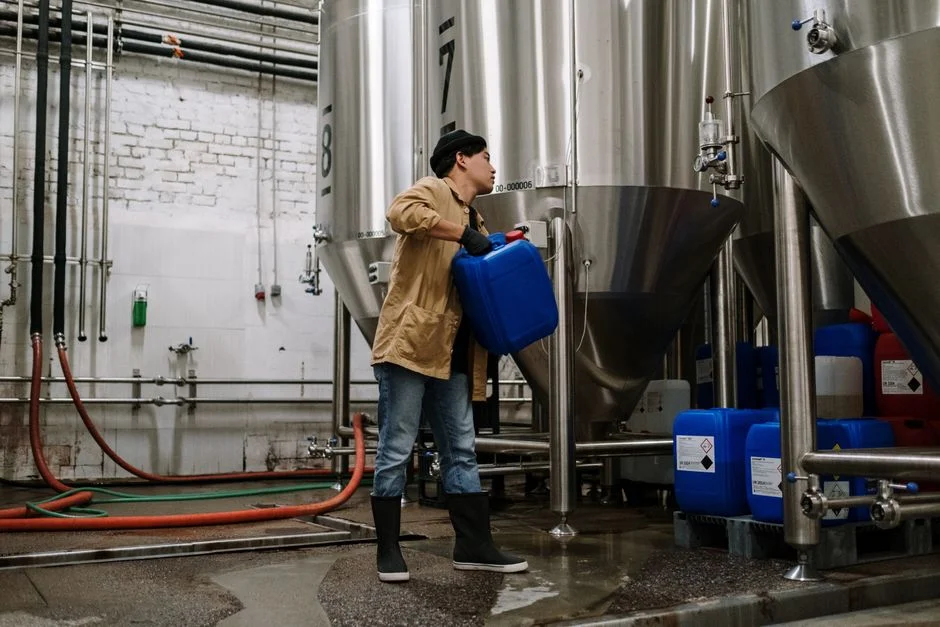
The treatment train should follow the pollutants that the wastewater characterization identifies. For dairy, brewery, food and beverage streams containing fats, oils, fine solids or colloidal material, place DAF after screening and equalisation and before biological treatment. This is the stage where DAF removes material that would otherwise burden downstream biological processes; it is not a substitute for them.
High-BOD organic effluent requires biological treatment after equalisation. Spans Envirotech presents MBBR for food-processing applications, while Maji Hill describes MBBR as compact, resistant to load variation and suitable for sites with limited space. Activated sludge or SBR may be alternatives where the plant brief, land, operational capability and nutrient-removal requirements justify them.
Textile, tannery, chemical and metal-finishing streams generally need physico-chemical treatment because biological processes do not effectively remove colour, metals or some chemical contaminants. Depending on the analysis, the scope may include pH adjustment, coagulation, flocculation, precipitation and filtration before biological polishing.
Spans Envirotech describes physico-chemical treatment combined with constructed wetlands or biological polishing for pesticide- and nutrient-rich flower-farm runoff. For reuse, add tertiary filtration and, where the specified water quality justifies it, MBR or reverse osmosis. The MBR wastewater treatment system for industrial reuse is rated in the supplied research at 10–2,000 m³/day and below-1 μm filtration, but that equipment range does not replace site-specific effluent and reuse testing.
Use the brewery spent-yeast treatment guide, starch-wastewater design guide and industrial DAF guide to identify applicable process logic—not to substitute for the factory’s own analysis.
| Factory profile | Indicative treatment train | Key decision |
|---|---|---|
| Dairy, brewery, food and beverage | Screening, equalisation, DAF, biological treatment, clarification and polishing | Confirm fats, oils, fine solids and colloids before including DAF |
| High-BOD organic process water | Equalisation followed by MBBR, activated sludge or SBR | Size biological capacity from measured load and Nairobi temperature |
| Textile, tannery, chemical or metal finishing | pH adjustment and coagulation/flocculation as indicated, followed by biological polishing and filtration | Identify non-biodegradable pollutants and their required removal |
| Horticulture runoff | Physico-chemical treatment with constructed wetlands or biological polishing | Test nutrients, pesticides and fumigants separately |
| Reuse requirement | Complete ETP plus tertiary filtration and, if justified, MBR or RO | Define the receiving process and its water-quality specification |
Design for Nairobi Climate, Loads and Utilities
Nairobi’s highland operating conditions must be included in biological sizing, electrical design and continuity planning. Spans Envirotech states that highland sites operate at 1,500–2,100 m elevation and mean temperatures of 14–22°C, reducing biological reaction rates by 20–35% compared with sea-level tropical conditions. Require the supplier to show how hydraulic retention time and biological tank volume were adjusted for those conditions; do not accept a generic biological design without the calculation basis.
Equalisation should be sized around batch operation, seasonal load changes and peak flows, not merely the average daily discharge. The treatment train also needs reliable controls, local spares access, chemical dosing and monitoring. Spare parts and chemical consumables are recurring operating dependencies, so their supply arrangements should be documented in the commercial scope.
Specify equipment for Kenya’s 415 V/50 Hz three-phase supply and require an explanation of power-interruption management. Spans Envirotech describes energy-efficient aeration using turbo blowers with variable-frequency drives and possible backup-generator integration. The electrical design should cover duty/standby requirements, automatic controls, alarms and safe restart after power loss.
For MBR reuse applications, review membrane cleaning, aeration and replacement provisions. The supplied MBR information specifies a compact 10–2,000 m³/day range but does not provide project-specific O&M pricing, so those obligations must be quoted. The MBR wastewater treatment system for industrial reuse should be evaluated against the required reuse quality, site footprint, operator capability and membrane-maintenance commitment.
Compare DAF, MBBR and MBR by Decision Criteria
DAF, MBBR and MBR perform different functions and should be compared within a treatment train rather than treated as interchangeable alternatives. DAF removes floatable and settleable contaminants; MBBR removes biodegradable organics; MBR combines biological treatment with membrane solids separation. Their suitability depends on the limiting pollutant, reuse objective, land, operating capability and sludge-management route.
HydropureWater’s DAF range covers 4–300 m³/h across 13 standard models, while the MBR reference covers 10–2,000 m³/day and below-1 μm filtration. The industrial DAF system for suspended solids, FOG and oil removal is therefore an equipment-selection reference, not a substitute for peak-flow and wastewater-test data. See also the DAF-versus-clarifier selection analysis.
No universal cost ranking is defensible here. The supplied research contains no verified 2026 Kenyan capital or operating prices for these systems. Request a scope-based quotation after characterization, with alternatives for pretreatment only, a complete ETP and an MBR reuse train clearly separated.
| Criterion | DAF | MBBR | MBR |
|---|---|---|---|
| Primary function | Floatable and settleable contaminant separation | Biodegradable organic removal | Biological treatment with membrane solids separation |
| Typical position | After screening and equalisation, before biology | After suitable pretreatment | As the biological and solids-separation stage in a reuse train |
| Best suited when | Oils, FOG, fine solids or colloids are limiting | Biodegradable organics require treatment in a compact biological stage | High-quality reuse or stringent solids separation is required |
| Main operating exposure | Recycling, nozzle condition, sludge and chemical handling | Biological media, aeration and sludge management | Membrane cleaning, aeration and replacement |
| Reference capacity | 4–300 m³/h; 13 models | Not stated in supplied research | 10–2,000 m³/day |
Set the Compliance and Procurement Scope
The quotation should define the complete performance obligation, not just the treatment equipment. Maji Hill identifies the EIA licence, discharge consent, quarterly effluent testing at a KEBS-accredited laboratory, daily operations log and annual environmental audit report as parts of full compliance. The supplier’s technical scope should also include the PFD and P&ID drawings, equipment datasheets, electrical documentation, civil drawings, commissioning spares, operator training and an O&M proposal.
Use the site’s NEMA consent as the controlling specification. Spans Envirotech lists BOD below 30 mg/L, COD below 150 mg/L, TSS below 50 mg/L and oil and grease below 5 mg/L. Maji Hill lists BOD not exceeding 30 mg/L, COD not exceeding 50 mg/L, TSS not exceeding 30 mg/L, pH from 6.0 to 9.0, oil and grease under 5 mg/L and total coliforms under 1,000 MPN/100 mL. This article does not resolve that difference. The applicable licence, consent, receiving water and reuse specification must be confirmed during design; the Kenya NEMA industrial effluent limits and compliance requirements should be used as a due-diligence reference, not a substitute for the consent.
Ask for a performance guarantee tied to the agreed effluent parameters. Include the automatic chemical dosing system only where the verified treatment process requires chemical addition, with its controls, reagent consumption and operator interface specified.
Planning indicators in the supplied research differ by supply model: Spans reports 25–35 days for sea freight to Mombasa, while Maji Hill reports 6–8 weeks for a package ETP and 3–6 months for a conventional small-to-medium ETP. These are not guaranteed project dates. The supplier should present the critical path, including design approval, civil works, shipping, installation, commissioning, biological startup, licensing and handover.
| Procurement package | Required content |
|---|---|
| Design basis | Effluent analysis, flow and load calculations, consent, discharge or reuse route, Nairobi design corrections |
| Technical deliverables | PFD, P&ID, equipment list, datasheets, civil and electrical drawings, controls and site interfaces |
| Commissioning and handover | Testing, biological startup, performance demonstration, operator training, spares and documentation |
| Compliance and O&M | NEMA support, monitoring, laboratory testing, operations log, maintenance, sludge and chemical management |
Frequently Asked Questions
Can a Nairobi factory select an ETP or DAF using flow alone?
No. A defensible selection requires representative factory effluent characterization, average and peak flow, pollutant loads, discharge or reuse route, available land and operating requirements. Flow establishes hydraulic capacity, but it does not show whether the limiting pollutants require DAF, biological treatment, physico-chemical treatment or tertiary polishing.
Should the quotation cover only the treatment equipment?
No. Request a scope covering process design, civil information, electrical and controls, equipment, installation interfaces, commissioning, biological startup, training, commissioning spares, monitoring, sludge and chemical management, and O&M support. This avoids discovering that compliance testing, power backup, dosing or civil works fall outside the supplier’s obligation after award.
Is DAF a substitute for a complete ETP?
Generally, no. DAF is pretreatment for suspended solids, fats, oils and grease, oil and grease and colloidal material. It can protect downstream biological treatment or support trade-effluent pretreatment, but organic-load reduction and final discharge or reuse compliance normally require additional stages.
How should conflicting discharge limits be resolved?
Treat the site-specific NEMA consent as controlling. Require the selected supplier to confirm the applicable limits in the design basis and performance guarantee, taking account of the receiving water or reuse specification. The different COD and TSS values cited by Spans Envirotech and Maji Hill should not be resolved by selecting whichever value is lower without regulatory confirmation.
What should a buyer request before comparing prices?
Request itemised CAPEX and OPEX after wastewater characterization, including installation, civil works, electrical works, chemicals, sludge handling, testing, maintenance, spares and membrane costs where applicable. Ask for separately priced alternatives for a basic pretreatment route, a complete ETP and an MBR reuse route. Because the supplied research provides no verified 2026 Kenyan prices for these systems, a defensible budget cannot be derived without a scope-based quotation and the site data listed in the best DAF unit selection framework.
Related Equipment
- industrial DAF system for suspended solids, FOG and oil removal — specifications, capacity range, and technical data