
What Makes Brewery Spent Yeast Water Different from General Brewery Effluent
Spent yeast water is the reject stream from fermenter bottoms, centrifuge/separator purges, and tank bottoms—not the dilute rinse water that flows from bottle washers, keg cleaners, or final CIP rinses. It is a high-solids, protein-rich, autothermal stream that behaves differently than the 200–800 mg/L TSS composite most DAF units in food-and-beverage plants are designed around. Spent yeast water typically carries 5,000–40,000 mg/L TSS, 15,000–35,000 mg/L BOD, 25,000–60,000 mg/L COD, pH 4.0–6.5, and a temperature of 30–45°C straight off the centrifuge (HydropureWater field data, 2026). The residual fermentable sugar and 0.5–3% v/v entrained ethanol keep the stream biologically active; equalization tanks without cooling or aeration control will drop below pH 4.0 within 6–12 hours and go anaerobic, which drives sulfide odor and float-sheen breakdown before the DAF even sees the flow.
The colloidal fraction is dominated by yeast cell walls (β-glucans and mannoproteins) and soluble proteins from autolysed cells. These colloids carry a net negative surface charge near neutral pH, which is why cationic polyacrylamide outperforms anionic or non-ionic flocculants on this stream. Generic FOG/TSS guidance—bubble size 50–100 µm, 20% recycle, low-pressure saturators—was written for restaurant grease traps and municipal primaries, and it under-performs by 30–50% on spent yeast water when applied without modification. Before specifying any DAF, confirm the stream matches the envelope above. A 500 mg/L rinse stream needs a different unit entirely; the configuration in this guide is for the high-solids, high-COD case. The DAF configuration for ammonia drain covers a related but much lower-solids case and is not interchangeable.
The Spent-Yeast DAF Configuration: Bubbles, Pressure, Recycle, Retention
A spent-yeast DAF is a high-solids, polymer-assisted dissolved air flotation unit engineered around five coupled parameters: micro-bubble size, saturation pressure, whitewater recycle, contact-zone HRT, and polymer dose. These parameters must be treated as a single set rather than independent selections. A dissolved air flotation system configured for brewery yeast will run with 30–60 µm micro-bubbles generated at 5–6 bar saturation pressure, 30–50% whitewater recycle, 3–5 minutes contact-zone HRT, and a cationic polyacrylamide dose of 5–15 mg/L (HydropureWater field data, 2026). Under this set, the unit typically delivers 85–95% TSS removal and 60–80% COD reduction on a 10,000 mg/L TSS feed.
Micro-bubble size drives everything downstream. Spent yeast solids have a relatively low rise velocity, so 50–100 µm bubbles (the municipal default) carry only the coarsest fraction. Target 30–60 µm, achieved with either a packed saturator with a recirculation pump or a venturi-type ejector driven by a recycle-side booster. Saturation pressure must be 5–6 bar—the 4 bar used on light TSS streams will not dissolve enough air to lift 10,000+ mg/L solids. Whitewater recycle of 30–50% of throughput is required to deliver roughly 8–12 g of air per kg of influent TSS; below 25% recycle, the bubble blanket starves during peak shift discharge. The contact zone (where saturated recycle meets flocculated feed) should hold 3–5 minutes; the full flotation cell should provide 15–25 minutes HRT. Surface hydraulic loading should stay between 5–10 m/h on the cell to prevent short-circuiting.
Polymer is dosed through an inline static mixer followed by a 60–90 second maturing tube before the contact zone. Specify cationic polyacrylamide with 30–60% charge density at 5–15 mg/L—start at 8 mg/L and trim on jar tests. pH conditioning to 5.5–6.8 is non-negotiable: below 5.5, micro-bubbles collapse because CO₂ comes out of solution; above 7.0, the protein fraction over-floats with too much entrained water and the float cake drops below 3% DS, which downstream dewatering cannot recover economically. The skimmer must be a full-width beach-type unit with scraper torque rated for a 4–6% DS float cake; a paddle skimmer will bog down once the cake thickens on the beach.
| Parameter | Spent-Yeast DAF Setpoint | Municipal / Light TSS Default |
|---|---|---|
| Micro-bubble size | 30–60 µm | 50–100 µm |
| Saturation pressure | 5–6 bar | 4 bar |
| Whitewater recycle | 30–50% of throughput | ~20% |
| Contact-zone HRT | 3–5 min | 1–2 min |
| Total flotation-zone HRT | 15–25 min | 8–12 min |
| Surface hydraulic loading | 5–10 m/h | 10–20 m/h |
| Cationic polyacrylamide dose | 5–15 mg/L (30–60% charge) | 1–3 mg/L anionic |
| Feed pH window | 5.5–6.8 | 6.5–7.5 |
| Skimmer type | Full-width beach, 4–6% DS torque rating | Paddle or partial-width |
Expected Performance: TSS, COD, and Float-Solids Quality
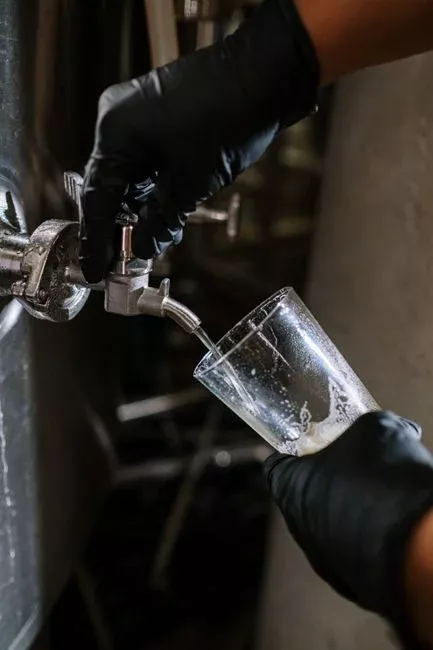
A well-tuned spent-yeast DAF typically achieves 85–95% TSS removal, with outlet levels between 300–2,000 mg/L from a 5,000–40,000 mg/L inlet. COD removal lands at 60–80% because the reduction tracks the suspended biomass fraction; the soluble COD (residual sugars, glycerol, short peptides) passes through largely unaffected and must be handled downstream. BOD removal runs 70–85%, slightly higher than COD because the float lifts the most readily biodegradable cell mass first. These bands are consistent with brewery commissioning data across 10,000–200,000 hL/year operations (HydropureWater field data, 2026).
The float cake comes off the skimmer at 3–6% DS. This dryness level determines the viability of by-product recovery: animal-feed blenders and pet-food co-packagers typically pay or zero-cost-haul at >18% DS, and most yeast-to-extract processors want 20–25% DS. The DAF skimmer alone will not get there. Adding a thickening beach or a rotary drum thickener upstream of a plate-and-frame filter press brings the float to 8–14% DS pre-press and 22–28% DS post-press, which is the range a yeast broker or renderer will accept. Plan the dewatering train in the same CAPEX line as the DAF—treating the two as separate budget items is the most common reason a brewery ends up paying full hauling cost on a stream that could have been sold.
Reuse vs Discharge: Two Valid Outlet Configurations
DAF supernatant is typically routed to either reuse or discharge based on water price, sewer surcharge, and local discharge consent. The reuse configuration runs DAF → multimedia filter (5–10 µm) → UV (30–40 mJ/cm²) → caustic trim → CIP make-up water, with target COD <500 mg/L and TSS <50 mg/L at the reuse tie-in. The discharge configuration runs DAF → equalization → MBBR or MBR → disinfection → sewer or surface water, with final targets set by the local brewery effluent consent—typical 2026 envelopes are BOD <30 mg/L, COD <125 mg/L, TSS <35 mg/L under EU IED 2010/75/EU BAT-AEL for food and beverage waste water or US EPA categorical standards at 40 CFR Part 405.
The decision rule is straightforward: if water price exceeds $2.50/m³ and sewer surcharge exceeds $1.50/m³, the reuse configuration pays back inside 3 years for most mid-size breweries (10,000–200,000 hL/year). Below those thresholds, the MBR discharge train usually wins on CAPEX and operating simplicity. Note regulatory divergence: EU sites operate under BAT-AEL ranges, US sites under 40 CFR Part 405 categorical limits, and many municipal sewer-use ordinances layer on top—the DAF outlet must feed whichever downstream train the consent demands, and a membrane bioreactor downstream is the most common pairing when discharge is the destination.
| Outlet Path | Downstream Train | Supernatant Targets | Final Effluent Targets | Economic Trigger |
|---|---|---|---|---|
| Reuse to CIP | Multimedia filter → UV → caustic trim | COD <500 mg/L, TSS <50 mg/L | n/a (internal reuse) | Water >$2.50/m³ and sewer >$1.50/m³ |
| Discharge to sewer | EQ → MBBR or MBR → disinfection | Biodegradable, low TSS | BOD <30 mg/L, COD <125 mg/L, TSS <35 mg/L (typical 2026 consent) | Default when reuse economics don't close |
Common Configuration Mistakes and How to Avoid Them
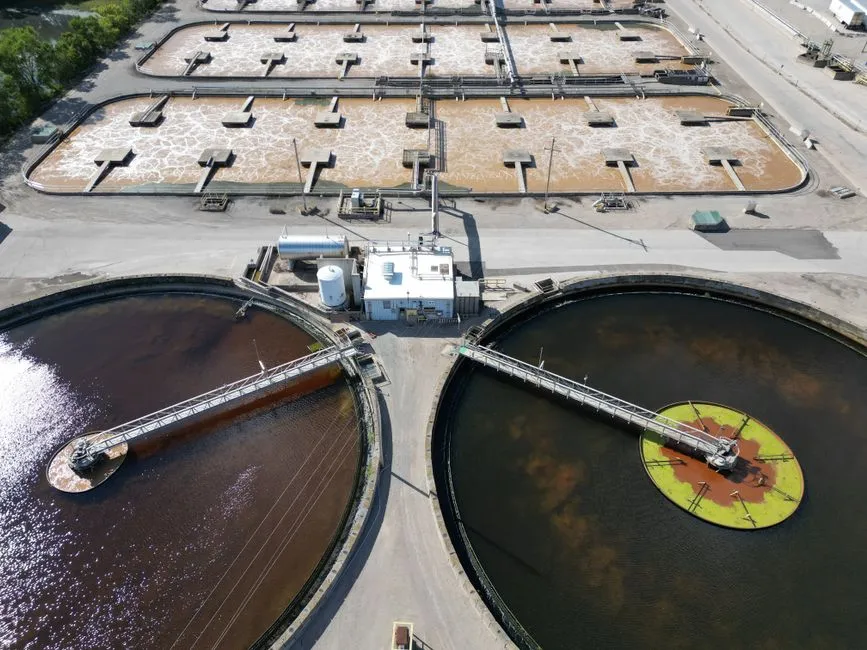
Three specific errors account for most spent-yeast DAF retrofits that fail to hit their TSS removal target. First, undersizing the saturator against peak shift discharge: spent yeast flows are slug-driven by fermenter blow-downs and CIP returns, and an EQ-sized saturator will starve the bubble blanket within minutes of a peak—size the saturator and recycle pump for peak flow, not daily average. Second, specifying anionic polyacrylamide because it is cheaper: anionic polymer on protein-rich yeast gives a 30–40% lower TSS removal than cationic at the same dose, because the charge mismatch leaves colloids unflocculated; always specify cationic with 30–60% charge density and confirm with a jar test on the actual feed. Third, omitting upstream equalization: a slug load from fermenter blow-down collapses the bubble blanket in under five minutes and pushes 10,000+ mg/L TSS straight through to the downstream MBBR; provide 8–24 hours of EQ with mixing and either cooling or aeration control to prevent autothermal acidification.
Frequently Asked Questions
What micro-bubble size does a brewery spent-yeast DAF need? Target 30–60 µm, finer than the 50–100 µm municipal default, generated by a packed saturator or venturi ejector at 5–6 bar. Coarser bubbles cannot lift the low-rise-velocity yeast colloids and TSS removal drops below