A Dissolved Air Flotation (DAF) unit removes 95–99% of suspended solids (TSS) and fats/oils/grease (FOG) from industrial wastewater by saturating a recycle stream with 40–70 psi (2.8–4.8 bar) air, then releasing it into a flotation tank to generate 20–100 μm microbubbles. These bubbles attach to contaminants, reducing their effective density below water (0.95 g/cm³ vs. 1.0 g/cm³), and float them to the surface for mechanical skimming. A properly sized DAF unit typically achieves effluent TSS ≤50 mg/L and FOG ≤10 mg/L, meeting U.S. EPA 40 CFR Part 403 pretreatment standards for most industries.
Why DAF Units Outperform Clarifiers for Industrial Wastewater
Dissolved Air Flotation (DAF) units achieve 95–99% TSS removal efficiency at hydraulic loading rates of 5–15 m/h, against 60–80% TSS removal for conventional clarifiers running at 1–2 m/h. According to US EPA (2024) benchmarks, this performance gap matters most when discharge limits are tight or wastewater volumes are high. A DAF unit designed for 100 m³/h occupies roughly 20 m², while an equivalent clarifier needs about 50 m² — roughly 50–70% more floor space for the same throughput.
DAF units also handle low-density contaminants that clarifiers miss. Oils, greases, and certain algae sit in the 0.95–1.05 g/cm³ density band, so they settle poorly or not at all in a gravity clarifier. In one poultry processing plant case, a DAF unit cut FOG from 1,200 mg/L influent to below 10 mg/L effluent, avoiding about $250,000/year in municipal surcharges. The same logic applies in food processing, pulp and paper, and petrochemical streams where buoyant solids dominate.
Higher solids capture upstream means less load on the biological step that follows.The short residence time inside the flotation tank (10–30 minutes) also limits anaerobic odor formation, which is a common complaint in equalization basins feeding a clarifier.
| Parameter | DAF Unit Performance | Conventional Clarifier Performance |
|---|---|---|
| TSS Removal Efficiency | 95–99% | 60–80% |
| Hydraulic Loading Rate | 5–15 m/h | 1–2 m/h |
| Footprint (for 100 m³/h) | ~20 m² | ~50 m² |
| Contaminants Handled | Low-density FOG, oils, suspended solids, algae | High-density suspended solids |
| Particle Density Threshold | 0.95–1.05 g/cm³ | >1.05 g/cm³ (settling particles) |
Microbubble Physics: How Air Pressure and Bubble Size Drive DAF Efficiency
DAF efficiency starts with bubble size. Optimal microbubbles run 20–100 μm and deliver about 500% more attachment surface per unit volume than 200 μm bubbles, so collision probability with flocculated particles rises sharply. The underlying driver is Henry's Law: dissolved gas concentration scales with partial pressure above the liquid.
Air dissolves into a 5–10% recycle stream at 40–70 psi, hitting an 8–12% air-to-water ratio at saturation. When the stream passes the pressure-reduction valve into the atmospheric flotation tank, the pressure drop forces the air back out of solution as millions of fine bubbles. The pressure vessel itself is rated to ASME Section VIII Div 1 at 70 psi, built in 304 or 316 stainless steel for corrosion resistance, and gives 1–3 minutes of contact time for full saturation.
Flotation tank geometry follows Stokes' Law for bubble-particle rise velocity. Tank depth runs 1.5–3 meters and retention time 10–30 minutes — long enough for buoyant aggregates to reach the surface, short enough to keep the tank compact. Water temperature, dissolved solids, and surfactants all shift bubble stability, which is why chemical conditioning with coagulant and flocculant ahead of the DAF unit matters as much as the air system itself. A well-conditioned floc is the difference between a 95% removal day and a 70% removal day on the same hardware.
| Parameter | Specification/Impact |
|---|---|
| Optimal Bubble Size | 20–100 μm |
| Surface Area (vs. 200 μm bubbles) | ~500% greater for attachment |
| Air Saturation Pressure Range | 40–70 psi |
| Typical Air-to-Water Ratio | 8–12% |
| Recycle Stream Ratio | 5–10% of total flow |
| Pressure Vessel Retention Time | 1–3 minutes |
| Flotation Tank Depth | 1.5–3 meters |
| Flotation Tank Retention Time | 10–30 minutes |
DAF System Components: Engineering Specs and Selection Criteria
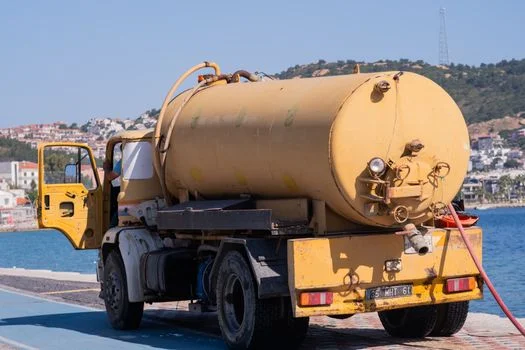
The pressure vessel is the heart of a DAF unit. It is built in 304 or 316 stainless steel to handle corrosive industrial service, rated for 40–70 psi, and holds the recycle stream for 1–3 minutes of saturation time. Compliance with ASME Section VIII Div 1 in North America or the Pressure Equipment Directive (PED) in Europe is the baseline for safety and code approval.
The flotation tank is where separation happens. Hydraulic loading runs 5–15 m/h, tank depth sits between 1.5–3 meters, and material selection depends on size: reinforced concrete for large installations, FRP where corrosion is the driver, stainless steel for modular or skid-mounted units. Internal baffling controls turbulence and stops short-circuiting, which is the most common cause of a DAF unit under-performing its nameplate spec.
Skimmer mechanisms remove the float layer. Chain-and-flight scrapers handle continuous, robust duty; spiral auger skimmers suit viscous or compact sludge. Skimmer torque is sized at 0.5–2 Nm and removal rate at 1–5 m³/h, matched to the expected solids loading. Automated skimmers tied to level sensors reduce water carryover into the sludge stream.
Chemical dosing systems do the upstream work that lets the DAF unit hit its removal numbers. Coagulants such as polyaluminum chloride (PAC) or ferric chloride neutralize particle charge, and polyacrylamide flocculant agglomerates the neutralized particles — together cutting TSS by 30–50% before the air even enters the tank. A PLC-controlled automatic coagulant and flocculant dosing skid for DAF pretreatment with peristaltic or diaphragm pumps keeps dose accuracy inside ±5% and protects downstream membranes from overdosing.
DAF vs. Alternatives: Side-by-Side Comparison for Industrial Applications
Picking a flotation technology means trading removal efficiency against footprint, energy, and chemical cost. DAF units lead on raw removal at 95–99% for TSS and FOG; Induced Air Flotation (IAF) reaches 85–90%, Cavitation Air Flotation (CAF) systems reach 90–95% via cavitation bubbles, and conventional clarifiers settle 60–80% of TSS by gravity alone.
Footprint for 100 m³/h tells the same story: DAF unit ~20 m², CAF ~25 m², IAF ~30 m², clarifier ~50 m². Energy use runs 0.2–0.4 kWh/m³ for DAF (recycle pump plus air compressor), 0.1–0.3 kWh/m³ for IAF, 0.3–0.5 kWh/m³ for CAF due to high-shear cavitation, and 0.05–0.1 kWh/m³ for a clarifier's pumping. Chemical demand is highest for DAF (coagulant plus flocculant), optional for IAF, and typically zero for CAF, which relies on cavitation alone.
Use-case fit is the deciding factor. DAF units suit high-TSS, high-FOG streams from food processing, meatpacking, and pulp/paper. IAF fits low-TSS municipal or light industrial flows. CAF handles oily petrochemical and metal-finishing wastewater where cavitation-generated bubbles lift emulsified oil. For a deeper look at how DAF compares with biological steps like membrane bioreactor (MBR) systems on the same plant train, see the linked working-principle guide.
| Feature | DAF | IAF | CAF | Clarifier |
|---|---|---|---|---|
| Removal Efficiency (TSS/FOG) | 95–99% | 85–90% | 90–95% | 60–80% |
| Footprint (for 100 m³/h) | ~20 m² | ~30 m² | ~25 m² | ~50 m² |
| Energy Use (kWh/m³) | 0.2–0.4 | 0.1–0.3 | 0.3–0.5 | 0.05–0.1 (pumping) |
| Chemical Use | Coagulants + Flocculants | Coagulants (optional) | No chemicals (typically) | Coagulants + Flocculants (optional) |
| Best Use-Case | High TSS/FOG (Food, Pulp/Paper) | Low TSS (Municipal, light industrial) | Oily Wastewater (Petrochemical) | High-density settling solids |
DAF Effluent Quality: Compliance Benchmarks and Industry-Specific Limits
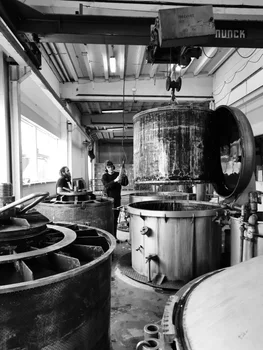
DAF unit effluent routinely meets the U.S. EPA 40 CFR Part 403 pretreatment standards, which set typical POTW limits at TSS ≤250 mg/L and FOG ≤100 mg/L. With optimized chemistry, a DAF unit commonly produces TSS ≤50 mg/L and FOG ≤10 mg/L — comfortably below those limits.
In Europe, the Urban Waste Water Treatment Directive 91/271/EEC caps TSS at ≤35 mg/L for certain discharges, and a tuned DAF unit delivers 20–30 mg/L. China's GB 8978-1996 sets TSS ≤70 mg/L for many industrial sectors, and DAF effluent typically lands at 20–50 mg/L.
Beyond compliance, a DAF unit enables water reuse. With advanced chemistry and polishing, effluent can reach TSS ≤10 mg/L and turbidity ≤5 NTU, suitable for cooling-tower makeup, equipment washdown, or irrigation. That reuse stream is what flips a DAF unit from a cost center to a payback project in most food and beverage plants we work with.
How to Select a DAF System: A Structured Procurement Framework
Procuring a DAF unit works best as a five-step framework that ties engineering numbers to lifecycle cost.
Step 1: Define Influent Quality and Effluent Targets. Characterize TSS, FOG, BOD, COD, and pH on the incoming stream, then set the effluent targets against local regulations (EPA, EU Directive 91/271/EEC, China GB 8978-1996) and any internal reuse goals. This pair of numbers drives every downstream choice.
Step 2: Size the System. Pick hydraulic loading between 5–15 m/h and a recycle ratio of 5–10% of total flow. A 100 m³/h flow typically needs 10–20 m² of flotation area at peak. HydropureWater's DAF units cover 4–300 m³/h with automatic skimming, which fits most food, pulp/paper, and petrochemical duty ranges without custom tank work.
Step 3: Evaluate Capital Expenditure (CAPEX). For 2025 budgets, a 50 m³/h DAF unit runs $80,000–$150,000 and a 200 m³/h unit runs $200,000–$400,000, all-in including pumps, compressor, civil works, and installation. Always price the installed cost, not just the skid.
Step 4: Calculate Operational Expenditure (OPEX). Plan for energy at 0.2–0.4 kWh/m³, chemicals at $0.05–$0.20/m³, and maintenance at $5,000–$15,000 per year. OPEX over a 10-year horizon usually exceeds CAPEX on a DAF unit, so the chemical and energy numbers deserve as much scrutiny as the purchase order.
Step 5: Assess Vendor Support and Lifecycle Value. Look for 1–2 year warranties, guaranteed spare-parts availability, and IoT-enabled remote monitoring. Plants running IoT-equipped DAF units report up to 30% less unplanned downtime, which is usually the largest single OPEX line item after chemicals.
| Selection Criteria | Key Considerations | Typical Ranges/Benchmarks |
|---|---|---|
| Influent/Effluent Targets | TSS, FOG, BOD, COD, pH; Regulatory limits (EPA, EU, China) | Effluent TSS ≤50 mg/L, FOG ≤10 mg/L |
| System Sizing | Hydraulic loading, recycle ratio, peak flow | 5–15 m/h loading, 5–10% recycle ratio |
| CAPEX (Capital Cost) | Equipment, installation, civil works | $80,000–$150,000 (50 m³/h); $200,000–$400,000 (200 m³/h) |
| OPEX (Operational Cost) | Energy, chemicals, maintenance, sludge disposal | Energy: 0.2–0.4 kWh/m³; Chemicals: $0.05–$0.20/m³; Maintenance: $5,000–$15,000/year |
| Vendor Support | Warranty, spare parts, technical support, remote monitoring | 1–2 year warranty; IoT systems reduce downtime by 30% |
Who this is for. Plant engineers and EPC contractors specifying a DAF unit for food processing, pulp/paper, meatpacking, or oily petrochemical streams above 5 m³/h. Look elsewhere if your TSS is mostly settleable mineral solids above 1.05 g/cm³ — a clarifier or DAF clarifier hybrid will be cheaper. Next step: send your influent/effluent data and target flow to our team for a sized proposal and quote.
Frequently Asked Questions
What's the difference between DAF and IAF?
DAF dissolves air under pressure (40–70 psi) into a 5–10% recycle stream and releases 20–100 μm microbubbles into the flotation tank, hitting 95–99% TSS/FOG removal. IAF mechanically induces air directly into the tank, producing larger 200–500 μm bubbles and 85–90% removal. The smaller bubble population is why a DAF unit carries more float per square meter of tank surface.
How much does a DAF system cost?
A 50 m³/h DAF unit runs $80,000–$150,000 capital and a 200 m³/h DAF unit runs $200,000–$400,000 (2025 installed cost). OPEX adds 0.2–0.4 kWh/m³ for energy and $0.05–$0.20/m³ for coagulant plus flocculant. Most food and pulp/paper plants we work with see payback inside 1.5–3 years through avoided surcharges and reuse.
Can a DAF unit handle high-salinity wastewater?
Yes, a DAF unit treats high-salinity wastewater up to about 5% NaCl, provided the design accounts for lower air solubility and picks corrosion-resistant materials (316 stainless steel, FRP). Chemical dosing usually needs adjustment because salinity shifts coagulant performance, so jar tests on the actual brine are worth the week they take.
What is the typical payback period for a DAF unit?
Industrial DAF units typically pay back in 1.5–3 years. The savings stack comes from avoided municipal TSS/FOG surcharges, lower fresh-water purchase cost through reuse, and reduced load (and chemical cost) on the downstream biological or membrane step. Plants with a published surcharge schedule usually sit at the short end of that range.
How do I troubleshoot poor DAF unit performance?
Run a 3-step check: (1) verify saturation pressure sits at 40–70 psi and the air compressor output matches nameplate; (2) confirm recycle ratio is 5–10% of total flow and the pressure-reduction valve is opening fully; (3) review coagulant and flocculant dose against jar-test results — most under-performing DAF units trace back to chemistry, not the air system.