Pressure flotation systems, such as dissolved air flotation (DAF) and suspended air flotation (SAF®), remove 95%+ of fats, oils, and grease (FOG) and 92–97% of total suspended solids (TSS) from food processing wastewater by injecting microbubbles (20–100 μm) that attach to contaminants, forming a floatable sludge. For a typical dairy plant processing 100 m³/h, a DAF system operating at 4–6 bar pressure and 10–15% recycle ratio can reduce FOG from 1,200 mg/L to <50 mg/L, meeting EPA and EU discharge limits without secondary treatment.
Why Food Processing Plants Need Pressure Flotation Systems
High organic loading in food processing wastewater requires robust pre-treatment to avoid municipal surcharges that often exceed $50,000 annually for medium-sized facilities. Food and beverage effluents are characterized by extreme fluctuations in chemical oxygen demand (COD) and FOG concentrations, which can disrupt downstream biological processes or lead to immediate regulatory fines. According to 2023 EPA benchmarks, dairy processing wastewater typically contains 1,000–3,000 mg/L of FOG, while meat packing facilities can see concentrations as high as 5,000 mg/L.
Regulatory frameworks have tightened globally to prevent the "fatberg" phenomenon in municipal sewers. The EPA generally mandates FOG levels below 100 mg/L and TSS below 200 mg/L for indirect discharge. In more stringent jurisdictions, such as those governed by the EU Urban Waste Water Directive, limits can drop to <40 mg/L for FOG. In China, the GB 8978-1996 standard sets similar rigorous benchmarks for industrial effluent. Failure to meet these standards results in significant financial penalties, ranging from $20,000 to $100,000 per violation depending on the severity and frequency of the permit breach.
Beyond compliance, the operational risks of untreated FOG are severe. Fats and oils congeal as wastewater cools, leading to clogged piping networks and frequent pump failures. In plants utilizing secondary biological treatment, excessive FOG coats microbial flocs, preventing oxygen transfer and leading to "bulking sludge" which ruins the treatment efficiency. Implementing a DAF system for food processing wastewater acts as a critical insurance policy against these technical and financial disruptions.
How Pressure Flotation Systems Work: Microbubble Physics and Process Flow
Pressure flotation relies on the physical principle of Henry’s Law, which states that the solubility of a gas in a liquid is proportional to the pressure of that gas above the liquid. In a DAF system, air is dissolved into a recycle stream of clarified water at 4–6 bar (60–90 psi). When this pressurized water is released into the flotation tank at atmospheric pressure, the air precipitates out of the solution as millions of microbubbles. These bubbles, typically 20–100 μm in diameter, provide a massive surface area for contaminant attachment.
The efficiency of the process is governed by Stokes’ Law, which dictates the rise velocity of the bubble-particle aggregate. By attaching low-density microbubbles to high-density solids or hydrophobic FOG molecules, the effective density of the particle drops below that of water, causing it to float rapidly to the surface. This "life jacket" effect is enhanced by chemical conditioning. Coagulants like Polyaluminum Chloride (PAC) or Ferric Chloride (FeCl³) neutralize the negative surface charges of the contaminants, while flocculants like polyacrylamide bridge these particles together into larger, more stable flocs.
The standard process flow begins in an equalization tank to normalize flow and pH. The wastewater then enters a PLC-controlled chemical dosing for flotation systems, where coagulants and flocculants are injected. The conditioned water enters the flotation chamber where it meets the microbubble cloud. Within 10–30 minutes of retention time, the clarified effluent is drawn from the bottom of the tank, while a mechanical skimmer removes the surface sludge. This sludge, typically containing 3–5% solids, is then sent to sludge dewatering for food plant flotation systems to reduce disposal volumes.
| Parameter | Specification Range | Impact on Performance |
|---|---|---|
| Bubble Size | 20–100 μm | Smaller bubbles increase surface area for FOG attachment. |
| Operating Pressure | 4–6 bar | Higher pressure increases air solubility and bubble density. |
| Retention Time | 10–30 minutes | Ensures complete separation of floatable flocs. |
| Rise Velocity | 5–15 m/h | Determines the required surface area of the flotation tank. |
| Sludge Solids | 3–5% | Affects the cost of downstream dewatering and disposal. |
Pressure Flotation vs. Other Flotation Technologies: A Comparison for Food Processing
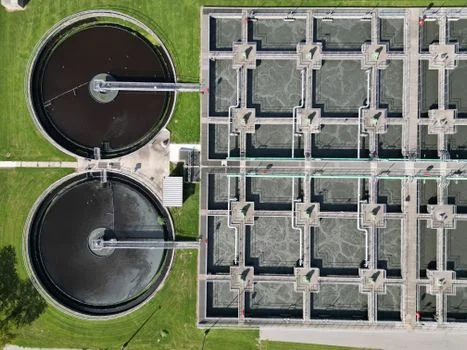
Dissolved Air Flotation (DAF) achieves the highest removal rates for emulsified oils and fine solids in food processing, but other technologies like Suspended Air Flotation (SAF®) and Induced Air Flotation (IAF) serve specific niches. DAF systems, such as HydropureWater’s, are the industry standard for dairy and meat processing because they produce the smallest bubbles, leading to 95%+ FOG removal. SAF® systems operate at lower pressures (2–3 bar) and rely on proprietary chemicals to create larger bubbles, which can be advantageous in high-FOG scenarios like meat packing where energy reduction is prioritized over absolute clarity.
Induced Air Flotation (IAF) utilizes mechanical aeration or venturi injectors to create bubbles without a pressurized recycle stream. While IAF has lower capital costs, its bubbles are significantly larger (500–1,000 μm), resulting in lower removal efficiencies (85–90% TSS). IAF is generally reserved for low-FOG applications or as a preliminary step before more refined treatment. For space-constrained plants, DAF offers the highest hydraulic loading rates, meaning a smaller footprint can treat a larger volume of water compared to IAF.
| Technology | FOG Removal | Energy Use (kWh/m³) | Footprint (m²/100 m³/h) | Chemical Requirement |
|---|---|---|---|---|
| DAF | 95–98% | 0.3–0.5 | 10–20 | Standard PAC/PAM |
| SAF® | 94–96% | 0.2–0.4 | 8–15 | Proprietary Polymers |
| IAF | 85–90% | 0.6–0.8 | 15–25 | Minimal |
Engineering Specs: How to Size and Select a Pressure Flotation System for Your Food Plant
Hydraulic loading rates for food processing DAF systems typically range from 5 to 10 m/h, depending on the concentration of emulsified fats and solids. To select the correct system, engineers must follow a structured framework based on 24-hour composite sampling data. This ensures the equipment can handle peak organic loads, which often occur during sanitation cycles (CIP) when hot water and detergents increase the emulsification of fats.
Step 1: Characterize Influent. Measure FOG, TSS, pH, and temperature. For example, a fruit processing plant may have high TSS but low FOG, whereas a dairy plant will have high concentrations of both. Step 2: Determine Regulatory Limits. Identify your discharge permit requirements (e.g., EPA <100 mg/L). Step 3: Calculate Removal Efficiency. Use the formula: (Influent - Effluent) / Influent * 100. If your influent is 1,500 mg/L FOG and you need <50 mg/L, your system must achieve 96.7% efficiency.
Step 4: Size the System. Calculate the required flotation area by dividing the flow rate by the hydraulic loading rate. For a 100 m³/h flow at a conservative 7 m/h loading rate, you require approximately 14.3 m² of surface area. Step 5: Chemical Optimization. Conduct jar testing to determine the ideal dosage. Typical ranges include PAC at 50–200 mg/L and polyacrylamide at 1–5 mg/L. Understanding how flocculant dosing optimizes flotation efficiency is key to minimizing OPEX.
| System Component | Design Specification (100 m³/h Plant) | Selection Criterion |
|---|---|---|
| Flotation Area | 12–18 m² | Based on 5–8 m/h loading rate. |
| Recycle Ratio | 10–15% | Higher for high TSS/FOG loads. |
| Air-to-Solids Ratio | 0.02–0.05 lb air/lb solids | Critical for bubble-particle attachment. |
| Skimmer Speed | 0.5–2.0 m/min | Adjustable to prevent sludge shearing. |
CAPEX, OPEX, and ROI: Cost Breakdown for Food Processing Flotation Systems
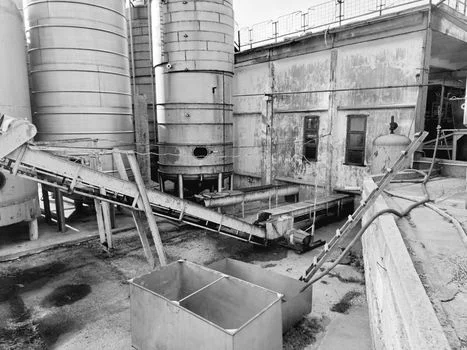
The CAPEX for a 100 m³/h DAF system ranges from $120,000 to $250,000, with an average payback period of 24 to 48 months through surcharge avoidance. Smaller systems (50 m³/h) generally scale down to $80,000–$150,000. While the initial investment is significant, the total cost of ownership is dominated by OPEX, which typically ranges from $0.15 to $0.30 per cubic meter of treated water. This includes energy for the recycle pump and air compressor, chemical costs, and maintenance labor.
ROI is primarily driven by three factors: municipal surcharge avoidance, reduced sludge disposal costs, and water reuse. Many food plants pay "over-strength" surcharges for BOD and TSS that can be reduced by 60–80% with a DAF system. by concentrating sludge to 4% solids rather than 1%, disposal volumes are quartered, saving thousands in hauling fees. For plants in water-stressed regions, the clarified effluent from a DAF can often be reused for non-contact cooling or initial wash-down stages, providing an additional saving of $0.50–$2.00/m³.
| Cost Category | Estimated Cost (per m³) | Annual Total (100 m³/h plant) |
|---|---|---|
| Energy (0.4 kWh/m³) | $0.05 – $0.10 | $40,000 – $80,000 |
| Chemicals (PAC/PAM) | $0.05 – $0.15 | $40,000 – $120,000 |
| Sludge Disposal | $0.02 – $0.10 | $15,000 – $80,000 |
| Maintenance | $0.03 – $0.05 | $25,000 – $40,000 |
Case Study: 95% FOG Removal at a Meat Processing Plant Using DAF
An 80 m³/h meat processing facility achieved 98% FOG removal and eliminated $30,000 in annual municipal surcharges by implementing a DAF-80 system. The plant’s influent was particularly challenging, with FOG levels averaging 2,500 mg/L and TSS at 1,800 mg/L. Before the installation, the plant frequently exceeded its discharge permit, resulting in monthly fines and strained relations with the local utility.
The solution involved a DAF-80 system operating at 4 bar with a 12% recycle ratio. Chemical dosing was optimized through on-site jar testing, settling on 150 mg/L of PAC and 3 mg/L of polyacrylamide. During the first month, the plant faced challenges with floc shearing caused by excessive turbulence at the inlet. This was resolved by reducing the hydraulic loading rate from 10 m/h to 7 m/h and adjusting the skimmer speed to 1.2 m/min. The final results showed FOG reduced to <50 mg/L and TSS to <100 mg/L, consistently meeting all local standards.
Lessons learned from this installation highlighted the importance of pre-treatment. The facility added a rotary drum screen to remove large bone fragments and hair before the DAF, which prevented skimmer clogs and reduced chemical demand by 15%. Additionally, maintaining a pH between 6.5 and 7.5 was found to be the "sweet spot" for optimal coagulation, ensuring the highest possible clarity in the clarified effluent.
Frequently Asked Questions
What is the difference between DAF and SAF® for food processing?
DAF uses pressurized air (4–6 bar) to create 20–100 μm microbubbles, offering 92–97% TSS removal. SAF® operates at lower pressures (2–3 bar) and uses proprietary chemicals to create larger bubbles. DAF is generally preferred for dairy and applications requiring high clarity, while SAF® is often used in meat processing to reduce energy costs.
How do I calculate the required size for my food plant’s flotation system?
Size the system based on the hydraulic loading rate (typically 5–10 m/h). Divide your maximum hourly flow rate by this loading rate to find the required surface area. For more precision, consult detailed engineering specs for DAF systems to account for temperature and solids concentration.
What chemicals are used in pressure flotation systems, and how do I optimize dosing?
Common chemicals include coagulants (PAC, FeCl³) and flocculants (polyacrylamide). Optimization is achieved through jar testing, where 1L samples are treated with varying doses to find the point of maximum clarity. This process can reduce chemical OPEX by up to 30%.
What are the maintenance requirements for a DAF system in food processing?
Daily tasks include skimmer inspection and pH monitoring. Weekly, operators should clean bubble diffusers and refill chemical tanks. Annual maintenance requires a full pressure vessel inspection to ensure ASME compliance and pump seal replacement to prevent leaks.
Can pressure flotation systems handle high-salinity wastewater from food processing?
Yes, but high salinity increases the density of the water, which can slightly reduce the rise velocity of bubbles. In seafood processing where salinity may exceed 3%, removal efficiency may drop by 5–10% unless the recycle ratio is increased or specialized flocculants are used. For more information, see the comparison of pressure flotation systems for industrial applications.