Hospital wastewater treatment in Colorado, USA, requires compliance with CDPHE and EPA standards, especially for facilities discharging over 2,000 gallons per day. Systems must remove pathogens, pharmaceuticals, and organic load using secondary treatment plus disinfection. Automated, compact systems achieve 99%+ pathogen kill with ozone and require no chemical dosing, meeting stringent discharge limits.
Colorado Regulations for Hospital Wastewater Discharge
Colorado law dictates that on-site wastewater treatment systems (OWTS) with a design capacity greater than 2,000 gallons per day (GPD) fall under the direct jurisdiction of the Colorado Department of Public Health and Environment (CDPHE) for permitting and oversight. Smaller medical facilities, such as rural clinics or specialized outpatient centers discharging less than 2,000 GPD, generally fall under local county health department regulations, though they must still adhere to state-wide water quality standards. For larger hospitals, the regulatory framework is governed by the Colorado Water Quality Control Act (WQCCA), which empowers the Water Quality Control Division to issue permits and enforce compliance.
Hospitals discharging into municipal sewer systems must comply with the EPA’s Pretreatment Standards for Existing Sources (PSES) and New Sources (PSNS) under 40 CFR Part 403. These federal rules are designed to prevent the discharge of pollutants that could pass through or interfere with a Publicly Owned Treatment Works (POTW). In Colorado, local POTWs often set specific local limits that are stricter than federal standards, particularly for heavy metals, pH levels, and temperature. If a medical facility intends to discharge treated effluent directly into state waters (surface or groundwater), it must obtain a National Pollutant Discharge Elimination System (NPDES) permit, which requires rigorous monitoring of nitrogen, phosphorus, and microbial indicators.
Navigating these requirements requires a clear understanding of the complete EPA discharge limits for hospitals and medical facilities to avoid heavy fines or operational shutdowns. CDPHE enforcement often focuses on the stability of the treatment process, requiring facilities to demonstrate that their systems can handle peak flows during high-occupancy periods without compromising effluent quality. Failure to maintain these standards can lead to enforcement actions under the WQCCA, which may include administrative penalties of up to $10,000 per day per violation.
Unique Contaminants in Hospital Wastewater
Hospital effluent typically contains 10 to 100 times higher concentrations of multi-drug resistant bacteria and antibiotic-resistant genes (ARGs) than domestic sewage. While municipal wastewater is primarily composed of organic biodegradable matter, hospital streams are characterized by a complex mixture of recalcitrant compounds. These include pharmaceutical residues such as antibiotics (e.g., ciprofloxacin, sulfonamides), analgesics, hormones, and contrast media used in radiology. Standard biological treatment often fails to break down these complex molecules, allowing them to persist in the environment and contribute to the global rise of antibiotic-resistant bacteria.
The EPA identifies 125 priority pollutants under the Clean Water Act, many of which are prevalent in medical environments. Laboratory activities contribute solvents, formaldehyde, and heavy metals like mercury or silver from older diagnostic equipment. The high volume of disinfectants used for surface cleaning in hospitals leads to an abundance of quaternary ammonium compounds (QACs) in the wastewater. These disinfectants can inhibit the microbial activity in standard activated sludge plants, leading to upset conditions where the system fails to meet its BOD and COD reduction targets.
Pathogen loading is the most immediate risk factor. Hospital sewage contains high titers of enteric viruses, bacteria like Staphylococcus aureus, and parasites. Because Colorado has a robust National Wastewater Surveillance System (NWSS) Center of Excellence, the state actively monitors for infectious disease pathogens in wastewater streams. This heightened surveillance means that medical facilities are under increasing pressure to ensure their disinfection stages are optimized for the total inactivation of resistant strains (HydropureWater field data, 2025).
Required Treatment Stages for Medical Facilities
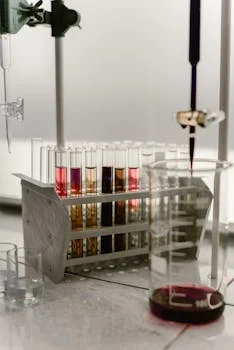
Effective medical wastewater treatment requires a multi-barrier approach that integrates physical separation, biological oxidation, and high-level disinfection to reduce Biochemical Oxygen Demand (BOD) by a minimum of 85%. Given the complexity of hospital waste, a single-stage treatment is rarely sufficient for compliance in Colorado. The process must be engineered to handle variable loads while maintaining a small enough footprint to fit within often-constrained hospital basements or utility yards.
Primary treatment begins with fine screening to remove non-biodegradable solids like wipes, plastics, and surgical waste. This is followed by secondary treatment, where biological processes like the Anoxic/Oxic (A/O) process or Membrane Bioreactor (MBR) technology stabilize organic matter. Tertiary treatment involves ultrafiltration or multi-media filtration to achieve high clarity. The final and most critical stage is disinfection. While chlorine was historically the standard, many Colorado facilities are moving toward ozone or chlorine dioxide to avoid the formation of toxic disinfection byproducts (DBPs) like trihalomethanes.
| Treatment Stage | Technology Solution | Primary Target | Performance Metric |
|---|---|---|---|
| Primary | GX Series Rotary Bar Screen | Large solids, plastics | Removal of 95% of solids >3mm |
| Secondary | A/O Biological Process | BOD, COD, Nitrogen | BOD reduction from 400mg/L to <20mg/L |
| Tertiary | high-efficiency MBR system for hospital effluent reuse or strict discharge | Suspended solids, Turbidity | Effluent turbidity <0.5 NTU |
| Disinfection | Ozone Generator | Pathogens, ARGs, Pharms | 99.99% viral/bacterial inactivation |
The integration of a high-efficiency MBR system for hospital effluent reuse or strict discharge is particularly effective in Colorado's arid climate, as it produces water of high enough quality for non-potable reuse, such as cooling tower make-up or landscape irrigation, thereby reducing the facility's total water footprint.
Compliant Hospital Wastewater Treatment Systems
Modern integrated treatment plants for medical facilities utilize Membrane Bioreactor (MBR) technology to produce effluent with turbidity levels consistently below 0.2 NTU. For Colorado facilities, selecting a system depends on the daily flow rate, available space, and whether the discharge is to a sewer or a sensitive watershed. The compact medical wastewater system is specifically engineered for clinics and smaller medical centers (0.5–5 m³/h). It utilizes an integrated ozone disinfection module, which is superior for breaking down pharmaceutical residues compared to traditional UV or chlorine methods.
For larger hospitals (10–80 m³/h), the WSZ Series underground integrated plants provide a discreet, automated solution. These systems use an A/O (Anoxic/Oxic) biological process that excels at nutrient removal, particularly nitrogen, which is a key concern for Colorado's groundwater. The underground configuration also protects the system from the state's extreme temperature fluctuations, which can negatively impact biological activity in surface-level plants. These systems are typically fully automated with remote monitoring capabilities, allowing facility engineers to track performance and compliance in real-time.
| System Series | Capacity Range (m³/h) | Key Technology | Compliance Standard |
|---|---|---|---|
| Compact medical wastewater system | 0.5 – 5.0 | Ozone + Integrated A/O | EU 91/271/EEC & CDPHE |
| WSZ Series | 1.0 – 80.0 | A/O Biological Process | US EPA & Colorado WQCCA |
| DF Series MBR | 5.0 – 500.0 | Ultrafiltration Membrane | NPDES & Reuse Standards |
The compact automated hospital wastewater system with ozone disinfection is increasingly favored in Colorado clinics due to its small footprint (often under 1 m²) and the fact that it requires no chemical storage or dosing, which simplifies facility safety management and reduces fire code compliance burdens.
Cost Analysis and ROI for Hospital Systems

The adoption of automated ozone-based disinfection systems in Colorado hospitals can reduce operational expenditures (OPEX) by approximately 30% compared to traditional sodium hypochlorite dosing. While capital expenditure (CAPEX) for a compact unit starts at approximately $18,000 for a 1 m³/h capacity, the long-term savings are driven by reduced labor and chemical costs. For larger MBR systems, CAPEX can range from $80,000 to over $500,000, but these systems often pay for themselves through reduced sewer surcharges and potential water reuse credits.
A major ROI driver for Colorado medical facilities is the reduction in labor. Fully automated systems do not require a full-time operator, which can save a facility up to $60,000 per year in salary and benefits. By ensuring consistent compliance with CDPHE standards, facilities avoid the costs of regulatory audits and the costs of non-compliance fines. For facilities planning a new build or a major renovation, referring to a 2025 buyer’s guide to compliant healthcare wastewater systems is essential for accurate budgeting and technology selection.
| System Type | Est. CAPEX | Annual OPEX | ROI Drivers |
|---|---|---|---|
| Compact Ozone | $18k – $45k | $2.5k – $6k | No chemicals, low labor |
| Integrated A/O (WSZ) | $50k – $150k | $8k – $20k | High durability, low energy |
| MBR System (DF) | $80k – $500k+ | $15k – $60k | Water reuse, no surcharges |
Ozone disinfection, while having a slightly higher initial cost for the generator, eliminates the ongoing expense of purchasing, storing, and handling hazardous chlorine chemicals. This is particularly beneficial for hospitals located in urban areas where chemical transport and storage are strictly regulated by local fire departments.
Frequently Asked Questions
What size hospital needs a permit in Colorado? Facilities with wastewater flows exceeding 2,000 gallons per day (GPD) must obtain a permit from the CDPHE. Smaller facilities are generally regulated at the county level but must still meet state effluent standards.
Can hospitals discharge to sewer without treatment? Only if the raw effluent meets the local POTW's pretreatment limits. Typically, hospitals must pretreat to ensure BOD is below 300 mg/L and TSS is below 350 mg/L, while also removing specific medical contaminants.
Is ozone better than chlorine for hospital wastewater? Yes. Ozone is more effective at killing antibiotic-resistant bacteria and breaking down pharmaceuticals. It also leaves no chemical residual and does not produce harmful disinfection byproducts like chlorine.
How small can a hospital system be? The compact medical wastewater system is designed for ultra-compact applications, with the smallest units occupying only 0.5 m² of floor space while treating 0.5 m³/h, making them ideal for dental clinics and small labs.