Which kill-rate standard matters for your facility?
A 2025 healthcare wastewater system manufacturer must deliver ≥99.9 % fecal-coliform kill (EPA) or <14 MPN/100 mL, occupy ≤1 m² for 1 m³/h clinics, and keep 10-year OPEX under 0.08 kWh/m³ via ozone or ClO₂ disinfection. Regulatory compliance for hospital effluent is bifurcated between microbial inactivation and chemical oxygen demand (COD) reduction. The EPA 40 CFR 133 mandates secondary treatment standards that typically require fecal coliform levels to remain below 200 MPN/100 mL for general discharge, though local "Title 22" style permits for water reuse or sensitive watersheds often tighten this to <2.2 or <14 MPN/100 mL. The European Union Directive 91/271 focuses heavily on nutrient load, requiring COD levels below 125 mg/L and BOD below 25 mg/L for facilities serving under 10,000 population equivalents (p.e.).
Facility managers must first identify if their local discharge permit is governed by "log-reduction" of pathogens or "mass-loading" of chemicals. The World Health Organization (WHO) 2017 guidelines specify a free chlorine residual of ≥0.5 mg/L after a 30-minute contact time at a pH <8.0. This ensures the inactivation of enteric silver-level pathogens. Consulting engineers should evaluate a manufacturer's ability to hit these benchmarks simultaneously; for instance, a hospital effluent treatment plant compliance guide highlights that meeting EU chemical limits often requires biological stages (like MBR), whereas EPA microbial limits are largely a function of disinfection CT (concentration × time) values.
| Standard | Primary Metric | Requirement Level | Application Focus |
|---|---|---|---|
| EPA 40 CFR 133 | Fecal Coliform | ≥99.9% Kill / <14 MPN | Pathogen safety (US) |
| EU 91/271 | COD / BOD | <125 mg/L / <25 mg/L | Environmental loading (EU) |
| WHO 2017 | Disinfectant Residual | ≥0.5 mg/L (30 min CT) | Clinical infection control |
| China GB18466-2005 | Enteric Pathogens | Zero detection (Total Coliform) | Strict infectious disease control |
Above-ground, underground, or mobile container?
The footprint of a hospital wastewater system is dictated by the hydraulic retention time (HRT) required to stabilize medical effluent, with package underground systems (WSZ) requiring only 0.9 m² per m³/h of treatment capacity. The choice between configurations depends on available land and the soil bearing capacity of the site. Underground systems are typically preferred for new hospital builds where aesthetic preservation is key; these systems utilize reinforced carbon steel or FRP tanks that require a soil bearing load of approximately 100 kN/m². Because they are buried, they do not require external cladding or climate-controlled housing, significantly reducing the initial civil works budget. A compact underground integrated sewage treatment unit can be installed beneath parking lots or green spaces, utilizing an A/O (Anaerobic/Oxic) process to meet standard discharge limits.
For campus expansions or facilities with limited excavation depth, above-ground MBR (Membrane Bioreactor) containers offer a higher density of treatment. These systems occupy roughly 2.3 m² per m³/h but provide superior effluent quality suitable for cooling tower make-up or irrigation. However, they require a 4-meter access aisle for membrane pull-out and maintenance. Mobile trailer-mounted MBRs are the most flexible option, housed in standard 6-meter or 12-meter shipping frames. These are "plug-and-play" units capable of being commissioned within 48 hours of arrival. These mobile units are engineered for higher structural loads, often requiring 250 kN/m² concrete pads to support the concentrated weight of the steel membrane tanks and heavy-duty blowers.
| Configuration | Footprint (m² per m³/h) | Civil Requirements | Ideal Use Case |
|---|---|---|---|
| Underground (WSZ) | 0.9 – 1.2 | Excavation; 100 kN/m² load | New builds; space-constrained sites |
| Containerized MBR | 2.1 – 2.5 | Concrete pad; 4m access aisle | Retrofits; high-quality reuse |
| Mobile Trailer | 3.5 – 4.0 | Level hardstand; 250 kN/m² | Emergency/Temporary expansion |
Ozone vs chlorine dioxide: which disinfectant wins on energy and by-products
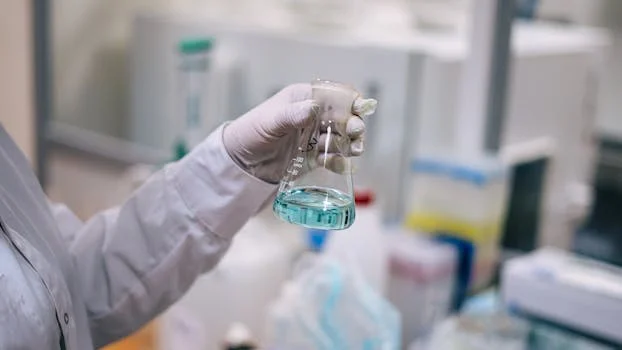
Ozone disinfection achieves a 5-log virus inactivation at a CT value of 4–6 minutes with a dosage of 8–10 mg/L, making it the most potent oxidant for neutralizing pharmaceutical residuals in hospital sewage. However, this potency comes at a high energy cost. Ozone generation requires approximately 7 kWh per kilogram of O₃ produced. For a hospital treating 100 m³/day, the power draw for the ozone system alone can become a significant portion of the OPEX. Ozone has no residual effect, meaning if the effluent sits in a holding tank, regrowth can occur. This is why many consulting engineers prefer a compact ozone-based hospital wastewater unit for direct discharge but look elsewhere for reuse applications.
Chlorine dioxide (ClO₂) presents a more balanced profile for 10-year lifecycle costs. Unlike traditional sodium hypochlorite, ClO₂ does not react with organic matter to form trihalomethanes (THMs). While hypochlorite can produce 35 µg/L or more of THMs, ClO₂ produces virtually 0 % trihalomethanes, which is critical for meeting strict EU environmental standards. The energy efficiency of on-site generation is also superior; electrolytic chlorine dioxide generators consume only 0.8 kWh per kg of ClO₂. Maintenance is predictable, with high-quality electrolytic cells requiring electrode replacement every 8,000 hours. For a technical deep-dive into these chemistries, engineers should review side-by-side data on Cl₂ vs ClO₂ oxidation power to determine which fits their infection control committee's risk profile.
| Metric | Ozone (O₃) | Chlorine Dioxide (ClO₂) | Sodium Hypochlorite |
|---|---|---|---|
| Energy (per kg) | ~7.0 kWh | ~0.8 kWh | Negligible (purchased) |
| CT Value (Typical) | 5 min @ 10 mg/L | 30 min @ 0.3 mg/L | 30 min @ 2.0 mg/L |
| THM Formation | None | <1 µg/L | 30–100 µg/L |
| Residual Life | <20 minutes | Up to 48 hours | Up to 72 hours |
CAPEX vs OPEX: 10-year cost model for a 50-bed hospital
The total cost of ownership for a 50-bed hospital wastewater system is dominated by power consumption and membrane replacement, not the initial purchase price. For a facility producing 50 m³/day, the CAPEX for an underground A/O system typically ranges from $1.2M to $1.5M. An MBR membrane bioreactor for near-reuse effluent quality commands a premium price of $1.6M to $2.0M. The justification for the higher MBR price point lies in the elimination of secondary clarifiers and the ability to meet ultra-low turbidity requirements for water recycling. (HydropureWater field data, 2025).
Operating expenses (OPEX) reveal a different story. MBR systems consume approximately 1.8 kWh/m³ due to the high-pressure air required for membrane scouring to prevent fouling. Standard A/O systems are more economical at 1.1 kWh/m³. At a 2024 US industrial tariff of $0.08/kWh, the annual power cost difference for a 50 m³/day plant is roughly $1,022. However, the largest "hidden" cost is membrane replacement. Modern PVDF flat-sheet membranes have a lifespan of 7–10 years, adding an amortized cost of $0.04/m³ to the lifecycle model. Sludge disposal also remains a constant: expect 0.3 kg of dry solids (DS) per m³ treated, with disposal costs averaging $120 per ton of DS.
"When defending the 10-year budget to finance, emphasize that the $400k CAPEX premium for MBR is offset by a 40% reduction in footprint and the avoidance of municipal sewer surcharges, which can exceed $2.50/m³ for high-strength medical waste."
Spec checklist for tender documents
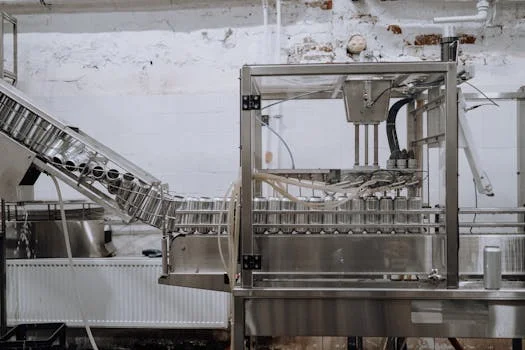
Healthcare wastewater systems must feature NSF 61-listed wetted parts to prevent chemical leaching into the treatment stream. The SCADA system must be capable of real-time monitoring and logging of CT values (Concentration × Time), Oxidation-Reduction Potential (ORP), and residual disinfectant levels to prove compliance during local authority audits. To ensure bidders provide comparable quotes that meet 2025 safety standards, tender documents must include specific copy-paste language regarding material quality and automation. Vague specifications lead to "race-to-the-bottom" bidding where manufacturers strip out essential sensors to lower CAPEX.
- Material Standards: All internal piping must be Schedule 80 PVC or 316L Stainless Steel; tanks must be coated with epoxy resin ≥300µm.
- Automation: SCADA integration via Modbus TCP/IP with a minimum 10-inch HMI; data logging must store 365 days of disinfection parameters.
- Warranty: Mandate a 2-year full-coverage warranty on all mechanical/electrical components and a 5-year pro-rata warranty on MBR membrane modules.
- Validation: Mandatory Factory Acceptance Test (FAT) using synthetic sewage to verify 99.9% kill rate before shipment.
- Redundancy: Dual-feed chemical pumps and 2x100% capacity blowers to ensure zero-downtime operation during maintenance.
Frequently Asked Questions
What is the minimum kill rate required for hospital sewage?
Most regulations, including EPA 40 CFR 133, require a minimum of 99.9% inactivation of fecal coliforms. For infectious disease wards, local permits may require "zero detection" or <3 MPN/L. Achieving this usually requires an ozone CT of 6 or a ClO₂ concentration of 0.5 mg/L.
How much space does a 100-bed hospital wastewater system need?
A 100-bed hospital typically generates 100–150 m³/day. An underground WS