Industrial wastewater treatment in Los Angeles means matching on-site pretreatment to sewer authority limits, surcharge triggers, and your waste profile. Most plants need a discharge permit, self-monitoring, and equipment that holds pH, TSS, BOD/COD, and FOG inside permit and surcharge thresholds.
Los Angeles Industrial Wastewater Regulations You Must Follow
Industrial dischargers to LACSD sewers must hold an Industrial Wastewater Discharge Permit so effluent does not damage pipes or upset downstream plants. Applications go to the Industrial Waste Section at [email protected] or (626) 458-3517. Local limits and high-strength fees often exceed pretreatment capital within a few billing cycles if untreated FOG or solids keep flowing.
The LACSD pretreatment program centers on pH, Total Suspended Solids (TSS), and Biochemical Oxygen Demand (BOD). LACSD enforces a pH range between 5 and 9; effluent outside that window can corrode concrete sewer lines. The district sets a baseline threshold for TSS at 300 mg/L and BOD5 at 340 mg/L. Discharge above these benchmarks is often still allowed, but it triggers the LACSD Surcharge Program, which recovers extra treatment cost for high-strength waste.
For many facilities, surcharge cost over a 24-month period often exceeds the capital needed for a complete 2025 EPA industrial effluent limits and technology guide level upgrade. Non-compliance with categorical standards (metal finishing, centralized waste treatment, and similar categories) can bring daily fines exceeding $1,000 per violation. Plants must use the Online Reporting System (IWFORS) to file self-monitoring reports that show on-site pretreatment stays inside permit limits.
Common Industrial Wastewater Streams in the LA Basin
Food processors in Vernon and the City of Industry generate high-BOD wastewater rich in fats, oils, and grease (FOG). Typical raw effluent from meat packing or dairy work shows Chemical Oxygen Demand (COD) between 1,500 and 5,000 mg/L (HydropureWater field data, 2025). Without pretreatment, those loads drive surcharges and grease caps in laterals, which bring emergency plumbing cost and citations.
Metalworking and manufacturing streams carry emulsified oils, coolants, and heavy metal particulates. These wastes usually need chemical precipitation and physical separation to remove zinc, copper, or chrome before sewer discharge. The process goal is to break oil-water emulsions so hydrocarbons do not upset municipal biology. Missed metals or oils can cause pass-through and state-level NPDES penalties.
Textile, chemical, and pharmaceutical plants produce dyes, toxic organics, or persistent contaminants. High-salinity effluent and volatile organic compounds (VOCs) often need advanced oxidation or membrane separation. Biotech labs usually target ultra-low TSS and no active biological agents or pharmaceutical ingredients in the discharge. Map the waste first—organic load (BOD), solids (TSS), or chemical toxicity—then size the train.
How DAF Systems Treat Industrial Wastewater in LA Facilities
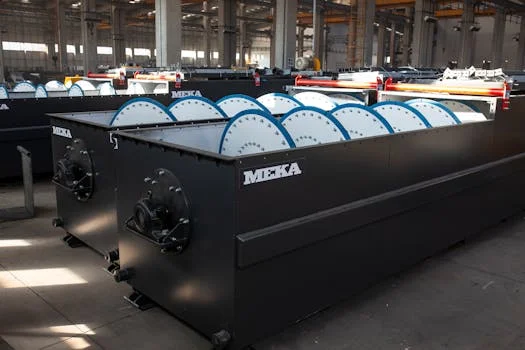
Dissolved Air Flotation (DAF) removes 90–97% of suspended solids and FOG when micro-bubbles attach to particles and float them for skimming. Food processors and laundries use DAF because it cuts the TSS and FOG loads that drive the highest LACSD surcharges. Most plants we size for FOG-heavy food waste see payback from surcharge savings in about 18 to 36 months when influent solids stay consistently high.
The high-efficiency DAF system for FOG and TSS removal handles industrial flows from 4 m³/h to over 300 m³/h. Units combine coagulant dosing (alum or similar) and polymer flocculation so emulsified oils form flocs the bubbles can lift. Automated dosing matters when production shifts hour to hour, because effluent consistency depends on matching chemical dose to load.
Space is scarce in LA industrial zones. Compact DAF packages can treat about 50 gallons per minute (GPM) in roughly 2 m by 4 m, which fits parking pads or utility rooms without a major building add-on. Versus gravity clarifiers, DAF runs a higher overflow rate, so more water is treated in a smaller tank. For separator selection detail, compare a DAF vs API separator performance and cost analysis.
MBR Systems for High-Quality Effluent and Water Reuse
Membrane Bioreactor (MBR) systems combine biological treatment with 0.1 μm membrane filtration and typically deliver TSS below 5 mg/L with COD under 50 mg/L under stable industrial operation. That quality exceeds basic LACSD pretreatment needs and supports reuse for cooling towers, boiler feed, or irrigation in drought-constrained Southern California.
A compact MBR system for high-quality effluent and reuse needs about 60% less footprint than conventional activated sludge because secondary clarifiers are removed. Membranes replace gravity settling, so Mixed Liquor Suspended Solids (MLSS) can run higher and high-strength organics are treated in less tank volume.
DF series MBR modules fit dense LA sites when energy use is controlled. Older cross-flow MBRs drew heavy power; modern flat-sheet or hollow-fiber designs with tuned aeration often cut energy by 10–20× versus those older layouts. As regional reuse programs expand, plants already running MBR are better placed for tighter nitrogen, phosphorus, or recycle mandates.
DAF vs MBR: Which System Is Right for Your LA Facility?
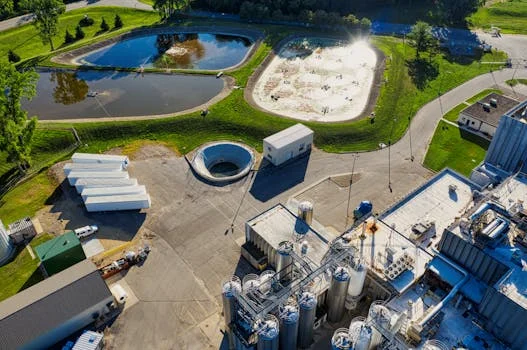
DAF versus MBR selection turns on discharge goals and influent chemistry. DAF is a physical-chemical step best for high-solids, FOG-heavy streams when the main goal is staying near the LACSD 300 mg/L TSS surcharge threshold. Relative CAPEX is typically 30–50% lower than MBR, and DAF tolerates shock loads common in food processing and rendering.
MBR is a biological-membrane train for soluble organics when ultra-clean effluent or reuse is required. Pharma, electronics, and beverage plants that need very low BOD often choose MBR despite higher OPEX from CIP cleaning and aeration. For mixed streams, many engineers specify DAF as a roughing stage for FOG and bulk solids, then MBR for polishing.
| Parameter | DAF (Dissolved Air Flotation) | MBR (Membrane Bioreactor) |
|---|---|---|
| Primary Target | TSS, FOG, Insoluble BOD | Soluble BOD, COD, Nitrogen |
| TSS Removal Efficiency | 90–97% | >99.9% (Effluent < 5 mg/L) |
| Footprint | Small (Requires chemical storage) | Very Small (No clarifier needed) |
| CAPEX (Relative) | Lower ($) | Higher ($$$) |
| Best Use Case | Food processing, Laundries, Oil/Gas | Pharma, Biotech, Water Reuse |
| Maintenance | Mechanical (Skimmers/Pumps) | Chemical (Membrane cleaning) |
Total Cost of Ownership decides more than sticker price. A lower-CAPEX DAF still leaves surcharges if soluble BOD stays high. An MBR may erase strength fees and cut purchased water through reuse. Rank decisions as: hard permit limits first, surcharge ROI second, then California reuse pressure through 2030.
Selection Checklist and Cost Drivers
Use this short checklist before you freeze a process train:
- Confirm sewer authority: LACSD districts versus City of LA Bureau of Sanitation service area.
- List permit and categorical limits for pH, metals, FOG, and organics.
- Measure average and peak TSS, BOD/COD, and FOG at production highs.
- Model surcharge exposure at TSS 300 mg/L and BOD5 340 mg/L baselines.
- Check footprint for equalization, chemical storage, and solids handling.
- Decide reuse goals: sewer-only pretreatment versus cooling/irrigation recycle.
- Budget OPEX for chemicals, sludge disposal, membrane CIP, and power.
Who this is for: plant engineers and EHS managers sizing pretreatment for food, metal, textile, or pharma discharge to LA County sewers. Who should look elsewhere: sites seeking only municipal drinking-water plants or stormwater-only BMPs. Next step: share flow, lab data, and permit limits for a scoped DAF or MBR quote matched to your surcharge and reuse targets.
Frequently Asked Questions
What is the industrial wastewater discharge permit process in LA?
You apply to LACSD or the City of LA Bureau of Sanitation based on sewer jurisdiction. The package describes processes, water use, and expected pollutants. After review, the authority issues permit limits and monitoring rules. Contact [email protected] or (626) 458-3517 to start IWFORS reporting once the permit path is clear.
How much does a DAF system cost for a 50 m³/h food plant?
Typical CAPEX for a high-quality DAF at about 50 m³/h is $80,000 to $150,000, depending on automation and equalization. Lead time is generally 6–8 weeks for standard models. Add chemical systems, sludge handling, and installation when you compare bids. Surcharge savings often drive payback when FOG and TSS stay high.
Can MBR systems meet LA surcharge thresholds for TSS and BOD?
Yes. MBR effluent typically reaches TSS < 5 mg/L and BOD < 10 mg/L under stable operation. Those values sit well below LACSD surcharge thresholds of 300 mg/L TSS and 340 mg/L BOD5. Strength-based fees usually drop sharply when the membrane barrier holds. Confirm sampling points match your permit.
Do I need chemical dosing with a DAF system?
Yes in almost all industrial applications. Coagulants such as ferric chloride and flocculant polymers bind fine solids and emulsified oils into flocs that bubbles can lift. Micro-bubbles then raise those flocs for skimming. Without dosing, emulsified FOG often passes and surcharge exposure remains high.
Is onsite pretreatment mandatory for LA industrial dischargers?
Onsite pretreatment is mandatory when raw discharge exceeds LACSD local limits or federal categorical standards. Even when not strictly mandatory, pretreatment is often the lower-cost path once surcharge, plumbing risk, and violation exposure are totaled over 12–24 months. Gravity interceptors are a common minimum; DAF or MBR follows when FOG, metals, or soluble organics stay high.