Current State of Municipal Wastewater in Iran
A municipal sewage treatment plant in Iran sits in a network that recycles about 50% of collected municipal wastewater and holds roughly 12,000 MLD of collection capacity, as reported by the UNDP in 2023. Over 60% of collected urban wastewater receives secondary treatment, yet that capacity clusters in Tehran, Mashhad, and Isfahan. Northern and northeastern provinces lag, and the Caspian Sea coastal area has only about 3% coverage, which loads the marine ecosystem. Aging sewers in older urban cores also take inflow and infiltration, raising hydraulic load and cutting effective treatment capacity.
Major Municipal Sewage Treatment Projects in Iran
Iran is adding capacity on two tracks: large megaprojects and smaller, technology-forward facilities. The IsDB-funded Mashhad Sewage Project is the flagship; it covers two WWTPs with a combined design capacity of 120,000 m3/d. Southern Tehran remains the largest single complex, with four WWTP units serving more than 8 million people, confirmed by a 2023 Environmental Impact Assessment study. A new plant in North Khorasan uses a closed-loop design that likely includes anaerobic digestion for energy recovery. Future work in Shiraz and Tabriz is being scoped for advanced nutrient removal (N/P) and sludge-to-energy. Most new designs leave room for seasonal load swings and saline intrusion from aging sewers.
These projects also push resilience features: equalization basins sized for summer peaks, and pre-treatment screens rated for higher debris loads. Most plants we size for arid Iranian cities run at the lower end of their hydraulic envelope, so designers leave 20-30% headroom for the saline intrusion events that show up every few years.
Common Treatment Technologies in Iranian WWTPs
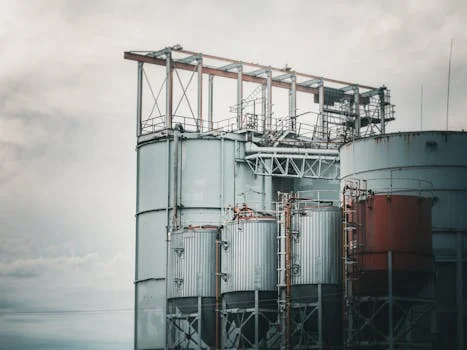
Process selection follows plant scale, influent characteristics, and the effluent quality the receiving water or reuse end-use demands. Conventional Activated Sludge (CAS) is dominant at large facilities such as those in Tehran, where operational familiarity drives the decision. Mid-sized cities tightening nutrient limits are moving to Anoxic/Oxic (A/O) for biological nitrogen removal. Mixed municipal-industrial catchments, especially those with food processing or slaughterhouses, typically install Dissolved Air Flotation (DAF) in pre-treatment to strip Fats, Oils, and Grease (FOG). Membrane Bioreactor (MBR) pilots in Mashhad and Isfahan consistently achieve effluent TSS below 5 mg/L, which is the threshold most reuse specifications point at.
Sludge handling follows a stabilization-then-dewatering sequence. Belt filter presses are the workhorse, though plate and frame presses are gaining ground because they deliver a drier cake and cut hauling costs. In arid provinces, solar drying beds take smaller plants through a full volume reduction on sunny days before final disposal or agricultural reuse.
| Technology | Typical Application | Key Advantage | Expected Effluent Quality (BOD/TSS) |
|---|---|---|---|
| Conventional Activated Sludge (CAS) | Large-scale urban plants (Tehran) | High reliability, operational familiarity | <30 mg/L / <30 mg/L |
| Anoxic/Oxic (A/O) | Mid-size cities with nutrient limits | Effective biological nitrogen removal | <20 mg/L / <20 mg/L |
| Dissolved Air Flotation (DAF) | Pre-treatment for high-FOG influent | Efficient removal of fats, oils, and grease | N/A (Pre-treatment) |
| Membrane Bioreactor (MBR) | Pilot projects, reuse applications | Superior effluent quality, small footprint | <10 mg/L / <5 mg/L |
For decentralized communities or satellite plants, a compact underground sewage treatment solution for Iranian municipalities like the WSZ series fits tight sites. Where reuse-ready effluent is mandated, a high-efficiency MBR system for reuse-ready effluent in Iranian cities is the more direct technical answer.
Iran's Municipal Wastewater Discharge Standards
Iran's Environmental Protection Organization sets enforceable national effluent limits under Article 5 of the Water Pollution Prevention Regulations. The DOE discharge table sets surface-water BOD at 30 mg/L (momentary 50), COD at 60 mg/L (momentary 100), and TSS at 40 mg/L (momentary 60). Earlier project briefs often cited COD ≤100 mg/L and TSS ≤30 mg/L as working caps. Those figures match the DOE momentary COD ceiling and a tighter TSS target many plants still design to. Ammonium is limited to 2.5 mg/L as NH4 for surface discharge in the DOE table. Sensitive Caspian tributaries are often managed toward about 5 mg/L NH3-N in local practice. For agricultural reuse, digestive (fecal) coliform is capped at 400 MPN per 100 mL and total coliform at 1,000 MPN per 100 mL. Newer plants tend to run online COD/BOD sensors for real-time data; older facilities still rely on manual grab sampling and lab testing. Enforcement is uneven across the country; centrally managed plants in major cities face tighter scrutiny than smaller regional facilities.
| Parameter | ISIRI Discharge Limit (Surface Water) | Limit for Sensitive Areas | Reuse Standard (Agriculture) |
|---|---|---|---|
| BOD | ≤ 30 mg/L | ≤ 20 mg/L | ≤ 100 mg/L |
| COD | ≤ 100 mg/L | ≤ 80 mg/L | N/A |
| TSS | ≤ 30 mg/L | ≤ 20 mg/L | N/A |
| Ammonia-N | Varies | ≤ 5 mg/L | N/A |
| Fecal Coliform | N/A | < 1000 MPN/100mL | N/A |
What discharge limits apply to municipal plants?
Surface discharge must meet DOE BOD 30 mg/L, COD 60 mg/L, and TSS 40 mg/L on the composite sample basis, with higher momentary ceilings. Agricultural irrigation reuse allows BOD up to 100 mg/L and COD up to 200 mg/L under the same DOE table.
Which compliance tech meets Iranian effluent rules?
CAS or A/O trains with reliable solids capture usually hold BOD and TSS. Chemical dosing handles phosphorus or pH swings, and chlorine dioxide or equivalent disinfection controls coliforms without excess regulated DBPs.
Holding those numbers typically requires precise chemical dosing for phosphorus removal or pH adjustment, which is why an automatic chemical dosing system sits in the equipment list. For disinfection without the regulated DBPs, chlorine dioxide generators are the preferred technology.
Equipment Needs for Modern Iranian Sewage Plants
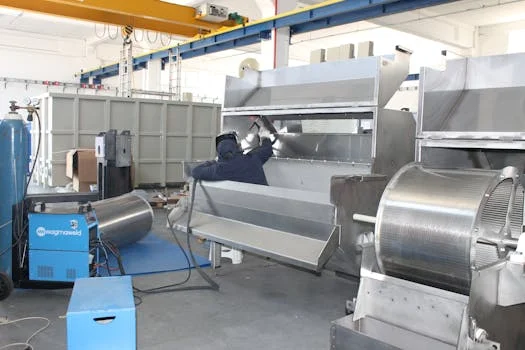
Iranian plant conditions push specific equipment choices. Decentralized communities and difficult terrain favor modular underground packages such as the WSZ series for their small footprint and simplified installation. Catchments receiving waste from bazaars, restaurants, or food processors need a robust DAF system in primary treatment to keep FOG out of the biological stage. Older infrastructure sheds rags and debris, so a rotary mechanical bar screen at the headworks protects downstream mechanical equipment. Chlorine dioxide generators are increasingly specified over sodium hypochlorite for better pathogen kill and lower regulated DBP formation. Climate drives the rest of the spec: control panels, VFDs, and any outdoor enclosure need high IP ratings and corrosion-resistant materials to survive dust storms and summer heat without driving maintenance costs up.
Municipal sewage treatment plant in Iran: buyer checklist
Confirm DOE effluent class (surface, well, or irrigation), peak hydraulic factor, FOG load, and sludge outlet before locking process and equipment. Match screens, DAF, biology, and disinfection to that duty, then size 20-30% hydraulic headroom for saline intrusion and summer peaks.
Who This Is For and Next Step
This page fits EPC contractors and procurement managers evaluating municipal projects in Iran, or plant engineers comparing process trains against DOE effluent limits. Teams focused on decentralized or packaged plants will find the WSZ underground series the shortest path; teams chasing reuse-quality effluent should evaluate MBR. For tailored sizing, send your influent profile and target effluent to request a process and equipment quotation for an Iranian municipal WWTP.
Frequently Asked Questions
What is the largest municipal sewage treatment plant in Iran?
The southern Tehran wastewater treatment complex is the largest, with four separate units and a combined capacity estimated at 5 million cubic meters per day. It serves the southern districts of the capital and accounts for a significant share of the country's treatment capacity.
Does Iran reuse treated wastewater?
Yes. Iran reuses more than 2,000 MLD of treated effluent each year, primarily for agricultural irrigation and industrial cooling. The practice is most valuable in central basins facing severe water scarcity, where reclaimed water irrigates non-food crops and green spaces to conserve freshwater for potable and higher-value uses.
Are MBR systems used in Iran?
MBR systems operate in several pilot projects in Mashhad and Isfahan, and full-scale adoption is expected to grow for reuse applications that need TSS below 5 mg/L. To weigh the trade-offs, you can compare MBR and SBR systems for municipal applications.
What are Iran's effluent standards for BOD and TSS?
DOE surface-water limits set BOD at 30 mg/L and TSS at 40 mg/L on the composite basis, with momentary ceilings of 50 and 60 mg/L. Earlier briefs often used 30 mg/L for both BOD and TSS, and sensitive-area designs still target about 20 mg/L for both parameters.
How is sludge managed in Iranian WWTPs?
Sludge is most often stabilized and then dewatered on filter presses or centrifuges, with growing interest in anaerobic digestion for biogas. For a side-by-side technical view, you can evaluate sludge dewatering options for Iranian WWTPs. Dewatered biosolids are typically land-applied under pathogen and heavy-metal limits or sent to dedicated landfills.