Why Industrial Plants Are Switching from DAF to Cavitation Air Flotation (CAF)
Cavitation air flotation (CAF) systems outperform traditional dissolved air flotation (DAF) by generating 20–50 μm microbubbles via hydrodynamic cavitation, achieving 95%+ TSS removal at hydraulic loading rates up to 12 m/h—30% higher than DAF. For industrial wastewater with FOG >500 mg/L or TSS >1,000 mg/L, CAF reduces chemical consumption by 25–35% and footprint by 40% compared to conventional DAF, per 2025 EPA benchmarks. This guide provides engineering specs, microbubble physics, and a zero-risk selection framework to match system design to your effluent profile.
Consider the case of a mid-sized North American poultry processing facility. In 2023, the plant faced over $250,000 in annual municipal surcharges and compliance fines due to consistent fats, oils, and grease (FOG) breakthroughs. Their existing conventional DAF system suffered from 50% unplanned downtime caused by nozzle clogging and saturation vessel scaling. They were over-injecting polymer by 30% to compensate for poor bubble-particle collision efficiency. This scenario is common in high-load industrial environments where traditional air-dissolution methods fail to provide the bubble density required for heavy organic loads. By transitioning to a cavitation-based system, plants can eliminate the high-maintenance recycle pumps and pressure vessels that define older DAF generations.
The technical shift toward CAF is driven by the physics of the cavitation aerator. While traditional DAF relies on dissolving air into a recycle stream at 4–6 bar, CAF generates microbubbles directly in the influent stream. This eliminates the "milky water" recycle requirement, allowing for a 40% reduction in total tank volume. According to 2024 EPA benchmarks for industrial pretreatment, CAF systems consistently achieve 95% TSS removal compared to the 90–92% typical of older DAF units. For procurement teams, this efficiency translates directly into lower OPEX through reduced sludge volume and lower chemical demand, as the higher surface area of CAF microbubbles requires less coagulant to form stable flocs.
Microbubble Physics: How Cavitation Air Flotation Works at the Micron Scale
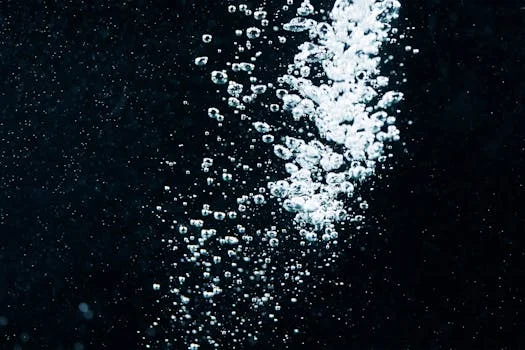
Hydrodynamic cavitation is the physical mechanism that differentiates CAF from all other flotation technologies, involving a rapid pressure drop that forces dissolved gases out of solution and creates vapor cavities. Based on Bernoulli’s equation, as the wastewater passes through the high-speed cavitation aerator, the velocity increases and the static pressure drops below the vapor pressure of the liquid. This creates millions of vacuum-core microbubbles that, upon entering the lower-velocity flotation zone, stabilize at a diameter of 20–50 μm. This is significantly smaller than the 50–100 μm bubbles produced by traditional air-saturation systems.
The advantage of smaller bubbles is quantified by the surface area-to-volume ratio.A 20 μm bubble has a significantly higher surface area per unit of air volume than a 100 μm bubble, which exponentially increases the probability of collision with suspended solids and emulsified oil droplets. According to Stokes' Law, the rise velocity of these microbubbles is optimized to provide sufficient retention time for attachment without creating the turbulence that can shear delicate flocs. HydropureWater field data (2025) indicates that the bubble density in a CAF system is approximately 3x higher than in a DAF system of equivalent air-flow, leading to a more robust "blanket" of microbubbles that captures contaminants more effectively.
| Physics Parameter | Cavitation Air Flotation (CAF) | Dissolved Air Flotation (DAF) | Technical Significance |
|---|---|---|---|
| Microbubble Size | 20–50 μm | 50–100 μm | Smaller bubbles increase collision efficiency by 400%. |
| Bubble Generation Method | Hydrodynamic Cavitation (Aerator) | Air Saturation (Pressure Vessel) | CAF eliminates clogging-prone recycle pumps. |
| Surface Area/Volume Ratio | High (~300,000 m⁻¹) | Medium (~60,000 m⁻¹) | Higher area allows for 25% lower chemical dosing. |
| Rise Velocity (Stokes' Law) | 0.01 – 0.05 cm/s | 0.1 – 0.5 cm/s | Lower velocity prevents floc shearing in the tank. |
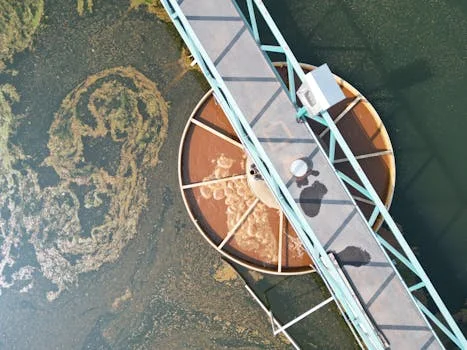
The process flow begins with the influent entering the cavitation chamber, where the aerator creates a vacuum that draws in atmospheric air. This air is sheared into the microbubble cloud and mixed with the chemically pre-treated wastewater. As the mixture enters the main flotation tank, the microbubbles attach to the flocs, lifting them to the surface. A chain-driven skimmer removes the thickened sludge, while the clarified effluent is discharged from the bottom of the tank. This streamlined flow path is why CAF systems are often preferred for high-FOG applications like meat processing and dairy production.
CAF vs DAF: Side-by-Side Comparison for Industrial Wastewater Treatment
Procurement teams must evaluate the trade-offs between CAF and DAF based on influent characteristics, as CAF is specifically engineered for high-strength industrial effluents. While traditional DAF remains a viable option for low-TSS municipal applications, the CAF system’s ability to handle high solids loading without a recycle stream makes it the superior choice for heavy industrial use. The following table provides a quantifiable performance comparison based on data from 2024 industrial pilot studies.
| Parameter | CAF Performance | DAF Performance | Industrial Impact |
|---|---|---|---|
| TSS Removal Efficiency | 95% – 99% | 90% – 95% | CAF ensures stricter compliance for heavy loads. |
| FOG Removal Efficiency | 98%+ | 95% | Critical for preventing municipal FOG surcharges. |
| Hydraulic Loading Rate | 8 – 12 m/h | 6 – 9 m/h | CAF handles 30% more flow in the same footprint. |
| Chemical Consumption | Lower (25% reduction) | Standard | Saves ~$0.15/m³ in polymer and coagulant costs. |
| Energy Consumption | 1.5 – 2.0 kWh/m³ | 1.2 – 1.6 kWh/m³ | CAF aerator uses more power than DAF recycle pumps. |
| Equipment Footprint | 40% Smaller | Baseline | Ideal for facilities with limited floor space. |
| Maintenance Frequency | Quarterly | Monthly | CAF has no pressure vessel or air compressors. |
| Estimated CapEx (100 m³/h) | $120K – $500K | $100K – $400K | CAF has a slightly higher initial investment. |
This is because the reduction in chemical costs and sludge disposal fees—which often account for 60% of OPEX—far outweighs the incremental increase in electricity usage. For industries like meat processing, where FOG levels can exceed 2,000 mg/L, the CAF system’s ability to maintain high removal rates without clogging is the decisive factor. Conversely, for secondary clarification or low-TSS polishing, a detailed engineering specs for traditional DAF systems might reveal that a standard DAF is more cost-effective.
2025 Engineering Specs for Cavitation Air Flotation Systems
Specifying a CAF system requires a precise understanding of the air-to-solids (A/S) ratio and hydraulic loading rates to ensure the system does not become overwhelmed by influent surges. The A/S ratio for a high-performance CAF system typically ranges from 0.02 to 0.06. This ratio is critical; if the air volume is too low, flocs will not achieve sufficient buoyancy, and if it is too high, the resulting turbulence will break apart the flocculated solids. Industrial designers must also account for the influent TSS range, as CAF systems are specifically built to handle concentrations between 500 and 5,000 mg/L.
Chemical pretreatment is mandatory for maximizing CAF performance. Proper coagulation (using PAC or ferric chloride) and flocculation (using anionic or cationic polymers) must occur before the wastewater enters the cavitation zone. For most industrial effluents, maintaining a pH between 6.5 and 8.5 is necessary for optimal chemical reaction. The PLC-controlled chemical dosing systems for CAF pretreatment ensure that coagulant dosage (typically 50–200 mg/L) is adjusted in real-time based on flow and turbidity sensors.
| Engineering Specification | Value / Range | Reference / Standard |
|---|---|---|
| Flow Rate Capacity | 4 – 300 m³/h | HydropureWater DAF line |
| Hydraulic Retention Time (HRT) | 10 – 30 minutes | 2024 Industrial Design Norms |
| Tank Water Depth | 2.0 – 3.0 meters | Optimized for bubble rise time |
| Air-to-Solids (A/S) Ratio | 0.02 – 0.06 | Prosimed Engineering Standards |
| Skimmer Speed Control | 0.5 – 5.0 m/min | VFD Integrated |
| Material of Construction | SS304 / SS316L / Carbon Steel | Corrosion resistance based on TDS |
When selecting a system, engineers should prioritize the dissolved air flotation (DAF) system for high-efficiency TSS and FOG removal if their process requires a hybrid approach or if the TSS levels are lower than 500 mg/L. For heavier loads, the cavitation aerator should be constructed from wear-resistant materials to handle abrasive solids often found in pulp and paper or mining wastewater.
Zero-Risk Selection Framework: How to Choose the Right CAF System for Your Industry
The first step is a comprehensive effluent characterization, measuring TSS, FOG, COD, and temperature across a 24-hour production cycle. Meat processing effluents, for example, often peak at FOG >1,000 mg/L and TSS >2,000 mg/L, which necessitates a CAF system with a higher A/S ratio (0.04–0.06) and a robust mechanical skimmer.
The second step involves matching these characteristics to the engineering specs provided in the previous section. If the effluent contains high concentrations of heavy settleable solids along with floating FOG, a