Bahrain's sewage treatment equipment market in 2026 spans DAF flotation, MBR membrane plants, underground package systems and RO trains, specified for influent carrying TDS 35,000–45,000 mg/L. Any sewage treatment equipment supplier in Bahrain must document performance against that salinity, against Law No. 21/1996 discharge limits, and against 50°C summer peaks. Budgets run from BD 500K–3M for systems handling 50–500 m³/h, and this guide compares the technologies, the 2026 cost benchmarks, and a five-check vetting method.
Bahrain Sewage Treatment Equipment in 2026: The Direct Answer
Choose the technology before the vendor: DAF for FOG-heavy industrial streams, MBR where effluent must reach <10 mg/L BOD for reuse, underground WSZ plants where land is scarce, and RO where TDS exceeds 35,000 mg/L. Then hold every candidate to the five field checks in this guide.
Bahrain's supply market remains fragmented, and specifications vary widely between bidders. MBR configurations deliver <10 mg/L BOD effluent, meeting WHO reuse standards, at roughly 30% higher CAPEX than comparable DAF installations. Municipal buyers weighing footprint often select underground WSZ plants, which combine A/O biological treatment with sedimentation in a single buried unit. That compactness matters where Bahrain's urban land is scarce.
Why Bahrain's Sewage Conditions Demand Custom Treatment Equipment
Bahrain's wastewater carries TDS of 35,000–45,000 mg/L because of seawater intrusion into the sewer network. That salinity, plus petrochemical and heavy-metal contaminants from industry, defeats off-the-shelf equipment engineered for temperate, low-salinity influent. IWS Bahrain notes that roughly 60% of household water in the Kingdom becomes greywater. Mixed with industrial discharges and brackish groundwater, it forms a complex influent matrix that no standard catalogue unit treats unaided.
The Muharraq island network shows how engineered the Kingdom's answers must be. Its concession is a 29-year Public-Private Partnership signed with the Ministry of Works in 2011, and operation runs from 2014 until 2040, according to Muharraq STP Company. The island serves approximately 260,000 people through one discrete sewerage catchment and a single treatment works. The plant's published inflow statistics record a commissioning flow of 55,000 m3/day in April 2014, rising as additional catchment areas were connected.
Treated effluent in Bahrain must meet WHO-aligned standards, typically <10 mg/L BOD and <1 mg/L ammonia, to avoid penalties under Law No. 21/1996. Vendors such as Pure Aqua identify compliance as a primary driver of technology selection in the Gulf market. Missing those limits invites fines, mandatory upgrades and shutdown orders, all of which escalate project cost faster than any equipment saving.
Urban industrial zones such as Sitra and Hidd face acute space limits that rule out sprawling conventional plants. Compact and modular designs, including buried WSZ units, become mandatory rather than optional there. Integrating several treatment stages underground frees surface land for production or public use.
A 2024 case at a petrochemical plant in Sitra shows the payoff of matching technology to influent. The influent carried 250 mg/L BOD, 500 mg/L COD and 150 mg/L oil and grease. A tailored DAF stage removed over 95% of the oil and grease, letting the downstream RO train finish at <5 mg/L BOD and <10 mg/L COD. That DAF-plus-RO configuration cut CAPEX by 25% compared with a standalone MBR quote, while meeting non-potable reuse limits.
Sewage Treatment Equipment Types for Bahrain: Head-to-Head Specs and Use Cases
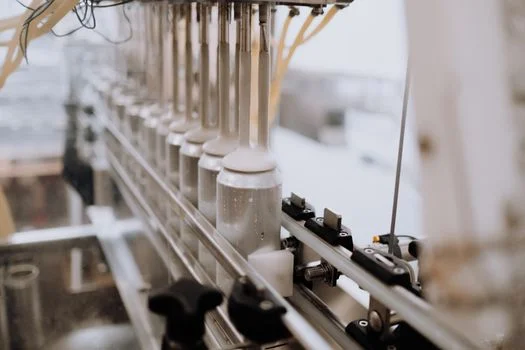
Selecting sewage treatment equipment in Bahrain means matching system capability to influent chemistry, site area and budget. Each technology below trades cost, effluent quality and footprint differently for industrial and municipal duty. The comparison matters most for petrochemical wastewater treatment in Bahrain, where FOG and salinity coincide. Spec sheets from temperate markets routinely overpromise here, so treat every figure below as a Bahrain-adjusted starting point.
DAF Systems
High-efficiency DAF units target influents rich in fats, oils and grease. That makes them the default first stage for food processing and several petrochemical operations. They achieve 92–97% TSS removal across flow rates of 4 to 300 m³/h (HydropureWater specs). Chemical dosing of coagulants and flocculants absorbs 10–15% of OPEX, yet CAPEX still lands roughly 30% below an MBR of equal capacity.
MBR Systems
MBR plants pair biological treatment with membrane separation at <1 μm, delivering near-reuse-quality effluent. HydropureWater compact units suit hospitals, residential complexes and any project targeting reuse. The membrane and aeration load lift energy use about 20% and CAPEX about 30% above DAF. In exchange, the effluent quality cuts downstream polishing or enables direct reuse, which is where Bahrain's water-stressed operating economics pay it back.
MBR vs DAF for Bahrain's High-Salinity Wastewater: Which Performs Better?
DAF wins on cost and FOG handling; MBR wins on effluent quality and footprint, and salinity stresses both differently. At TDS 35,000–45,000 mg/L, DAF flotation chemistry needs re-tuned dosing and corrosion-rated internals, but the process itself keeps working. MBR membranes tolerate salinity in the biology, yet fouling accelerates if oil or scalants break through, and cleaning chemical consumption rises. For high-salinity industrial streams, the practical pattern is DAF or ultrafiltration ahead of RO, with MBR reserved for municipal effluent destined for reuse.
Field rule: if the discharge permit only names BOD and TSS, DAF plus chemical dosing clears it for less. If the permit names reuse or nutrient limits, membranes earn their premium quickly. Most permit reviews we run for Bahrain industrial plots fall in the first group. The deciding data is your own influent lab report, not the vendor's reference list.
Underground WSZ Series
The WSZ underground integrated sewage treatment plants bury A/O biological treatment and sedimentation in one unit, removing the surface footprint entirely. Flows from 1 to 80 m³/h run under automated control with minimal on-site staffing (HydropureWater automation specs). Low noise and a hidden profile suit sensitive municipal and commercial neighbours.
When Does an Urban Bahrain Site Need an Underground Sewage Treatment Plant?
Any site where land value or space rules out above-ground tanks needs an underground plant. Muharraq island concentrates approximately 260,000 residents on a single small catchment, illustrating how dense Bahrain urbanism crowds conventional layouts. Buried units serve hotels, districts and industrial plots where excavation is cheaper than land purchase. Most Bahrain plots we size fall inside the 1 to 80 m³/h envelope of this class, at the lower end when retrofitting.
RO Systems
RO becomes mandatory once influent TDS exceeds 35,000 mg/L, the signature condition of Bahrain's seawater-intruded network. It produces potable or high-purity process water that no biological stage can match. Membranes foul quickly without robust pre-treatment such as DAF or ultrafiltration to strip solids, FOG and biology first. Pure Aqua's seawater RO experience underlines how strongly pre-treatment quality decides membrane life and efficiency.
To aid in the selection process, the following table provides a head-to-head comparison of these technologies:
| System Type | Influent Type | Effluent Quality | CAPEX Range (BD) | OPEX (BD/year) | Footprint | Bahrain-Specific Pros/Cons |
|---|---|---|---|---|---|---|
| DAF | High FOG, TSS, industrial (food, petrochemicals) | 92-97% TSS removal, pre-treatment for MBR/RO | 500K - 2M | 50K - 200K | Medium (above ground) | Pros: Lowest CAPEX, excellent for FOG. Cons: Requires chemical dosing, not for direct reuse. |
| MBR | Municipal, industrial, high BOD/COD | <10 mg/L BOD, <1 mg/L NH3, near-reuse quality | 700K - 3M | 70K - 250K | Compact (above ground) | Pros: High effluent quality, compact. Cons: Higher energy, higher CAPEX, membrane replacement. |
| Underground (WSZ Series) | Municipal, commercial, low-medium industrial | <10 mg/L BOD, <1 mg/L NH3, good for discharge | 600K - 2.5M | 60K - 220K | Very compact (buried) | Pros: Minimal footprint, automated, discreet. Cons: Higher civil works, limited flow rate. |
| RO | High TDS (>35,000 mg/L), brackish water | Potable, high-purity process water | 1M - 5M+ | 100K - 500K+ | Medium (requires pre-treatment) | Pros: Essential for high salinity, water reuse. Cons: High energy, requires extensive pre-treatment, membrane fouling risk. |
For full specifications, review the DAF machine for FOG removal and the MBR integrated wastewater treatment systems for reuse-grade effluent. Both anchor the cost rows in the comparison table above.
Space-constrained sites should shortlist the Underground Package Sewage Treatment Plant (WSZ Series) early in the study. It removes the land question before the tender opens.
2026 Cost Benchmarks for Sewage Treatment Plants in Bahrain: CAPEX, OPEX, and Hidden Costs
Accurate budgeting needs 2026 CAPEX and OPEX benchmarks plus the hidden costs that sink unprepared projects. At 100 m³/h, a DAF system runs near BD 900K, an MBR near BD 1.2M, and an underground WSZ plant near BD 1M. These three anchors frame every credible quotation a buyer will see.
Installation typically adds 10–15% of CAPEX, covering equipment assembly, piping and electrical work. Civil works run higher for buried systems: excavation, concrete structures and backfilling account for 20–30% of total CAPEX. Both figures are underestimated more often than any equipment line.
Energy drives 30–40% of OPEX at a wastewater plant in Bahrain. An MBR consumes 0.8–1.2 kWh/m³ against 0.3–0.5 kWh/m³ for DAF (HydropureWater energy specs). Chemicals claim another 15–20%, and membrane replacement 5–10%, with lifespans set by influent quality and cleaning discipline.
Bahrain's climate adds its own line items. Temperatures above 50°C and TDS of 35,000–45,000 mg/L make duplex stainless steel mandatory for critical components, adding 15–20% to equipment CAPEX. RO pre-treatment trains add BD 200K–400K to protect membranes from fouling, and compliance testing runs near BD 20K per year. Budget reviews that skip these three lines approve projects that cannot survive their first summer.
What Does a DAF System Cost in Bahrain in 2026?
A 100 m³/h DAF installation costs approximately BD 900K in equipment CAPEX, with BD 90,000–120,000 per year in OPEX. Budget 10–15% of CAPEX for installation and a further 10–15% of OPEX for coagulants and flocculants. Quotes far below that band usually mean thinner steel, smaller recycle pumps or no salinity-rated materials. Most quotes we review for the island also carry a duplex stainless option priced separately, so compare like with like.
The following table provides a detailed breakdown of 2026 cost benchmarks:
| System Type | CAPEX (BD) | OPEX (BD/year) | Energy Use (kWh/m³) | Chemical Use (kg/m³) | Membrane Lifespan (years) |
|---|---|---|---|---|---|
| DAF (100 m³/h) | 900,000 | 90,000 - 120,000 | 0.3 - 0.5 | 0.05 - 0.15 (coagulants/flocculants) | N/A |
| MBR (100 m³/h) | 1,200,000 | 120,000 - 180,000 | 0.8 - 1.2 | 0.01 - 0.05 (cleaning chemicals) | 5 - 7 |
| Underground WSZ (100 m³/h) | 1,000,000 | 100,000 - 150,000 | 0.6 - 1.0 | 0.02 - 0.08 (disinfectants) | N/A |
Deeper project-level budgeting belongs in our Wastewater Treatment Plant Cost in Bahrain 2026 guide, which expands each CAPEX line for industrial and municipal buyers. The OPEX columns above then complete the ten-year picture.
What CAPEX Should a Petrochemical Sewage Treatment Plant in Bahrain Carry?
The Sitra 2024 reference puts a DAF-plus-RO petrochemical train below a standalone MBR quote by 25% on CAPEX. The comparison table brackets the range: DAF at BD 500K–2M, RO at BD 1M–5M+, inside the BD 500K–3M band quoted for 50–500 m³/h projects. Heavy-metals pre-treatment to below 0.1 mg/L chromium adds instruments and dosing skids that petrochemical budgets must carry explicitly. Owners who skip that line meet it later as a retrofit at a premium.
Reverse Osmosis Pre-Treatment for Bahrain TDS 35000 mg/L Influent
RO feed at TDS above 35,000 mg/L fouls unless pre-treatment strips FOG, solids and organics first. DAF removes oil and grease ahead of the membranes, while ultrafiltration polishes particles down to sub-micron size. The 2024 Sitra train proved the sequence: DAF at 95% oil removal, then RO finishing at <5 mg/L BOD and <10 mg/L COD. Designing the RO stage itself is a discipline of its own; our Rinse Wastewater Treatment by Reverse Osmosis: 2026 Engineer walkthrough covers flux, recovery and fouling control in depth.
Anti-scalant dosing and cartridge filtration complete the train between the DAF and the membranes. Skimp on either and the fouling bill arrives within months, not years.
Bahrain's flagship Muharraq works already treats to WHO standards suitable for unrestricted irrigation, with reuse water exported by pipeline and tanker (Muharraq STP Company). That is the reuse bar an RO-polished industrial effluent should aim for too. Industrial plots can mirror that pattern at smaller scale by polishing biological effluent through DAF and RO. The network, not just the plant, decides how much reuse water you can actually move.
How to Select a Sewage Treatment Equipment Supplier in Bahrain: Five Field Checks
A structured, five-step review protects buyers from compliance failures, cost overruns and delivery delays. Work every candidate through the same checks and score the evidence, not the brochure. Score each candidate on paper first, then shortlist for site visits. Reference visits to a running GCC installation beat any datasheet claim.
Step 1: Verify Bahrain-Specific Compliance
Start with documented adherence to Law No. 21/1996 and the WHO effluent standards Bahrain enforces. Ask for test reports from comparable GCC projects showing BOD <10 mg/L, COD <50 mg/L and ammonia <1 mg/L. A supplier fluent in local permitting and environmental impact assessment clears step one; one who hesitates does not.
Step 2: Assess Influent Adaptability
Bahrain's TDS of 35,000–45,000 mg/L invalidates datasheets written for temperate influent. Require pilot data or case studies run at comparable salinity with your contaminant profile, petrochemical or otherwise. Generic performance curves from low-salinity climates are not evidence here. Pilot columns can run on site for weeks, which is cheap insurance against a mis-sized plant.
Step 3: Compare CAPEX/OPEX Quotes Against Benchmarks
Test every quotation against the benchmarks in the cost section above. Bids more than 20% under market usually signal thin materials or missing engineering, while bids 30% above it suggest padding. Require line-item breakdowns covering equipment, installation, civil works, chemicals, energy and maintenance.
Step 4: Evaluate After-Sales Support
Sustained 50°C heat makes responsive local support a survival requirement, not a service luxury. Confirm technicians based in Bahrain for membrane cleaning, dosing calibration and emergency repair, plus realistic response times. Ask which spare parts sit in stock on the island and which ship from abroad. Remote monitoring that ships alarms to your control room halves the response argument in practice.
Step 5: Put Performance Warranties in Writing
Insist on contractual performance terms, not verbal assurances. An MBR vendor should commit to <10 mg/L BOD effluent for at least 5 years under a defined maintenance regime. Coverage should extend to system capacity, major component life and remedies if results slip. Pure Aqua treats WHO-standard compliance as a headline performance indicator, which is the correct bar.
For energy-heavy hybrid designs, our Photovoltaic Wastewater Treatment Equipment Hybrid DAF review shows how solar-assisted DAF-RO-MBR trains reshape OPEX. Then run the decision tree below before you commit a budget.
Decision Tree: Choosing Your Sewage Treatment System in Bahrain
- Is Land Availability Extremely Limited (e.g., Urban, Industrial Zones)?
- Yes: Consider Underground WSZ Series.
- No: Proceed to next question.
- Is the Primary Goal Water Reuse or Ultra-High Effluent Quality (<10 mg/L BOD)?
- Yes: Consider MBR Systems.
- No: Proceed to next question.
- Is Influent High in FOG (Fats, Oils, Grease) or Suspended Solids (e.g., Food Processing, Petrochemicals)?
- Yes: Consider DAF Systems (as primary or pre-treatment).
- No: Consider Conventional Biological Treatment (if space/effluent quality allows).
- Is Influent Salinity Very High (TDS >35,000 mg/L) and High-Purity Water Needed?
- Yes: RO System (requires robust pre-treatment, potentially DAF/MBR).
- No: Refer back to DAF/MBR/Underground based on other criteria.
Compliance Checklist for Bahrain Sewage Treatment Projects: Avoid Fines and Delays
Every Bahraini sewage project answers to Law No. 21/1996, which mandates effluent quality aligned with WHO guidelines. Non-compliance risks fines up to BD 50K, forced upgrades or an operational shutdown.
Effluent Quality Standards
The most critical aspect of compliance is meeting effluent benchmarks consistently. For discharge into the environment or for non-potable reuse, treated wastewater must consistently meet:
- BOD (Biological Oxygen Demand): <10 mg/L
- COD (Chemical Oxygen Demand): <50 mg/L
- Ammonia (as N): <1 mg/L
- TSS (Total Suspended Solids): <10 mg/L
These WHO standards are rigorously enforced in Bahrain.
Pre-treatment Requirements
Industrial wastewater projects, above all in heavy industry, need pre-treatment steps written into the design. Heavy metals such as chromium must fall below 0.1 mg/L (per EPA benchmarks) before biological stages. Skipped pre-treatment inhibits the biology and produces non-compliant effluent.
Sludge Disposal Protocols
Dewatered sludge must pass pathogen testing before landfill approval. E. coli levels below 1,000 CFU/g are the working threshold. The Bahrain Tender Board sets the management requirements that prevent contamination and public health risks.
Documentation and Reporting
Documentation is a regulatory requirement, not a formality. Suppliers must deliver operation and maintenance manuals in both Arabic and English. Operator training records, routine calibration logs and annual compliance test reports must be maintained and submitted to authorities as required.
The following checklist summarizes key compliance requirements for sewage treatment projects in Bahrain:
| Requirement | Standard | Testing Frequency | Responsible Party |
|---|---|---|---|
| Effluent BOD | <10 mg/L (WHO) | Daily/Weekly | Buyer/Operator |
| Effluent COD | <50 mg/L (WHO) | Daily/Weekly | Buyer/Operator |
| Effluent Ammonia | <1 mg/L (WHO) | Daily/Weekly | Buyer/Operator |
| Effluent TSS | <10 mg/L (WHO) | Daily/Weekly | Buyer/Operator |
| Industrial Heavy Metals | e.g., Cr <0.1 mg/L (EPA) | Monthly/Quarterly | Buyer/Operator |
| Sludge Pathogens (E. coli) | <1,000 CFU/g (Bahrain Tender Board) | Before disposal | Buyer/Operator |
| Operation Manuals | Arabic & English | One-time provision | Supplier |
| Training Records | Certified personnel | Continuous | Supplier/Buyer |
| Annual Compliance Reports | Regulatory submission | Annually | Buyer/Operator |
Who this guide serves: plant engineers and procurement leads sizing DAF, MBR, WSZ or RO duty in Bahrain. If your influent data is partial, send what you have: our engineers will size the train and quote against the benchmarks above through request a quotation. Where a permit already names nutrient limits, add MBR sizing to the same inquiry.
Frequently Asked Questions
Cost, salinity, penalties, heat and membrane life dominate the questions buyers ask about sewage treatment equipment in Bahrain.
What is the most cost-effective sewage treatment system for Bahrain's industrial zones?
DAF systems usually are, at roughly BD 900K CAPEX for a 100 m³/h plant. Chemical dosing adds operating cost, yet the initial investment stays about 30% below an MBR of the same capacity. Choose DAF where FOG is high and discharge, rather than reuse, is the target. Where reuse-grade effluent is required, the MBR premium buys compliance headroom instead.
How does Bahrain's high salinity affect sewage treatment equipment?
It drives material and pre-treatment decisions before anything else. At TDS beyond 35,000 mg/L, duplex stainless steel becomes standard, adding 15–20% to CAPEX. RO trains need DAF or ultrafiltration ahead of them to keep fouling under control, as Pure Aqua's SWRO experience shows. Pumps, valves and instruments all need the same salinity rating as the tanks.
What are the penalties for non-compliance with Bahrain's wastewater regulations?
Fines can reach BD 50K under Law No. 21/1996, with mandatory upgrades or shutdowns on top. Authorities enforce the WHO-aligned limits daily, so repeated exceedance compounds quickly. The cheapest defence is a supplier with a documented GCC compliance record, verified in step one of the framework above.
Can underground sewage treatment plants handle Bahrain's extreme temperatures?
Yes, WSZ plants are engineered for it. Buried tanks stabilise internal temperature, while insulated walls and automated cooling hold the biology in its working range. Surface peaks above 50°C barely reach the process (HydropureWater thermal specs). The same burial that saves land also protects the biomass through Bahrain's summer.
What is the lifespan of MBR membranes in Bahrain's conditions?
Plan on 5–7 years with disciplined cleaning, and 3–5 years in aggressive industrial service. High salinity and petrochemical contaminants both shorten membrane life when pre-treatment slips. Cleaning cycles matched to flux, plus DAF or ultrafiltration upstream, recover most of the lost years (HydropureWater membrane warranty). Budget replacement at 5–10% of OPEX from day one.