An MBR wastewater treatment system in Germany typically achieves effluent quality with <10 mg/L BOD5, <15 mg/L COD, and <1 mg/L TSS, meeting EU Urban Waste Water Directive 91/271/EEC. Systems range from 10 to 2,000 m³/day, with energy use between 1.2–2.8 kWh/m³. Compact, containerized units (20–40 ft) dominate industrial installations, especially in food, textile, and chemical sectors.
Why MBR Systems Are the Standard for Wastewater in Germany
The Membrane Bioreactor (MBR) is recognized as the state-of-the-art technology for high-quality municipal and industrial effluent in Germany, as evidenced by large-scale implementations like those of the Erftverband. Industrial operators in the Rhine and Ruhr regions increasingly face stringent discharge permits that conventional activated sludge (CAS) systems cannot consistently meet. By integrating biological degradation with microfiltration or ultrafiltration, MBR technology eliminates the need for secondary clarifiers, ensuring an effluent that is essentially free of suspended solids and bacteria.
DWA-A 131 guidelines, which govern the design of single-stage activated sludge plants, favor membrane-based systems for nitrogen and phosphorus removal, particularly in sensitive catchments. In Germany, the protection of groundwater and surface water bodies like the Elbe and Danube requires nutrient removal efficiencies that exceed 90%. MBR systems facilitate this by maintaining a high biomass concentration, typically between 6,000 and 12,000 mg/L MLSS. This high sludge concentration allows the system to handle fluctuating organic loads—a common challenge in the German chemical and food processing industries—without the risk of sludge washout.
the shift toward a circular economy in German industry has made water reuse a strategic priority. With filtration pore sizes often <0.1 μm, MBR effluent is suitable for direct reuse in industrial cooling towers, boiler feed pretreatment, or irrigation. The compact nature of these systems is also a critical factor; many German production sites are located in dense industrial zones where land is at a premium. Transitioning to an integrated MBR membrane bioreactor system with 60% smaller footprint compared to CAS allows facilities to expand production capacity without requiring additional real estate for wastewater infrastructure.
German Regulatory Requirements for MBR Effluent Quality
EU Urban Waste Water Directive 91/271/EEC establishes the baseline for discharge in Germany, mandating limits of ≤25 mg/L BOD5, ≤35 mg/L COD, and ≤15 mg/L TSS for discharges exceeding 2,000 population equivalents (p.e.). However, German national regulations (AbwV) and regional water authorities often impose even stricter thresholds to protect local ecosystems. For industrial facilities, compliance is not merely about meeting these averages; it requires 100% reliability to avoid the heavy fines associated with the German Wastewater Charges Act (AbwAG).
The DWA-A 131 standard recommends even tighter controls for sensitive watersheds, often targeting <10 mg/L BOD5 and <5 mg/L Total Nitrogen (TN). MBR systems are uniquely positioned to meet these demands because the physical membrane barrier ensures that the effluent quality is decoupled from the settling characteristics of the sludge. This is particularly relevant for the textile and chemical sectors, where "bulking sludge" frequently plagues conventional plants. MBR systems consistently deliver effluent with <1 mg/L TSS, effectively removing the particulate-bound phosphorus and nitrogen that often cause CAS systems to fail compliance checks.
For facilities pursuing water reuse, the DWA-A 226 standard provides the framework for non-potable recycling. MBR effluent meets the microbiological requirements for cooling water and process water without extensive tertiary treatment. The table below outlines the comparison between standard German requirements and typical MBR performance benchmarks.
| Parameter | EU Directive 91/271/EEC | DWA-A 131 (Sensitive Zones) | Typical MBR Effluent |
|---|---|---|---|
| BOD5 (mg/L) | ≤ 25 | < 10 | < 5 |
| COD (mg/L) | ≤ 35 | < 30 | < 15 |
| TSS (mg/L) | ≤ 15 | < 5 | < 1 |
| Total P (mg/L) | ≤ 2.0 | < 0.5 | < 0.2 (with precipitant) |
| Total N (mg/L) | ≤ 15 | < 5 | < 3 |
Technical Specifications of Industrial MBR Systems in Germany
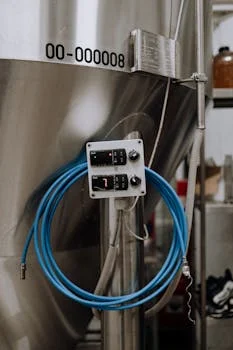
Submerged PVDF flat-sheet membranes utilized in modern MBR systems provide a nominal pore size of 0.1 μm, ensuring the complete removal of suspended solids and most pathogens. In the German market, the preference has shifted toward flat-sheet designs like the DF series PVDF flat-sheet membrane modules with 0.1 μm filtration because they offer superior resistance to fouling and are significantly easier to clean than hollow-fiber alternatives. These modules are designed to operate at flux rates of 15–25 LMH (liters per square meter per hour), which is the standard for industrial applications involving high-strength organic waste.
Energy consumption remains a primary concern for German procurement managers, given the high local electricity costs. Modern MBR systems have reduced energy demand to between 1.2 and 2.8 kWh/m³ of treated water. This efficiency is achieved through optimized aeration protocols, where air scours the membrane surface to prevent cake layer formation while simultaneously providing oxygen for the biological process. Advanced PLC-controlled systems monitor transmembrane pressure (TMP) in real-time, adjusting scouring intensity to minimize energy waste during low-flow periods.
The footprint of an MBR system is roughly 60% less than that of a conventional activated sludge plant. For a 500 m³/day facility, an MBR system might require only 60 m², whereas a CAS plant would require over 150 m² to accommodate the secondary clarifier. This compactness has led to the rise of containerized MBR solutions. These prefabricated units, typically housed in 20 ft or 40 ft ISO containers, are "plug-and-play," reducing on-site construction time and allowing for rapid deployment in expanding industrial parks. Detailed international MBR system performance and compliance benchmarks suggest that these containerized units are now the preferred choice for decentralized industrial treatment.
| Feature | Standard MBR Specification | Benefit for German Operators |
|---|---|---|
| Membrane Material | PVDF (Polyvinylidene Fluoride) | High chemical resistance and durability |
| Pore Size | 0.03 - 0.1 μm | Absolute barrier for bacteria and solids |
| Operating MLSS | 8,000 - 12,000 mg/L | Handles high organic loads in small tanks |
| Cleaning Method | In-situ Chemical Cleaning (CIP) | Reduces downtime and manual labor |
| Automation | Siemens/Allen-Bradley PLC | Ensures compliance with minimal oversight |
MBR System Costs in Germany: 2025 Pricing and ROI Analysis
The capital expenditure for a packaged MBR system in Germany for 2025 ranges between €150 and €300 per m³/day of treatment capacity, depending on the complexity of the influent. For a medium-sized industrial plant treating 1,000 m³/day, the total investment typically falls between €150,000 and €600,000. While the initial CapEx is higher than that of a CAS system, the reduction in civil works and the elimination of tertiary filtration stages often bridge the gap during the construction phase. Prefabricated, containerized systems further reduce installation costs by up to 40% compared to traditional concrete-built plants.
Operational expenditure (OpEx) for MBR systems in Germany typically ranges from €0.60 to €1.20 per m³. This includes energy costs, chemicals for cleaning (CIP), and a sinking fund for membrane replacement every 5 to 7 years. When compared to the cost of purchasing municipal water—which can exceed €2.50/m³ in some German industrial zones—the economic argument for MBR-based water reuse becomes compelling. A detailed 2025 B2B pricing and ROI analysis for MBR systems indicates that most industrial installations achieve a full return on investment within 3 to 5 years through water savings alone.
| Cost Component | Estimated Cost (per m³) | Notes for 2025 Budgeting |
|---|---|---|
| Energy (Aeration & Pumps) | €0.35 – €0.55 | Based on €0.25/kWh industrial rate |
| Chemicals (CIP & Pretreatment) | €0.10 – €0.20 | Varies by influent organic load |
| Membrane Replacement Fund | €0.15 – €0.25 | Calculated over a 7-year lifespan |
| Maintenance & Labor | €0.10 – €0.20 | Automated systems require <5 hrs/week |
| Total OpEx | €0.70 – €1.20 | Significantly lower than water purchase |
Comparison: German vs. International MBR Suppliers
While German MBR manufacturers often prioritize specialized maritime or high-end municipal certifications, international suppliers provide systems with 30–40% lower capital costs while maintaining full compliance with EU environmental standards. German-based firms like Martin Membrane and RWO are renowned for their high-end engineering, particularly in the shipping and offshore sectors. However, for land-based industrial applications, international manufacturers such as HydropureWater offer comparable technical specifications—including PVDF flat-sheet membranes and PLC-controlled automation—at a more competitive price point for the mid-market.
The primary concern for German procurement managers when selecting an international supplier is often service and support. To address this, leading international suppliers have established EU-based partnerships that guarantee a service response time of 24–48 hours, rivaling local manufacturers. These systems are designed to meet all relevant European directives, including the Machinery Directive 2006/42/EC and the Industrial Emissions Directive 2010/75/EU. For specific sectors, such as the food industry, optimized MBR solutions for food and beverage effluent in Germany provide the necessary pretreatment and biological stability required for high-fat and high-protein wastewater.
| Comparison Factor | Local German Suppliers | International Suppliers (e.g., HydropureWater) |
|---|---|---|
| Capital Cost (CapEx) | Premium Pricing | 30–40% Lower Investment |
| Footprint | Compact | Up to 60% smaller than CAS |
| Compliance | Full CE/DVGW | Full CE/EU Standards Compliance |
| Membrane Technology | Mixed (Hollow/Flat) | Specialized PVDF Flat-Sheet (High Flux) |
| Delivery Lead Time | 16–24 Weeks | 10–14 Weeks (Prefabricated) |
Frequently Asked Questions
What is the lifespan of MBR membranes in German industrial plants?
Typically, MBR membranes last 5–7 years. Lifespan is maximized through proper screening pretreatment and adherence to automated Clean-in-Place (CIP) protocols using citric acid and sodium hypochlorite.Can MBR systems handle textile effluent with high COD and dyes?
Yes. By maintaining MLSS levels up to 12,000 mg/L and utilizing specific pretreatment like DAF (Dissolved Air Flotation), MBR systems effectively degrade complex dyes and organic compounds that conventional systems cannot.Are MBR systems in Germany required to be PFAS-free?
While not yet a universal legal mandate for all industrial discharges, many German engineers now specify CPVC or high-grade PVDF flat-plate membranes that are PFAS-free to future-proof their installations against evolving EU REACH regulations.How much space does a 500 m³/day MBR system need?
An MBR system of this capacity typically requires 50–70 m². This represents a 60% space saving compared to conventional activated sludge systems, which require large secondary clarifiers.Do MBR systems in Germany support water reuse?
Yes, MBR effluent consistently meets DWA-A 226 standards, making it suitable for non-potable reuse in industrial cooling, floor washing, or landscape irrigation, significantly reducing municipal water costs.
Related Equipment
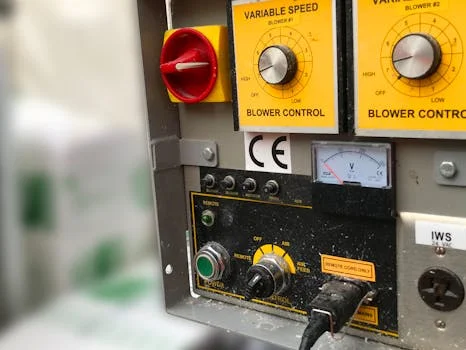
The following HydropureWater products are engineered for the wastewater challenges discussed above:
- integrated MBR membrane bioreactor system with 60% smaller footprint — view specifications, capacity range, and technical data
- DF series PVDF flat-sheet membrane modules with 0.1 μm filtration — view specifications, capacity range, and technical data
Need a customized solution? Request a free quote with your specific flow rate and pollutant parameters.