Why Textile Effluent in KSA Needs Its Own Treatment Train
Saudi textile mills, dye houses and industrial laundries do not produce generic industrial wastewater, and the country's national water strategy and Vision 2030 programme are pushing the design bar higher than historical norms for effluent quality and reuse. Textile streams carry colour bodies, suspended solids, process chemicals, detergents and reactive or azo dyes, and the Red Sea Arabia industrial wastewater guide lists this contaminant mix as the defining feature of textile effluent in Saudi plants.
The Water 2020 microalgae–bacteria textile study (doi 10.3390/w12113034) documents more than 70 chemical types in textile effluents, including around 30 that are not easily removed by conventional means, which is why single-stage treatment is rarely enough and multi-barrier trains are now the expectation rather than the exception. The Saleem 2025 YJES study (DOI 10.53370/001c.126183) frames textile wastewater management explicitly inside Saudi Vision 2030 and the national water strategy, noting that industrial growth has to be balanced against environmental stewardship and stricter discharge and reuse expectations.
The Red Sea Arabia guide also flags a recurring design error that Saudi engineers should avoid: two factories at the same flow can require very different trains because the contaminant profile, not the hydraulic flow, drives unit-operation selection. The right Saudi textile ETP in 2026 starts from a site-specific wastewater audit and a defined reuse target, not from a generic equipment catalogue.
What Saudi Textile Wastewater Actually Contains
Published Saudi data sets give the engineer a real benchmark to compare influent against, instead of generic textbook numbers. The Jastaniah 2019 JEBAS study (June 2019, Volume 7 Issue 3, pages 308–315) sampled textile effluent from the Al Khumra WWTP in the industrial area of south Jeddah and reported a biochemical oxygen demand of 3.48 mg/L alongside total suspended solids of 1,134.9 mg/L, with the reactive vinyl sulphone dye Remazol Black B used locally for silk, wool and cotton colouring as the model pollutant.
The Saleem 2025 YJES optimisation baseline (YJES Vol. 22 Iss. 1, 2025) is the strongest single data point for a Saudi iron-electrode electrocoagulation design: 60-minute treatment time, 6.2 mA/cm² current density, pH 8–8.5, 150 rpm stirring and 5 cm inter-electrode spacing gave 79.2% total solids removal, 92.7% COD removal, 88.9% turbidity removal and 98.7% colour removal on real Saudi textile wastewater. The author recommends a coupled filtration or adsorption step after EC for residual polishing, which is an important design flag for any plant that stops at electrocoagulation alone.
The Maqbool 2026 3 Biotech study (3 Biotech Vol. 16(8):303, 4 July 2026) is the biological-route benchmark, with co-authors from Taif University and the University of Jeddah. Serratia liquefaciens AM-2 reached 92% decolourisation of Reactive Black 5, 80% of Reactive Red-120 and 82% of Congo Red in 72 hours, and lab textile wastewater treatment reduced electrical conductivity 45.2%, TDS 39.5%, TSS 56.6%, COD 54.8% and BOD 52.3%. Heavy metals and salts are a separate design driver: the Water 2020 study reached 93% Cd removal only at a 5% wastewater dilution, signalling that for real-strength Saudi textile streams, reuse polishing almost always needs a membrane or advanced oxidation step rather than a biological reactor alone.
| Parameter | Value or range | Source / context |
|---|---|---|
| BOD (Al Khumra textile effluent, Jeddah) | 3.48 mg/L | Jastaniah 2019, JEBAS Vol. 7 Iss. 3 |
| TSS (Al Khumra textile effluent, Jeddah) | 1,134.9 mg/L | Jastaniah 2019, JEBAS Vol. 7 Iss. 3 |
| EC operating window (Saudi textile) | 60 min, 6.2 mA/cm², pH 8–8.5, 150 rpm, 5 cm IES | Saleem 2025, YJES Vol. 22 Iss. 1 |
| EC removal — COD | 92.7% | Saleem 2025 |
| EC removal — colour | 98.7% | Saleem 2025 |
| EC removal — turbidity | 88.9% | Saleem 2025 |
| EC removal — TS | 79.2% | Saleem 2025 |
| S. liquefaciens AM-2 — Reactive Black 5 decolourisation | 92% in 72 h | Maqbool 2026, 3 Biotech Vol. 16 Iss. 8 |
| S. liquefaciens AM-2 — COD reduction | 54.8% | Maqbool 2026 |
| Cd removal (microalgae–bacteria consortium) | 93% at 5% wastewater dilution | Water 2020, doi 10.3390/w12113034 |
Unit Operations in a Saudi Textile ETP — What Each Step Actually Does
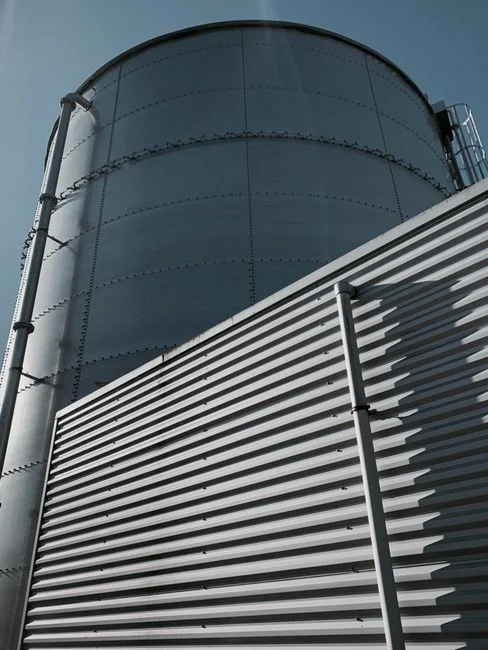
Front-end screening protects every downstream unit from the rags, fibres and plastic fragments that textile streams shed continuously, and the Red Sea Arabia guide treats this as a non-negotiable first step in any Saudi industrial train. A rotary mechanical bar screen at the inlet removes the coarse material that would otherwise blind DAF nozzles, clog dosing pumps and load biological reactors with inert solids.
Equalisation and pH correction stabilise flow, temperature and chemistry before any coagulant or biological step sees the water. Saleem 2025 showed that iron-electrode electrocoagulation on Saudi textile wastewater works only inside a narrow pH 8–8.5 window, and a swing in pH or batch-dye flow outside that band will collapse removal efficiency. Dosing has to be controllable, which is why an automatic chemical dosing system tied to a pH probe is the realistic minimum rather than a manual day-tank.
The physico-chemical step is where suspended solids, colour bodies and emulsified process chemicals are aggregated and floated off. Coagulation and flocculation followed by a dissolved air flotation system is the standard Saudi option for textile streams, because DAF handles the floatable fibre and chemical sludge that a simple clarifier would miss. The biological step — aerobic, anaerobic or a hybrid reactor — then takes the biodegradable COD and BOD load. The Jastaniah 2019 and Maqbool 2026 Saudi studies show that local bacterial isolates can break down azo and reactive dyes that physico-chemical steps leave behind, but biology is slower than EC and sensitive to toxicity shocks from concentrated dye batches.
Polishing is where the reuse decision is locked in. Multimedia filtration followed by an ultrafiltration system handles colloidal solids, bacteria and most residual turbidity, and a reverse osmosis stage is added when the reuse target is cooling, boiler feed or any application with a salt limit. The Maqbool 2026 reuse scenario — treated textile wastewater used to irrigate rice with reduced H₂O₂ and MDA content — only works because polishing brought dissolved salts and refractory organics low enough for the crop.
Electrocoagulation, Biological, Ozone or Membrane — Matching Technology to the Pollutant
Electrocoagulation is the strongest single-stage option for Saudi textile colour and COD on the published evidence. Saleem 2025's iron-electrode envelope (60 min, 6.2 mA/cm², pH 8–8.5, 5 cm IES) delivered 98.7% colour and 92.7% COD removal on real Saudi textile wastewater, and the author explicitly recommends a coupled filtration or adsorption step afterwards, which means EC is rarely the final stage in a working plant.
Bioremediation is the second anchor, with a different cost and footprint profile. Serratia liquefaciens AM-2 (Maqbool 2026) reduced COD 54.8%, TSS 56.6% and BOD 52.3% on lab textile wastewater and decolourised Reactive Black 5 by 92% in 72 hours, while Jastaniah 2019 isolated Pseudomonas putida from Jeddah textile wastewater with similar azo-dye degradation. Biology handles biodegradable dye classes cheaply but is slower than EC and loses performance when influent toxicity spikes, so it is usually placed downstream of equalisation and DAF rather than at the head of the train.
Advanced oxidation and ozone are part of standard Saudi industrial wastewater trains per the Red Sea Arabia guide, but no numeric Saudi textile-specific removal data was provided in the supplied research, so the engineer should ask suppliers for documented removal on the actual dye mix rather than assume performance. Membrane polishing is the standard Saudi escalation when reuse or a strict discharge limit applies: an ultrafiltration system followed by an industrial RO system handles dissolved salts, residual colour and refractory organics that EC and biology cannot fully resolve. The reuse scenario in Maqbool 2026 (irrigation with reduced oxidative stress markers in the rice) only works because polishing is in place.
| Technology | Best at removing | Saudi evidence | Main limitation |
|---|---|---|---|
| Iron-electrode electrocoagulation | Colour, COD, turbidity, TS | 92.7% COD, 98.7% colour (Saleem 2025) | Narrow pH/current window; needs post-polish |
| Biological (S. liquefaciens AM-2, P. putida) | Biodegradable COD, BOD, azo/reactive dyes | 54.8% COD, 92% Reactive Black 5 decolourisation in 72 h (Maqbool 2026) | Slower than EC; sensitive to toxicity shocks |
| Advanced oxidation / ozone | Refractory organics, residual colour | Listed in Red Sea Arabia guide; no Saudi textile-specific number supplied | Energy and oxidant cost; supplier must justify on actual dye mix |
| UF + RO membrane polishing | Dissolved salts, colloids, residual colour | Standard Saudi escalation per Red Sea Arabia; reuse demonstrated in Maqbool 2026 | Membrane fouling, brine management, capex |
Designing a 2026 Textile ETP — Sizing, Sludge and Reuse Considerations
Sizing starts from streams, not from a single total flow number. The Red Sea Arabia guide is explicit that the engineering team must identify each wastewater stream, measure average and peak hydraulic loading, and run a laboratory analysis to define the contaminant load before the train is selected. A flow-only spec will undersize the biological stage and oversize the DAF, or vice versa, on a Saudi textile site.
Sludge handling is the second design pillar that is often under-scoped. Textile physico-chemical and biological stages generate a mixed chemical–biological sludge, and the DAF float is rich in fibre, dye residues and process chemicals. A plate and frame filter press is the standard dewatering option, while a high-efficiency sedimentation tank ahead of it reduces chemical consumption by recirculating clarified water. A multi-media filter between sedimentation and the membrane train protects UF and RO from residual carry-over.
The reuse pathway is the lever that decides the entire end of the train. Saudi water-sector initiatives are pushing reuse of treated water for industrial applications, so the design should fix the reuse target — cooling, boiler feed, process wash, irrigation — up front, because that is what tells the engineer whether UF alone is acceptable or whether RO is mandatory. Commissioning and on-site optimisation are not optional: Red Sea Arabia highlights commissioning as the step that turns a designed plant into a working plant, and the Saleem 2025 EC window shows how sensitive textile trains are to operating-point control. Engineers planning a 2026 project should also review the commissioning duration guide and the chemical wastewater reuse compliance guide to align timelines and compliance evidence with the design.
Choosing Equipment and a Supplier in Saudi Arabia — 2026 Checklist
Start by asking the supplier for documented performance on Saudi textile or comparable dye-house effluent, not generic industrial case studies, and request references at a similar hydraulic load and COD/colour range. A supplier that can only point at municipal or food-and-beverage references has not proven their design on the specific colour and salt load the engineer is sizing for.
Ask for a treatment-train P&ID that names every unit operation — screening, equalisation, pH correction, DAF, biological reactor, filtration, UF, RO, sludge dewatering, disinfection — so nothing is implied rather than specified. The P&ID should be checked against the Saudi domestic sewage treatment guide for the design conventions that the local engineering office will expect, and against the chemical wastewater reuse compliance guide for the discharge and reuse evidence the supplier should be able to provide.
Check whether the EC or biological unit is sized with the operating parameters reported in the Saudi literature — for example the Saleem 2025 EC envelope (6.2 mA/cm², pH 8–8.5, 5 cm IES, 60 min) or the Maqbool 2026 biological residence time — rather than generic textbook defaults. Verify that the proposed system can be commissioned locally, with on-site optimisation and access to RO and UF membranes and filter elements and spare valves and media through a regional supply chain, and that the disinfection stage such as a UV steriliser is sized for the post-membrane flow rather than the raw influent.
Frequently Asked Questions
What is a realistic 2026 budget envelope for a Saudi textile ETP?
Capital cost depends on flow, influent load, reuse target and the depth of treatment, and the supplied research does not publish a per-cubic-metre price for a Saudi textile ETP. A buyer should request a budget-range quotation tied to a defined influent characterisation and a defined reuse quality, then check it against at least two reference plants of similar hydraulic load in the Kingdom.
How do I shortlist suppliers for a Saudi textile wastewater treatment project in 2026?
Shortlist suppliers that can produce documented performance on Saudi textile or comparable dye-house effluent, a full P&ID naming every unit operation, and evidence of local commissioning capability with regional spare-parts access. The supplied research does not name a preferred vendor, so the engineering decision should rest on demonstrated Saudi textile references and the supplier's ability to anchor the EC or biological design to published local parameters such as the Saleem 2025 or Maqbool 2026 operating windows.
Do I need reverse osmosis, or is UF enough for reuse?
The reuse target decides this, not the treatment train alone. If the treated water is going to cooling, boiler feed or any application with a dissolved salt limit, an RO stage is required after UF; if the reuse is for landscape irrigation of salt-tolerant species, UF plus disinfection may be acceptable. The Maqbool 2026 reuse scenario only works because polishing brought salts and refractory organics low enough for the crop, which is the level of evidence the buyer should request from any supplier proposing reuse without RO.
What is the biggest design risk on a Saudi textile ETP in 2026?
The biggest risk is selecting equipment before characterising the wastewater, which the Red Sea Arabia guide identifies as the most common ETP design error. Two Saudi factories at the same flow can need very different trains because the contaminant profile drives the unit-operation selection, and the Saleem 2025 EC window shows how narrow the operating envelope is on real Saudi textile water, so a design that ignores influent characterisation will fail at commissioning even if the equipment list is correct.