Why Winery Wastewater Breaks Conventional Treatment
Winery wastewater generation ranges from 0.3 to 3 L per liter of wine produced, making seasonal treatment highly volatile (source: Membranes, 2018). On a larger scale, processing 3 to 5 kL of wastewater per ton of grapes crushed means that a major wine-producing region, such as Australia during its 1.7 million tonne crush, generates 5 to 9 billion liters of wastewater in a single vintage (source: Wiley review). For an individual mid-size cellar, product loss to the drain can represent a significant financial drain, with a 5 to 10 million L/yr facility losing an estimated $2.4 to $3.4 million AUD annually in lost product (source: Wiley review).
Deploying an ultrafiltration system for winery wastewater requires 0.1 µm PVDF hollow-fiber or flat-sheet membranes operated at 200–260 L/m²·hr flux with 1.5 min filtration/30 sec backwash cycles, but only after DAF pretreatment and equalization to dampen harvest BOD spikes from <1,000 to 8,000 mg/L. Standalone UF suits mid-size cellars (20–2,000 m³/d) targeting irrigation reuse (BOD/TSS <30 mg/L); MBR wins for direct-reuse clarity; MABR wins for TN compliance and energy on basin retrofits >2,000 m³/d.
The primary design challenge is the extreme organic load variation between the off-season and the active crush. Francis Ford Coppola Winery operating data highlights the severity of these harvest side-streams: 1% citric acid cleaning solutions reach 7,496 mg/L BOD, lees streams average 20,000 mg/L BOD, raw grape juice spikes to 245,850 mg/L BOD, and finished wine losses hit 265,810 mg/L BOD (source: Coppola operating data). While legacy facultative ponds with 60-to-90-day hydraulic retention times (HRT) can slowly absorb these shocks, modern membrane filtration and fixed-film systems will fail without upstream equalization when weekly influent spikes from under 1,000 mg/L BOD to over 8,000 mg/L BOD (source: Coppola operating data).
meeting strict standards like California Title 22 water reuse or regional vineyard irrigation mandates requires achieving reliable thresholds: BOD < 30 mg/L, TSS < 30 mg/L, TDS < 500 mg/L, and sodium < 100 mg/L (source: Coppola operating data). Conventional lagoon systems cannot consistently hit these limits, making advanced physical barriers necessary.
Where UF Fits in the Winery Treatment Train
Membrane ultrafiltration acts as a strict physical barrier rather than a biological treatment process, meaning it rejects particulate matter while letting dissolved organics pass through (source: Cal Poly thesis, 2024). Because UF membranes reject particles larger than 0.1 µm, they do not directly remove dissolved chemical oxygen demand (COD) or biochemical oxygen demand (BOD). Therefore, biological treatment—such as an aerated lagoon, sequencing batch reactor (SBR), or active biofilm process—must always precede the ultrafiltration system for winery wastewater to oxidize dissolved sugars, alcohols, and organic acids (source: Cal Poly pond-UF sequence, 2024). Engineers can review a comparable biological setup in the SBR design guide for high-strength seasonal wastewater.
When positioned as a tertiary polishing step, ultrafiltration removes suspended solids, colloidal starches, yeast, bacteria, and micro-algae from biologically treated effluent. This prevents the clogging of vineyard drip irrigation emitters. Additionally, concentration polarization winery effects can be engineered to recover high-value bioactive compounds. In dedicated side-stream valorization processes, ultrafiltration and nanofiltration membranes like the ETNA 01PP and NF 270 are operated at transmembrane pressures (TMP) up to 15 bar to concentrate and recover antioxidant polyphenols, flavonoids, and polysaccharides before the main waste stream enters the treatment train (source: Membranes, 2018).
For standard treatment, the process flow must follow a strict sequence: raw wastewater passes through a 6 mm fine screen for winery headworks, flows into an equalization basin, undergoes biological oxidation, passes through a dissolved air flotation (DAF) clarifier to strip bulk solids, and is then pumped through the ultrafiltration skid for final polishing and disinfection before reuse.
Pretreatment Design Rules: What the Pilots Proved
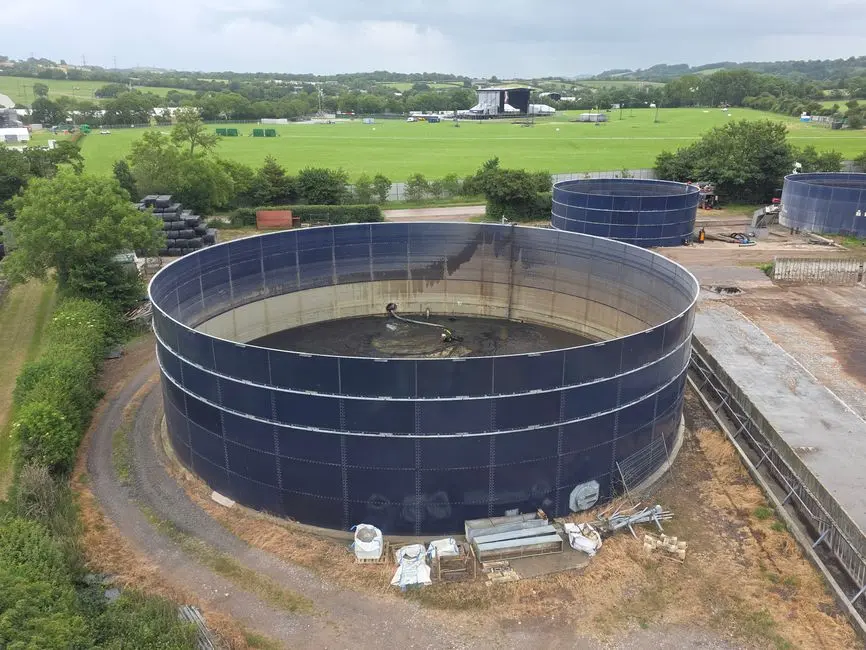
Pilot trials on pond-treated winery wastewater demonstrated that a 177 µm screen and sand filtration fail to prevent rapid membrane fouling unless upstream chemical coagulation or natural biological flocculation is provided (source: Cal Poly thesis, 2024). Without proper pretreatment, the high concentration of colloidal organic matter and cellular debris causes irreversible pore blocking. To prevent premature membrane fouling, a multi-stage pretreatment train must be sized for harvest-week peak flows rather than annual averages.
The first step requires mechanical screening to protect downstream pumps and membrane surfaces from labels, stems, and plastics. This is followed by a primary clarification step using dissolved air flotation (DAF) to strip fats, oils, grease (FOG), and suspended pomace or lees carryover. Detailed sizing parameters for these systems can be found in the DAF sizing and selection framework for industrial wastewater. To optimize flocculation ahead of the DAF, a PLC-controlled coagulant/pH dosing skid must automatically dose organic polymers or metal coagulants, directing the conditioned stream into a high-efficiency sedimentation tank or DAF active zone.
Equalization is the most critical step in preventing biological and physical process failure. For example, the Francis Ford Coppola Winery repurposes the first pond of its 6-million-gallon (22,700 m³) three-pond system as a dedicated equalization zone to dampen the 8,000 mg/L BOD harvest spikes (source: Coppola operating data). Additionally, chemical selection during cellar cleaning is vital; if the reuse target requires sodium levels under 100 mg/L, the winery must restrict the use of sodium hydroxide (NaOH) cleaners and use potassium-based alternatives instead (source: Wiley review).
| Pretreatment Step | Equipment / Technology | Key Design Parameter | Target Removal / Function |
|---|---|---|---|
| 1. Coarse Screening | 6 mm fine screen for winery headworks | 6 mm aperture, continuous-duty | Removes labels, grape stems, plastics, and large debris |
| 2. Flow & Load Equalization | Equalization Basin / Repurposed Pond | Min. 24-hr HRT (or 30–60 day pond volume) | Dampens 8,000 mg/L BOD spikes and balances pH swings |
| 3. Chemical Conditioning | PLC-controlled coagulant/pH dosing skid | pH adjustment to 7.0–7.5; polymer dosing | Promotes micro-floc formation of colloidal proteins and yeasts |
| 4. Primary Clarification | DAF pretreatment for harvest-peak FOG/TSS removal | Sized to peak harvest-week flow; 15–30% recycle | Removes FOG, lees carryover, and diatomaceous earth (DE) solids |
UF Membrane Selection & Sizing Parameters
Hollow-fiber and flat-sheet ultrafiltration membranes designed for winery applications require robust polyvinylidene fluoride (PVDF) construction to withstand harsh, high-concentration clean-in-place chemical cycles (source: Cal Poly thesis, 2024). PVDF exhibits excellent chemical tolerance to the strong oxidizers and acids needed to dissolve organic cake layers. Standard clean-in-place (CIP) protocols developed during pilot testing require recirculating a 0.4M NaOH solution for 1 hour to strip organic foulants, followed by a water rinse, and then recirculating a 0.9M acetic acid solution for 1 hour to dissolve inorganic scale (source: Cal Poly thesis, 2024).
Sizing calculations must account for the severe concentration polarization that occurs during the active crush. While initial pilot fluxes on clean pond effluent can reach 258 L/m²·hr, design engineers must derate the operational flux to 180–220 L/m²·hr to handle harvest-season loads (source: Cal Poly thesis, 2024). The operating transmembrane pressure (TMP) typically ranges from 5 to 32 PSI (0.34 to 2.2 bar) under a standard cycle of 1.5 minutes of filtration followed by a 30-second backwash using clean permeate (source: Cal Poly thesis, 2024).
To calculate the required total membrane surface area ($A_{membrane}$), use the following formula:
$A_{membrane} = Q_{design} / (Flux_{design} \times t_{filtration\_hours} \times \eta_{recovery})$
Where $Q_{design}$ is the peak daily flow during harvest, $Flux_{design}$ is the derated flux (180–220 L/m²·hr), and $\eta_{recovery}$ is the net recovery factor (typically 0.80 to 0.85 to account for frequent backwash and CIP cycles). Designers should include a 20% fouling safety margin and configure at least one redundant membrane train ($N+1$) to ensure continuous operation during CIP cycles.
For modular retrofits, PVDF flat-sheet UF/MBR modules (0.1 µm, 80–225 m²) offer distinct advantages over hollow-fiber systems. These modules handle higher solid concentrations, operate with 10 to 20 times lower energy consumption than pressurized cross-flow systems, and feature individually replaceable membrane sheets. This design makes them well-suited for integration into an integrated MBR wastewater treatment system.
| Design Parameter | Hollow-Fiber PVDF Specification | Flat-Sheet PVDF Specification (DF Series) | Engineering Basis / Source |
|---|---|---|---|
| Pore Size | 0.01 – 0.04 µm | 0.1 µm | Cal Poly Thesis 2024 / HydropureWater Spec |
| Design Flux (Harvest Peak) | 180 – 200 L/m²·hr | 200 – 220 L/m²·hr | Cal Poly 2024 Pilot (Derated for fouling) |
| Operating TMP Range | 0.34 – 2.2 bar (5 – 32 PSI) | 0.10 – 0.35 bar (1.45 – 5.0 PSI) | Cal Poly 2024 / HydropureWater Field Data |
| Filtration / Backwash Cycle | 1.5 min filtration / 30 sec backwash | 9 min filtration / 1 min relaxation + air scour | Cal Poly 2024 / MBR Standard Operating Cycle |
| Standard CIP Chemistry | 0.4M NaOH + 0.9M Acetic Acid | 0.5% NaOCl + 2.0% Citric Acid | Cal Poly 2024 / HydropureWater CIP Protocol |
| Typical Module Area | 30 – 55 m² per pressurized vessel | 80 – 225 m² per submerged cassette | HydropureWater Engineering Catalog 2026 |
Technology Decision Matrix: UF vs MBR vs MABR by Winery Scale
Selecting the optimal biological and physical separation barrier depends on the winery's daily discharge volume, existing infrastructure, and specific effluent quality constraints (source: Fluence MABR design data, 2025-08). Wineries must evaluate whether their primary constraint is footprint, energy consumption, nitrogen removal, or total suspended solids (TSS). For a comprehensive view of effluent parameters, engineers can consult the MBR effluent specs for food/beverage reuse compliance.
For boutique wineries processing under 20 m³/d, containerized MBR or packaged UF systems are highly effective. At this scale, the small physical footprint and ease of operation outweigh the higher specific energy consumption. This approach is supported by the 2-million-gallon-per-year MBR system operated at the Francis Ford Coppola Winery (source: Coppola operating data).
For mid-size seasonal wineries (20 to 2,000 m³/d), the choice depends on existing assets. If the winery has functioning biological lagoons or SBRs, adding a tertiary ultrafiltration system for winery wastewater is the most cost-effective way to achieve irrigation-ready water. If building a new system on a tight footprint, an integrated MBR cassette system is ideal, especially when meeting a TSS < 30 mg/L reuse mandate is a priority (source: Coppola operating data).
For large industrial wineries processing more than 2,000 m³/d, membrane aerated biofilm reactors (MABR) retrofitted into existing aeration basins provide a highly efficient solution. MABR systems deliver passive oxygen transfer through gas-permeable membranes directly to a nitrifying biofilm. This reduces aeration energy consumption by up to 90% compared to conventional activated sludge, while achieving total nitrogen (TN) levels under 3 mg/L and total phosphorus (TP) levels under 0.3 mg/L (source: Fluence pilots).
| Winery Scale (Flow Tier) | Technology Path | Aeration Energy Demand | Effluent TSS / TN Performance | Retrofit & Civil Work Requirement |
|---|---|---|---|---|
| Boutique (<20 m³/d) | Containerized MBR or Package UF | High (membrane air scour required) | TSS < 2 mg/L; TN variable | Minimal; plug-and-play skid, no concrete basins |
| Mid-Size (20–2,000 m³/d) | Tertiary UF Polishing or MBR Cassettes | Moderate to High (air scour + pump energy) | TSS < 5 mg/L; TN < 15 mg/L | Moderate; utilizes existing ponds or SBR tanks |
| Industrial (>2,000 m³/d) | MABR Basin Retrofit (SUBRE) | Low (up to 90% aeration savings vs CAS) | TSS < 15 mg/L; TN < 3 mg/L | Low; drop-in modules, optional internal dividing wall |
CapEx/OpEx Framework and Specification Checklist
Retrofitting an existing lagoon or activated sludge plant with advanced membrane modules reduces civil engineering costs to a fraction of a new basin build (source: Fluence design guide, 2025-08). While the initial capital expenditure (CapEx) for membranes, blower skids, and automated clean-in-place (CIP) systems is higher than that of simple storage lagoons, the long-term operational savings and water reuse potential provide a clear return on investment. The primary operating cost (OpEx) drivers are membrane replacement cycles (typically 5 to 7 years for high-quality PVDF), CIP chemicals, and the energy required for membrane scouring or system pumps (source: Cal Poly thesis, 2024). To manage biological solids and reduce disposal costs, plants should integrate a plate and frame filter press for efficient sludge dewatering.
To prepare a complete and technically sound Request for Proposal (RFP) for an ultrafiltration system for winery wastewater, process engineers should follow this five-step specification checklist:
- Define Hydraulic and Seasonal Profile: Document average daily flows, peak harvest-week flows (m³/d), and the exact start and end dates of the crush season.
- Characterize Influent Quality: Provide separate, detailed wastewater profiles for the off-season and harvest season, including BOD, COD, TSS, pH, temperature, sodium, and TDS.
- Specify Target Reuse Standards: Define the regulatory compliance targets, such as California Title 22, local agricultural irrigation rules, or environmental discharge limits. If pathogen control is required, specify a chlorine dioxide generator for final disinfection downstream of the UF.
- Audit Existing Infrastructure: Detail the volumes, depths, and aeration capacities of any existing ponds, SBRs, or activated sludge basins that could be repurposed for equalization or biological treatment.
- Identify Key Process Constraints: Specify whether the system design should prioritize footprint reduction, energy efficiency, nitrogen removal, or total suspended solids (TSS) control.
Additionally, because winery wastewater characteristics are highly site-specific, design standards recommend running an 8-to-12-week pilot trial (source: Fluence design guide, 2025-08). This trial should span the harvest transition period to verify flux stability, test CIP effectiveness, and establish temperature correction factors for nitrifying bacteria before finalizing the full-scale system design.
Frequently Asked Questions
How does a membrane bioreactor vs ultrafiltration system differ for winery wastewater reuse?
An ultrafiltration (UF) system acts as a tertiary physical polishing barrier downstream of an existing biological stage (like an SBR or aerated pond). In contrast, a membrane bioreactor (MBR) integrates the biological reactor and filtration into a single step, replacing the secondary clarifier. MBR provides superior effluent clarity (TSS < 5 mg/L) but requires higher aeration energy for membrane scouring compared to standalone tertiary UF.
What are the typical hollow-fiber ultrafiltration flux rates during harvest season?
While clean-water or off-season flux can exceed 250 L/m²·hr, design engineers must derate the flux to 180–220 L/m²·hr during the harvest season. This accounts for severe concentration polarization and rapid organic fouling caused by high-strength grape juice and lees carryover (source: Cal Poly thesis, 2024).
What is the recommended PVDF membrane cleaning CIP protocol for winery applications?
The standard clean-in-place (CIP) protocol involves a two-step chemical recirculation: first, recirculate 0.4M sodium hydroxide (NaOH) for 1 hour to strip organic fouling, followed by a rinse, and then recirculate 0.9M acetic acid for 1 hour to remove inorganic scale (source: Cal Poly thesis, 2024). Weekly CIP is recommended during peak harvest.
How does a winery meet California Title 22 water reuse standards for sodium and TDS?
Membrane filtration (UF/MBR) does not remove dissolved salts like sodium or TDS. To meet the Title 22 ceiling of Na < 100 mg/L and TDS < 500 mg/L, wineries must implement upstream source control, such as replacing sodium hydroxide-based cleaners with potassium-based alternatives, rather than relying on membrane treatment (source: Coppola operating data, 2016).