
Why Municipal Sewage Plant Maintenance Matters in 2026
Municipal sewage wastewater plant maintenance in 2026 is a unit-by-unit preventive program covering headworks screening, primary clarification, activated sludge or MBR biology, tertiary filtration, disinfection, and sludge dewatering. Operators typically budget 8–15% of plant replacement value annually for O&M, with major spare-parts spend on diffusers, membranes, UV lamps, and filter press cloth — every 3–24 months depending on duty cycle.
Scale matters: 85.7% of Norway's population is connected to municipal wastewater facilities (SSB, 2024 release, reporting 2024 data) — and that connection rate is roughly representative of mature EU utilities. Each percentage point of population served represents millions of pipe-meters, hundreds of pump stations, and one treatment plant whose effluent permit is non-negotiable. Inadequate headworks and primary maintenance raises solids carry-over into biological reactors, which directly elevates effluent BOD, COD, and TSS — the parameters policed under EU UWWTD 91/271/EEC and EPA 40 CFR Part 133. A single wet-weather bypass at a combined-sewer overflow can dump raw sewage into a receiving water and trigger a consent order that costs more than five years of preventive spend.
Translate it into a budget line: a typical 20 MLD plant with a $20 million replacement value sits inside a $1.6M to $3.0M annual O&M envelope. That envelope is your risk-transfer budget — every dollar shifted from preventive work into emergency repair shows up later as a consent decree fine (commonly $10,000–$50,000 per discharge violation in U.S. jurisdictions) or a biological recovery that takes 30–60 days of lost capacity.
Headworks and Preliminary Treatment Maintenance
Headworks failure is the single most common cause of downstream biological upset, because a blinded screen or a dead grit pump sends rags, sand, and油脂 straight into aeration tanks and MBR modules. On a rotary mechanical bar screen for wastewater headworks (GX-type), inspect rake teeth and brushes weekly, check chain tension monthly, and budget full brush replacement every 12 months in plants receiving more than 5 MLD; debris bypass during a storm event is the most frequent permit-excursion trigger at small-to-mid municipal works.
Grit chambers should be pumped out quarterly, with classifier bearing lubrication on a 6-month interval. Typical grit yield at municipal plants runs 0.03–0.10 m³ per 1,000 m³ of sewage — anything materially below that band usually means grit is migrating into primary sludge and damaging pump impellers. Parshall flumes and mag meters need a 6-month calibration check, and integrated level-sensor desiccants on ultrasonic flow meters are an annual replacement. Hand-cleaned bar screens at plants under 2 MLD still require daily raking and a weekly wash-down; a missed weekend is enough to overflow the channel.
| Headworks Task | Frequency | Consumable / Part | Typical 2026 Cost |
|---|---|---|---|
| Rake tooth & brush inspection | Weekly | Visual, no consumable | — |
| Chain tension check | Monthly | Grease, tensioner shim | < $50/yr |
| Brush set replacement | 12 months | Nylon brush assembly | $300–$800 |
| Grit pump-out | Quarterly | Haulage (skip) | $200–$600/event |
| Classifier bearing lube | 6 months | Grease | $20/event |
| Flow meter calibration | 6 months | Calibration gas / standard | $150–$400 |
Primary Treatment and Biological Reactor Maintenance
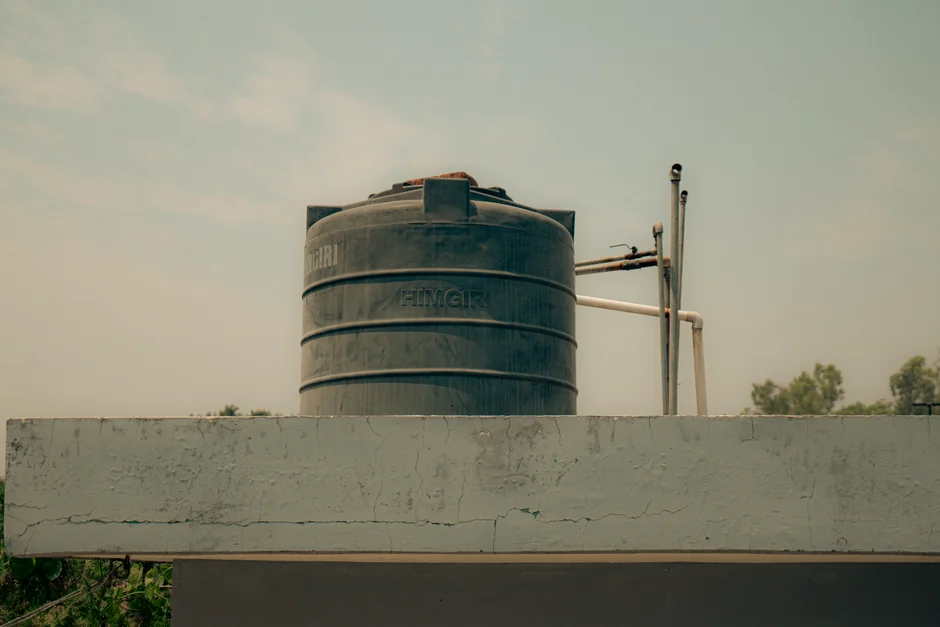
Primary clarifiers, aeration tanks, and MBBR/MBR biology absorb the largest single maintenance budget at a municipal plant. Sludge pump-out cycles on a primary clarifier run every 2–4 hours depending on solids loading and whether the unit uses chain-and-flight, suction, or hopper-bottom design; scum baffles need weekly cleaning, and the drive unit gearbox oil change is a 12-month task. Skipping it is how a clarifier goes down for a week in the middle of a heatwave.
For the activated-sludge train, maintenance is judged against a tight operating envelope: MLSS 2,000–4,000 mg/L, SVI below 150 mL/g, F/M ratio 0.2–0.5 lb BOD/lb MLVSS·d, and dissolved oxygen held at a 2 mg/L setpoint. Fine-bubble diffusers are the workhorse — and the most common silent failure. Run an acid wash every 12–24 months, a dynamic headloss test annually, and plan full disc replacement at 24–60 months. On an integrated MBR membrane bioreactor system with a PVDF flat sheet MBR membrane module, CIP chemistry is non-negotiable: a weekly maintenance wash at 500 mg/L NaOCl and a quarterly recovery CIP at 2,000–3,000 mg/L NaOCl plus 1–2% citric acid keeps transmembrane pressure in spec; full membrane replacement lands at year 7–10. For biofilm-carrier systems, an MBBR troubleshooting guide for 2026 covers carrier loss and short-circuiting in more detail.
| Biological Parameter / Task | Target or Frequency | Action Threshold |
|---|---|---|
| MLSS | 2,000–4,000 mg/L | Waste at >4,500 mg/L |
| SVI | < 150 mL/g | Investigate at >200 mL/g |
| F/M ratio | 0.2–0.5 | Adjust wasting at >0.6 |
| DO setpoint | 2 mg/L | < 1.5 mg/L triggers alarm |
| Diffuser acid wash | 12–24 months | When SOTE drops > 10% |
| Diffuser replacement | 24–60 months | Dynamic headloss > 0.5 m |
| MBR maintenance wash | Weekly | 500 mg/L NaOCl |
| MBR recovery CIP | Quarterly | 2,000–3,000 mg/L NaOCl + 1–2% citric |
| MBR membrane replacement | 7–10 years | TMP > 30 kPa at design flux |
Tertiary Treatment, Disinfection, and Effluent Polishing
Compliance failures happen at the polish stage, not the biological stage — that is where the plant's permit is finally either met or missed. On a lamella clarifier for tertiary sedimentation, the sludge recirculation pump should be inspected every 6 months, the plate pack washed annually to strip biofilm and scale, and surface loading held in the 20–40 m/h design band; above that, solids slip through into the filter.
Multi-media filters backwash on a 24–72 hour cycle depending on influent TSS, media is replaced every 3–5 years, and underdrain nozzles get a 24-month inspection for biological fouling and cracked laterals. UV is the most predictable maintenance line item: lamps run 8,000–12,000 hours (about 12–18 months of continuous duty) and quartz sleeves need a citric-acid wipe-down every 3 months. Where UV is unsuitable (high color, industrial contribution), a chlorine dioxide generator for wastewater disinfection sized from 50 g/h up to 20,000 g/h handles the load — precursor chemical drums swap on a weekly to monthly cadence depending on capacity.
Sludge Handling and Dewatering Maintenance
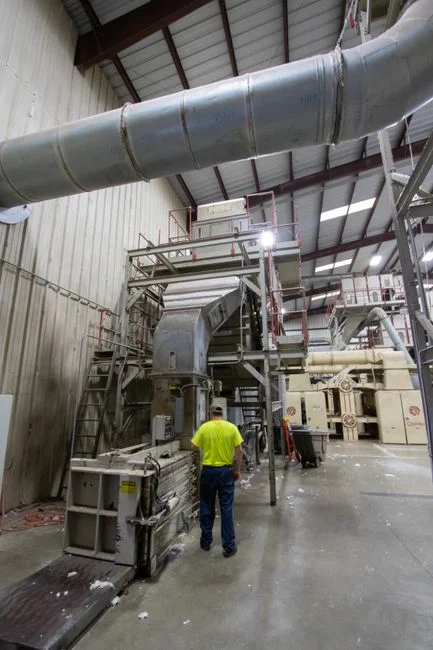
Sludge production never stops, and a single dewatering-line failure at a 20 MLD plant backs up the entire secondary train within 48 hours. Thickener rake torque should be trended weekly — a rising baseline means buildup on the floor mechanism; scum removal is a daily round, and polymer dosing pumps need a monthly calibration against actual flow.
On a plate and frame filter press for sludge dewatering, cloth washing happens after every cycle, plate cleaning is quarterly, and the hydraulic system oil change is annual. Cloth life runs 800–1,500 cycles depending on feed solids and polymer program; 2026 cloth replacement lands in the $15–$45/m² range, with full plate-pack replacement $120–$260/m². Pair the press with an automatic chemical dosing system for polymer and coagulant feed and run the polymer through a 30–60 minute maturation tank — short-circuited polymer is the most common cause of wet cake and downstream hauling cost overruns. Centrifuges (where used) need a bowl-balance check every 12 months, bearing lubrication on a 2,000-hour cycle, and a scroll-wear inspection every 6 months. Detailed consumables budgeting is covered in our filter press spare parts and consumables cost in 2026 reference.
SCADA, Automation, and Alarm Management
A 2026 plant runs on alarms, not on sight-glass rounds. Build the alarm program around the ISA-18.2 lifecycle — identify, rationalize, implement, operate, maintain, audit — and align asset decisions with ISO 55000. Without rationalization, the average municipal SCADA floods operators with 50–300 alarms per day, and the ones that matter get muted. A practical alarm management in wastewater SCADA per ISA-18.2 program targets fewer than 10 alarms per operator per shift, with a prioritized bad-actor review every quarter.
Sensor calibration is the silent killer: verify pH and DO weekly, TSS and ammonia monthly, and nitrate/phosphate quarterly, with grab-sample cross-checks run per APHA Standard Methods. Compliance sampling is automated through an automatic sampler for wastewater compliance — flow-paced, refrigerated, and chain-of-custody sealed. PLC program backups belong on a quarterly schedule, UPS batteries swap every 3 years, and I/O modules get an annual test against a calibration source.
12-Month Preventive Maintenance Calendar
Daily and weekly tasks live on the operator's rounds sheet; monthly and quarterly tasks become PM work orders in the CMMS; annual and capital-interval tasks anchor the winter shutdown planning window. Lead times drive the calendar: membranes 4–8 weeks, UV lamps 2–4 weeks, standard pump seals 1–2 weeks. Order in the calendar row before the install month, not during it.
| Month | Primary PM Task | Unit | Spare-Part Lead Time |
|---|---|---|---|
| January | Diffuser inspection & headloss test | Aeration tank | 3–4 weeks |
| February | Filter press cloth replacement | Sludge dewatering | 2–3 weeks |
| March | UV lamp swap (half-bank rotation) | Disinfection | 2–4 weeks |
| April | Lamella plate pack wash | Tertiary | None |
| May | Primary clarifier drive oil change | Primary | 1 week |
| June | Grit chamber pump-out | Headworks | None |
| July | MBR quarterly recovery CIP | Biological | NaOCl/citric in stock |
| August | Multi-media filter underdrain inspection | Tertiary | 2 weeks |
| September | Centrifuge scroll & bearing check | Sludge | 3–4 weeks |
| October | PLC program backup & I/O test | SCADA | None |
| November | Chlorine dioxide generator service | Disinfection | 2 weeks |
| December | Annual shutdown planning & budget lock | All units | — |
2026 Spare-Parts and Maintenance OPEX Ranges
These ranges reflect typical 2026 list pricing for equivalent industrial-grade components; actual pricing varies with region, container freight, and order quantity. Use them as the baseline for a budget memo, then adjust for local duty, installation labor, and your specific duty cycle. The annual OPEX envelope of 8–15% of plant replacement value is consistent with WEF MOP 11 guidance and remains the standard benchmark procurement will accept.
| Spare Part / Service | 2026 Unit Cost | Replacement Interval | 20 MLD Plant Annual Spend |
|---|---|---|---|
| Fine-bubble diffuser disc | $8–$25 installed | 24–60 months | $3,000–$15,000 |
| MBR membrane module | $80–$180/m² | 7–10 years (capitalized) | Budget $50k–$120k at year 8 |
| Filter press cloth | $15–$45/m² | 800–1,500 cycles | $4,000–$12,000 |
| Filter press plate set | $120–$260/m² | 5–10 years | $8,000–$25,000 (capitalized) |
| UV lamp | $80–$220 each | 8,000–12,000 h | $2,500–$7,000 |
| UV quartz sleeve | $30–$60 each | 3–5 years | $500–$1,200 |
| Standard pump seal | $80–$350 | 12–24 months | $1,500–$4,000 |
| Bearing set (blowers, centrifuges) | $200–$900 | 2,000–8,000 h | $2,000–$6,000 |
| Annual OPEX envelope (8–15%) | — | — | $1.6M–$3.0M (20 MLD, $20M asset) |
Frequently Asked Questions
How often should fine-bubble diffusers be inspected or replaced at a municipal activated-sludge plant?
Inspect annually with a dynamic headloss test, acid-wash every 12–24 months, and budget full disc replacement at 24–60 months. On a 20 MLD plant with 1,500–3,000 discs, expect $3,000–$15,000 in annual diffuser spend at 2026 pricing.
What is the standard MBR CIP frequency and chemistry for a municipal plant?
Run a weekly maintenance wash at 500 mg/L NaOCl and a quarterly recovery CIP at 2,000–3,000 mg/L NaOCl plus 1–2% citric acid. Plan full membrane replacement at year 7–10, with module cost at $80–$180/m² in 2026.
How long does filter press cloth last, and what is the 2026 replacement cost?
Cloth life runs 800–1,500 cycles depending on feed solids and polymer conditioning. Budget $15–$45/m² in 2026, with full plate-pack replacement at $120–$260/m² on a 5–10 year cycle.
What annual maintenance budget should a 20 MLD municipal plant plan for in 2026?
8–15% of plant replacement value per WEF MOP 11. For a 20 MLD plant with $20M replacement value, that is a $1.6M–$3.0M annual O&M envelope, with major consumables on diffusers, membranes, UV lamps, and filter cloth.
How often must UV lamps and quartz sleeves be replaced at a municipal WWTP?
Replace UV lamps every 8,000–12,000 operating hours (about 12–18 months of continuous duty) and clean or replace quartz sleeves every 3 months with citric acid; 2026 lamp cost is $80–$220 each, sleeves $30–$60.