How Netherlands Municipal Sewage Plants Cut Energy and Meet EU Rules
Netherlands municipal sewage plants numbered 313 at end-2024 (CLO/CBS, 2026). National nutrient removal averaged 84.1% TN and 86.8% TP in 2024, above the EU 75% Article 5(4) floor. Typical CAPEX spans about €5M for a 10,000 PE Nereda plant to €50M+ for conventional trains above 100,000 PE, with Nereda often 20–30% lower in lifecycle cost.
Older inventories often cited 330 or more works; the CLO/CBS count for end-2024 is 313. Earlier briefs also quoted countrywide nutrient removal near 90%, which overstates the 2024 national averages above. Capital costs for Netherlands municipal sewage plants still cluster from about €5M at 10,000 PE Nereda scale to €50M+ above 100,000 PE (Royal HaskoningDHV 2024).
Dutch water boards apply discharge limits that frequently sit below EU baselines for sensitive waters. Many permits target TN below 10 mg/L, while the older EU sensitive-area baseline remains 15 mg/L TN. That gap pushed boards toward aerobic granular biomass and tighter aeration control. The Utrecht plant, managed by De Stichtse Rijnlanden and designed by Arcadis, is a useful benchmark. Optimized A/O operation with advanced DO control removed about twice the prior nutrient load and cut energy demand by about 30% (Arcadis 2023).
Aerobic granular biomass (AGB), commercialized as Nereda and first scaled at Epe, drives much of that efficiency. Dense granules carry aerobic outer layers and anoxic/anaerobic cores. Nitrification, denitrification, and biological phosphorus removal therefore share one reactor. Compared with conventional activated sludge, footprint can fall by up to 75% and energy by about 25% under typical Dutch municipal loads. Most plants we size for 20,000–80,000 PE run HRT at 6–12 h and SRT at 10–20 days to keep granules stable.
Technical Specifications: Nereda vs. Conventional Activated Sludge vs. MBR
Technology choice for a Dutch upgrade hinges on effluent clarity, available land, and energy price. Nereda suits large nutrient-driven rebuilds; MBR remains the route when reuse-grade turbidity is mandatory. Engineers must weigh MBR membrane scour energy against the process complexity of granular sludge control.
| Metric | Nereda (AGB) | Conventional Activated Sludge | MBR System |
|---|---|---|---|
| COD Removal % | 95% | 85–90% | 98% |
| TSS Removal % | 97% | 90–92% | >99% |
| TN Removal % | 90% | 70–80% | 95% |
| TP Removal % | 90% | 75–85% | 92% |
| Energy Use (kWh/m³) | 0.20–0.25 | 0.30–0.40 | 0.45–0.60 |
| Footprint (m²/PE) | 0.15–0.25 | 0.60–0.80 | 0.10–0.20 |
| Sludge Yield (kg/kg BOD) | 0.30–0.40 | 0.50–0.60 | 0.25–0.35 |
Technical parameters for MBR systems for municipal sewage treatment usually set membrane flux at 15–25 LMH. Nereda trains more often run sludge loading at 0.05–0.15 kg BOD/kg MLSS·d. MBR mixed liquor at 8,000–12,000 mg/L MLSS shrinks reactor volume but raises scour air demand. Conventional activated sludge stays simplest to operate, yet secondary clarifiers consume scarce urban land. Where primary solids removal is weak, add a High-Efficiency Sedimentation Tank (Lamella Clarifier). Other pre-treatment options for Dutch municipal plants can also cut load on the biological stage.
2025 Cost Benchmarks for Dutch Municipal Sewage Treatment Plants
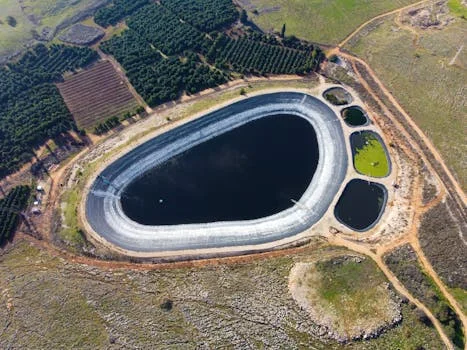
Dutch water-board procurement scores 20-year lifecycle cost, not CAPEX alone. Energy and sludge prices dominate OPEX. Nereda often starts higher in capital cost than conventional activated sludge. Lower energy and land use still improve 20-year net present value.
| Plant Size (PE) | Technology | CAPEX (€/PE) | OPEX (€/m³) | Lifecycle Cost (€/m³) |
|---|---|---|---|---|
| 10,000 PE | Nereda | €650–€750 | €0.18–€0.22 | €0.32–€0.38 |
| 10,000 PE | MBR | €900–€1,200 | €0.35–€0.50 | €0.55–€0.70 |
| 50,000 PE | Nereda | €550–€650 | €0.15–€0.19 | €0.28–€0.34 |
| 50,000 PE | Conventional AS | €350–€500 | €0.22–€0.28 | €0.35–€0.42 |
| 100,000+ PE | Conventional AS | €300–€450 | €0.20–€0.25 | €0.30–€0.40 |
Does secondary treatment justify higher CAPEX?
Secondary biological treatment usually costs less per kilogram of BOD removed once nutrient or reuse limits apply. Primary stages may look cheaper per m³/d of capacity, but they leave most soluble BOD and nutrients untreated. For Dutch permits targeting TN below 10 mg/L and TP near 1 mg/L, extra secondary or tertiary CAPEX is the cost of staying online.
Energy typically takes about 40% of OPEX, sludge disposal about 15%, and skilled labor the rest. For MBR systems for municipal sewage treatment, membrane replacement every 8–10 years can approach 20% of lifetime OPEX. Nereda needs denser instrumentation for granule inventory control, which raises the I&C line item. In Randstad sites, a 75% footprint cut can outweigh process premiums through avoided land and civil works. Benchmarks against MBR systems in EU compliance contexts show Dutch bids often carry higher architectural and integration costs.
EU Urban Waste Water Directive Rules for Dutch Plants
Netherlands municipal sewage plants still operate under Directive 91/271/EEC today. Member States are also transposing the revised Urban Waste Water Treatment Directive adopted by the Council in November 2024. The Netherlands designates its whole territory as a sensitive area under Article 5(8). Article 5(4) then requires at least 75% national removal of TN and TP (EEA WISE). National practice already exceeds that floor: 2024 country averages reached 84.1% TN and 86.8% TP removal (CLO/CBS, 2026).
Under Dutch rules for plants above 10,000 PE, tertiary nutrient removal is the default design path. The revised directive adds staged tertiary and quaternary duties for larger works through 2045. It also sets energy-neutrality targets for plants at or above 10,000 PE by 2045 (Council adoption, Nov 2024). Online sensors for pH, DO, and TSS feed SCADA, with weekly lab checks for COD, TN, and TP. Earlier summaries cited about 95% BOD/TSS compliance and 90% nutrient compliance (CBS 2023). Boards still treat nutrient misses as high-severity events, with fines that can reach €500,000 per violation under the Dutch Water Act.
Why aim below permit discharge limits?
Permit numbers are not the same as design set-points. Meeting a monthly average TN of 10 mg/L with no margin fails in cold weeks or storm dilution swings. Dutch designers therefore target lower effluent indicators so the plant stays inside the permit after real load swings. That choice raises CAPEX and OPEX. It still costs less than emergency dosing, tankerage, or a forced shutdown on recreational or agricultural waters.
Reliable disinfection remains part of the compliance train. Many boards specify chlorine dioxide disinfection for municipal effluent when pathogen limits protect bathing or irrigation uses.
Decision Framework: Choosing Between Nereda, MBR, and Conventional Systems for Dutch Projects
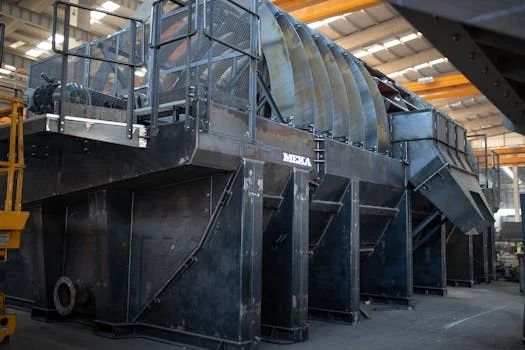
Technology screening for a Dutch municipal rebuild starts with three constraints: land, energy budget, and receiving-water sensitivity. Rural sites with cheap land can still justify conventional activated sludge. Urban and energy-priced sites usually shortlist Nereda or MBR first.
| Constraint | Nereda | MBR | Conventional AS |
|---|---|---|---|
| Footprint < 0.5 m²/PE | Excellent | Superior | Poor |
| Energy Cost > €0.20/kWh | Best Choice | Challenging | Moderate |
| Effluent Reuse (Class A) | Requires Tertiary | Directly Suitable | Requires Tertiary |
| Maintenance Complexity | High (Process) | High (Mechanical) | Low |
| Industrial Shock Load | Moderate | High Resistance | Low Resistance |
A practical decision tree for Dutch engineers follows this logic. If available footprint is below 0.5 m²/PE, Nereda or MBR are the viable shortlist. If energy efficiency leads and capacity exceeds 20,000 PE, Nereda usually wins the NPV comparison. On dense urban infill with almost no surface land, use compact underground integrated sewage treatment or MBR packages under decks or roads. When primary clarification is the bottleneck, install a High-Efficiency Sedimentation Tank (Lamella Clarifier) to stabilize solids loading.
Selection checklist for EPC and water-board teams:
- Confirm PE load for dry weather and 95th-percentile wet weather.
- Map permit TN/TP, pathogen, and any reuse class in writing.
- Measure usable footprint in m²/PE after flood and amenity setbacks.
- Price energy at the board’s 10-year tariff, not today’s spot rate.
- Score sludge haul distance and cake dryness targets.
- Reserve I&C budget for online nutrient sensors if design sits below permit.
- Check quaternary/micropollutant obligations for plants above 150,000 PE under the revised directive timeline.
Who this is for: Dutch water boards, EPC process leads, and procurement teams comparing Nereda, MBR, and CAS for 10,000–100,000+ PE upgrades. Who should look elsewhere: buyers seeking only packaged drinking-water RO or data-center cooling loops. Next step: share influent COD/TN/TP, PE, footprint, and permit limits via our request-quote form. A process engineer can then return a sized shortlist.
Frequently Asked Questions
How many municipal sewage plants does the Netherlands run?
The Netherlands operated 313 municipal sewage treatment plants at the end of 2024, according to CLO/CBS indicator data. Older marketing copy often said “over 330,” which no longer matches the national inventory. Virtually all domestic and most commercial wastewater, plus stormwater that enters combined sewers, is treated at these water-board works before discharge to surface water.
What nutrient removal rates do Dutch plants achieve?
National average removal in 2024 was 84.1% for Total Nitrogen and 86.8% for Total Phosphorus, above the EU 75% Article 5(4) requirement. Individual permits for sensitive receiving waters often demand effluent TN below 10 mg/L and TP near or below 1 mg/L. Design teams therefore size biological and chemical stages for colder weeks and wet-weather dilution, not for annual-average influent alone.
When should a Dutch project choose Nereda over MBR?
Choose Nereda when land is tight, energy price exceeds about €0.20/kWh, and reuse-grade turbidity is not mandatory. Choose MBR when Class A reuse or very low TSS is required without a separate tertiary filter train. Conventional activated sludge still fits large rural sites where clarifier land is cheap and operators prefer simpler mechanical maintenance.
What CAPEX range should boards budget per PE?
Indicative 2025 Dutch ranges are about €650–€750/PE for 10,000 PE Nereda, €900–€1,200/PE for similar MBR capacity, and €300–€500/PE for mid-to-large conventional activated sludge. Lifecycle cost in €/m³ usually favors Nereda when energy and land are expensive, even if first cost is higher than CAS.
Does the revised EU wastewater directive change Dutch designs now?
Yes for long-range planning. The Council adopted the revised Urban Waste Water Treatment Directive in November 2024, adding staged tertiary and quaternary duties through 2045 and energy-neutrality goals for plants at or above 10,000 PE. Dutch boards already meet the old 75% nutrient floor nationally, so near-term designs still focus on local permits, while large plants must reserve space and power for future micropollutant stages.