What Counts as a Filter Press Spare Part vs a Consumable
Filter press spare parts and consumables cost in 2026 typically runs $40–$110 per m² of filter area per year in steady-state operation, dominated by filter cloth replacement ($15–$45/m²-yr), hydraulic oil and seals ($8–$20/m²-yr), and wearing items such as gaskets, feed nozzles, and shifter dogs ($10–$25/m²-yr). Smaller presses under 20 m² carry proportionally higher per-area cost because fixed replacement labor is spread over less area.
For budget planning, separate the two categories cleanly. Spare parts are durable components kept on a shelf for unplanned replacement: hydraulic cylinder seal kits, shift cylinders, plate shifter dogs, drip trays, filter plate handles, check rings, and grommets. A 40-plate press with 20 years of service history typically carries $3,000–$8,000 worth of these on-site at any given time. Consumables are items used up in normal operation: filter cloth, hydraulic oil, wash water, polymer, gasket grease, and filter paper used downstream for polishing.
Filter cloth sits at the boundary. Technically it is replaceable, but in practice it is a recurring OPEX line because cloth life runs 300 cycles on abrasive mining slurries to 1,200 cycles on clean chemical filtrate, with 800–1,000 cycles typical for municipal digested sludge. Plate size also affects the math: presses under 20 m² use 250–630 mm plates and a 30-plate pack, while presses over 100 m² use 800–2,000 mm plates and may carry 60–150 plates — doubling the part count per square meter of filter area. Recessed-chamber plates dominate sludge dewatering; plate-and-frame designs add an extra gasket face and a different cloth mounting system, which raises per-plate consumable cost by 10–20%. When sourcing a new unit, the cloth and gasket formats on HydropureWater's plate-and-frame filter press line follow industry-standard dimensions, which keeps aftermarket cloth and gasket options open.
Filter Cloth Replacement: The Largest Recurring Cost
Filter cloth typically accounts for 35–50% of total annual spare parts spend on a working filter press, and procurement managers consistently underestimate it because cloth is replaced in batches, not as a single line item. In 2026, cloth unit cost in USD per m² of cloth runs $8–$18 for polypropylene, $12–$22 for polyester, and $20–$35 for polyamide (chosen for higher temperature and abrasion resistance above 80 °C or pH below 2). The selected cloth grade moves the annual cloth bill more than any other variable.
Cloth life depends on four feed properties: solids content, abrasiveness (silica content, sharp crystal habit), pH, and operating temperature. The engineering rule of thumb is 800–1,200 cycles for clean municipal or chemical sludge, 300–600 cycles for mining tailings and metal hydroxide slurry, and 200–400 cycles for abrasive mineral concentrates like kaolin or titanium slag. A 50 m² press running 6 cycles per day, 280 operating days per year, at 900 cycles per cloth life consumes roughly 560 m² of cloth annually — a $4,500–$10,000/year line item in 2026 USD before labor.
Mounting style adds a labor surcharge. Gasketed snap-on cloth costs $3–$6 per plate to install and is the cheapest option but allows bypass at the seal face. Sewn-in cloth runs $8–$15 per plate labor but gives better sealing and is mandatory for cake-washing duties on plate-and-frame presses. Cloth washing systems using high-pressure spray bars at 50–80 bar extend cloth life by 20–40% and add 1–2% to CAPEX; the typical payback is 12–18 months on cloth savings alone, and operators also report shorter cycle times because the wash step is faster.
| Cloth Material | 2026 Unit Cost (USD/m²) | Typical Cycle Life | Best-Fit Application |
|---|---|---|---|
| Polypropylene (PP) | $8–$18 | 800–1,200 cycles | Municipal sludge, neutral-pH chemical filtrate |
| Polyester (PE) | $12–$22 | 600–1,000 cycles | Mineral processing, food processing |
| Polyamide (PA) | $20–$35 | 400–700 cycles | High-temp (>80 °C), acidic (pH <2), abrasive |
| PTFE-laminated | $35–$60 | 1,000–2,000 cycles | Aggressive chemical, sticky cake release |
Hydraulic System Parts and Oil: Automatic Presses Only
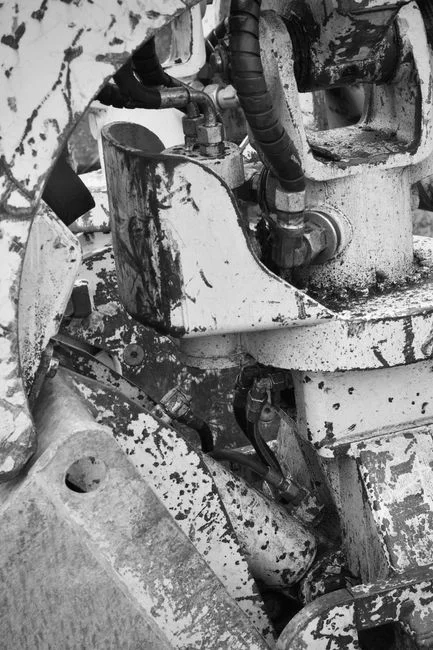
Manual filter presses — jack, gear-and-ratchet, and hand-hydraulic — carry near-zero hydraulic OPEX. The only hydraulic item is the occasional hand-pump seal at $30–$80/year, which is one of the main reasons manual presses remain popular at low-throughput mining camps and remote sites where labor is cheap and skilled hydraulic technicians are scarce.
Automatic and electro-hydraulic presses are a different proposition. The hydraulic reservoir holds 20–80 L of ISO VG 46 hydraulic oil depending on cylinder bore and stroke. Oil change interval is 2,000–4,000 operating hours, and ISO VG 46 in 2026 prices at $4–$8/L in 20 L drums, so each change costs $80–$640. Hydraulic cylinder seal kits run $120–$450 per cylinder and last 8,000–12,000 hours; a two-cylinder press averages one seal change every 4–6 years.
Hydraulic hose replacement is often overlooked. Hoses last 5–8 years and cost $50–$200 each depending on diameter and pressure rating; a typical automatic press carries 4–6 hoses. Pressure gauges, relief valves, and solenoid coils run $80–$300 each and are replaced on failure rather than schedule, but a 3-shift plant should budget two of each on the shelf. For a 30 m² automatic press running 3,000 hours per year, total hydraulic OPEX — oil, seals, hoses, and amortized cylinder rebuilds — lands at $1,200–$2,500/year, equivalent to $40–$83/m²-yr and a major input to the master OPEX table below.
| Hydraulic Component | 2026 Unit Cost (USD) | Replacement Interval | Annual Quantity (30 m² press, 3,000 hr/yr) |
|---|---|---|---|
| ISO VG 46 hydraulic oil | $4–$8 / L | 2,000–4,000 hr (full change) | 0.3–0.7 changes / yr → $80–$640 |
| Cylinder seal kit (per cylinder) | $120–$450 | 8,000–12,000 hr | 0.2 sets / yr → $25–$90 |
| Hydraulic hose (each) | $50–$200 | 5–8 years | 0.7–1.2 hoses / yr → $35–$240 |
| Pressure gauge / relief valve | $80–$300 | On failure | 0.3–0.5 units / yr → $25–$150 |
| Solenoid coil / sensor | $80–$250 | On failure | 0.3–0.5 units / yr → $25–$125 |
Wearing Parts: Gaskets, Nozzles, Plate Shifters, Drip Trays
Wearing parts collectively represent 15–25% of filter press spare parts spend, and they are the line items most often missed by first-time procurement planners because no single item is expensive enough to flag on its own. Plate gaskets on recessed-chamber presses and rubber sealing strips on plate-and-frame presses run $5–$25 per plate and are replaced every 2–4 years; a 40-plate pack costs $200–$1,000 to re-gasket, which is a planned shutdown job rather than an emergency.
Feed nozzles (center eyes) cost $40–$120 each, discharge nozzles (corner eyes) $30–$90 each, and both wear from cake abrasion at the flow transition. Life is 3–6 years on chemical duty and 1–2 years on abrasive mining duty. Plate shifter dogs and wear strips run $60–$250 per set and are replaced every 3–5 years on automatic presses; on a manual press the equivalent wear occurs on the plate shift mechanism and is usually a one-time rebuild. Drip trays, filtrate pans, and cake chutes in galvanized or 304 stainless run $500–$3,000 per press and are replaced on damage rather than schedule — typical life exceeds 10 years unless the chemistry is wrong.
Low-cost items add up: check rings, grommets, and filter plate handles run $5–$40 each and disappear during plate handling. In a busy plant the replacement volume reaches $300–$800/year. Frame fasteners, side bars, and structural pins rarely need replacement, but when they fail on a 15-year-old press, individual parts run $200–$800; keeping one full set on the shelf for legacy presses is standard practice. For procurement leads standardizing across multiple presses, consolidating plate size and cloth format simplifies gasket and nozzle inventory — the savings show up in reduced SKU count, not lower unit price.
Annual Filter Press OPEX per m² of Filter Area
The single most useful budgeting number for a procurement manager is annual spare parts and consumables cost expressed per m² of filter area, because it scales linearly with press size and removes the guesswork from sizing a 5-year spares budget. The 2026 benchmark band is $40–$110/m²-yr for automatic presses and $30–$85/m²-yr for manual presses (no hydraulic oil line item), broken down as follows.
| Cost Category | 2026 USD / m²-yr (Automatic) | 2026 USD / m²-yr (Manual) | Driver |
|---|---|---|---|
| Filter cloth | $15–$45 | $18–$50 | Cycles/yr, cloth grade, feed abrasiveness |
| Hydraulic oil + seals | $8–$20 | $0 | Operating hours, cylinder size |
| Wearing parts (gaskets, nozzles, shifters) | $10–$25 | $8–$20 | Plate count, automation level |
| Miscellaneous (grease, fasteners, wash nozzles) | $5–$15 | $4–$15 | Maintenance discipline |
| Total | $40–$110 | $30–$85 | Duty cycle + feed abrasiveness |
Two adjustment multipliers are essential when applying this table. Duty cycle: a 1-shift plant running 180 days/year sits at the low end of every range; a 3-shift continuous plant at 330 days/year sits at the high end — a roughly 1.8× spread. Feed abrasiveness: mining and mineral processing feeds carry a 1.5–2.0× multiplier against the baseline; municipal and food-processing feeds sit at 1.0×; chemical and pharmaceutical feeds with clean filtrate run 0.8–1.0× because cloth life is longer. Worked example: a 50 m² automatic press, 2-shift operation (260 days/yr), municipal digested sludge, 900 cycles/cloth life → $5,000–$7,500/year steady-state spare parts OPEX. This is consistent with the 8–15% of initial CAPEX per year that industry data shows for filter presses in steady-state duty, and it is the number to anchor a TCO discussion against — for context, see the Total Cost of Ownership Wastewater Plant: 2026 TCO Breakdown for the wider CAPEX-to-OPEX ratio.
OEM vs Aftermarket Spare Parts: Where the Savings Are
The OEM-vs-aftermarket question is not ideological — it is line-item specific. Some parts carry genuine fit, warranty, or spec risk if sourced off-brand; others are pure commodities where the OEM markup is the only differentiator. The defensible rule is to OEM-source critical-spec items and commodity-source everything else.
Always-OEM parts are hydraulic cylinders, branded PLC components, electronic pressure transducers, and any part with a safety-of-function role. Aftermarket savings run 10–25%, but warranty exposure and fit risk on a 250 bar hydraulic cylinder are not worth the delta. The standard procurement approach is OEM-only for the first 2 years of equipment life, then evaluate based on failure history. Commodity parts — filter cloth, gaskets, nozzles, hoses, general hardware — are the savings zone. Aftermarket savings of 30–60% are common, and most major cloth manufacturers (Sefar, Eaton, Filtec) sell direct with technical data sheets that match or exceed OEM-equivalent cloth at lower price. Filter cloth is the easiest part to dual-source: most plants run two grades, a standard cloth for normal cycles and a premium cloth for high-solids or sticky batches, and benchmark both against the OEM offering annually.
Critical-spec parts include cylinder seal kits for high-pressure presses above 250 bar and special-alloy plate shifters for abrasive duty. Here, OEM or certified-equivalent sourcing is the defensible position. Lead time also matters: OEM delivery runs 4–8 weeks, regional stockist 1–2 weeks, on-site shelf 0 days. Holding 3–5% of CAPEX in on-site spares is the standard best practice across mineral processing and chemical plants. Because the cloth and gasket formats on HydropureWater's plate-and-frame filter press follow industry-standard dimensions, aftermarket sourcing is straightforward and lock-in risk is low.
5 Ways to Cut Filter Press Spare Parts and Consumables Cost
- Optimize feed conditioning. The single highest-ROI maintenance change is polymer dose and mixing energy. Better charge-density selection and proper mixing extend cloth life by 20–40% and reduce cake moisture, which shortens cycle time. Pair the press with an automatic polymer dosing skid for consistent dose, and cloth failures drop noticeably within one quarter.
- Install automatic cloth washing. High-pressure spray bars at 50–80 bar cut cloth replacement frequency by 20–40% and reduce wash cycle time, doubling as a downtime reduction. CAPEX impact is 1–2%; payback is 12–18 months.
- Standardize plate size and cloth format across the plant. A 2-press plant saves 25–35% on gaskets and cloth by consolidating inventory. The savings come from reduced SKU count, not lower unit price, and they show up as fewer obsolete parts and shorter stockout resolution times.
- Run within design pressure and feed solids window. Over-pressure accelerates seal and cloth failure. Under-pressure gives wet cake that recirculates and loads downstream equipment, which shortens pump and conveyor life. Track closing pressure and feed % solids on every cycle and alarm on deviation.
- Adopt a preventive maintenance schedule. Plants running 250-hour, 1,000-hour, and 4,000-hour checkpoints report 30–50% lower annual spare parts spend than run-to-failure operations. The discipline forces early detection of seal weep, cloth blinding, and shifter dog wear, and it converts unplanned shutdowns into planned ones.
Frequently Asked Questions
What is the average annual maintenance cost for a filter press?
Steady-state spare parts and consumables OPEX runs $40–$110 per m² of filter area per year for automatic presses in 2026, dominated by filter cloth ($15–$45/m²-yr), hydraulic consumables ($8–$20/m²-yr), and wearing parts ($10–$25/m²-yr). A 50 m² automatic press on 2-shift municipal duty typically lands at $5,000–$7,500/year.
How often should filter cloth be replaced?
Cloth life ranges from 200 cycles on abrasive mineral concentrates to 1,200 cycles on clean chemical filtrate, with 800–1,000 cycles typical for municipal digested sludge. The drivers are feed solids, pH, temperature, and cake release characteristics. Cloth washing at 50–80 bar extends life by 20–40%.
Is it cheaper to run a manual or automatic filter press?
Manual presses eliminate the $8–$20/m²-yr hydraulic line item but require operators on every cycle. The break-even depends on local labor cost: at fully loaded labor below $15/hr, manual wins on 10-year OPEX; above $25/hr, the labor savings from automation outweigh the hydraulic and shifter OPEX within 4–6 years.
Can I use non-OEM filter cloth?
Yes. Filter cloth is the easiest part to dual-source, and aftermarket savings of 30–60% are common when buying direct from major weavers. Most plants run two grades — a standard cloth for normal cycles and a premium cloth for high-solids or sticky batches — and benchmark both annually against the OEM price.
How much hydraulic oil does a filter press use?
Automatic presses hold 20–80 L of ISO VG 46 hydraulic oil depending on cylinder size. Oil change interval is 2,000–4,000 operating hours, and a 30 m² press running 3,000 hr/yr performs roughly one oil change every 1–2 years at a cost of $80–$640 per change.