Why Lamella Clarifier Spare Parts and Consumables Belong in Your OPEX Budget, Not Just CAPEX
Lamella clarifier spare parts and consumables cost typically runs 8–15% of system CAPEX per year, dominated by lamella plate replacement (every 5–10 years, $40–$90 per plate), polymer and coagulant dosing ($0.02–$0.08 per m³ treated), and sludge discharge valves (1–3 year service life). For a 100 m³/h stainless unit, plan $4,000–$9,000 annual OPEX excluding labor.
The reason this number surprises most plant engineers is that the procurement conversation almost always starts on CAPEX. A 2026 Weilan spare-parts package ranges from $8,000 to $60,000 for a stainless unit, which is roughly 10–20% of the system price just for the first round of replacement wear items (Weilan 2026 price list). That figure is a strong tell: the aftermarket segment is material, not incidental. If you only budgeted the upfront purchase order, you have underfunded the asset by a multiple of 5–7 over its service life.
The mechanical reason consumables matter more than the CAPEX line suggests is hydraulic stress. A well-designed HydropureWater high-efficiency lamella clarifier runs at 20–40 m/h surface loading rate — roughly 10–20× a conventional clarifier — and that velocity is what removes solids quickly, but it is also what scours biofilm, drives polymer demand, and shortens plate life when influent TSS drifts upward. The asset is engineered to work hard; the consumables bill reflects that.
The Five Categories of Lamella Clarifier Consumables and Spares
Procurement needs a taxonomy, not a parts list. Every lamella clarifier consumable falls into one of five buckets, and the stocking treatment is different for each. Treating them as a single "spares line item" is how plants end up either overstocked on FRP brackets or waiting 14 weeks for a $300 pinch valve.
| Category | Typical Service Life | Unit Cost Range (USD) | Stocking Treatment |
|---|---|---|---|
| Lamella plates (PP, PVC, FRP) | 5–10 years | $40–$90/plate (PP/PVC); $120–$220/plate (FRP/SS-clad) | Hold 10% spares on site |
| Sludge discharge valves (pinch, knife gate, pneumatic) | 1–3 years | $300–$1,800 per valve | Stock 2 spares per duty valve |
| Polymer and coagulant chemicals | Continuous (consumable) | $0.02–$0.08 per m³ treated | Order on contract, 30–60 day call-off |
| Instrumentation (level, turbidity, flow, pH) | 3–7 years (probe); 2–4 years (wiper/lamp) | $400–$2,500 per probe; $200–$400/yr consumables | Stock 1 of each probe type |
| Support hardware (launder weirs, feed wells, brackets) | 8–15 years | $800–$6,000 per assembly | Order on demand only |
Plate life is governed by three variables: influent TSS, free chloride concentration, and sustained temperature above 50 °C. A municipal plant running 150 mg/L TSS at pH 7 will see 8–10 years; a food processor at 4,000 mg/L and 60 °C CIP rinses will see 3–5. Sludge valve cycle life is the inverse problem: every discharge cycle is one stroke against the sleeve, and a poorly tuned timer cycling the valve 200+ times per shift will eat a pinch valve sleeve in under 12 months.
Lamella Plate Replacement Cost: The Most Visible Spare

Plate replacement is the line item finance remembers, because it shows up as a capex event every 5–10 years rather than as a smooth OPEX line. Per-plate cost runs $40–$90 for PVC and PP, and $120–$220 for FRP or stainless-clad designs (Weilan 2026 spare-parts benchmark). Plate count scales with flow: a 100 m³/h unit typically holds 80–180 plates arranged in 3–5 modular packs, so a full replacement campaign lands in the $7,000–$25,000 hardware range before labor is counted.
Labor is where budgets get surprised. Plate replacement on a 100 m³/h unit takes 8–16 hours of confined-space work per pack, plus a crane or chain hoist to lift the pack clear of the tank. At industrial confined-space rates of $120–$180/hour, plan $1,500–$3,500 per campaign for a 3-pack unit, scaling roughly linearly with pack count. The downstream sludge dewatering filter press receiving the thickened sludge also sees a temporary loading shock during the campaign, so coordinate the dewatering window with operations.
The replacement decision rule, not a calendar: replace when warping exceeds 15% of plates in a pack, or when biofilm fouling covers more than 20% of plate area and does not respond to two consecutive clean-in-place cycles. Below those thresholds, plates are still earning their keep. The biggest avoidable cost in plate replacement is replacing them on a 5-year schedule regardless of condition — that is a $5,000–$10,000 write-off per campaign on a typical 100 m³/h unit.
Chemical Consumables: Polymer, Coagulant, and pH Adjuster
Chemical dosing is the recurring OPEX line that usually dominates the consumables sheet. Polymer dose for sludge thickening on a lamella typically runs 0.5–3 mg/L, and coagulant (PAC, alum, or ferric chloride) runs 20–150 mg/L depending on influent TSS and target turbidity. At 20–40 m/h surface loading, the dose–response curve is steep: cutting loading rate by 20% can reduce coagulant demand by 15–25% with no effluent penalty, because residence time per particle nearly doubles.
Unit cost benchmarks for 2026: cationic polyacrylamide $2.50–$4.50/kg, PAC $0.40–$0.80/kg, ferric chloride $0.60–$1.10/kg. For a 100 m³/h unit running 6,000 hours per year, polymer alone runs $1,800–$5,400/year, coagulant $1,200–$3,600/year, and pH adjuster (when needed) $300–$900/year. That places the chemical line at roughly 50–60% of total annual consumables OPEX for most installations.
An automatic polymer and coagulant dosing system with streaming-current control typically achieves 15–30% chemical reduction versus a fixed-rate pump, because it tracks the dose to actual particle charge rather than flow alone. For plants treating variable influent — stormwater, food processing wash water, mining runoff — that control loop pays back in 6–14 months on chemical cost alone. A few side-by-side comparisons on industrial sites put HydropureWater's high-efficiency plate pack at the upper end of that 30% savings figure versus legacy designs.
Mechanical and Instrument Spares: Valves, Pumps, and Sensors
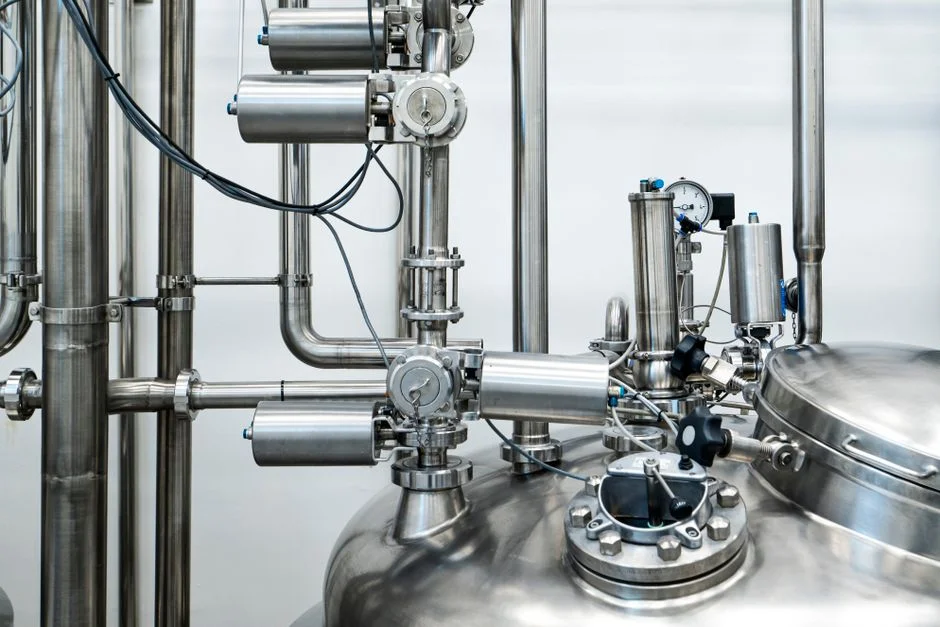
Mechanical and instrument spares are the high-frequency, low-unit-cost items that cause most unplanned downtime on a lamella train. They are individually cheap; collectively they are the reason a $70,000 plant has a $4,000/year small-spares OPEX line. The trick is knowing which ones to stock and which to chase on next-day freight.
| Item | Typical Life | Unit / Rebuild Cost | Recurring Consumable |
|---|---|---|---|
| Sludge pump (progressive cavity / centrifugal) | 3–5 years (bearings/seals) | $800–$3,500 rebuild kit | Mechanical seal, rotor lubricant |
| Solenoid / pneumatic actuator | 2–4 years | $150–$600 each | Solenoid coil, seal kit |
| Turbidity / TSS sensor | 2–4 years (wiper/lamp) | $900–$2,500 each | $200–$400/yr wiper cartridge |
| Inline pH probe | 1–2 years | $250–$600 | Calibration buffers, KCl refill |
| Level transmitter (ultrasonic / hydrostatic) | 5–7 years | $500–$1,200 | None typical |
The pattern above the table matters as much as the numbers. Turbidity sensors fail predictably because the wiper wears out — that is a planned $300/year line, not an emergency. pH probes fail because the reference junction fouls; that is a 12–18 month replace, not a "wait until it drifts." Sludge pump seals fail because the discharge valve above the pump is passing solids back into the suction; fix the valve, and the seal life triples. Most "instrument problems" on lamella trains are actually valve problems wearing the instruments out.
Annual OPEX Calculator: 5-Year Lifecycle Cost for a Reference 100 m³/h Lamella Clarifier
Below is a defensible annual OPEX build for a reference unit: 100 m³/h stainless lamella, 6,000 operating hours per year, 200 mg/L influent TSS, surface loading 25 m/h, polymer dose 1.5 mg/L, coagulant dose 80 mg/L PAC. These are the assumptions to write into the budget memo. If your plant runs higher TSS or longer hours, scale the chemical and valve lines linearly and the plate life inversely.
| Cost Line | Annual Cost (USD) | Driver / Replacement Interval |
|---|---|---|
| Cationic polymer | $2,400 | 1.5 mg/L × 600,000 m³/yr × $2.65/kg |
| PAC coagulant | $1,800 | 80 mg/L × 600,000 m³/yr × $0.55/kg |
| Sludge discharge valves (2) | $700 | 2-year replacement, $700/valve amortized |
| Turbidity & pH probes / buffers | $400 | Wiper cartridges, probe rotation |
| Sludge pump rebuild kit | $700 | 4-year interval, $2,800 rebuild amortized |
| Plate replacement (amortized) | $2,200 | 8-year interval, ~$17,500 campaign amortized |
| Instrumentation (amortized) | $400 | 5-year interval, $2,000 cycle amortized |
| Misc. small spares & actuators | $400 | Solenoids, seals, brackets |
| Total annual consumables & amortized spares | $9,000 (midpoint of $8,000–$12,000 range) | Excludes labor and power |
That $8,000–$12,000 annual figure equates to 10–14% of the $70,000–$90,000 CAPEX benchmark for a 100 m³/h stainless unit from 2026 used-market listings. A doubling of influent TSS to 400 mg/L raises polymer and sludge-valve cost by roughly 35% — the chemical dose is the dominant sensitivity, and valve cycle frequency rises because more solids means more frequent discharge. Power is a separate line: expect 2–4 kW continuous draw on the sludge pump and polymer mixer, or $1,500–$2,800/year at 2026 industrial tariffs.
Sparing Strategy: What to Stock, What to Order, What to Skip
The translation from cost table to procurement policy is short and worth printing. Stock on site: one full set of plates (10% of total, kept crated and dry), two spare sludge discharge valves, one pump seal kit, and one of each probe type. These four lines cover roughly 80% of unplanned downtime events on a typical 100 m³/h installation. Order on demand: launder weirs, structural brackets, FRP feed wells, and tank internals. They have 8–15 year life and 4–12 week lead time, but the failure mode is "wear," not "instant stop," so you can plan.
Skip the original OEM proprietary controller boards when a third-party equivalent exists at under 40% of list price. The board does not know it is proprietary; it only knows its I/O map. The exception is safety-rated PLCs where the certification chain matters — do not skimp there.
The decision rule of thumb worth tattooing on the procurement wall: any item with a lead time longer than 2 weeks and a unit cost above $1,000 should be on the shelf, not in the catalog. Everything else is fair game for vendor-managed inventory or annual call-off contracts. This single rule eliminates most of the "we were down for six weeks waiting on a part" stories you hear from peer plants.
Frequently Asked Questions
How much does annual lamella clarifier OPEX cost for a 100 m³/h unit?
Plan $8,000–$12,000 per year excluding labor and power, dominated by polymer ($2,400), coagulant ($1,800), and amortized plate replacement ($2,200). At 6,000 operating hours and 200 mg/L influent TSS, this equates to roughly 10–14% of the system's CAPEX.
How often do lamella plates need replacement?
Every 5–10 years in typical municipal service, or 3–5 years in hot, high-TSS industrial service. Replace when warping exceeds 15% of plates in a pack or biofilm fouling exceeds 20% and resists CIP, not on a fixed calendar. A 100 m³/h unit typically holds 80–180 plates at $40–$90 each for PP/PVC.
What is the polymer dose for a lamella clarifier?
Cationic polyacrylamide at 0.5–3 mg/L for sludge thickening, and 20–150 mg/L of coagulant (PAC, alum, or ferric) for turbidity reduction. At 2026 prices, polymer alone runs $1,800–$5,400 per year for a 100 m³/h unit on 6,000 hours, and an automatic polymer and coagulant dosing system with streaming-current control can cut that 15–30%.
How long do sludge discharge valves last?
1–3 years depending on cycle frequency. Pinch valves on a poorly tuned timer cycling 200+ times per shift can fail inside 12 months; a properly timed cycle at 20–40 actuations per shift typically sees 2–3 year life. Budget $300–$1,800 per valve and stock two spares per duty valve on site.
How do I cut lamella OPEX without hurting effluent quality?
Three levers, in order of payback: install automatic dose control on the polymer feed (6–14 month payback, 15–30% chemical reduction); rebuild the sludge valve cycle timer to minimize actuations (often halves valve OPEX); and reschedule plate replacement to condition-based rather than calendar-based, which typically extends intervals by 1–3 years. None of these change the hydraulic design or the effluent — they all attack waste in the consumables line. For context on a comparable OPEX build, see the DAF maintenance cost comparison and the ultrafiltration consumables cost guide, which use the same line-item structure for adjacent technologies. For a biological-process comparator, the IFAS spare parts and consumables cost piece covers the moving parts on the aeration side.