Why COD and Suspended Solids Must Be Removed Together
Chemical Oxygen Demand (COD) is the standard mass-based measure of oxidisable organic pollutants in water, expressed in mg/L or ppm (Arvia Technology, 2026). Suspended solids (SS) is a separate, mass-based parameter that captures insoluble particulates, including the floatable, colloidal and fibrous fractions that physically carry or shield organics. Because the two parameters measure different things, a treatment stage that drops SS does not automatically drop COD: biological flocs that settle well may still release soluble organics, and clarified effluent can carry high dissolved COD with very low SS.
Discharging either parameter in excess triggers environmental and commercial damage. Excessive COD discharged to receiving water depletes oxygen and causes hypoxia and death of aquatic organisms (PeerJ, 2017). Regulators therefore enforce both KPIs simultaneously, with typical discharge limits placed below 120 mg/L COD in the EU and below 50 mg/L COD in China (Arvia Technology, 2026). A compliant plant must design for both pollutants in a coupled train, not chase them with a single unit.
The Four-Stage Treatment Train at a Glance
A defensible COD/SS treatment train is a sequence of four stages, each removing a defined fraction of the load. Stage 1, preliminary treatment, uses mechanical bar screens and grit removal to protect downstream pumps and membranes from rags, plastics and abrasive solids; a typical duty unit is the rotary mechanical bar screen. Stage 2, primary treatment, strips settleable and floatable solids plus a portion of particulate COD using sedimentation, lamella clarification, or dissolved air flotation (DAF) for suspended solids and floatables. Stage 3, secondary (biological) treatment, oxidises biodegradable COD using activated sludge, A/O, SBR or an MBR membrane bioreactor; published treatment experience places cumulative primary and secondary COD removal at 75–85% (Arvia Technology, 2026). Stage 4, tertiary polishing, targets the remaining non-biodegradable COD and fine SS using MBR membrane separation, multi-media filtration or advanced oxidation.
| Stage | Function | Typical Equipment | Target Pollutant |
|---|---|---|---|
| 1. Preliminary | Protect downstream equipment | Bar screens, grit chambers | Rags, grit, large debris |
| 2. Primary | Remove settleable/floatable solids | Clarifier, lamella, DAF | Particulate SS, FOG, particulate COD |
| 3. Secondary (biological) | Oxidise biodegradable organics | Activated sludge, A/O, SBR, MBR | Biodegradable COD, BOD |
| 4. Tertiary / polishing | Hit residual targets | UF, multi-media, AOP, adsorption | Recalcitrant COD, fine SS, trace organics |
Stage 1 and 2: Pretreatment, Screening and Primary Solids Removal
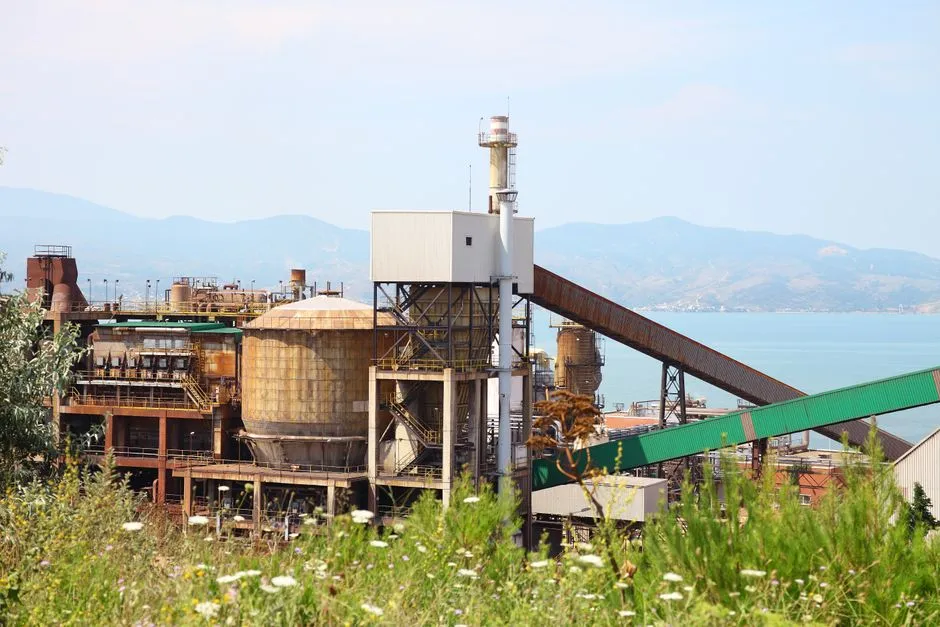
The front of the plant decides whether everything downstream works. Rotary mechanical bar screens continuously remove rags, plastics and fibrous debris before the lift station, which prevents ragging of pumps, biofouling of aerators and shock loads on the biological stage. Dissolved air flotation (DAF) then uses fine micro-bubbles to lift suspended solids, fats, oil and grease, and colloidal matter; it is proven across food, pulp and paper, textile, metalworking and petrochemical pre-treatment duty. Standard DAF models cover 4–300 m³/h across 13 sizes, so selection should be driven by flow, SS loading and surfactant content rather than by catalogue capacity. Where footprint is tight, a high-rate lamella clarifier with sludge recirculation and inline flocculation operates at surface loading rates of 20–40 m/h and can reduce coagulant consumption by up to 30%, a useful choice when the building footprint is fixed and the upstream stream is variable. Both DAF and lamella are best paired with an automatic chemical dosing skid so that coagulant and polymer feed tracks the actual influent load rather than a fixed setpoint.
Stage 3: Biological Treatment for Biodegradable COD
Biological treatment is where the bulk of biodegradable COD is consumed; this is the fraction that activated sludge, A/O contact oxidation, sequencing batch reactors (SBR) and membrane bioreactors (MBR) are designed to oxidise (Arvia Technology, 2026). The configuration is chosen from influent strength, footprint, reuse targets and the operator skill available on site. Conventional activated sludge remains the workhorse for high-flow municipal and food plants with land available. The MBR membrane bioreactor couples activated sludge with submerged PVDF membrane filtration, delivers near-reuse-quality effluent with sub-1 µm filtration and a 60% smaller footprint than a conventional clarification-plus-basin layout, and accepts influent variability that would upset a settling tank. MBR modules are available in 80–225 m² configurations producing 32–135 m³/day per module, with 10–20× lower energy consumption than external cross-flow systems. For sites with limited plot area, hotels, hospitals, factories and rural communities, an underground package plant combining anoxic/aerobic contact oxidation with sedimentation and disinfection in a single buried unit handles 1–80 m³/h with no dedicated operator. All of these biological configurations are sensitive to upstream SS swings, which is why primary solids removal is non-negotiable.
Stage 4: Tertiary Polishing for Recalcitrant COD and Fine SS
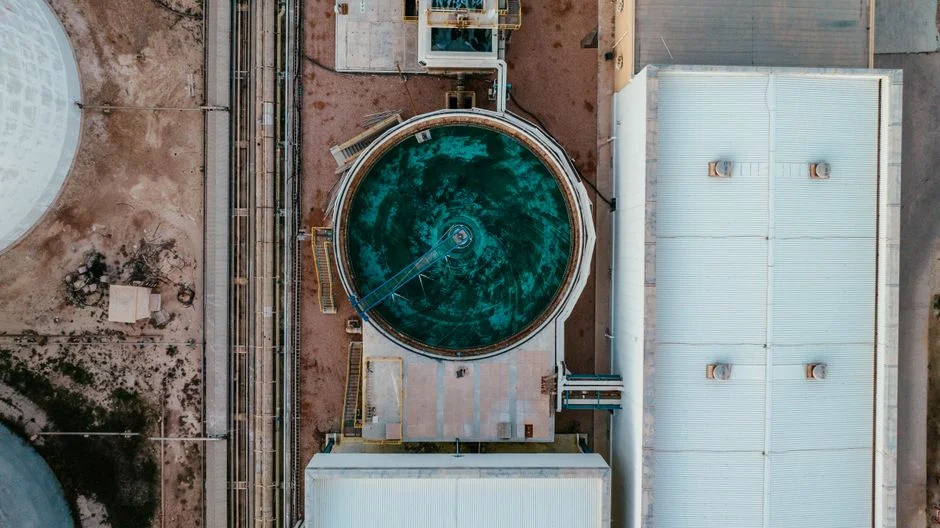
The residual COD that survives the biological stage is dominated by non-biodegradable, recalcitrant compounds, and removing it is the explicit purpose of advanced tertiary processes (Arvia Technology, 2026). Advanced oxidation (AOP) using ozone, UV/H₂O₂, Fenton or peroxone breaks down organics that biology cannot, and the right variant must be selected after bench-scale treatability trials because scavenging demand varies sharply between food, textile and chemical matrices. For the SS side, an ultrafiltration polishing system using PVDF hollow-fibre membranes at 0.03 µm removes bacteria, colloids and suspended solids without chemicals and accepts feedwater turbidity up to 300 ppm, which makes it a robust polishing step ahead of any reverse osmosis or reuse loop. Where the plant is also targeting water reuse, multi-media filtration reduces turbidity and silt density index (SDI) to protect the RO membranes that follow. Engineering selection across these polishing options is covered in the AOP system design guide for 2026.
| Polishing Option | Primary Target | Strength | Selection Driver |
|---|---|---|---|
| AOP (O₃, UV/H₂O₂, Fenton) | Recalcitrant COD | Mineralises non-biodegradable organics | Treatability trial, scavenging demand |
| Ultrafiltration (PVDF, 0.03 µm) | Fine SS, colloids, bacteria | Chemical-free, tolerates up to 300 NTU feed | Reuse targets, RO pre-treatment |
| Multi-media filtration | Turbidity, SDI | Protects downstream RO | Reuse, consistent low-SD feed |
Choosing the Right Polishing Technology: DAF vs MBR vs Clarifier vs AOP
The polishing-slot decision is the one the engineer actually has to make, and it should be driven by the target KPI, influent variability, footprint, and the energy and chemical budget available. DAF excels at floatable SS, oil and grease, and colloidal load, and the 4–300 m³/h model range lets it scale from a small food plant to a large textile effluent line; common operational issues and their fixes are documented in the DAF troubleshooting guide for 2026. MBR excels at simultaneous low-SS and low-COD polishing with reuse-quality effluent, at the cost of membrane aeration energy and periodic chemical cleaning. AOP (ozone, UV/H₂O₂, Fenton, peroxone) attacks the non-biodegradable COD fraction specifically, and selection depends on treatability testing because scavenging demand varies by industry. A conventional clarifier is the lowest-energy option but does not solve residual soluble COD, so it is rarely the polishing slot on its own for plants chasing the EU or China limits.
| Technology | Best For | Footprint | Energy / Chemical | Residual SS | Residual COD |
|---|---|---|---|---|---|
| DAF | Floatables, FOG, colloids | Compact | Low energy; polymer | Low | Modest |
| MBR | Simultaneous SS + COD polishing | Compact | Membrane aeration; CIP chemicals | Very low (sub-1 µm) | Low |
| Clarifier (conventional) | Bulk settleable SS | Large | Lowest energy | Moderate | Limited on soluble COD |
| AOP | Recalcitrant / non-biodegradable COD | Moderate | High electrical; H₂O₂ or O₃ | No direct effect | Low, if matched to matrix |
Compliance Targets and How to Plan Around Them
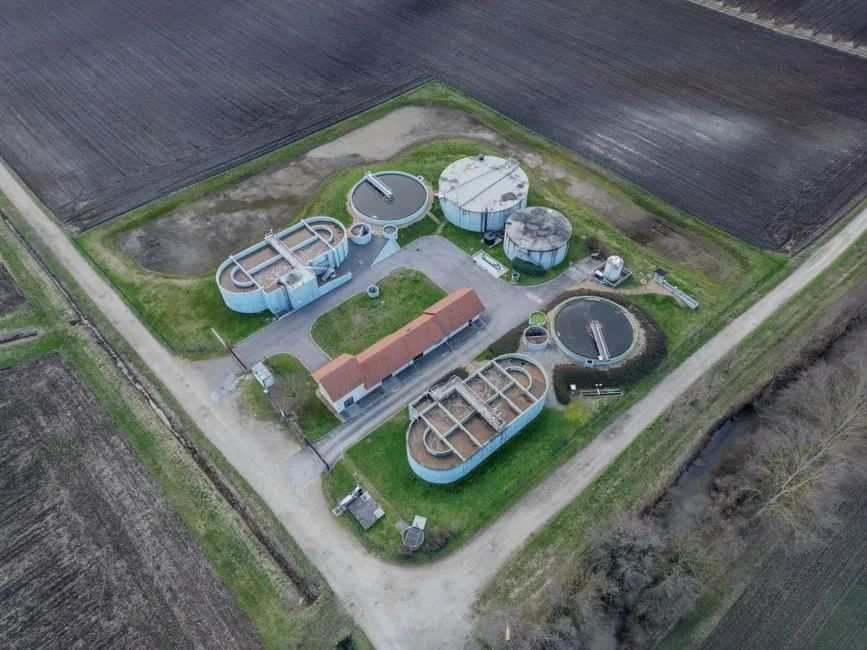
The realistic design envelope for an industrial plant exporting to sewer or watercourse is framed by the EU COD discharge threshold below 120 mg/L and the China threshold below 50 mg/L (Arvia Technology, 2026). A concrete tightening example is China's GB4287-2012 textile standard, which lowered the textile direct-discharge COD ceiling to 100 mg/L and the indirect-discharge ceiling to 200 mg/L, down from a previous 500 mg/L (PeerJ, 2017). Because residual targets depend entirely on influent strength and matrix, the design process must start with a treatability trial on a representative 24-hour composite sample rather than on assumed values; all published performance ranges must be validated per project following an in-depth treatability trial (Arvia Technology, 2026). Final disinfection, typically UV sterilisation or a chlorine dioxide generator, sits after the polishing step so that turbidity no longer shields microbes and the pathogen target can be hit consistently. Water reuse targets, where applicable, change the polishing train entirely and are covered separately in water reuse and loss reduction strategies.
| Region / Standard | Discharge Route | COD Limit | Implication for Design |
|---|---|---|---|
| EU (general, per Arvia, 2026) | Surface water / sewer | < 120 mg/L | Biological train alone often sufficient; tertiary polish for margin |
| China (general, per Arvia, 2026) | Surface water / sewer | < 50 mg/L | Tertiary or AOP polish typically required |
| China GB4287-2012 textile (per PeerJ, 2017) | Direct discharge | ≤ 100 mg/L | Tightened from 500 mg/L; tertiary needed |
| China GB4287-2012 textile (per PeerJ, 2017) | Indirect discharge (sewer) | ≤ 200 mg/L | Biological train with polishing margin |
Sizing, Treatability Testing and Procurement Checklist
A supplier cannot size a compliant train from a flow number alone. The inputs the engineer must hand over are: a 24-hour composite influent profile for COD, BOD, TSS, pH, temperature, FOG, salinity, and bromide, plus the peak instantaneous flow. Bromide matters because standard COD test methods can be biased in bromide-rich industrial wastewater, and the test method itself should be reviewed before any limit is taken at face value (S1, Chemosphere, 2019). Bench- or pilot-scale treatability data is required to confirm that the biological and tertiary stages hit design COD and SS targets, because all performance ranges must be validated per project (Arvia Technology, 2026). The procurement decision must also fix the discharge route in advance: sewer, surface water, or reuse, because the polishing train and the disinfection choice change with that route. A plate-and-frame filter press for sludge dewatering and an automatic chemical dosing skid for coagulant and polymer feed complete the bill of materials that the supplier should be asked to quote as a single train, not as loose skids.
Frequently Asked Questions
What budget should a plant engineer plan for a COD and SS treatment train?
No project-specific CAPEX or OPEX figure is provided in the cited research, so cost must be scoped against the variables that drive it: influent COD and SS load, peak flow, the discharge route (sewer vs surface water vs reuse), the polishing technology selected, and the level of automation. The actionable check before requesting a price is to fix the 24-hour composite influent profile and the discharge route, then ask each supplier to quote on the same influent envelope and the same compliance target so that bids are comparable.
How do we choose between DAF, MBR and AOP suppliers for the polishing step?
Supplier selection should be driven by treatability-test evidence on the actual wastewater, validated COD and SS removal data from reference plants of similar matrix, and the supplier's ability to integrate the polishing unit with the upstream biological train. The actionable check is to require documented reference plants in the same industry (food, textile, paper, chemical) and pilot or bench data on a representative sample before signing.
What inputs do we need before we can size a biological or MBR system?
Sizing requires a representative 24-hour composite influent profile covering COD, BOD, TSS, pH, temperature, FOG and salinity or bromide, plus the peak instantaneous flow and the target effluent quality. The actionable check is to confirm the COD test method itself, because standard methods can be biased in bromide-rich industrial wastewater (S1, Chemosphere, 2019), and to commission a treatability trial before any biological or MBR sizing is frozen (Arvia Technology, 2026).
What is the compliance risk if we miss the COD or SS limit?
Missing a COD or SS limit can mean loss of permit, operational downtime, limited production volume, severe fines, and reputational and environmental damage (Arvia Technology, 2026). The actionable check is to size the polishing stage with measurable margin against the published limit (for example, the EU < 120 mg/L or China < 50 mg/L envelope) and to validate that margin on a treatability trial before procurement, rather than designing to the limit itself.