What Counts as UF Spare Parts and Consumables
Ultrafiltration spare parts and consumables typically run $0.04–$0.18 per m³ of permeate in 2026, with replacement hollow-fiber UF membranes ($35–$120/m²) accounting for 45–65% of total UF consumable spend. Cartridges, CIP chemicals, dosing pumps, pressure gauges, and flow sensors add another 35–55%, depending on feedwater quality and CIP frequency. Defining the boundary clearly up front keeps your RFQ line items defensible.
An industrial UF consumable bill of materials breaks into five categories: (1) membranes and modules, (2) cartridge or bag prefilters, (3) CIP chemicals including antiscalant, (4) rotating-equipment spares — pump seals, valve diaphragms, relief valves, and (5) instrumentation — pressure transmitters, flow meters, conductivity probes, and turbidity sensors. Each category recurs on a different driver: membranes on years or TMP creep, cartridges on weeks, chemicals on CIP cycles, mechanical spares on hours, and sensors on fouling rate or calibration drift.
Public lab-supply catalogs set the floor on unit-pricing transparency. Sterlitech lists disposable UF units at $24.65–$199.27 and scale-inhibitor replacement kits at $397.00–$605.00 (Sterlitech catalog, accessed 2026). Those numbers are useful as evidence that vendors do publish line-item pricing — but industrial UF modules, housings, and CIP volumes operate at a different price scale entirely. Consumables are not one-time CAPEX line items; they recur on hours, cycles, or permeate volume, which is why they belong in the OPEX column of a 2026 maintenance budget, not the spare-parts inventory ledger.
UF Membrane Modules and Replacement Cost
Hollow-fiber UF membranes cost $35–$120/m², flat-sheet PVDF modules run $80–$180/m², and tubular ceramic modules run $400–$900/m² in 2026 industrial pricing (HydropureWater field data, 2026). Membrane replacement is the single largest line in a UF consumable budget and the first figure a procurement manager should defend in a 2026 RFQ.
Replacement interval is driven by feedwater SDI, TMP creep, and CIP frequency rather than a calendar date. Hollow-fiber PVDF modules typically last 3–7 years on industrial wastewater and 5–8 years on clarified surface water. Flat-sheet PVDF runs 5–8 years across most feeds. Tubular ceramic modules routinely exceed 10 years because the alumina or titania substrate resists chemical degradation that destroys polymeric fibers.
Molecular-weight cut-off is the spec buyers should anchor on. Sterlitech catalogs 10K, 50K, and 200K MWCO disposables for bench work; industrial UF operates in the 0.01–0.1 μm pore range, equivalent to roughly 1K–100K MWCO, which determines both rejection performance and price per m². Tighter cut-offs cost more because the membrane layer is denser and the flux is lower, so more area is needed for the same permeate flow.
Module-area sizing math makes the cost concrete. A 50 m³/h plant running at a design flux of 60 LMH (liters per m² per hour) needs roughly 833 m² of installed membrane. At $35–$120/m² for hollow fiber, that translates into $29,160–$99,960 in membrane inventory alone — before housings, end caps, or seals. For plants that need both UF and downstream biological treatment, the same permeate stream can feed an integrated MBR wastewater treatment system, in which case UF modules are often staged upstream of the MBR tank.
| Geometry / Material | 2026 Price ($/m²) | Replacement Interval | Best-Fit Feed |
|---|---|---|---|
| Hollow fiber, PVDF | $35–$120 | 3–7 years | Clarified wastewater, surface water |
| Flat sheet, PVDF | $80–$180 | 5–8 years | Mixed industrial feeds, MBR sidestream |
| Tubular ceramic (Al₂O₃/TiO₂) | $400–$900 | 10+ years | High-TDS, oily, harsh-CIP feeds |
Cartridge and Bag Pre-Filters
Industrial PP melt-blown cartridges cost $8–$45 each depending on length (10″–40″) and rating (1–100 μm), and stainless-steel backwashable screen filters run $400–$2,200 per unit with a 2–5 year service life. Prefilters are the most frequently replaced item in a UF consumable BOM and protect the membrane from particulate loading that drives premature CIP cycles.
Replacement interval is feedwater-driven. Raw wastewater feed on a UF skid typically forces cartridge changes every 2–8 weeks because suspended solids in the 5–50 μm range load the filter rapidly. Clarified or DAF-treated feed extends that to 8–16 weeks. Plants that skip the multi-media pre-filter stage upstream of the UF rack usually see cartridge consumption double and membrane life drop by 30–40%.
The annual cost model is straightforward. A 100 m³/h plant with raw-wastewater feed consumes roughly 600 cartridges per year (about 12/week at 50 m³/h flow per 40″ housing). At $8–$45 per cartridge, that is $4,800–$27,000 per year on prefilters alone — a line item that frequently surprises procurement teams who budgeted for membranes and forgot the cartridges. Bag filters in stainless housings cut that recurring cost by 60–70% on flows above 50 m³/h but require backwash automation and a higher initial CAPEX line.
| Prefilter Type | Unit Price (2026) | Replacement Interval | Annual Cost, 100 m³/h Plant |
|---|---|---|---|
| PP melt-blown cartridge, 10″, 5 μm | $8–$15 | 2–4 weeks | $1,800–$3,400 |
| PP melt-blown cartridge, 40″, 5–25 μm | $25–$45 | 2–8 weeks | $4,800–$27,000 |
| Stainless backwashable screen, 100 μm | $400–$2,200 | 2–5 years | $300–$1,100 amortized |
| Bag filter, felt, 25–100 μm | $5–$18 | 1–4 weeks | $1,400–$4,800 |
CIP Chemicals, Dosing and Antiscalant
Standard UF CIP chemicals — NaOH at 0.2–0.5% w/w, citric acid at 0.1–0.3%, and NaOCl at 100–300 ppm — translate into $0.01–$0.04/m³ of permeate at 2026 bulk pricing, with antiscalant adding another $0.003–$0.012/m³. CIP is the second-largest consumable line on most industrial UF systems and the most controllable OPEX lever a plant engineer owns.
Bulk chemical pricing in 2026 runs $0.30–$0.80/kg for NaOH (50% solution basis), $1.20–$2.50/kg for citric acid, and $0.20–$0.60/kg for NaOCl (12.5% solution). A typical UF CIP cycle uses 200–400 L of diluted solution per square meter of membrane area per cleaning event, so a 50 m³/h plant with 833 m² of membrane consumes 165–330 m³ of CIP solution per cycle depending on flow configuration. At the dosing rates above, that lands the chemicals line at roughly $0.01–$0.04/m³ of permeate produced between CIP events.
CIP frequency drives the OPEX multiplier. Industrial wastewater feed typically needs 2–3 CIP cycles per week to hold TMP below 1.0 bar; clarified surface water can run one cycle per week. Doubling CIP frequency roughly doubles the chemicals line. Antiscalant is dosed continuously upstream of the UF rack at 2–5 mg/L, costs $1.80–$4.50/L of commercial product, and is delivered through an automatic chemical dosing skid sized to the feed flow.
Sterlitech lists scale-inhibitor replacement kits at $397.00–$605.00 and carbon-system replacement kits at $221.00 (Sterlitech catalog, 2026), which is a useful pricing reference for the antiscalant and CIP chemical line items in your RFQ even though the volumes are orders of magnitude smaller than industrial dosing. Plan for chemical storage tank capacity of 1.0–1.5× the largest single CIP batch to avoid mid-cycle refill shutdowns.
| Chemical | Concentration | Bulk Price (2026) | Cost Contribution ($/m³ permeate) |
|---|---|---|---|
| NaOH (caustic) | 0.2–0.5% w/w | $0.30–$0.80/kg | $0.005–$0.018 |
| Citric acid | 0.1–0.3% w/w | $1.20–$2.50/kg | $0.004–$0.015 |
| NaOCl (bleach) | 100–300 ppm | $0.20–$0.60/kg | $0.002–$0.010 |
| Antiscalant | 2–5 mg/L continuous | $1.80–$4.50/L | $0.003–$0.012 |
Pumps, Valves and Rotating-Equipment Spares
Feed-pump mechanical seals cost $180–$650 each and last 12–24 months; pneumatic diaphragm valve rebuild kits run $90–$280 with an 18–36 month service life; backwash-blower relief valves need $60–$220 per unit on annual scheduled replacement. Rotating-equipment spares are the smallest consumable line by spend but the largest source of unplanned UF downtime when not stocked.
Most UF feed pumps run between 2–6 bar and see continuous duty; backwash pumps cycle 2–4 times per hour and accumulate seal wear faster than the feed pump. Specifying a spare seal kit for each rotating pump on the skid at the time of purchase adds 0.3–0.5% to CAPEX and cuts mean-time-to-repair from 48–72 hours (procurement lead time) to under 4 hours. Pneumatic diaphragm valves on CIP and backwash headers fail on diaphragm fatigue, not on cycles; plan a rebuild at 18 months and full replacement at 36 months.
Solenoid coils on the air-actuated valves run $40–$110 each and are the cheapest spare to stock; relief valves on the backwash blower and pressure vessels need scheduled replacement at $60–$220 per unit annually because set-point drift is common. Spare bearings for the backwash pump cost $80–$260 and should be replaced every 3–5 years or aligned with the seal change. The combined rotating-equipment spares line typically lands at 5–10% of total UF consumable spend, or $0.003–$0.015/m³ of permeate.
Instrumentation and Sensor Replacement
Pressure transmitters cost $420–$1,400 each with a 5–8 year life; magnetic flow meters run $1,800–$4,500 with 8–12 year life and $260–$540 replacement electrodes; conductivity probes run $180–$480 replaced every 12–24 months; permeate turbidity sensors run $1,200–$3,200 plus $300/year in wipe-clean consumables. Instrumentation is the smallest UF OPEX line by percentage but the most routinely skipped in budget planning.
Annualized instrumentation cost per UF train lands at $1,800–$6,500 in 2026, depending on the number of measurement points and whether the plant uses smart transmitters with HART or basic 4–20 mA units. Conductivity probes are the highest-frequency replacement item because CIP residue and biofouling degrade the electrode response; budget for 2 probes per train per year. Turbidity sensors on the permeate line are critical for verifying membrane integrity, and the wipe-clean consumables (wiper blades, calibration standards) should be a separate line at roughly $300/year per sensor.
Plants that integrate UF with a downstream DF series PVDF flat sheet membrane module often share conductivity and turbidity instruments across the UF and MBR stages, which can drop the annualized instrumentation cost by 20–30%. Plan for 5–10% of total UF consumable spend on instrumentation, or $0.003–$0.012/m³ of permeate.
Building the 2026 UF OPEX Per Cubic Meter
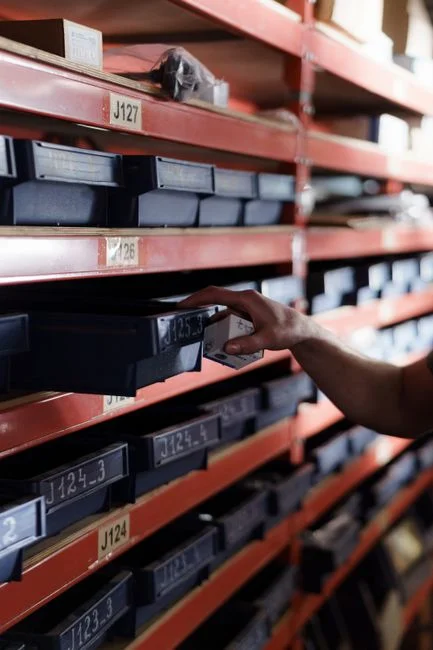
Total UF consumables OPEX lands at $0.04–$0.18/m³ of permeate in 2026 for industrial plants, with membranes taking 45–65%, chemicals 15–25%, cartridges 5–15%, and pump/valve spares plus instrumentation splitting the remaining 10–20%. This per-m³ figure is the single number a procurement manager should be able to defend in front of a 2026 RFQ review board.
Worked example: a 50 m³/h UF plant running 16 hours per day, 330 days per year, produces 264,000 m³ of permeate annually. At the midpoint of the consumables range, that is $0.11/m³ × 264,000 m³ = roughly $29,000/year in consumables, with a low-to-high spread of $10,560–$47,520. Membranes account for $13,000–$19,000 of that midpoint figure, chemicals for $4,400–$7,300, and the balance split across cartridges, spares, and sensors.
Three ROI levers move the OPEX line more than any vendor negotiation. First, DAF or multi-media pre-treatment upstream of the UF rack typically extends cartridge life by 2–3× and adds 6–12 months to membrane life, cutting consumables by 15–25%. Second, automated CIP scheduling tied to TMP rather than calendar time eliminates 20–40% of CIP chemical spend on plants that default to weekly CIP regardless of fouling rate. Third, permeate-side turbidity feedback used as a membrane-integrity trigger defers premature membrane swaps; a 6-month deferral on a 833 m² hollow-fiber rack saves $5,800–$20,000. For CAPEX context, see the UF system CAPEX and sizing guide.
| Consumable Category | Share of UF OPEX | 2026 Cost ($/m³ permeate) | Driver |
|---|---|---|---|
| UF membranes and modules | 45–65% | $0.018–$0.117 | Years, TMP creep |
| CIP chemicals + antiscalant | 15–25% | $0.006–$0.045 | CIP cycles/week |
| Cartridge and bag prefilters | 5–15% | $0.002–$0.027 | Feedwater SDI |
| Pump and valve spares | 5–10% | $0.002–$0.018 | Operating hours |
| Instrumentation and sensors | 5–10% | $0.002–$0.018 | Fouling rate, calibration drift |
| Total UF consumables | 100% | $0.04–$0.18 | — |
Frequently Asked Questions
How much do UF membranes cost per m² in 2026?
Hollow-fiber PVDF modules run $35–$120/m², flat-sheet PVDF runs $80–$180/m², and tubular ceramic runs $400–$900/m². Membrane cost typically accounts for 45–65% of total UF consumable OPEX, which is why membrane price per m² is the first line to lock down in any 2026 RFQ.
How often should UF cartridge prefilters be replaced?
PP melt-blown cartridges on raw wastewater feed need replacement every 2–8 weeks; on clarified or DAF-treated feed, every 8–16 weeks. A 100 m³/h plant typically spends $4,800–$27,000/year on cartridges, making this the highest-frequency replacement line in the BOM.
What is the typical UF CIP chemical dosing rate?
NaOH at 0.2–0.5% w/w for organics, citric acid at 0.1–0.3% for scale, and NaOCl at 100–300 ppm for biofouling. Combined chemical cost lands at $0.01–$0.04/m³ of permeate, with 2–3 CIP cycles per week for industrial wastewater feed.
What is the average UF membrane replacement interval?
Hollow-fiber PVDF membranes last 3–7 years, flat-sheet PVDF lasts 5–8 years, and tubular ceramic exceeds 10 years. Replacement is driven by TMP creep and irreversible fouling rather than a fixed calendar, which is why automated CIP scheduling extends membrane life by 20–40%.
How do you budget UF consumables per m³ of permeate?
Budget $0.04–$0.18/m³ in 2026 for industrial plants, split across membranes, chemicals, cartridges, spares, and instrumentation. For deeper lifecycle optimization tactics, see the membrane replacement cost optimization guide.
Related Equipment
- hollow-fiber UF system flow range and specs — Operators budgeting consumables can check current system specs before replacing or upgrading.
- replacement UF membranes and cartridges — The consumables list maps to stock elements fitting any supplier's plant.