Taiwan’s Municipal Sewage Treatment Landscape: Key Plants and Capacity
Taiwan operates over 50 municipal sewage treatment plants, with the largest—Dihua (500,000 t/day) and Neihu (240,000 t/day) in Taipei—using Class-2 biochemical and step-VIP treatment methods, respectively. These plants achieve 90-95% BOD removal under Taiwan’s EPA effluent standards (BOD < 30 mg/L, SS < 30 mg/L). Costs range from $0.15–$0.30 USD/m³ for OPEX, with CAPEX for new plants averaging $1,200–$1,800 USD per daily ton of capacity. Performance-based contracts (ROT model) are standard, incentivizing energy efficiency and water quality improvements.
The sewage infrastructure in Taiwan is characterized by a high concentration of capacity in northern and southern industrial hubs. In the North, the Taipei-New Taipei-Taoyuan corridor manages the highest volume of domestic waste, driven by a population density of 9,950 people per km² in Taipei. In the South, particularly Kaohsiung, the focus has shifted toward integrated water resource centers that combine municipal treatment with industrial-grade reclaimed water production to mitigate seasonal droughts. Influent characteristics typically range from 200–400 mg/L for BOD and 250–500 mg/L for TSS, necessitating robust primary and secondary treatment stages.
| Plant Name | Location | Capacity (t/day) | Primary Treatment Method | Key Focus |
|---|---|---|---|---|
| Bali Sewage Treatment Plant | New Taipei City | 1,320,000 | Primary Sedimentation/Ocean Outfall | Large-scale regional processing |
| Dihua Sewage Treatment Plant | Taipei City | 500,000 | Deep Aeration (Class-2 Biochemical) | Urban footprint optimization |
| Linhai Water Resource Center | Kaohsiung City | 300,000 | Combined Wastewater/Reclaimed Water | Industrial water supply |
| Neihu Sewage Treatment Plant | Taipei City | 240,000 | Semi-underground Step-VIP | Odor control and land reuse |
| Futian Sewage Treatment Plant | Taichung City | 193,000 | Conventional Activated Sludge | Central Taiwan hub |
| Nanzi Sewage Treatment Plant | Kaohsiung City | 75,000 | SBR / Biological Treatment | Industrial/Municipal mix |
| Anping Sewage Treatment Plant | Tainan City | 63,000 | Activated Sludge | Cultural heritage zone protection |
| Taoyuan North District Plant | Taoyuan City | 50,000 | MBR / Bio-filtration | High-growth residential area |
| Guishan Sewage Plant | Taoyuan City | 35,000 | Oxidation Ditch | Industrial park integration |
| Zhongli Sewage Plant | Taoyuan City | 30,000 | Bardenpho Process | Nitrogen and Phosphorus removal |
Growth in this sector is currently dictated by the 2021-2026 Reclaimed Water Resources Development Act, which mandates that specific industrial zones in Taoyuan and Kaohsiung must use a percentage of reclaimed water. This has shifted the design of new municipal plants from simple disposal facilities to sophisticated production centers where effluent quality must meet industrial cooling and process water standards.
Treatment Technologies Used in Taiwan’s Municipal Plants
Treatment processes in Taiwan are increasingly moving toward compact, high-efficiency systems due to severe land scarcity. The Dihua plant, for instance, utilizes a deep aeration system within an underground structure to maximize capacity without impacting the surrounding urban environment. Similarly, the Neihu plant employs the step-VIP (Virginia Initiative Plant) method, which is an enhanced biological nutrient removal (BNR) process designed to maximize nitrogen and phosphorus removal within a semi-underground footprint.
For newer installations and upgrades, engineers are weighing the trade-offs between Conventional Activated Sludge (CAS), Membrane Bioreactors (MBR), and Sequencing Batch Reactors (SBR). MBR systems are particularly favored in Taoyuan and Taipei, where land costs are prohibitive; they offer a 60% smaller footprint compared to CAS while producing effluent that often bypasses the need for tertiary filtration. For smaller or rural installations, underground sewage treatment plants for space-constrained sites provide a discreet solution that integrates biological treatment and sedimentation into a single buried vessel.
| Technology | Footprint Requirement | Effluent Quality (BOD/SS) | Operational Complexity | Best Use Case in Taiwan |
|---|---|---|---|---|
| CAS (Conventional) | High (100%) | < 20 / 20 mg/L | Moderate | Large plants with available land (e.g., Bali) |
| MBR | Low (30-40%) | < 5 / 1 mg/L | High (Membrane cleaning) | Urban centers and water reuse projects |
| SBR | Medium (70%) | < 15 / 15 mg/L | Moderate (Automation heavy) | Areas with high flow variability |
| Step-VIP | Medium (60%) | < 10 / 10 mg/L | High (Nutrient control) | Sensitive watersheds requiring N/P removal |
Energy efficiency has become a critical performance metric under Taiwan’s "Purchase of Service" contracts. The Ministry of Environment (MOE) provides energy/resource subsidies to vendors who implement carbon deduction technologies. This includes the use of high-efficiency aeration diffusers and solar-integrated sludge drying beds. Modern MBR systems for compact municipal sewage treatment in Taiwan are now designed with automated scouring air control to reduce the energy consumption of membrane maintenance, which historically accounted for up to 50% of an MBR plant’s energy bill.
Regulatory Compliance and Effluent Standards in Taiwan
The Taiwan EPA (now Ministry of Environment) enforces strict effluent standards that are comparable to international benchmarks but include specific local requirements for color and specific conductivity in industrial-heavy zones. For municipal sewage, the standard limits are BOD < 30 mg/L, SS < 30 mg/L, and COD < 100 mg/L. However, many plants in the "Water Resource Center" category aim for much higher standards to facilitate water reuse.
Water reuse standards in Taiwan are among the most stringent in Asia to support the semiconductor and heavy industry sectors. Reclaimed water intended for industrial use must maintain a turbidity of < 2 NTU and residual chlorine > 1 mg/L to prevent biofouling in distribution pipes. Achieving these levels requires advanced disinfection, where chlorine dioxide disinfection for Taiwan’s water reuse standards is often preferred over traditional liquid chlorine due to its superior efficacy against viruses and lower formation of trihalomethanes (THMs).
Environmental Impact Assessments (EIA) are required for any new plant exceeding 10,000 t/day capacity or any expansion in sensitive catchment areas. The EIA process typically spans 6 to 12 months and focuses heavily on odor control and sludge management plans. In the case of the Kaohsiung Linhai project, the plant had to demonstrate not only compliance with wastewater discharge but also a net-positive impact on local groundwater levels by providing 33,000 tons of reclaimed water daily to the Linhai Industrial Park, thereby reducing the park’s reliance on fresh water.
Cost Breakdown: Building and Operating a Municipal Sewage Plant in Taiwan
Financial modeling for Taiwan’s sewage sector relies on a blend of government grants and the Rehabilitate-Operate-Transfer (ROT) or Build-Operate-Transfer (BOT) models. For a standard 100,000 t/day municipal plant, the Capital Expenditure (CAPEX) typically ranges from $120 million to $180 million USD. Land acquisition in Taiwan is a significant outlier, often accounting for 15-20% of the total cost in western corridor cities, which drives the preference for underground or semi-underground designs.
Operational Expenditure (OPEX) in Taiwan is influenced by subsidized industrial electricity rates but countered by high sludge disposal costs. Sludge treatment and disposal now account for approximately 10-15% of total OPEX as landfill space becomes increasingly limited. The average OPEX of $0.15–$0.30 USD/m³ covers energy, chemicals, labor, and routine maintenance.
| Cost Component | Percentage of CAPEX | Estimated Cost (100k t/day Plant) |
|---|---|---|
| Civil Works & Piping | 30% | $36M – $54M |
| Mechanical & Electrical Equipment | 40% | $48M – $72M |
| Land Acquisition (Urban) | 15% | $18M – $27M |
| EPC & Engineering Services | 15% | $18M – $27M |
| Total CAPEX | 100% | $120M – $180M |
Return on Investment (ROI) for these projects is generally calculated over an 8 to 12-year period. For a 50,000 t/day plant serving a population of 200,000, the Net Present Value (NPV) at a 7% discount rate remains positive, provided the plant secures a long-term "Purchase of Service" agreement from the local municipality. These contracts often include escalators for chemical costs and energy price fluctuations, protecting the operator’s margins. To see how these economics vary globally, engineers can compare how Taiwan’s sewage treatment compares to other regions like East Africa, where lower land costs but higher energy prices change the ROI landscape.
Equipment Selection Guide for Taiwan’s Municipal Plants
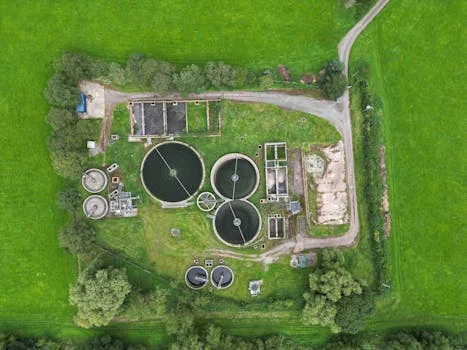
Selecting equipment for Taiwan’s municipal plants requires a focus on durability and automated maintenance to counteract the high cost of skilled labor. For influent screening, the high TSS loads (250–500 mg/L) common in Taiwanese sewers necessitate fine screening equipment for Taiwan’s high-TSS municipal wastewater. Rotary mechanical bar screens with a 6-10 mm aperture are standard for primary protection, followed by 1-3 mm fine screens if MBR technology is used downstream.
Biological treatment selection is a choice between CAS and MBR. In the Dihua renewal project, the transition to high-efficiency aeration diffusers and advanced DO (Dissolved Oxygen) sensors allowed the plant to maintain Class-2 standards while reducing energy consumption by 12%. For new projects in residential zones, MBR is often the only viable choice due to its ability to provide 99% pathogen removal without the need for large secondary clarifiers.
Sludge management is the final, and perhaps most critical, equipment consideration. Given that sludge disposal costs in Taiwan range from $50 to $100 USD per ton, maximizing cake solids is essential. A plate and frame filter press is often preferred over centrifuges for municipal sludge in Taiwan because it can achieve 25-30% cake solids, significantly reducing the volume of waste transported to incinerators. integrating an automatic chemical dosing system ensures that polymer usage is optimized, preventing the "blinding" of filter cloths and maintaining high throughput.
| Process Stage | Recommended Equipment | Key Specification for Taiwan |
|---|---|---|
| Pre-treatment | Rotary Bar Screen (GX Series) | Stainless Steel 316, < 10mm gap |
| Biological | MBR Membrane Modules | PVDF material, < 0.1 micron pore size |
| Disinfection | ClO2 Generator | Dosage: 2–5 mg/L; residual control |
| Dewatering | Plate & Frame Filter Press | > 25% cake solids target |
| Chemical Dosing | Automated Dosing Skids | PLC integration with flow sensors |
For rural or decentralized applications, such as the White Stone Cirque Agri-tourism Area in Taipei, engineers often specify smaller-scale sewage treatment solutions for Taiwan’s rural areas. These package plants allow for localized treatment and reuse, bypassing the need for expensive sewer network expansions in mountainous or remote terrain.
Frequently Asked Questions
How many municipal sewage treatment plants are currently operating in Taiwan?As of 2025, Taiwan operates over 50 municipal sewage treatment plants. These range from massive facilities like the Bali plant (1.32 million t/day) and Dihua (500,000 t/day) to smaller, localized facilities serving rural districts. The network is currently expanding through the development of Water Resource Centers that emphasize water reclamation.
What are the typical effluent standards for sewage plants in Taiwan?The Taiwan Ministry of Environment (formerly EPA) sets municipal standards at BOD < 30 mg/L, SS < 30 mg/L, and COD < 100 mg/L. For reclaimed water projects, standards are significantly stricter, often requiring turbidity < 2 NTU and specific limits on nitrogen and phosphorus to prevent industrial equipment scaling.
What is the average cost to build a sewage treatment plant in Taiwan?The CAPEX for a municipal plant in Taiwan typically averages between $1,200 and $1,800 USD per daily ton of capacity. For a 100,000 t/day plant, this results in a total cost of $120–$180 million USD, with mechanical equipment and civil works comprising approximately 70% of the budget.
Why is MBR technology becoming popular in Taiwan’s municipal sector?MBR is favored due to Taiwan’s extreme land scarcity and the push for water reuse. MBR systems require 60% less footprint than conventional activated sludge and produce high-quality effluent that meets industrial reuse standards, making them ideal for urban plants like the Taoyuan North District facility.