Czech Regulatory Framework for Food Processing Effluent in 2026
Food processing wastewater treatment in the Czech Republic in 2026 sits inside a four-layer legal stack: Act No. 254/2001 Coll. (the Water Act) as the umbrella statute, Government Decree No. 401/2015 Sb. as the controlling industrial effluent instrument, IED 2010/75/EU BAT conclusions for Food, Drink and Milk industries (Commission Implementing Decision 2019/2031, with the 2024 revision entering Czech enforcement practice during 2025–2026), and the Urban Waste Water Treatment Directive 91/271/EEC for plants discharging to a municipal sewer. The 2024 BAT revision lowered several food-sector AELs by 10–30% for COD, total nitrogen, and total phosphorus versus the 2019 baseline, and Decree 401/2015 Sb. is being amended in the 2024–2026 cycle to mirror those floors.
For a permit applicant, the practical question is which ceiling binds. IED-licensed plants above the BAT throughput thresholds (e.g. >75 t/day dairy intake, >100 t/day slaughter carcass, >300 m³/day brewery discharge) follow the BAT-AEL ranges and are inspected by the Czech Environmental Inspectorate (ČIŽP) under IED 2010/75/EU. Sub-IED plants discharge to sewer under a municipal-WWTP agreement but still must meet Decree 401/2015 Sb. ceilings at the connection point. A 2026-specific obligation for meat and rendering operations above the BAT threshold is quarterly monitoring of AOX, dioxins (PCDD/F), and chlorinated compounds, with limits typically expressed as ng TEQ/L for dioxins and mg/L Cl for AOX.
| Parameter | Typical 2026 Czech ceiling (food/beverage, sewer discharge) | Source |
|---|---|---|
| pH | 6.0–8.5 | Decree 401/2015 Sb. |
| COD | ≤ 120 mg/L (sub-IED); 25–125 mg/L AEL band (IED) | Decree 401/2015 Sb. / BAT-AEL Food, Drink and Milk 2019 (2024 revision) |
| BOD5 | ≤ 25 mg/L | Decree 401/2015 Sb. |
| TSS | ≤ 30 mg/L | Decree 401/2015 Sb. |
| Total nitrogen | ≤ 15 mg/L (sub-IED); 10–25 mg/L AEL band (IED) | Decree 401/2015 Sb. / BAT-AEL |
| Total phosphorus | ≤ 2 mg/L | Decree 401/2015 Sb. |
| Oils/grease (FOG) | ≤ 5 mg/L | Decree 401/2015 Sb. |
| Conductivity / chlorides | Site-specific in permit | Decree 401/2015 Sb., Annex |
Exact values are sensitive to receiving-water body class, plant throughput, and whether the plant discharges to a municipal WWTP with biological nutrient removal. Treat the table as a permit-prep baseline, not a free pass.
Influent Characteristics by Czech Food Sub-Sector
One biological plant rarely serves two food sub-sectors well — influent swings are too wide and the FOG:N:P balance changes too sharply. Food and beverage processing consumes 66% of global industrial freshwater on average and up to 90% in some breweries and dairies (Springer, Advances in Wastewater Treatment in Food Processing Industries, 2023), which is why water reuse and the MBR/RO polish stage have become permit-relevant in Czechia, not just sustainability theatre.
Four effluent characteristics decide train architecture: high BOD/COD load, fats-oils-grease (FOG), nitrogen from protein-rich streams, and pH/thermal shock from cleaning-in-place (CIP) cycles. A brewery and a dairy look superficially similar (both carbohydrate-rich) but a dairy carries 200–1,500 mg/L fats that a brewery rarely sees, and a meat plant carries blood/paunch solids that no amount of biological design can ignore.
| Sub-sector | COD (mg/L) | BOD5 (mg/L) | TSS (mg/L) | FOG (mg/L) | Total N (mg/L) | pH | Key challenge |
|---|---|---|---|---|---|---|---|
| Brewery | 2,000–6,000 | 1,200–3,500 | 200–1,000 | 50–300 | 30–80 | 4–11 (CIP swings) | Thermal/pH shock, high seasonal variability |
| Dairy | 1,000–5,000 | 600–3,000 | 200–800 | 200–1,500 | 50–200 | 5–11 | Lactose-driven BOD, FOG fouling, N removal |
| Meat / slaughter | 2,000–10,000 | 800–4,000 | 500–3,000 | 200–1,000 | 100–400 | 6–9 | Blood/paunch solids, high N, pathogen load |
| Snack / bakery | 2,500–8,000 | 1,500–4,500 | 300–1,500 | 300–1,200 | 20–80 | 4–9 | Starch and oil, batchy flow, solvent residues (ATEX) |
Use the table to position your plant on the FOG × BOD × N matrix. If two of the three are in the high column, you need DAF as a non-negotiable pre-stage, A/O (or SBR) for biological nutrient removal, and MBR as the polishing barrier — not a conventional activated sludge basin with a clarifier.
The 2026 Reference Treatment Train: Screening → DAF → Biological → MBR
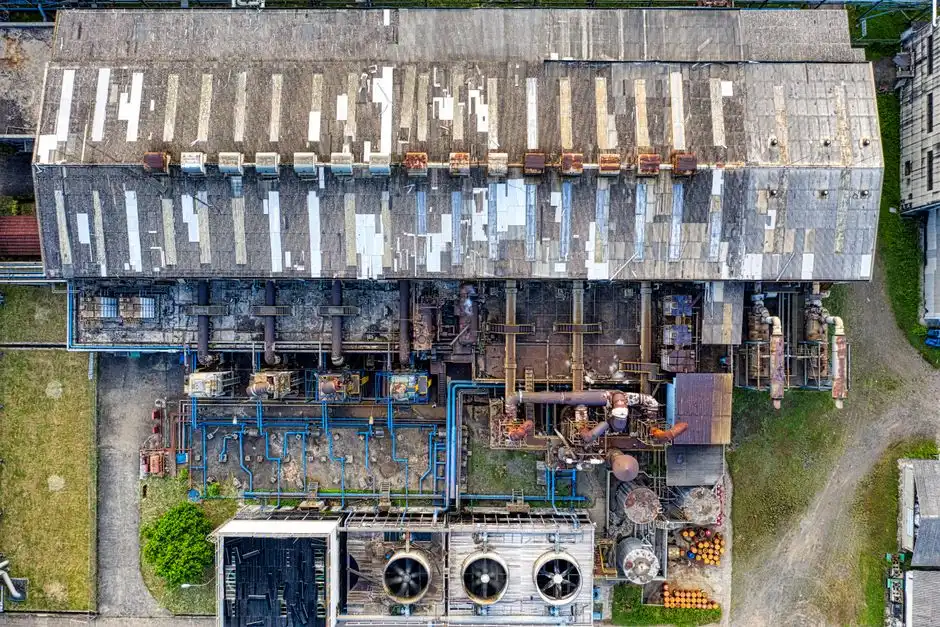
The canonical 2026 train at a Czech brewery, dairy, or meat plant is a four-stage line: rotary screening → DAF → biological (A/O or SBR) → MBR, with an optional RO polish for water-reuse plants. This is the configuration Czech designers specify and ČIŽP inspectors recognise from the process-flow diagrams in IED permit files.
Stage 1 — Rotary mechanical bar screen (1–3 mm aperture). A GX series rotary bar screen protects the DAF and MBR from ragging and grit; the 1–3 mm aperture is the industry compromise between capture rate and headloss.
Stage 2 — Dissolved Air Flotation (DAF). The DAF system covers 4–300 m³/h across 13 models, uses micro-bubble saturation, and runs an automatic skimmer. DAF typically removes 60–90% of suspended solids and FOG ahead of the biological stage, drops the inlet COD by 30–50%, and is non-negotiable for dairy and meat streams where FOG would otherwise coat the downstream MBR membrane within days.
Stage 3 — Biological stage. Use A/O (anoxic + aerobic) for breweries and dairies that must denitrify to ≤ 15 mg/L total N; SBR for batch-flow snack and bakery plants where equalisation happens inside the reactor; MBBR as a retrofit option when existing concrete tanks cannot be expanded. Target MLSS 3,000–5,000 mg/L for A/O and HRT 18–36 h for FOG-bearing streams.
Stage 4 — MBR polishing. An integrated MBR system with submerged PVDF flat-sheet or hollow-fiber modules (0.1 μm nominal pore size) replaces the secondary clarifier. Typical MBR effluent: turbidity < 1 NTU, TSS < 5 mg/L, COD ≤ 60 mg/L, which means the MBR effluent usually meets Decree 401/2015 Sb. without a tertiary clarifier. Footprint is roughly 60% smaller than conventional activated sludge at the same load.
Stage 5 (optional) — RO polish. An industrial RO polish skid is added for breweries and dairies pursuing water reuse under the BAT-AEL water-efficiency benchmark, with recovery up to 70–75% per pass and 85–95% across two-pass configurations.
Equipment Sizing, Sludge & Disinfection: The Supporting Package
A spec that stops at DAF + MBR will not pass an IED permit review. The supporting package — sludge dewatering, chemical dosing, and disinfection — is what turns a treatment train into a compliant plant.
Sludge from DAF plus the biological stage typically arrives at 2–4% dry solids; a plate-and-frame filter press (1–500 m² filter area) dewaters it to a 22–28% DS cake that passes the landfill acceptance threshold. Use the design rule of 0.4–0.8 kg dry sludge per kg BOD5 removed to size the press — a 500 m³/day dairy plant at 2,000 mg/L BOD produces roughly 400–800 kg DS/day and needs a 30–60 m² press.
Chemical dosing — a PLC-controlled chemical dosing skid — handles coagulant and polymer for DAF, pH correction for CIP swings, and optional carbon-source (methanol or acetate) dosing for post-denitrification in winter when biological activity slows. A high-efficiency lamella clarifier (surface loading 20–40 m/h) is a useful pre-DAF roughing stage or low-footprint alternative for plants with constrained civils.
Disinfection closes the loop. A chlorine dioxide generator (50 g/h to 20,000 g/h capacity) is preferred where residual disinfection matters in the receiving sewer; UV is the choice for plants feeding an RO polish or a water-reuse loop where residual oxidants would damage the RO membrane.
2026 CAPEX and OPEX Benchmarks for Czech Food Plants
Budget defence is the part of the project that lives or dies in procurement. The figures below are 2026 indicative bands for a turnkey scope (screening, DAF, A/O, MBR, civil works, instrumentation, commissioning) and exclude land acquisition, VAT, and the cost of any building envelope. They are band-level, not line-item, and they should be triangulated against at least two vendor quotes.
| Flow (m³/day) | Indicative turnkey CAPEX (CZK, 2026) | Indicative OPEX (CZK/m³ treated) | Dominant OPEX line items |
|---|---|---|---|
| 200 | 18–32 million | 6.5–10 | Aeration 40–50%, sludge 20–30% |
| 500 | 38–70 million | 5.5–9 | Aeration 40–50%, sludge 20–30%, chemicals 10–15% |
| 1,000 | 70–130 million | 5.0–8 | Aeration 40–50%, sludge 20–30%, labor 10–15% |
The strongest payback lever in 2026 is the MBR+RO water-reuse loop. MBR+RO typically cuts freshwater intake 60–80% in breweries and dairies, and at current Czech industrial water tariffs (roughly CZK 80–150/m³ depending on region) the RO skid pays back in 2–4 years for plants near a freshwater-supply or discharge-volume constraint. Plants operating under the BAT water-efficiency benchmark recover faster.
Equipment Selection Checklist for Czech Food-Plant Buyers
Hand this list to the vendor at RFQ stage. Items in bold are disqualifying; the rest are scoring criteria.
| Criterion | What to demand in writing | Why it matters |
|---|---|---|
| Process guarantee | Vendor guarantees effluent COD, BOD, TN, FOG at the stated flow and temperature | Permit transferability |
| Compliance evidence | CE marking on skids; IED 2010/75/EU compliance language; ClO₂ reference to Directive 98/83/EC if shared intake | ČIŽP file completeness |
| Automation | PLC with Czech/English HMI, remote telemetry, BOD/COD/oil-in-water online analyzers (see the BOD online monitoring system guide) | IED monitoring obligations |
| Service | 24/7 Czech-language support, ≤ 8 h on-site response, EU spare-parts stocking | Uptime & permit continuity |
| Documentation | Czech-language operating manual, ATEX zoning for solvent-cleaned bakeries, ČIŽP-acceptable commissioning protocol | Permit handover |
For snack and bakery lines specifically, cross-check the snack food wastewater treatment plant supplier guide for solvent and ATEX detail; for bakeries, the MBR for bakery wastewater design guide covers starch and oil handling.
Frequently Asked Questions
What are the binding Czech effluent limits for a 500 m³/day brewery discharging to sewer in 2026? Decree 401/2015 Sb. ceilings of COD ≤ 120 mg/L, BOD5 ≤ 25 mg/L, TSS ≤ 30 mg/L, total N ≤ 15 mg/L, and FOG ≤ 5 mg/L apply at the connection point, with site-specific tightening in the permit. IED-licensed breweries above 300 m³/day discharge also follow the BAT-AEL bands under Commission Implementing Decision 2019/2031 (2024 revision).
Does a sub-IED food plant still need an MBR, or is conventional activated sludge enough? CAS with a well-operated secondary clarifier can technically meet Decree 401/2015 Sb. for BOD and TSS, but it rarely holds total N ≤ 15 mg/L without dedicated denitrification volume, and it fails on FOG spikes. An integrated MBR system gives a 60% smaller footprint and decouples effluent quality from sludge settleability — which is why it has become the 2026 default for new Czech food-plant builds.
How is FOG monitored continuously to satisfy 2026 IED reporting? Online oil-in-water analyzers (typically UV fluorescence or solvent-extraction types) feed the plant SCADA and quarterly ČIŽP reports; the oil and grease online monitoring guide walks through the technology choice and the 5 mg/L FOG alarm setpoint that triggers CIP review.
What is the realistic 2026 payback for adding an RO polish in a Czech dairy? With freshwater tariffs of CZK 80–150/m³ and MBR+RO cutting intake 60–80%, the RO skid typically pays back in 2–4 years, faster under the BAT water-efficiency benchmark where the permit incentivises reuse.