What Is a BOD Online Monitoring System?
A BOD online monitoring system continuously measures biochemical oxygen demand in wastewater in real time, eliminating the 5-day delay of lab BOD5 testing (Standard Method 5210B). Modern systems use fluorescence respirometry, UV-VIS spectral analysis, or microbial electrode sensors, delivering ±5–10% accuracy versus lab results with measurement cycles of 5–15 minutes and per-probe costs ranging from $8,000 to $60,000 USD.
The 5-day BOD5 test, performed under Standard Method 5210B by diluting a sample, seeding, incubating at 20 °C, and measuring dissolved oxygen depletion, remains the legal reference method for nearly every discharge permit worldwide. Its weakness is structural: by the time the result is logged, the discharge event that caused the exceedance is already 120 hours in the past. A continuous analyzer inverts that information flow, giving the operator a real-time view of organic load on the aeration basin, the clarifier, and the final effluent.
In practice, three measurement principles dominate the 2026 market. Fluorescence respirometry uses immobilized or free microbes whose metabolism is tracked through NADH fluorescence or oxygen consumption, producing a 5–15 minute cycle. UV-VIS spectral estimation correlates absorbance at 254 nm with organic load via a site-calibrated BOD/COD ratio, delivering a 1–3 minute cycle. Microbial electrode sensors rely on a biofilm fixed to an oxygen electrode; the current drop is proportional to BOD, with cycles of 8–20 minutes.
Regulatory targets frame the value proposition. EU IED 91/271/EEC sets a treated effluent BOD of 25 mg/L, China GB 18918-2002 Grade 1A holds 20 mg/L, and typical NPDES permits enforce a 30 mg/L monthly average. A continuous signal within 10–15% of those limits is the difference between preventing a violation and documenting one after the fact.
How the Three Sensor Principles Work
Fluorescence respirometry achieves ±5–8% accuracy by measuring metabolic activity in near-real-time. Immobilized or suspended microbes consume organics in a sealed flow cell; the instrument tracks either NADH autofluorescence or dissolved oxygen drawdown, with a 5–15 minute cycle. The method responds to biodegradable organics directly, tolerates turbidity swings up to 500 NTU, and recovers from a 24-hour toxic-shock shutdown through reactivation solutions. The trade-off is biological: the microbial population must be acclimated, and reagent-grade nutrients cost $200–$500 per probe per year (per HydropureWater field data, 2026).
UV-VIS spectral estimation runs the fastest cycle of the three, 1–3 minutes, by measuring UV absorbance at 254 nm (a proxy for aromatic and double-bonded organic carbon) and converting it to a BOD-equivalent value through a site-calibrated ratio typically between 1.5 and 2.5 BOD/COD. Accuracy lands at ±8–12% on stable municipal influent. The limitation is fundamental: the sensor measures organic carbon, not oxygen demand, so any shift in influent composition — surfactant loads, color bodies, humic acids — degrades the correlation. Turbidity above 200 NTU fouls the optical window, and the unit must compensate for color interference at wavelengths above 350 nm.
Microbial electrode BOD sensors fix a living biofilm on a Clark-type oxygen electrode. As the biofilm respires the sample, the current drops in proportion to BOD, yielding ±5–10% accuracy over an 8–20 minute cycle. Sensitivity is excellent in the low range (≤30 mg/L), making the principle popular for drinking water, surface water, and final effluent polishing. Weaknesses are operational: toxic shock kills the biofilm and requires 24–72 hours of reactivation, and the membrane must be replaced every 30–60 days.
| Parameter | Fluorescence Respirometry | UV-VIS Spectral | Microbial Electrode |
|---|---|---|---|
| Measurement cycle | 5–15 min | 1–3 min | 8–20 min |
| Accuracy vs lab BOD5 | ±5–8% | ±8–12% | ±5–10% |
| Best matrix fit | Variable industrial load | Stable municipal sewage | Low-BOD (≤30 mg/L) / drinking water |
| Cleaning interval | 7–30 days | 30–90 days | 14–30 days + biofilm reactivation |
| Toxic-shock recovery | Reactivation solution, 4–8 h | No impact (optical) | Biofilm replacement, 24–72 h |
| Reagent consumption | Low (buffer + nutrients) | None | Moderate (buffer + replacement biofilm) |
BOD Online vs Lab BOD5: Accuracy, Turnaround, and Use Cases
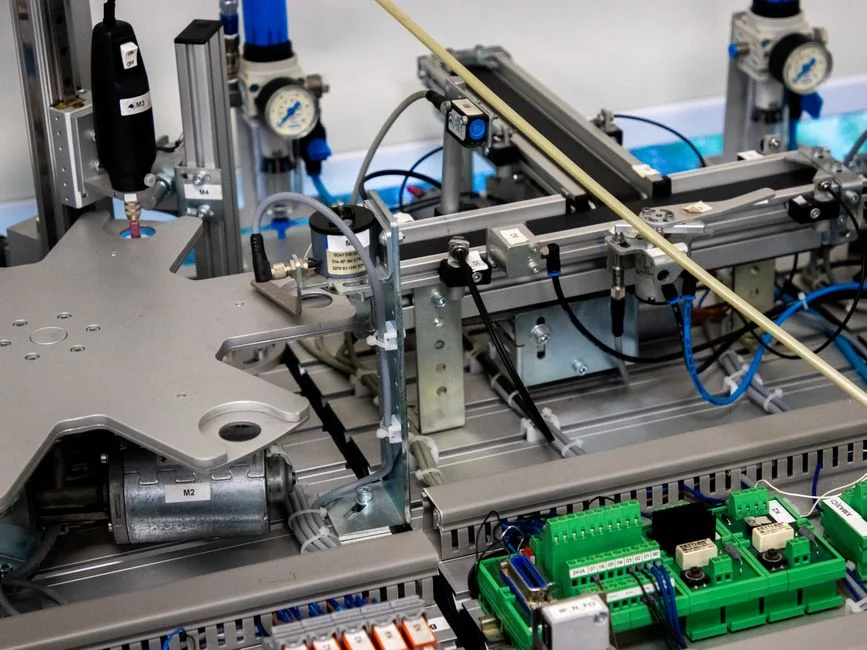
Lab BOD5 under Standard Method 5210B remains the legal reference method in 2026 across the US, EU, and China. A continuous BOD sensor is classified as an "equivalent" or "surrogate" method and requires a documented correlation study before a regulator will accept the data on a Discharge Monitoring Report (DMR). The turnaround gap is the structural reason the technology exists: lab BOD5 takes 120 hours from sample collection to signed result; online sensors deliver a value every 5–15 minutes, a 1,000–10,000× reduction in information latency (HydropureWater field data, 2026).
Accuracy is closer than most procurement documents suggest. Inter-laboratory reproducibility on the same BOD5 sample sits at ±15–20% between accredited labs — a fact often buried in method footnotes. A well-calibrated online probe shows ±5–10% day-to-day repeatability against the same lab, and a properly executed correlation study typically yields r² values of 0.80–0.95 across 30–50 paired samples. For process control — trimming aeration DO setpoints, managing recycle ratios, protecting an MBR membrane bioreactor system from organic overload — online BOD is unambiguously the right tool. For the monthly DMR signature line, the lab result still rules in most jurisdictions.
Regulators have moved toward conditional acceptance. US EPA, EU member-state authorities, and China MEE generally accept continuous online BOD for self-monitoring reports if a correlation study against lab BOD5 with r² ≥ 0.8 is documented, the probe carries a third-party certification (MCERTS, ISO 17025-equivalent), and the operator maintains a quarterly paired-sample audit. The standard sanity check when only online COD is available is the BOD/COD ratio, which typically runs 1.5–2.5 for municipal sewage and 2.5–4.0 for biodegradable industrial effluent. Operators should validate this ratio for their own matrix and flag excursions that suggest a shift in influent composition — a useful early warning for an operator navigating 2026 self-monitoring reporting requirements.
Pricing, Installation, and Total Cost of Ownership
Capex in 2026 splits cleanly by principle. UV-VIS spectral probes land at $8,000–$22,000 USD per probe, microbial electrode units at $12,000–$30,000 USD, and fluorescence respirometry systems at $18,000–$45,000 USD, before installation. Add 30–60% of probe cost for a sidestream rack with filtration and flow control, or 50–100% for an in-situ immersion assembly with an auto-clean head and retraction mechanism. A fully commissioned single monitoring point in 2026 therefore sits between $12,000 and $90,000 depending on architecture and sensor class (HydropureWater market data, 2026).
Opex is dominated by consumables and labor. Microbial electrode systems consume $200–$500/year in reagents; all three principles need cleaning solution and instrument air at $300–$800/year; calibration buffer and standard solutions run $400–$1,200/year. Technician time averages 0.5–1.5 hours per week at $40–$80/hour fully loaded, or roughly $1,000–$6,000/year per probe. Add a mid-life probe refurbishment (replacement optics, membrane, or biofilm cartridge) at year three, and the 5-year TCO per monitoring point lands in the $45,000–$180,000 range.
Against the alternative, lab BOD5 costs $25–$60 per sample in commercial lab fees, with 3–5 samples per week for routine NPDES self-monitoring — $4,000–$15,000/year in lab fees alone, plus 5-day result delay. Most industrial plants recover the online BOD capex within 12–30 months through avoided violations, optimized aeration energy (a 10–20% reduction on the largest motors is realistic), and reduced polymer consumption in sludge dewatering (see related work on polymer consumption cost optimization). Bundles from Chinese OEMs typically land 30–50% below EU/US brand list price for comparable accuracy, though buyers should verify the local service network and spare-parts lead time before committing.
Integration with SCADA, PLC, and Plant Control
Standard industrial outputs cover 4–20 mA analog, Modbus RTU/TCP, HART 7, and increasingly OPC-UA over Ethernet. Confirm the output set at order — it is the single most common source of integration delay. A typical panel architecture in 2026 runs probe → signal conditioner or transmitter → PLC (Siemens S7-1500, Allen-Bradley CompactLogix, Schneider M580) → SCADA (WinCC, iFIX, Ignition, AVEVA) → historian (PI, Wonderware, open-source InfluxDB) → reporting layer. Lag from probe to SCADA tag should be under 30 seconds for a sidestream unit and under 5 seconds for an in-situ probe.
The highest-value control loop is aeration feedback. Placing a fluorescence respirometry or UV-VIS probe on the biological reactor outlet and trimming the DO setpoint in a 10–20 minute moving window routinely yields 10–20% aeration energy savings — the single largest electrical load at most municipal WWTPs. Pairing the BOD signal with a coagulant feed-forward on an automatic chemical dosing system tightens phosphorus or heavy-metal precipitation and reduces reagent overuse. For greenfield plants, the same sensor stack is now standard input to a digital twin for municipal wastewater plant models used for scenario testing and operator training.
Data retention must satisfy the regulator and the auditor. Log at 5-minute minimum resolution and retain 3–5 years of time-series data, with raw signal alongside the calibrated engineering value, calibration history, and cleaning-cycle log. Cybersecurity is no longer optional in 2026: segment the OT network per IEC 62443, encrypt Modbus over TLS or use a hardware-enforced DMZ, and keep the historian air-gapped from the corporate LAN where the control system architecture allows — a pattern covered in detail in the engineering guide to remote pump station control architecture.
How to Choose the Right BOD Online Monitoring System
Selecting the right probe for an underground integrated sewage treatment plant or an industrial wastewater train follows a five-step decision sequence. Skipping a step is the most common cause of a failed installation — the probe works on the bench and fails in the field because the matrix, compliance role, or installation envelope was never properly defined.
- Define the influent matrix. Municipal sewage with stable organics and turbidity below 200 NTU: UV-VIS is the cost-effective default. Variable industrial load with rapid swings in BOD and toxicity risk: fluorescence respirometry. Low-BOD (≤30 mg/L) surface water or final effluent polishing: microbial electrode.
- Define the compliance role. Process indicator (aeration, MBR protection): any sensor type is acceptable. DMR-equivalent reporting: require a documented r² ≥ 0.8 correlation against lab BOD5. Continuous self-monitoring reports: require MCERTS, ISO 17025, or equivalent third-party certification.
- Define the installation constraint. In-pipe or in-tank with limited access: immersion probe, IP68 rated, with auto-clean. Sidestream rack with panel space: easier servicing, slower response. Grab-sample auto-analyzer in a temperature-controlled cabinet: lab-grade accuracy, but no real-time data.
- Specify the environment. Operating temperature range (typically 0–50 °C for standard probes), hazardous area classification (ATEX/IECEx Zone 1 if the probe sits in a classified space), maximum line pressure, and required ingress protection (IP65 minimum for sidestream, IP68 for immersion).
- Evaluate the vendor. Ask for documented calibration stability data (drift <5% over 30 days), mean-time-between-failure >18 months, local service response <72 hours, and consumable lead time. Request a 60–90 day pilot rental at $1,500–$3,000/month and demand a written r² correlation report from at least 10–20 paired lab BOD5 samples before signing the capex.
| Decision Factor | Fluorescence Respirometry | UV-VIS Spectral | Microbial Electrode |
|---|---|---|---|
| Municipal sewage (stable) | Acceptable | Best fit | Over-specified |
| Industrial variable load | Best fit | Marginal | Poor (toxic shock risk) |
| Low-BOD / drinking water | Acceptable | Marginal | Best fit |
| DMR-equivalent reporting | With r² ≥ 0.8 study | With r² ≥ 0.8 study | With r² ≥ 0.8 study |
| Capex per probe (USD) | $18,000–$45,000 | $8,000–$22,000 | $12,000–$30,000 |
Maintenance, Calibration, and Troubleshooting

Neglected calibration is the #1 cause of online BOD project failure. A probe that has drifted 15% below the lab value will quietly mis-report compliance for months before the next round of paired samples reveals the gap. A defensible maintenance schedule is short, repeatable, and tied to documented procedures.
Daily (2 minutes per shift): confirm the auto-clean cycle has run, check the sidestream flow rate, and scan the signal for noise or flatline. Weekly: verify buffer pH, confirm air supply pressure for pneumatic cleaning, and run a 1-point calibration check against a single mid-range BOD-equivalent standard. Monthly: execute a full 2-point calibration with low (20 mg/L) and high (200 mg/L) BOD-equivalent standards, and pull a grab sample for paired lab BOD5 analysis to refresh the r² correlation.
Common failure modes map to clear root causes. Signal drift almost always traces back to probe fouling; the fix is shortening the auto-clean interval or installing a more aggressive cleaning solution. Negative readings on a UV-VIS unit point to lamp failure or a cracked flow cell; replace the lamp and verify the optical alignment. Slow response on a microbial electrode is biofilm loss from toxic shock or starvation; apply reactivation solution and run a 24-hour recovery cycle before returning the probe to service. A standard service contract in 2026 runs $3,000–$8,000 per probe per year and should cover scheduled calibration visits, consumables, and 48-hour emergency response.
Frequently Asked Questions
What is the accuracy of an online BOD sensor vs lab BOD5?
A well-calibrated online BOD sensor delivers ±5–10% day-to-day repeatability against lab BOD5, and a properly executed correlation study typically yields r² values of 0.80–0.95 across 30–50 paired samples. Most regulators require r² ≥ 0.8 documentation before accepting continuous data on a self-monitoring report (per EPA and EU member-state guidance, 2026).
How much does a BOD online monitoring system cost in 2026?
Probe-only capex ranges from $8,000 to $60,000 USD depending on sensor principle — UV-VIS at the low end, fluorescence respirometry at the high end. A fully commissioned monitoring point with installation, auto-clean, and SCADA integration lands between $12,000 and $90,000. The 5-year TCO per point runs $45,000–$180,000 including consumables, calibration, and one mid-life probe refurbishment.
Can online BOD replace lab BOD5 for NPDES compliance?
No for the DMR signature line — the lab BOD5 under Standard Method 5210B remains the legal reference method in 2026. Yes for continuous self-monitoring reporting, provided the operator documents a correlation study with r² ≥ 0.8 against lab BOD5 and the probe carries third-party certification (MCERTS, ISO 17025, or equivalent).
How often does a BOD probe need calibration?
Weekly 1-point verification, monthly 2-point calibration using 20 mg/L and 200 mg/L BOD-equivalent standards, and a 5-day paired lab BOD5 correlation on a rolling monthly basis. Drift beyond 5% between calibrations is the trigger for probe service.
Which sensor type is best for industrial wastewater?
Fluorescence respirometry is the strongest default for variable industrial loads because it tracks biodegradable organics directly and tolerates turbidity swings. UV-VIS is appropriate for stable, low-turbidity industrial influent when budget is the dominant constraint. Microbial electrodes are reserved for low-BOD polishing applications and are generally a poor fit for variable industrial streams because of toxic-shock sensitivity.