What Wastewater Streams Does a Jos Data Center Need to Treat?
A data center in Jos, Nigeria, needs a source-separated treatment train for cooling-tower blowdown and other wastewater: equalization and chemical control, solids filtration, ultrafiltration for membrane protection, and reverse osmosis when low-TDS reuse is required. The final design depends on local water chemistry, desired reuse, receiving-water limits, energy reliability and brine-disposal options. Blowdown commonly carries 1,200–6,000 mg/L TDS and 10–50 mg/L suspended solids, so it should not be assumed suitable for direct discharge or cooling-tower reuse.
Start with a register that keeps each stream separate. Cooling-tower blowdown, sanitary sewage, process wastewater, boiler or generator-related wastewater, fire-system water, once-through cooling water and washdown water have different contaminants, flow patterns and permissible destinations. Combining them at the inlet can unnecessarily increase treatment load or concentrate contaminants that could otherwise be removed by source.
Cooling-tower blowdown is the purge used to prevent dissolved solids, corrosion products, scale and biological growth from accumulating in recirculating cooling water. Genesis Water Technology reports common characteristics of 1,200–6,000 mg/L TDS and 10–50 mg/L suspended solids, with calcium, magnesium, silica, alkalinity, biocides, corrosion inhibitors and biofilm material among the important concerns.
| Stream | Project information required | Potential destination |
|---|---|---|
| Cooling-tower blowdown | Flow, cycles of concentration, chemistry, chemical programme and variability | Cooling make-up, non-potable reuse, permitted discharge or concentrate management |
| Sanitary sewage | Peak flow, loadings, pretreatment and separate collection status | Authorized sewage system or dedicated treatment |
| Process wastewater | Batch and continuous flows, contaminants and cleaning chemicals | Segregated treatment, reuse or authorized disposal |
| Boiler or generator-related wastewater | Temperature, oil, additives, chemicals and discharge frequency | Treatment or permitted disposal |
| Fire-system water and washdown water | Discharge frequency, retention, contaminants and water quality | Equalization, controlled discharge or disposal |
Request representative source-water and blowdown analyses covering pH, conductivity, TDS, hardness, calcium, magnesium, silica, alkalinity, suspended solids, turbidity, oil and grease, metals, residual biocides and corrosion-inhibitor residuals. The Nigeria data-center cooling-blowdown treatment guide provides a useful framework for extending this site-definition work.
For Jos, verify the applicable federal, Plateau State and local-authority environmental, water-abstraction and discharge requirements. The supplied research does not establish a specific Jos effluent limit, so no numerical discharge standard should be assumed. A discharge route should be treated as unresolved until the responsible authority confirms the applicable route, permit conditions and receiving-water constraints.
Choose the Treatment Objective Before Selecting Equipment
The treatment endpoint should be fixed before equipment is compared: cooling-tower make-up reuse, compliant discharge, non-potable reuse, partial zero liquid discharge (ZLD) or full ZLD. These routes solve different problems and should not be treated as interchangeable specifications.
For cooling-tower make-up reuse, the priority is scale control, suspended-solids removal, biological control and compatibility with the existing cooling-water chemistry. Genesis Water Technology reports 60–85% recovery as typical for this route. Discharge treatment should address only the pollutants and concentrations specified by the applicable permit; producing ultrapure permeate is not automatically justified. A non-potable reuse application may accept a lower treatment specification, but the receiving process and public-health requirements must define the final quality.
| Objective | Treatment focus | Decision condition |
|---|---|---|
| Cooling-tower make-up reuse | Scale, solids, biology and compatibility with the tower programme | Use where the water balance and recovered-water quality justify treatment |
| Non-potable reuse | Quality appropriate to the receiving application | Confirm the use, public-health requirements and demand |
| Discharge compliance | Permit-specific pollutants and concentrations | Use when permitted reuse is not viable and a lawful route exists |
| Partial ZLD | Concentrate volume reduction | Use when brine quantity is the main constraint |
| Full ZLD | Membrane concentration, thermal evaporation and crystallization | Require a credible residual route and adequate energy supply |
Genesis Water Technology reports 95–99% overall water recovery and less than 1% of original blowdown volume remaining as solid waste for ZLD, while also stating that ZLD has materially higher capital and energy costs. The data-center blowdown treatment guide for water-stressed sites provides a useful comparison of reuse, discharge and ZLD logic. The practical sequence is: choose reuse where the water balance benefits justify it; choose discharge treatment where reuse is not viable; select partial ZLD where brine volume dominates; and require a separate life-cycle assessment before full ZLD.
Map the Jos Water Balance and Blowdown Quantity
Treatment capacity must be based on the actual blowdown and slug-load profile, not the facility’s total water use. Calculate evaporation, drift, blowdown and make-up from the selected cooling configuration, operating temperature, wet-bulb conditions, cycles of concentration and measured water chemistry. The result should include continuous flow, peak demand, minimum operating flow and expected variability.
Genesis Water Technology states that a cooling tower at 4 cycles of concentration typically sends approximately 25–30% of make-up water to blowdown. Higher cycles reduce blowdown but increase water-quality challenges, so the selected operating target must be compatible with the contaminants actually present in Jos source water and the existing cooling programme.
The UGA Extension 2026 field report states that closed-loop cooling can use up to 70% less water than open evaporative cooling, while costing more and adding system complexity. That is a site-planning alternative, not a default retrofit: assess the existing facility, server heat loads, available power, maintainability and expansion plan before changing the cooling configuration.
Segregate continuous cooling blowdown, variable process wastewater and slug loads before selecting equalization and treatment capacity. A practical sequence is:
- Measure makeup, evaporation, drift and blowdown over representative operating periods.
- Separate continuous flow from batch discharges and identify the chemicals present in each stream.
- Calculate treatment flow at the selected cycles of concentration and the required recovery.
- Add equalization for variable wastewater and slug loads without treating them as a steady stream.
- Record power availability, redundancy, future expansion, operator skill and maintenance constraints in the design basis.
These inputs determine whether a compact membrane package is realistic, whether equalization is required, and whether a high-recovery or ZLD train can be supported at the site.
Build a Chemistry-Safe Cooling-Tower Pretreatment Train
Membrane selection is only defensible after the feed has been characterized and protected from solids, scale and uncontrolled chemical residuals. A side-stream filtration and equalization stage improves blowdown quality before membrane treatment and reduces the load on downstream equipment.
Genesis Water Technology reports self-cleaning spiral filters at 10–25 micron filtration and recommends membrane feed filtration below 10–15 microns, together with chemical conditioning, antiscalant dosing and pH adjustment. HydropureWater multi-media filters are relevant where suspended-solids, turbidity or colloid removal is required before RO. The automatic chemical dosing system provides PLC-controlled injection of coagulants, flocculants, pH adjusters and specialty chemicals; the selected programme should be based on the measured chemistry, not a generic recipe.
| Pretreatment barrier | Primary function | Design question for Jos |
|---|---|---|
| Equalization and side-stream filtration | Suspended-solids removal and flow stabilization | Will continuous and slug flows remain separate? |
| Multi-media filtration | Removal of suspended solids, turbidity and colloids | Does the feed require a robust solids barrier before membranes? |
| Chemical dosing | Controlled pH, coagulation, flocculation and scale control | Which chemicals are compatible with reuse, discharge and membrane feed? |
| UF | Particulate, microbial and high-molecular-weight organic removal | Is biological removal or RO pretreatment required? |
Consider UF pretreatment for cooling-tower blowdown when biological and particulate removal are priorities or when RO pretreatment is required. Genesis Water Technology reports UF pore sizes of 0.01–0.1 micron, 10–30 psi operating pressure and 90–95% recovery for blowdown duty.
Include any legacy chromate or high-phosphate programme, concentrated biocides and corrosion inhibitors in the recovery-feasibility review. These residuals can complicate membrane compatibility, reuse acceptance and discharge objectives. Chemical substitution should be evaluated against cooling performance, corrosion control, safety and the treatment train—not selected solely because it improves membrane feed.
Choose Between UF, NF and RO for Reuse
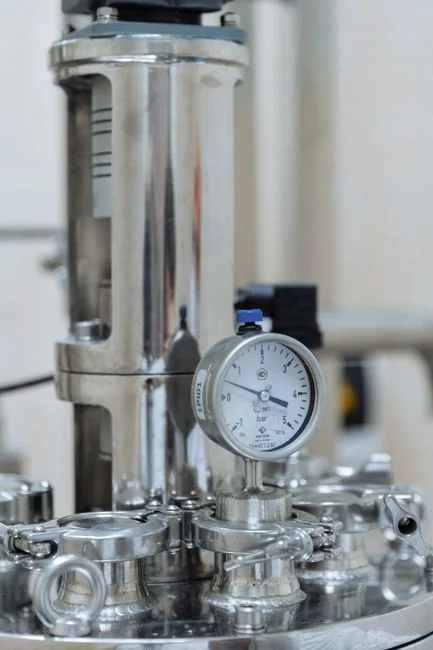
UF, nanofiltration (NF) and reverse osmosis (RO) remove different contaminants and should be matched to the required endpoint. UF primarily removes suspended solids, bacteria, viruses and high-molecular-weight organics while allowing dissolved salts to pass; it does not desalinate blowdown by itself.
Genesis Water Technology reports NF at 75–150 psi, 70–85% recovery and permeate TDS at 30–50% of feed concentration. NF is relevant where partial hardness and dissolved-solids removal are sufficient, particularly when increased cycles of concentration or partial softening is the objective. It should not be described as a substitute for RO where the required cooling make-up quality is based on major TDS reduction.
RO is the main option for high-quality cooling make-up. Genesis Water Technology reports 95–99% dissolved-solids removal, 150–400 psi operating pressure, 10–50 mg/L typical permeate TDS and 50–85% blowdown recovery. A HydropureWater industrial RO system for cooling-water reuse is relevant where desalination and high-quality reuse are required, but the final design must include site-specific scaling projection, antiscalant control and a concentrate route.
| Process | Main function | Reported operating basis | Best fit |
|---|---|---|---|
| UF | Solids, bacteria, viruses and high-molecular-weight organics | 0.01–0.1 micron; 10–30 psi; 90–95% recovery | RO pretreatment or biological/particulate removal |
| NF | Partial hardness and dissolved-solids removal | 75–150 psi; 70–85% recovery; permeate TDS 30–50% of feed | Partial softening and increased cycles of concentration |
| RO | High dissolved-solids removal and demineralized permeate | 95–99% TDS removal; 150–400 psi; 10–50 mg/L permeate TDS; 50–85% blowdown recovery | High-quality cooling make-up or major TDS reduction |
IDE Tech reports that conventional brackish-water RO commonly reaches 75–80% recovery before scaling becomes unmanageable. Silica, calcium carbonate and calcium sulfate require site-specific projection and controlled salt management. RO permeate should be used as cooling-tower make-up only after confirming hardness, silica, alkalinity, conductivity, biocide demand and compatibility with the operating programme.
The energy comparison matters. A 2026 Open Engineering Inc life-cycle study found that a wastewater-plus-UF/RO scenario used over five times the energy of the freshwater scenario, while higher cycles of concentration reduced blowdown and chemical consumption. Compare total water, chemical and energy costs rather than membrane energy alone. Membrane selection should also consider the RO and UF membrane and filter elements needed for maintenance planning.
Manage the Concentrate Without Creating a Second Waste Problem
Every membrane recovery decision must include a measured or contractually confirmed route for the concentrate. Permeate recovery alone is not a complete treatment strategy. The residual route determines whether the proposed recovery rate is technically and legally operable in Jos.
Compare controlled discharge under the applicable permit, return to another process stream, managed blending, deep-well or authorized disposal where legally available, hauled brine, and partial or full ZLD. Do not assume that a route used in another jurisdiction is available in Jos; the responsible authority must confirm the applicable option.
IDE Tech describes a high-recovery approach in which RO operates below local scaling limits and selected salts are precipitated as a managed solid before further brine concentration. This reduces liquid volume but adds equipment, solids handling and process-control requirements. A cleaner-looking brine does not remove the need for a lawful residual route.
| Residual option | What must be demonstrated | Key project limitation |
|---|---|---|
| Permitted discharge or blending | Applicable permit, receiving-water limits and residual quality | May not support the proposed recovery rate |
| Return to another process stream | Compatible chemistry, hydraulic capacity and operational acceptance | Transfers contamination rather than resolving it |
| Hauled or authorized disposal | Approved facility, transport route, capacity and cost | Residual remains a managed waste stream |
| Partial ZLD | Concentrate-reduction equipment and residual disposal | Energy and maintenance requirements |
| Full ZLD | Membrane concentration, evaporation, crystallization and solid-waste route | Highest capital and operating burden |
Genesis Water Technology reports mechanical vapour compression recovery of 95–98% from concentrate streams, distillate below 10 mg/L TDS, and energy use of 15–25 kWh per 1,000 US gallons of distillate. Its 2026 equipment and operating-cost examples are US evidence, not Jos prices or quotations.
For Jos, compare electrical demand, generator availability, thermal rejection, local technical support, consumable supply and residual transport before selecting a high-recovery or ZLD configuration. Use partial ZLD when reducing concentrate volume is the priority; require a life-cycle cost and energy audit before full ZLD.
Disinfect, Stabilize and Verify the Treated Water
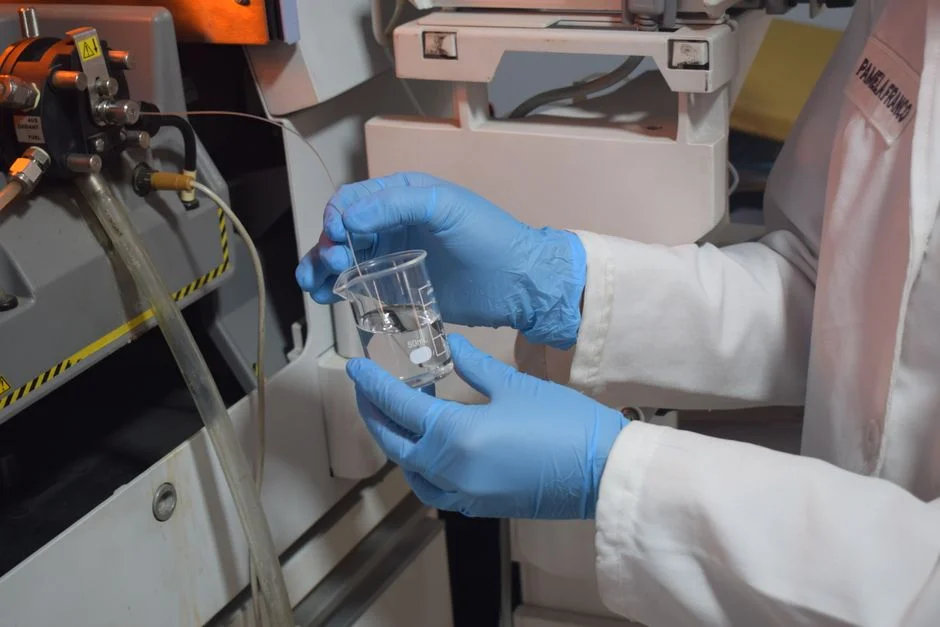
Commissioning should demonstrate that the installed system protects equipment, workers and the receiving environment, not merely that it produces flow at its nameplate rate. Define acceptance tests for flow, differential pressure, turbidity, SDI where applicable, conductivity, TDS, hardness, silica, pH, residual disinfectant and automatic-control interlocks.
HydropureWater chlorine-dioxide generators are suitable for on-site production and are specified for microbial control in industrial cooling loops and process wastewater. HydropureWater UV sterilizers provide chemical-free UV-C disinfection for suitable flow arrangements and do not create disinfection by-products or alter taste and odour. The choice should follow the water chemistry, flow arrangement, residual requirement and operator competence.
Run a controlled trial with the actual cooling-water programme. Confirm that recovered water does not cause increased scaling, corrosion, foaming or biocide demand in the tower. The trial should also verify the concentrate route, membrane cleaning method, chemical-dosing interlocks, alarm response and safe isolation. Train operators on dosing, permeate-quality monitoring, membrane cleaning, concentrate routing and fault response before full-scale operation.
Compare Lifecycle Value Before Ordering Equipment
Compare total cost of ownership, not the equipment price alone. The evaluation should include equipment, installation, membranes, chemicals, energy, operators, maintenance, freshwater, discharge fees, concentrate handling and planned replacement. Open Engineering Inc (2026) reports that treatment energy accounted for roughly 80% of the GWP difference between the wastewater and freshwater cases, making electrical demand a first-order design criterion rather than a minor operating detail.
| Procurement item | Information to request before pricing | Commercial relevance |
|---|---|---|
| Equipment and installation | Measured flow, analysis, treatment objective, site utilities and installation scope | Defines the technical basis and installation boundary |
| Energy | Power availability, generator support and expected operating hours | Can dominate the treatment trade-off |
| Membranes and media | Feed chemistry, projected recovery, cleaning strategy and replacement interval | Operating cost and availability risk |
| Chemicals | Existing programme, residuals, dosing plan and compatibility tests | Feed quality, reuse acceptance and discharge risk |
| Concentrate | Confirmed route, permitted volume and handling arrangement | May constrain the recovery rate |
| Service and training | Local coverage, spare parts, PLC support and operator training | Availability and maintainability |
The same Open Engineering Inc study reports an indirect water penalty of approximately 0.93 L/m³ for the reuse train, less than 0.1% of the direct displacement benefit. That result is specific to the study’s modelled cases, but it supports site-specific water and carbon accounting rather than a general assumption that reuse is always environmentally preferable.
Require a Nigerian supplier or project partner to confirm local electrical standards, spare-parts strategy, membrane availability, operator training and service-response arrangements. Request a site-specific pilot or bench test using Jos source and blowdown water; do not use the supplied US equipment and operating-cost examples as Jos quotations. Evaluate the industrial water softener system when hardness reduction or RO pretreatment is needed, provided the analysis confirms that softening is the correct pretreatment rather than masking another water-quality problem.
Frequently Asked Questions
How much does a data-center cooling-blowdown treatment system cost in Jos?
There is no defensible price without measured flow, source and blowdown analyses, treatment objective, available power, residual route and local installation scope. A supplier should provide a priced equipment schedule, installation exclusions, membrane or media replacement assumptions, energy demand, chemical requirements, commissioning scope and service terms. The US equipment and operating-cost examples in the supplied research must not be presented as Jos quotations.
Should a Jos data center use UF, NF or RO?
Use UF when solids and biological removal are priorities or when it is needed to protect RO. Use NF where partial hardness and dissolved-solids removal are sufficient for the defined reuse or discharge objective. Use RO when high-quality cooling make-up or major TDS reduction is required. The final choice should be confirmed by a representative pilot using Jos water and the actual cooling chemical programme.
Can cooling-tower blowdown be discharged without treatment?
Do not assume that it can. Genesis Water Technology reports common blowdown characteristics of 1,200–6,000 mg/L TDS and 10–50 mg/L suspended solids, while UGA Extension (2026) notes that chemical-bearing blowdown may require permits or wastewater treatment. The applicable Jos authority must confirm the discharge route, permit conditions, receiving-water limits and any required pretreatment; the supplied research does not establish a Jos numerical effluent limit.
How should a Nigerian wastewater-equipment supplier be qualified?
Require evidence of local compliance support, a verified flow and feed-quality basis, membrane or media warranties, spare-part availability, operator training, PLC and automation support, and documented service coverage. The supplier should also identify how it will validate recovery, scaling control, concentrate routing and performance with the site’s actual water.
What data should be collected before sizing the system?
Request source and blowdown analyses, flow measurements, operating cycles, chemical inventory, reuse demand, discharge route, power availability and future expansion plans. Include peak, minimum and slug flows. Then use a representative pilot to confirm recovery, membrane compatibility, scaling assumptions and the operation of the concentrate route before ordering equipment.