Why Breweries Need DAF as Primary Pretreatment
A dissolved air flotation system for brewery wastewater in 2026 costs $15,000–$80,000 for skid equipment at 5–50 m³/h and $250,000–$900,000 fully installed at 100–300 m³/h. OPEX runs $0.08–$0.35 per m³ treated, driven by polymer dose (3–8 mg/L) and saturator power. Typical brewery effluent (BOD 2,000–6,000 mg/L, TSS 1,500–4,000 mg/L, FOG 200–1,000 mg/L) requires a 10–20 minute hydraulic retention with 50–80% TSS and 60–90% FOG removal before biological polishing.
Brewery effluent is not a single stream — it is a blend of wort boil-over, kettle trub, fermentation residuals, label and filter-aid solids, and hot (50–80°C) CIP caustic and acid rinses. pH swings from 4 to 11 within a single 24-hour cycle, and peak FOG concentrations above 1,000 mg/L routinely follow a brew or bottling run. Gravity settling and lamella plates capture only the heavy settleable fraction; emulsified fats, colloids, and suspended yeast remain in the supernatant and overload any downstream biological stage.
DAF addresses this by saturating a side-stream of clarified effluent with air at 4–6 bar in a pressure vessel, then releasing it through needle valves into the main flotation tank. The resulting 20–80 μm micro-bubbles attach to FOG droplets and flocculated colloids, lifting them to the surface where a skimmer removes the float at 3–6% dry solids. A typical recycle ratio of 20–50% provides the air-to-solids mass transfer required without excessive compressor load. As a sizing reference, the dissolved air flotation (DAF) system covers 4–300 m³/h across 13 standard models, which maps onto the full craft-to-macro brewery envelope. Expected primary removal on brewery effluent: TSS 50–80%, FOG 60–90%, and BOD 20–40% — enough to stabilize the load to a UASB, MBBR, or activated sludge polishing stage (per WesTech WAS-thickening references, 2018-05).
2026 CAPEX by Brewery Size: Craft, Regional, and Macro Tiers
For a craft brewery at 5–20 m³/h, skid-only DAF equipment in 2026 budgets $15,000–$45,000 and a fully installed system runs $40,000–$110,000. The lower bound tracks the Made-in-China catalog baseline of $3,000–$6,000 for a 5 m³/h skid at $3,100–$3,200 export package, with a brewery-grade premium for SS304 contact surfaces, automation, and western-market certification. Regional breweries at 20–100 m³/h should plan $45,000–$180,000 for skid and $110,000–$450,000 fully installed. Macro breweries at 100–300 m³/h — multi-line packaging, in-line CIP, and continuous fermentation — sit at $180,000–$550,000 for skid and $450,000–$900,000 fully installed, anchored to WesTech's $600,000 2018 installed baseline (per WesTech, 2018-05) escalated at ~3–4% annually to 2026.
Material and automation choices swing these numbers more than tank volume does. SS304 over SS202 or carbon steel adds 15–25%; full SS316 with PU-coated internals for high-FOG or hot-CIP duty adds 30–50%. A basic manual skid at the catalog price converts to a brewery-grade PLC + HMI package with auto-skimmer, polymer make-up, and trending for an additional $8,000–$25,000. For buyers who only need a single 5 m³/h unit, the Made-in-China listing confirms a 1-set MOQ and $3,100–$3,200 packaged price — a useful reference when benchmarking a regional vendor's small-craft quote. Headworks International confirms a similar independent range of $18,000–$55,000 for DAF systems depending on material, automation, and integration (per Headworks Bio DAF specifications, 2026).
| Brewery tier | Design flow (m³/h) | Skid-only CAPEX (USD) | Fully installed CAPEX (USD) | Typical driver |
|---|---|---|---|---|
| Craft | 5–20 | $15,000–$45,000 | $40,000–$110,000 | Taproom + brewpub, batch CIP |
| Regional | 20–100 | $45,000–$180,000 | $110,000–$450,000 | Multi-packaging line, in-line CIP |
| Macro | 100–300 | $180,000–$550,000 | $450,000–$900,000 | Continuous fermentation, high-FOG kettle stream |
For a defensible budget, multiply the skid number by 2.0–2.5× to estimate the fully installed line item, then add 10% contingency. The dissolved air flotation (DAF) system covers this entire flow envelope with 13 catalog models, so a single model line can carry a buyer from a 5 m³/h taproom to a 250 m³/h regional plant.
What Drives Installed Cost: A Line-Item Breakdown
The skid itself is only 35–50% of the installed cost — the rest is civil, mechanical, and instrumentation work that no catalog price captures. A typical brewery-grade DAF installation in 2026 breaks down as follows.
The equipment skid (flotation tank, saturator vessel, skimmer drive, scraper, and pipe rack) accounts for 35–50% of the installed budget, with material choice driving most of the swing. The air compressor and receiver add 5–10% — typically a 5.5–15 kW screw or piston unit sized to maintain 4–6 bar saturator feed under continuous duty. Polymer make-up and dosing equipment add 5–8% and are usually paired with an automatic chemical dosing system sized for the 3–8 mg/L polyacrylamide dose plus coagulant (PAC or ferric chloride) at 30–80 mg/L. Civil works — concrete foundations or tankage, FRP or SS pipework, and actuated valves tying the DAF into the upstream equalization tank and downstream biological stage — run 15–25%. Instrumentation and control (flow meters, TSS probes, level switches, PLC panel, and SCADA integration) account for 5–10%. Installation labor and commissioning are typically 8–15%, or 1–3 weeks for 5–50 m³/h units and 4–8 weeks for larger skids. A 10% contingency is industry standard for brewery retrofits, where tie-ins to existing CIP drain lines and EQ tanks always surface unknowns (per HydropureWater project data, 2024–2026).
| Line item | % of installed cost | Scope |
|---|---|---|
| Equipment skid (tank, saturator, skimmer) | 35–50% | SS304/SS316, PLC-ready I/O |
| Air compressor and receiver | 5–10% | 5.5–15 kW, 4–6 bar duty |
| Polymer make-up and dosing skid | 5–8% | Auto poly + coagulant, paired with automatic chemical dosing system |
| Civil works, piping, valves | 15–25% | Concrete foundations, FRP/SS pipe, actuated valves |
| Instrumentation and control | 5–10% | Flow, TSS, level, PLC, SCADA integration |
| Installation labor and commissioning | 8–15% | 1–8 weeks depending on size |
| Contingency | 10% | Standard for brewery retrofits |
Buyers who only price the skid line routinely underestimate the total by a factor of two. The defensible move is to lock a vendor scope on the skid + compressor + dosing package, then ask the EPC or site mechanical contractor for the civil, I&C, and labor line items against a P&ID.
2026 OPEX: Polymer, Power, Sludge, and Maintenance
Total OPEX for a brewery DAF in 2026 runs $0.08–$0.35 per m³ of treated effluent, with the lowest end at large well-instrumented regional breweries and the high end at small craft sites with single-shift operator attention. Chemistry is the dominant line. Polyacrylamide (PAM) at 3–8 mg/L and $2.50–$4.50/kg gives a chemical cost of $0.01–$0.04/m³; coagulant (PAC or ferric chloride) at typical brewery doses adds $0.03–$0.08/m³; total chemistry runs $0.04–$0.12/m³. Power is the next line: the saturator air compressor draws 0.05–0.15 kWh/m³, and at $0.08–$0.14/kWh US industrial tariff that is $0.004–$0.021/m³. Total plant power — recycle pumps, skimmer drive, control — adds another $0.03–$0.08/m³.
Sludge handling is a real line item even if it is often lumped into plant waste. DAF float is 2–5% of inlet flow at 3–6% dry solids; dewatering through a plate and frame filter press or drying bed runs $0.02–$0.06/m³. Maintenance and spares at 3–5% of CAPEX per year translate to $0.02–$0.05/m³ depending on scale. Operator labor is 0.5–2 hours per day for 5–50 m³/h units and is normally absorbed into existing plant shift coverage rather than hired out — confirm that with the plant's own labor model rather than treating it as a marginal cost.
| OPEX line | Range ($/m³) | Driver |
|---|---|---|
| Polymer (PAM) chemistry | $0.01–$0.04 | 3–8 mg/L dose, $2.50–$4.50/kg |
| Coagulant (PAC or ferric) | $0.03–$0.08 | 30–80 mg/L dose |
| Saturator compressor power | $0.004–$0.021 | 0.05–0.15 kWh/m³ at $0.08–$0.14/kWh |
| Recycle + skimmer + control power | $0.03–$0.08 | Pumps, drives, PLC |
| Sludge dewatering | $0.02–$0.06 | Plate and frame filter press or drying bed |
| Maintenance and spares | $0.02–$0.05 | 3–5% of CAPEX/year |
| Total 2026 OPEX | $0.08–$0.35 | Low end: large regional, well-instrumented |
Pairing the DAF with the same vendor's automatic chemical dosing system tightens the chemistry line by 10–20% versus manual make-up, which is usually the single largest payback lever inside the OPEX envelope. For a deeper dive on reducing the chemical line across a brewery pretreatment train, the wastewater treatment chemical cost optimization guide walks through dose-response testing protocols.
Sizing a Brewery DAF: Flow, Load, and Hydraulic Checks
Design flow equals peak daily flow multiplied by a 1.5–2.0 peaking factor; brewery effluent is highly batchy because brew, fermentation drop, and CIP discharges all hit the drain within overlapping windows. Hydraulic equalization upstream is not optional — an EQ tank with 8–24 hours of retention at peak flow is the single most cost-effective piece of equipment on the whole train, because it flattens the peaks that otherwise force the DAF to be oversized by 50–100%. Surface loading rate for brewery DAF sits at 5–15 m/h, and hydraulic retention is 10–20 minutes. Counterintuitively, longer retention does not always improve FOG capture: already-floated sludge sitting on the surface for too long can re-suspend or gas-off, and short, sharp hydraulic pulses tend to outperform long, lazy tanks on FOG.
Recycle ratio of 20–50% — typically optimized at 30% for most brewery wastewaters — sets the air-to-solids ratio. Higher recycle lifts more FOG but costs more compressor power and dilutes the float solids concentration. White-water streams (high-FOG kettle trub, label-removal effluent) should be pre-screened through a rotary mechanical bar screen to protect the DAF skimmer from rags and large solids. Temperature also matters: warmer effluent (35–45°C from hot CIP) reduces air-saturation efficiency and lowers specific gravity contrast, so a buffer tank or cooling step upstream of the saturator pays for itself on hot-CIP-heavy sites. The dissolved air flotation (DAF) system is rated 4–300 m³/h, so the same model line covers a craft-to-macro capacity range without a fundamental re-spec.
Payback and ROI: How a Brewery Recovers the Investment
Avoided sewer surcharge is the dominant payback driver. Typical US brewery discharge is $2–$8/m³, and a 100 m³/h brewery running 16 hours a day for 365 days generates 584,000 m³/yr of exposure — at $4/m³ that is $2.34M/yr in potential surcharges, of which a properly sized DAF typically eliminates or sharply reduces the BOD/TSS/FOG load component. Worked example: a regional brewery at 100 m³/h with a $300,000 fully installed DAF achieves 50% load reduction, saves $4/m³ × ~200,000 m³/yr = $400,000/yr on the sewer line item alone, and pays back the capital in roughly 9 months on that line.
Water reuse credit is the second lever. DAF-polished effluent at 60–80% TSS removal can feed cooling-tower make-up or washdown, displacing $0.50–$1.50/m³ of freshwater; 5–10% reuse on a 200,000 m³/yr site offsets $20,000–$80,000/yr. Sludge disposal differential also helps: thicker DAF float (3–6% DS) reduces hauling cost versus dilute gravity-thickened solids, worth $30–$80/tonne on disposal contracts. BOD-spike penalties from municipal peak-factor charges are avoided because the DAF smooths load to the biological stage. Blended payback on the full CAPEX — including civil, I&C, and contingency — typically lands at 2–4 years for a craft or regional brewery, with the shortest payback on sites with high sewer surcharges or active water-reuse programs. For a parallel benchmark on pretreatment economics in another high-strength industry, the automotive stamping wastewater treatment cost 2026 guide covers a comparable CAPEX/OPEX structure, while the MBR for meat processing wastewater cost 2026 and SBR plant operating cost breakdown 2026 articles extend the OPEX model into the biological polishing stage.
Frequently Asked Questions
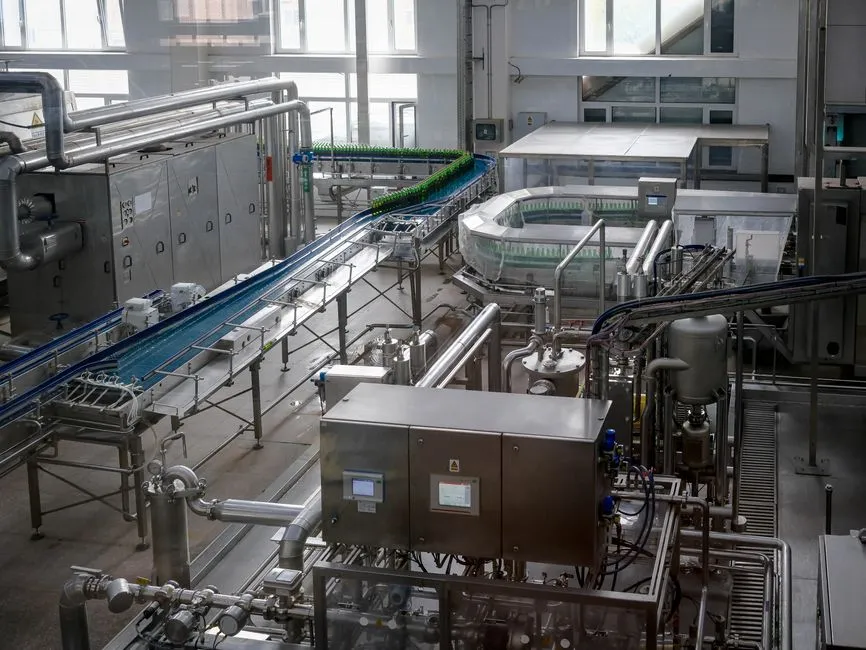
How much does a DAF system for a craft brewery cost? In 2026, a skid-only DAF at 5–20 m³/h budgets $15,000–$45,000 and a fully installed system runs $40,000–$110,000. The lower end tracks the Made-in-China catalog baseline of $3,000–$6,000 for a 5 m³/h unit; the upper end reflects SS304 construction, automation, and western-market certification.
What is the operating cost per cubic meter of brewery DAF? Total OPEX runs $0.08–$0.35/m³, dominated by polymer (3–8 mg/L PAM) and coagulant chemistry at $0.04–$0.12/m³, plus power, sludge dewatering, and maintenance. Large well-instrumented regional sites sit at the low end; small craft sites with manual chemistry make-up sit at the high end.
Can DAF treat brewery wastewater to discharge standards alone? No. DAF is primary treatment only — typical removal is TSS 50–80%, FOG 60–90%, BOD 20–40%. Discharge to a municipal sewer at typical limits (BOD ≤30 mg/L, COD ≤100 mg/L, TSS ≤30 mg/L) requires biological polishing via UASB, MBBR, or activated sludge downstream.
How long does a DAF system last in brewery duty? Stainless tanks last 15–20 years with annual inspection. Air compressors run 8–12 years before major overhaul. Polymer pumps, skimmer blades, and level switches are consumable with annual or biannual rebuilds; budget 3–5% of CAPEX/year for spares and maintenance.
Is DAF better than a lamella clarifier for brewery FOG? DAF wins on FOG capture (60–90% vs. 20–40% for lamella) and footprint — DAF typically needs 20–30% of the floor area of a comparable lamella. Lamella wins on OPEX for low-FOG, low-CIP breweries that do not need emulsion-breaking air flotation and are willing to accept a larger civil footprint.