Why MBR Is the Default for Meat Processing Wastewater in 2026
Meat processing covers three operationally distinct sub-streams that all converge on a biological treatment plant: slaughterhouse effluent (blood, paunch manure, gut contents), poultry processing (feather, offal, chill-water overflow, scalder discharge), and red-meat packing (rendering condensate, brine, wash water). The combined pollutant load is severe — per a 2021 Springer review, BOD typically runs 800–4,000 mg/L, COD 1,500–6,000 mg/L, TSS 600–3,000 mg/L, FOG 200–1,000 mg/L, total nitrogen 100–400 mg/L, and total phosphorus 15–60 mg/L. Those numbers explain why the 2026 default for new and retrofit plants is a membrane bioreactor rather than conventional activated sludge.
High FOG and shock load make a CAS + secondary clarifier unreliable in this service. FOG 200–1,000 mg/L triggers filamentous bulking, foaming, and TSS carryover, and the diurnal kill-floor spike (4–8× average flow) overwhelms clarifier hydraulics within a few hours. MBR decouples solids retention time (SRT 20–40 days) from hydraulic retention time (HRT 6–12 h), so the biomass weathers the spike while the membrane retains everything. The secondary clarifier also disappears, which gives a 60% footprint reduction versus CAS and lets urban or land-locked plants fit treatment inside the production building.
The 2026 Cost Picture: CAPEX and OPEX Ranges at a Glance
For a 2026 meat-plant project, a defensible budget envelope starts with flow tier. A 10–50 m³/day packaged skid MBR runs $120K–$280K in CAPEX, 50–200 m³/day plants land at $280K–$650K, 200–1,000 m³/day systems fall in the $650K–$1.5M band, and flows above 1,000 m³/day typically run $1.2M–$3M+ before civil works and building shell. OPEX across the same envelope runs $0.18–$0.62/m³ treated, depending on local electricity price, FOG pretreatment, and whether RO polishing is included for reuse.
A widely cited 2021 Frontiers pilot of a meat-processing MBR-RO system reported MBR-only OPEX of 0.03 $/m³, with the aerobic MBR stage accounting for 62% of total plant OPEX and electricity alone at 94.19% of MBR OPEX. That 0.03 $/m³ number is real, but it reflects a single MBR stage without full pretreatment or downstream polishing; an integrated meat-plant train with DAF, screening, equalization, and sludge handling runs 5–15× higher in published commercial deployments (per HydropureWater field data, 2026).
| Flow Tier | CAPEX Range (USD) | Typical OPEX (USD/m³) | Best-Fit Plant Type |
|---|---|---|---|
| 10–50 m³/day | $120K–$280K | $0.25–$0.50 | Small slaughterhouse, packaged skid |
| 50–200 m³/day | $280K–$650K | $0.22–$0.45 | Mid-size poultry or red-meat plant |
| 200–1,000 m³/day | $650K–$1.5M | $0.20–$0.40 | Regional processor, integrated line |
| >1,000 m³/day | $1.2M–$3M+ | $0.18–$0.35 | Multi-shift industrial facility |
CAPEX figures exclude civil works, building, and outfall; OPEX includes electricity, membrane replacement, chemicals, sludge hauling, and labor but not financing.
Pretreatment Stack: Where Most Meat-Plant MBR Budgets Leak
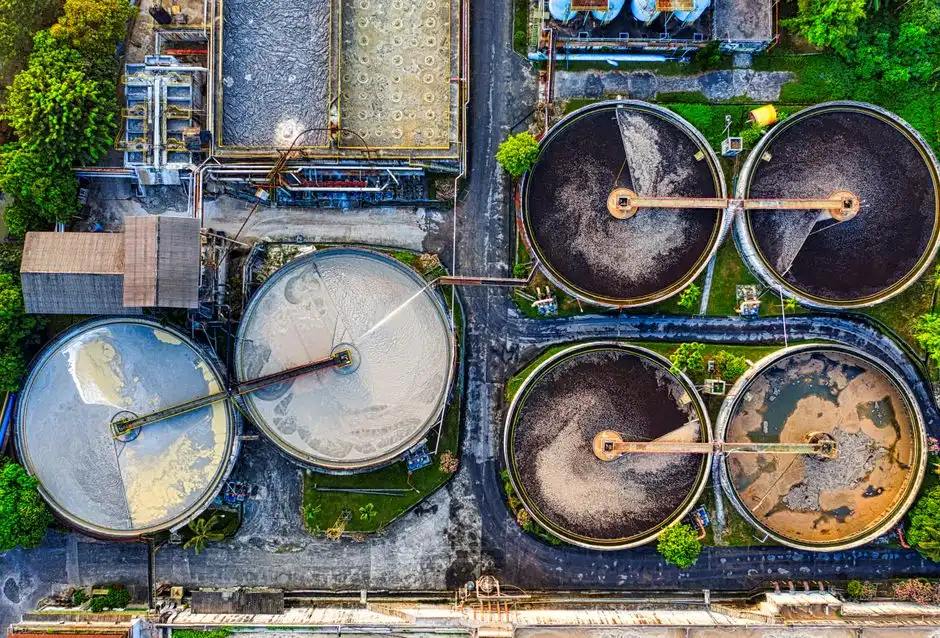
The pretreatment train is the 20–35% of installed CAPEX that sits upstream of the membrane tank, and it is where meat-plant budgets most often leak. The standard sequence is rotary bar screen (2–6 mm aperture) for feathers and paunch solids, grit removal, flow equalization at 8–24 h HRT, dissolved air flotation for FOG and blood protein, pH and temperature trim, then the MBR. A GX rotary bar screen at the head of the train and a dissolved air flotation system for FOG are the two pieces most often left out of early budget estimates.
DAF is the highest-impact line for meat plants because raw FOG at 200–1,000 mg/L will foul PVDF membranes in days without it. Properly dosed DAF (typically 30–80 mg/L cationic polyacrylamide + 2–4 g/L recycle air) removes 60–90% FOG and 50–70% TSS before the bioreactor sees the water, and the equalization tank and DAF together account for 15–30% of total installed CAPEX depending on retention time and flow variability. The single most common cause of premature membrane replacement we see in meat-plant MBRs is a poorly skimmed equalization tank that lets FOG re-emulsify and pass downstream.
Inside the MBR Block: Tank, Membrane, Aeration, Cleaning
Once influent is pretreated, the MBR block itself is comparatively standardized. A submerged PVDF MBR system uses flat-sheet or hollow-fiber modules with 0.1–0.4 μm nominal pore size, operating at a design flux of 12–25 LMH for mixed industrial wastewater. Mixed liquor suspended solids run 8,000–12,000 mg/L — roughly double a typical CAS basin — which is what drives the higher aeration demand and the 0.3–0.6 m³ air/m² membrane area/h scouring rate on top of the biological oxygen demand air. That combined air load is the 94% electricity line item from the Frontiers 2021 study.
Cleaning regime follows a three-tier cadence: relaxation and backpulse on a 5–15 minute cycle, a maintenance CIP every 1–3 months with NaOCl at 300–500 mg/L and citric acid at 2,000–3,000 mg/L, and a recovery CIP every 6–12 months. DF-series flat-sheet MBR modules handle the backpulse regime well; the schedule should be written into the EPC contract, not left to operations.
| Parameter | Typical Range / Value | Notes |
|---|---|---|
| Membrane material | PVDF, 0.1–0.4 μm | Submerged flat-sheet or hollow-fiber |
| Design flux | 12–25 LMH | Mixed industrial wastewater |
| MLSS | 8,000–12,000 mg/L | Higher than CAS, requires wasting strategy |
| Scour air | 0.3–0.6 m³/m²·h | On top of BOD air demand |
| Maintenance CIP | Every 1–3 months | NaOCl 300–500 mg/L + citric acid 2,000–3,000 mg/L |
| Recovery CIP | Every 6–12 months | Heated chemical soak, vendor-supervised |
Where the Money Goes: OPEX Breakdown for a 200 m³/day Meat-Plant MBR
Translating the 62% / 94.19% ratios from the Frontiers 2021 study into a working annual budget, a representative 200 m³/day poultry plant splits OPEX roughly as follows: electricity 55–65% (blowers plus permeate and recirculation pumps), membrane replacement 10–15% (PVDF modules replaced every 5–8 years), chemicals 8–12% (CIP reagents, coagulant, antifoam), sludge hauling 8–12%, and labor 5–8%.
At 200 m³/day, 330 operating days per year, and a blended OPEX of $0.40/m³, variable cost runs about $26,400/year — a defensible number against a $280K–$650K CAPEX over a 10-year horizon. The dominant lever is aeration: each 10% reduction in specific air demand per cubic meter of permeate cuts roughly $2,500–$4,000/year at this scale (HydropureWater field data, 2026). That is also why the published 0.03 $/m³ MBR-only figure understates reality — the 200 m³/day integrated plant including DAF, screening, and sludge handling runs 5–15× higher once you add the supporting processes the pilot did not measure.
| OPEX Line | Share of Annual Cost | Annual Range (200 m³/day, 330 d/yr) |
|---|---|---|
| Electricity (blowers + pumps) | 55–65% | $14,500–$17,200 |
| Membrane replacement (amortized) | 10–15% | $2,640–$3,960 |
| Chemicals (CIP, coagulant, antifoam) | 8–12% | $2,110–$3,170 |
| Sludge hauling | 8–12% | $2,110–$3,170 |
| Labor | 5–8% | $1,320–$2,110 |
MBR vs MBBR vs SBR vs Anaerobic MBR: Which Wins on Cost?
When finance pushes back on MBR's price tag, the answer depends on what is being optimized. A head-to-head matrix on CAPEX, OPEX, effluent quality, footprint, FOG tolerance, and reuse readiness for a 200 m³/day meat plant looks like this:
| Technology | CAPEX ($/m³/day) | OPEX ($/m³) | Effluent COD (mg/L) | Footprint | FOG Tolerance | Reuse-Ready? |
|---|---|---|---|---|---|---|
| Aerobic MBR | $1,400–$3,200 | $0.20–$0.45 | ≤50 | Small | Low without DAF | Yes (UF + RO if needed) |
| Anaerobic MBR (AnMBR) | $1,800–$4,000 | $0.10–$0.25 (with biogas credit) | ≤100 | Medium | Struggles >500 mg/L FOG | Yes (post-polish required) |
| MBBR + sand filter | $800–$1,500 | $0.12–$0.22 | 80–150 | Medium | Moderate | Marginal without UF |
| SBR | $700–$1,400 | $0.15–$0.30 | 60–120 | Medium-large | Low (decantor clogging) | No |
AnMBR cuts energy by 50–80% on high-strength streams and produces biogas, but adds capital complexity (UF module, gas handling) and struggles with FOG above 500 mg/L without dedicated pretreatment. MBBR is the cheapest CAPEX option but cannot reliably hit TSS ≤5 mg/L or NH3-N ≤5 mg/L without downstream polishing — and a sand filter or UF usually erodes the cost gap. SBR is competitive at sub-200 m³/day flows for BOD removal, but volatile loads and FOG shocks cause decanter clogging and MLSS bulking in real meat plants. A useful cross-reference for the aerobic-MBR versus MBBR case is the standalone MBR vs MBBR comparison guide; for SBR-side cost benchmarking, the SBR maintenance cost breakdown is a practical complement. Where reuse is the deliverable, the MBR permeate specs in the MBR effluent quality benchmarks article give a defensible compliance target.
Five Cost Levers Buyers Can Pull During Procurement
Procurement can move the OPEX number more than any other phase of the project. Five levers consistently show up in 2026 meat-plant tenders:
- Insist on a 24-hour equalization tank. It is the cheapest insurance against membrane fouling and blower oversizing, and it directly protects the 15–30% of CAPEX in the DAF/eq train.
- Specify high-efficiency blowers. Magnetic-bearing turbo or positive-displacement blowers with VFD deliver 20–30% electricity savings on the single largest OPEX line (per HydropureWater field data, 2026).
- Lock the membrane warranty at ≥5 years and clarify replacement cost per m² in writing. This protects the 10–15% OPEX line from being treated as a soft cost during vendor negotiations.
- Demand flux and air-demand guarantees tied to penalty/bonus clauses in the EPC contract. A 5 LMH flux shortfall or 0.1 m³/m²·h air-demand overrun compounds across the membrane's life.
- Co-locate an RO unit only if reuse revenue or strict indirect-discharge limits justify it. Otherwise MBR permeate is usually sufficient. If RO is required, a packaged RO polishing unit keeps the integration scope manageable.
Frequently Asked Questions
How much does an MBR cost for a small slaughterhouse? A packaged skid MBR for 10–50 m³/day typically runs $120K–$280K in CAPEX, with OPEX of $0.25–$0.50/m³ including DAF, screening, and sludge handling.
Is MBR or MBBR cheaper for meat wastewater? MBBR has lower CAPEX (often 30–50% less than MBR), but MBR wins on total cost when reuse, footprint constraints, or strict TSS limits apply because MBBR usually needs a sand filter or UF downstream.
How long do MBR membranes last in a meat plant? PVDF submerged membranes typically last 5–8 years with routine CIP. Aggressive FOG without DAF can halve that interval, driving membrane replacement from 10–15% of OPEX to 25%+.
Can MBR handle FOG above 500 mg/L? Not directly. DAF or anaerobic pretreatment is required upstream to drop FOG below 100–200 mg/L before the membrane; otherwise fouling becomes uncontrollable within weeks.
What effluent quality can we expect from a meat-plant MBR? With a properly designed biological stage, typical MBR permeate is COD ≤50 mg/L, BOD ≤5 mg/L, TSS ≤5 mg/L, and NH3-N ≤5 mg/L — sufficient for most reuse applications without further polishing.