What Makes Automotive Stamping Wastewater Expensive to Treat
Stamping wastewater carries four distinct contaminant streams that interact inside the treatment train, and mischaracterizing any one of them wrecks the cost model downstream. Free and emulsified tramp oil typically runs 50–500 mg/L depending on whether the line runs blanking (low oil) or deep-drawing with compound (high oil). Suspended fines from blanking and die wear push TSS into the 200–3,000 mg/L band. Alkaline cleaner rinsewater swings pH to 9–12 between batches, and drawing compound or lubricant loadings drive COD to 500–4,000 mg/L — a stubborn load that resists biological oxidation without pretreatment (per the 2015 Springer study on automotive paintshop wastewater, which recorded 48% baseline COD removal versus 76% with enzyme-assisted break).
Galvanized and coated stock layers add dissolved zinc at 5–50 mg/L and occasionally nickel from zinc-nickel plating, which forces a precipitation stage at pH 9–9.5 with sludge classified as hazardous in most US/EU jurisdictions. Cake disposal then lands at $80–$200/ton rather than the $40–$120/ton baseline for non-hazardous oily sludge.
Flow variability is the dominant CAPEX driver. A press shop cycling between batch blanking and continuous stamping can swing influent 4–6× over a shift; designers who size for the daily mean instead of the peak end up with a tripped DAF and a biological unit running at half-load, which inflates $/m³ by 25–40%.
| Contaminant Stream | Typical Concentration | Cost Impact |
|---|---|---|
| Tramp oil (free + emulsified) | 50–500 mg/L | Forces DAF + chemical demulsification stage |
| Suspended fines (TSS) | 200–3,000 mg/L | Drives sludge handling volume and filter press sizing |
| Drawing compound / lubricant COD | 500–4,000 mg/L | Sets biological stage HRT and aeration energy |
| Alkaline cleaner pH swing | 9–12 | Requires NaOH/H₂SO₄ dosing buffer tank |
| Zinc from galvanized stock | 5–50 mg/L | Adds 10–18% CAPEX for precipitation + clarifier |
Stamping Wastewater Treatment Process: The 4-Stage Train
Stage 1 is oil and TSS removal, and a DAF system for stamping wastewater is the workhorse — 90–95% free-oil and 85–92% TSS removal in a single unit. Lines with very high free oil (above 1,000 mg/L from heavy drawing) usually add an API or CPI oil-water separator upstream to strip the bulk oil before DAF, which protects the saturator pump and cuts chemical demand.
Stage 2 breaks emulsified oil and drops the COD that DAF cannot touch. Coagulant (typically PAC at 50–150 mg/L) plus anionic polymer at 1–5 mg/L is fed through an automatic chemical dosing for coagulant and pH control skid, then flocculated and sent to a lamella clarifier for coagulated floc with surface loading 20–40 m/h — a footprint roughly one-quarter of an equivalent settling tank. This stage reliably takes emulsified oil below 20 mg/L and TSS below 50 mg/L.
Stage 3 is biological polishing. An MBR for stamping effluent polishing at HRT 6–10 h drives residual COD below 80 mg/L and BOD₅ below 20 mg/L, replacing the older SBR and conventional activated-sludge trains common in 2010s-era stamping plants. MBR's main trade is energy: aeration alone draws 0.3–0.6 kWh/m³, which is the line item that pushes a 50 m³/day plant's OPEX from $0.40/m³ to $0.70/m³.
Stage 4 is the reuse-versus-discharge decision. For facilities sending water to sewer, ClO₂ or UV disinfection is enough. For closed-loop rinsewater, an RO polishing for closed-loop rinsewater reuse at 75–85% recovery closes the loop. Sludge from stages 1–2 is dewatered with a filter press for stamping sludge to 25–35% dry solids, which sets the cake-disposal line in the OPEX model.
2026 CAPEX Breakdown by System Size
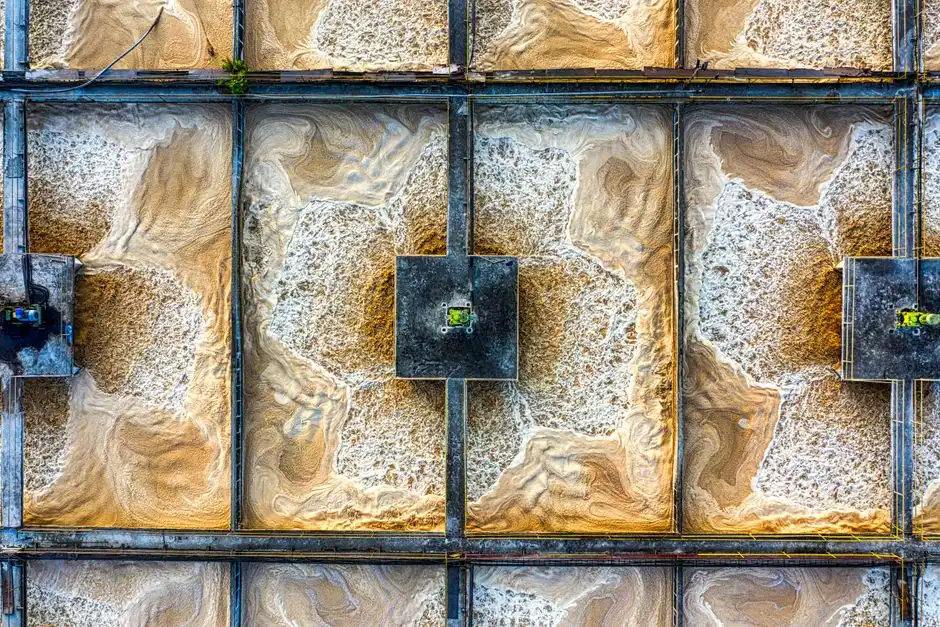
Stamping wastewater treatment cost in 2026 typically runs $180,000–$2,200,000 CAPEX plus $0.40–$1.10 per m³ OPEX for a 5–500 m³/day discharge-compliant system. A DAF-led train plus MBR polishing handles 80–95% of stamping facilities; facilities targeting reuse add RO and the total climbs to $1.80–$3.50 per m³ OPEX and adds $800,000–$2,300,000 to CAPEX at the mid-to-large scale.
| System Size | Daily Flow | Discharge-Compliant CAPEX | With RO Reuse Loop |
|---|---|---|---|
| Micro press line | 5–20 m³/day | $180,000–$420,000 | Not economic — typically skipped |
| Mid-scale stamping plant | 50–150 m³/day | $650,000–$1,400,000 | +$900,000–$1,600,000 |
| Large integrated facility | 200–500 m³/day | $1,500,000–$2,200,000 | +$1,300,000–$2,300,000 |
Galvanized or coated-stock facilities add 10–18% to the CAPEX band for a heavy-metal precipitation stage (pH adjustment reactor, lamella clarifier, and the additional sludge line). Per 2025 modular WWTP construction data, prefabricated skid construction cuts installed CAPEX by roughly 30% versus stick-built — a saving that containerized DAF and MBR skids directly capture, with factory acceptance testing completed before shipment and on-site commissioning compressed to 1–2 weeks.
2026 OPEX: What Drives the $/m³ Number
Energy is the single largest OPEX line, accounting for 35–50% of total running cost. MBR aeration draws 0.3–0.6 kWh/m³ and DAF saturator pumps draw another 0.05–0.15 kWh/m³; together they set the floor on $/m³ before any chemical or labor line is added.
Chemicals run 15–25% of OPEX: PAC at 50–150 mg/L, anionic polymer at 1–5 mg/L, plus pH adjusters (H₂SO₄ or NaOH) and optional silicone defoamer where emulsified oil is high. Sludge handling accounts for 10–20%, dominated by the filter-press consumables and cake disposal at $40–$120/ton for non-hazardous waste and $80–$200/ton for hazardous metal-bearing sludge (HydropureWater field data, 2025–2026). Labor and membrane replacement together are 10–15% — MBR membrane replacement cycles are 5–7 years at $35–$55/m² of membrane area, so this is a known sunk cost the 10-year model must carry explicitly.
The aggregate benchmark for a discharge-compliant train sits at $0.40–$1.10/m³ in 2026. Once RO is added for reuse, OPEX jumps to $1.80–$3.50/m³ because RO feed pressurization (0.6–1.2 kWh/m³) and antiscalant dosing enter the model. For facilities optimizing the sludge line specifically, the Sludge Thickening Cost Reduction: 2026 Engineering Guide to Cut OPEX covers thickening-rate targets and polymer-dose tuning that can reclaim 8–15% of total OPEX. The SBR Operating Cost in 2026: OPEX Breakdown, Energy Use & Cost Reduction reference is useful for facilities still running legacy SBR trains and weighing retrofit to MBR.
Discharge vs Reuse vs Zero Liquid Discharge: Break-Even Logic
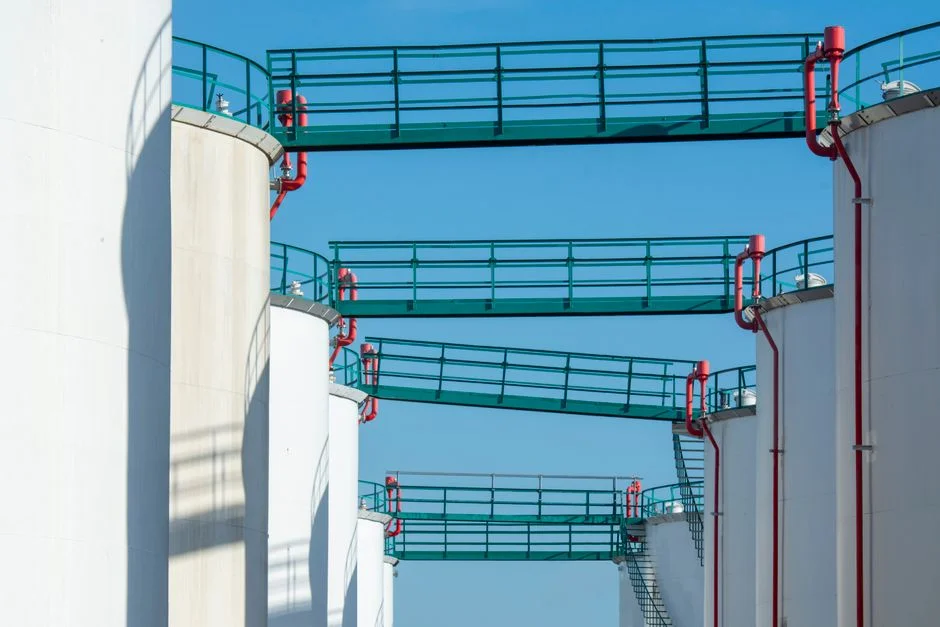
Municipal sewer surcharges in most US/EU jurisdictions run $0.30–$0.90/m³ on top of the volume charge, and the widening gap between fresh-water cost and discharge cost is what pushes mid-scale stamping plants toward reuse. The break-even math is straightforward: when fresh water cost exceeds $4/m³ and discharge flow runs above 80 m³/day, RO polishing pays back in 3–5 years on water-cost savings alone (per municipal water-rate surveys, 2025–2026).
| Discharge Path | Flow Band | Typical CAPEX | OPEX ($/m³) | Decision Trigger |
|---|---|---|---|---|
| Sewer discharge (DAF + MBR + disinfection) | < 50 m³/day | $180,000–$700,000 | $0.40–$1.10 | Low flow, low fresh-water cost |
| RO reuse (closed-loop rinsewater) | 50–200 m³/day | +$900,000–$2,300,000 over base | $1.80–$3.50 | Fresh water > $4/m³ or water-scarce region |
| Zero liquid discharge (ZLD) | > 200 m³/day, arid zone | >$5,000,000 | $3.50–$6.00 | Strict reuse mandate or evaporation-favorable climate |
ZLD is rarely the 2026 answer for stamping wastewater alone — it becomes rational when evaporation ponds are viable, when concentrate disposal costs exceed $8/m³, or when a regulator mandates closed-loop discharge. Outside those conditions, RO reuse captures 70–85% of the lifecycle-cost benefit at roughly one-third the CAPEX of a full ZLD train. For facilities in South and Southeast Asia planning broader plant-wide water reuse, the Industrial Wastewater Treatment in Dhaka: 2026 Process, Cost & Compliance Guide shows how a stamping line fits into a multi-source reuse scheme.
How to Choose a Stamping Wastewater Treatment Supplier
A defensible vendor shortlist comes down to five checks. First, require a pilot or reference plant on actual stamping effluent — a single lab sample on a synthetic mix does not prove the chemistry works on real tramp oil and drawing compound. Second, demand a process guarantee tied to a defined influent range, not a single headline number, and insist on liquidated performance clauses for TSS, COD, and oil at the discharge point. Third, request a 10-year CAPEX/OPEX model that includes membrane replacement at years 5–7, chemical consumption at the guaranteed influent, and sludge disposal at the regional rate — not just Year-1 OPEX. Fourth, confirm factory acceptance testing (FAT) and on-site commissioning lead time; modular or containerized systems from experienced Asian manufacturers typically ship in 8–14 weeks. Fifth, verify the supplier's hazardous-sludge disposal chain if your influent includes galvanized or coated-stock loadings, because an unproven waste hauler can void the OPEX model overnight.
Frequently Asked Questions
What is the typical 2026 CAPEX for a stamping wastewater treatment system?
Stamping wastewater treatment cost in 2026 runs $180,000–$2,200,000 CAPEX for a 5–500 m³/day discharge-compliant system. A 50 m³/day mid-scale plant lands between $650,000 and $1,400,000; a 300 m³/day integrated facility runs $1,500,000–$2,200,000 without RO.
How much does it cost per m³ to treat stamping wastewater in 2026?
A discharge-compliant DAF + MBR train runs $0.40–$1.10 per m³ OPEX in 2026. Adding RO for closed-loop rinsewater reuse pushes OPEX to $1.80–$3.50 per m³, dominated by RO feed pressurization and antiscalant.
Which process removes tramp oil most effectively?
DAF removes 90–95% of free oil and 85–92% of TSS in a single stage. For influent free oil above 1,000 mg/L, an upstream API/CPI separator is added to protect the DAF saturator and reduce chemical demand.
When does RO reuse become cheaper than sewer discharge for a stamping plant?
RO reuse breaks even when fresh water cost exceeds $4/m³ and discharge flow is above 80 m³/day, paying back in 3–5 years on water-cost savings alone. Below that threshold, sewer discharge remains the rational 2026 answer.
Does stamping wastewater require heavy-metal treatment?
Only if the line processes galvanized or coated stock, in which case zinc enters at 5–50 mg/L and nickel occasionally appears from zinc-nickel plating. This adds a pH-9 precipitation stage plus 10–18% CAPEX and reclassifies the cake as hazardous, raising disposal cost to $80–$200/ton.
What is the 2026 OPEX for zero liquid discharge on stamping wastewater?
ZLD for stamping effluent alone requires more than $5,000,000 CAPEX and runs $3.50–$6.00 per m³ OPEX. It is rational only with evaporation-favorable climate, strict local reuse mandates, or concentrate disposal costs above $8/m³.