Industrial Wastewater Treatment in Dhaka: 2026 Process, Cost & Compliance Guide
Industrial wastewater treatment in Dhaka in 2026 must meet Bangladesh Department of Environment Environment Conservation Rules 2023 (S.R.O. 229/Law/2023) discharge limits — typically BOD ≤50 mg/L, COD ≤200 mg/L, and TDS ≤2,100 mg/L for inland surface water. Most Gazipur, Savar, and Narayanganj textile and tannery plants combine DAF pre-treatment with an MBR or SBR biological stage and RO polishing, with on-site CAPEX of BDT 1.5–45 crore (USD 13,000–400,000) depending on capacity. The regulatory cliff is real: DoE mobile-court enforcement against non-compliant Gazipur and Savar units has tightened through 2024 and 2025, and BGMEA/BKMEA buyer audits now routinely request the most recent Online Environmental Clearance Monitoring System filing as a condition of contract award.
Why Dhaka Industrial Discharge Is a 2026 Compliance Priority
DoE enforced S.R.O. 229/Law/2023 — the Environment Conservation Rules 2023 — at a materially higher rate across Dhaka Division in 2025 than in any prior year, with mobile-court actions concentrated in the Gazipur, Savar, and Narayanganj industrial belts and inside the Dhaka Export Processing Zone (DEPZ). The headline inland-surface-water limits a Dhaka factory must hit to keep operating are BOD ≤50 mg/L, COD ≤200 mg/L, TSS ≤150 mg/L, TDS ≤2,100 mg/L, and pH 6–9; failure on any one of these is grounds for an immediate closure order under the Bangladesh Environment Conservation Act 1995 (as amended 2023). The same legal framework governs hospital effluent in Rajshahi — see the Rajshahi hospital wastewater compliance guide for a parallel walkthrough.
Enforcement is not theoretical. Through 2024–2025 DoE revoked or suspended Environmental Clearances for at least 12 named units in Gazipur and Savar, and a tannery CETP inlet exceedance in 2025 triggered a partial shutdown order for downstream non-compliant members. The DoE Environmental Clearance renewal cycle — typically three years — now requires two years of compliant 24-hour composite sampling data, so a non-compliant factory has to pay the CAPEX it deferred plus a remediation clock.
DoE is also politically constrained from granting extensions because Dhaka's receiving rivers — the Buriganga, Shitalakshya, and Turag — feed municipal water intakes for roughly 18 million residents and have already exceeded Hilsa and carp recruitment thresholds in the 2024–2025 BFDC monitoring reports. A factory manager who frames the ETP as a "cost" rather than a closure-avoidance cost will lose the argument inside the first 30 seconds of a finance-committee review.
Dhaka Industrial Influent Profile by Sector
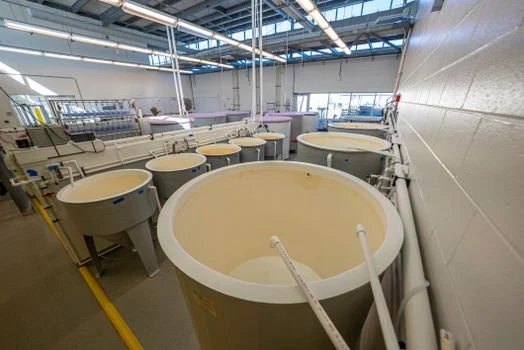
Dhaka's industrial belts do not produce "average" wastewater — each sector arrives at the ETP with a distinct pollutant signature, and generic activated-sludge sizing fails on almost every one of them. The table below summarizes typical raw influent from the four largest discharge categories in the Gazipur–Savar–Narayanganj–DEPZ corridor, based on HydropureWater field data from 2024–2025 commissioning logs.
| Parameter | Textile dyeing | Tannery | Pharmaceutical | Steel re-rolling / metalworking |
|---|---|---|---|---|
| COD (mg/L) | 1,500–6,000 | 2,000–5,000 | 1,000–4,000 | 500–2,500 |
| BOD (mg/L) | 800–2,500 | 1,000–2,500 | 400–1,800 | 200–900 |
| TSS (mg/L) | 300–1,500 | 1,500–4,000 | 200–800 | 500–2,000 |
| TDS (mg/L) | 2,500–8,000 | 8,000–35,000 | 1,500–5,000 | 800–3,000 |
| Color (Pt-Co) | >2,000 | 500–2,000 | 200–800 | — |
| Temperature (°C) | 40–60 | 25–35 | 25–35 | 25–40 |
| Chromium total (mg/L) | — | 5–50 | — | 0.5–10 (hexavalent) |
| Sulfide (mg/L) | — | 50–200 | — | — |
| Oil & grease (mg/L) | 50–300 | 100–500 | 20–100 | 200–1,500 |
| pH | 8–12 | 7–10 | 4–11 | 5–9 |
Seasonal variation in Dhaka changes the design load by 30–50%. The June–September monsoon dilutes pollutant concentrations but triples hydraulic loading in plants without adequate equalization, and the resulting F/M ratio swings knock conventional activated-sludge systems into bulking within 36–72 hours. Size equalization tanks at 8–12 hours retention, not the 4–6 hours typical of European designs.
High temperature is the second shared constraint. Textile dyeing effluent arrives at 40–60°C from the dye-bath discharge; standard mesophilic biology (30–38°C) loses 40–60% of its activity above 42°C, and a 50°C surge can wipe out a nitrifying population in under four hours. Options are (a) cooling towers sized for a 15–20°C delta-T, (b) a thermophilic MBR rated for 45–55°C, or (c) a two-stage train with a thermophilic upflow anaerobic sludge blanket (UASB) followed by a mesophilic MBR. For most Gazipur dyeing units the thermophilic MBR gives the smallest footprint and the lowest chemical cost. A HydropureWater DAF pre-treatment unit at the head of the train removes 70–90% of suspended solids, color bodies, and free oil before biology, which protects the membranes and reduces chemical demand downstream.
DoE ECR 2023 Discharge Limits Every Dhaka Plant Must Hit
The limits below are taken from Schedule 2 of S.R.O. 229/Law/2023 for industrial effluent discharged to inland surface water — the category that covers virtually every Gazipur, Savar, and Narayanganj factory draining to a Dhaka river or to the DEPZ common outfall. Tighter limits apply to irrigation reuse and to discharge to municipal sewers; check your Environmental Clearance for the exact category.
| Parameter | Unit | Inland surface water | Irrigation land |
|---|---|---|---|
| pH | — | 6–9 | 6–9 |
| BOD₅ (3 days, 27°C) | mg/L | ≤50 | ≤100 |
| COD | mg/L | ≤200 | ≤400 |
| TSS | mg/L | ≤150 | ≤200 |
| TDS | mg/L | ≤2,100 | — |
| Color | Pt-Co | ≤100 | — |
| Temperature | °C | ≤40 (at receiving water edge) | — |
| Oil & grease | mg/L | ≤10 | ≤10 |
| Chromium total (Cr) | mg/L | ≤2 | ≤2 |
| Sulfide (S²⁻) | mg/L | ≤2 | — |
| Residual chlorine | mg/L | ≤1 | — |
| Heavy metals (Pb, Cd, Hg, Ni, Cu, Zn) | mg/L (total) | ≤10 (sum) | site-specific |
"Inland surface water" under S.R.O. 229/Law/2023 means any natural or man-made inland water body — river, canal, beel, or drain — that is not classified as coastal or marine. "Irrigation land" means any agricultural land where the effluent is applied as a soil amendment; a plant holding both categories of clearance will face the lower of the two on each parameter, not the higher. Pharmaceutical and tannery plants must monitor antibiotic residues, chromium (Cr⁶⁺ and total), and nickel quarterly under standard Environmental Clearance conditions, and submit results through the Online Environmental Clearance Monitoring System.
On-Site ETP vs Dhaka CETP: Decision Framework
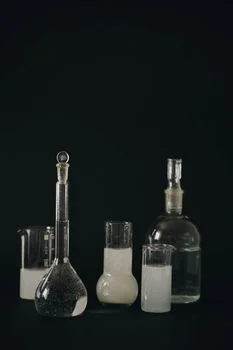
The single largest CAPEX decision a Dhaka plant engineer will make in 2026 is whether to build on-site or to discharge to a Centralized Effluent Treatment Plant (CETP). The two viable CETP options in Dhaka are the Tannery Industrial Estate CETP at Hemayetpur (Savar), which now serves the relocated Hazaribagh tanneries, and the DEPZ CETP for export-processing-zone factories. Reported 2024–2025 tariff ranges were BDT 5,000–18,000/m³ annualized for the tannery CETP (because of high TDS and chromium loads) and BDT 14–50/m³ for the DEPZ CETP. Membership entry fees are typically BDT 0.5–3 crore plus the tariff.
Build on-site when any of the following apply: (1) your discharge exceeds CETP inlet limits (e.g. COD >2,000 mg/L, Cr >5 mg/L, TDS >10,000 mg/L), (2) the relevant CETP is at hydraulic capacity — both Dhaka CETPs reported >90% utilization in 2025, (3) the buyer's audit requires closed-loop water reuse, where industrial Dhaka municipal water is BDT 60–120/m³ in 2026 and reuse cost is BDT 5–8/m³, or (4) you need a process-water specification tighter than the CETP's effluent (textile finishing typically requires <50 mg/L TDS, which is below the DEPZ CETP's 2,100 mg/L inland limit).
| Parameter | On-site ETP | CETP membership |
|---|---|---|
| CAPEX (range, 2026 BDT) | 1.5–45 crore | 0.5–3 crore (entry + connection) |
| OPEX (BDT/m³, 2026) | 25–80 | 14–50 (tariff) |
| Lead time | 8–14 months | 2–4 months hookup |
| Discharge control | Full — closed loop possible | None — controlled by CETP |
| Water reuse possible | Yes (60–90% recovery) | No |
| DoE audit risk | Direct on the plant | Shared with CETP members |
For a new textile plant in Gazipur or a tannery in Savar, the on-site ETP is the realistic answer. A typical on-site train uses a HydropureWater MBR biological system for the BOD/COD step and a lamella clarifier for solids–liquid separation, and that combination gives a 60% smaller footprint than conventional activated sludge — a material advantage in the land-constrained Gazipur and DEPZ sites where available plot is often below 400 m².
Recommended Process Train for a Dhaka Textile or Tannery ETP
The reference process train for a 200–500 m³/day textile dyeing plant in Gazipur is equalization (8–12 h, with pH correction using sulfuric acid and sodium hydroxide) → HydropureWater DAF pre-treatment unit for suspended solids, color bodies, and free oil (typical DAF line at 20–80 m³/h per unit, 4–300 m³/h capacity range) → biological treatment using either a HydropureWater MBR biological system (0.1 μm PVDF submerged modules, 60% smaller footprint than CAS) or a sequencing batch reactor (SBR) for lower CAPEX → HydropureWater industrial RO polishing unit for TDS and color → HydropureWater ClO₂ disinfection generator (50–20,000 g/h) → sludge dewatering via a HydropureWater plate and frame filter press (1–500 m² filter area, cake dryness 25–35% DS).
For the textile case, the parameter walkthrough is COD 1,500–6,000 mg/L → 150–200 mg/L after MBR → <50 mg/L after RO; color >2,000 Pt-Co → <100 Pt-Co after RO; TDS 2,500–8,000 mg/L → <500 mg/L after RO with 60–75% recovery. The RO concentrate (25–40% of feed) is typically sent to the MBR influent for further biological treatment or to an evaporation pond; zero-liquid-discharge (ZLD) designs are rare in 2026 Dhaka because the evaporator CAPEX adds BDT 8–15 crore for a 200 m³/day plant.
For the tannery case at Hemayetpur/Savar, the train inserts chromium recovery (sulfide precipitation at pH 8–9, then re-acidification to recover Cr³⁺ as a marketable cake) before equalization, and sulfide oxidation in a pre-aeration basin (2–4 h retention, 0.5–1.0 m³ air/m³ effluent) before DAF. Chromium drops from 5–50 mg/L raw to <2 mg/L after sulfide precipitation + biological polishing — within DoE's ≤2 mg/L total chromium limit. The lamella clarifier reduces chemical consumption by up to 30% versus a conventional circular clarifier at the same surface loading rate of 20–40 m³/h·m².
2026 CAPEX and OPEX Ranges for a Dhaka Industrial ETP
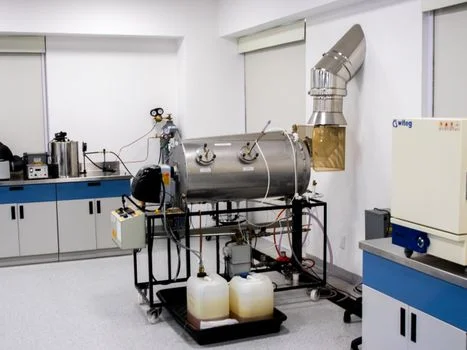
Translate the process train into BDT for a finance-committee review. The CAPEX table below is for a full on-site ETP including civil works, equipment, installation, instrumentation, and commissioning, anchored to USD at ~110 BDT/USD and to 2026 supplier quotes for Bangladesh-bound equipment.
| Capacity | CAPEX range (BDT crore, 2026) | CAPEX range (USD) | Typical industry fit |
|---|---|---|---|
| 50 m³/day | 1.5–3.5 | USD 135,000–320,000 | Small pharmaceutical, BSCIC light industry |
| 200 m³/day | 6–12 | USD 545,000–1.09M | Medium textile dyeing, small tannery |
| 500 m³/day | 18–28 | USD 1.64–2.55M | Large textile dyeing, full tanneries |
| 1,000 m³/day | 30–45 | USD 2.73–4.09M | Multi-line textile, EPZ cluster plant |
OPEX for a typical Dhaka textile ETP in 2026 is energy BDT 8–18/m³ (largely from aeration blowers and RO high-pressure pumps, both running 20–24 h/day), chemical dosing BDT 6–15/m³ (coagulant, polymer, NaOH, H₂SO₄, antiscalant), sludge handling BDT 3–7/m³ (filter-press operation, cake transport), labor BDT 4–9/m³ (typically 2–3 operators per shift), and membrane replacement reserve BDT 2–5/m³ (PVDF MBR membranes typically last 5–7 years; RO membranes 3–5 years). Total OPEX: BDT 25–55/m³ for textile, BDT 30–80/m³ for tannery due to the higher chemical load from chromium precipitation.
Water-reuse ROI closes the deal in most cases. Dhaka industrial municipal water tariff in 2026 is BDT 60–120/m³ for industrial users. A 200 m³/day plant running 365 days/year and recovering 60% of its flow to the process saves ~73,000 m³/year, or BDT 44–88 lakh/year in offset water purchase. Add the avoided DoE penalty exposure (typical non-compliance fines BDT 50 lakh–2 crore per offense under the 1995 Act as amended) and the typical simple payback for a closed-loop textile ETP project lands at 2.5–4 years. That is the number to put in front of the finance director.
What to Ask an ETP Supplier Before You Sign in Dhaka
Four questions filter out the equipment brokers from the integrators who will still be answering your service call in 2027.
- Do you have third-party DoE-accredited lab data for influent and effluent, taken on your reference plant, dated within the last 12 months? Manufacturer brochures quoting removal rates without test certificates are not citable in a DoE audit response.
- What is the MBR membrane replacement schedule, the membrane material, and the replacement membrane price in BDT per square meter? Expect PVDF, 5–7 years to first replacement, and a 2026 membrane price around BDT 1,800–2,800/m² for the MBR. Confirm the HydropureWater MBR biological system specification in writing.
- What is the ClO₂ generator sizing and the service response time from a Dhaka-region or Bangladesh-based service base? Size for peak flow × 1.5 safety factor (the HydropureWater ClO₂ disinfection generator ranges from 50 to 20,000 g/h), and target <48 hours response for Gazipur/Savar.
- Will you support DoE Environmental Clearance renewal documentation and Online Environmental Clearance Monitoring System filings for at least three years post-commissioning? A supplier who scopes out at handover is not the supplier you want on a renewal audit.
Frequently Asked Questions
What are the current Bangladesh DoE discharge limits for industrial wastewater in Dhaka?
For inland surface water, S.R.O. 229/Law/2023 sets BOD ≤50 mg/L, COD ≤200 mg/L, TSS ≤150 mg/L, TDS ≤2,100 mg/L, pH 6–9, color ≤100 Pt-Co, total chromium ≤2 mg/L, and residual chlorine ≤1 mg/L. The same legal framework governs hospital effluent — see the Rajshahi hospital wastewater compliance guide for a hospital-sector example.
How much does an on-site ETP cost in Dhaka in 2026?
On-site CAPEX for a Dhaka industrial ETP ranges BDT 1.5–45 crore in 2026 depending on capacity: BDT 1.5–3.5 crore for 50 m³/day, BDT 6–12 crore for 200 m³/day, BDT 18–28 crore for 500 m³/day, and BDT 30–45 crore for 1,000 m³/day. Add civil works and installation if not already included.
Which process train is best for a Gazipur textile dyeing ETP?
Equalization → DAF → MBR (or SBR for lower CAPEX) → RO → ClO₂ disinfection → plate-and-frame sludge dewatering. This combination is the standard referenced in the Rajshahi hospital wastewater compliance guide process discussion and applies across Bangladesh high-COD sectors.
What is the operating cost per cubic meter for a Dhaka textile ETP?
BDT 25–55/m³ for a textile plant and BDT 30–80/m³ for a tannery plant, broken down as energy 8–18, chemicals 6–15, sludge handling 3–7, labor 4–9, and membrane replacement reserve 2–5 BDT/m³.
Is it cheaper to join a Dhaka CETP or build on-site?
CETP entry costs BDT 0.5–3 crore plus a BDT 14–50/m³ tariff, which looks cheaper in CAPEX but blocks water reuse (Dhaka industrial water costs BDT 60–120/m³) and exposes the plant to CETP-wide enforcement actions. On-site is the right answer whenever water reuse, closed-loop buyer audits, or high-COD/high-TDS influent are in play.