Hospital wastewater in Chile requires treatment to meet SISSA 2024 effluent limits (e.g., COD ≤ 125 mg/L, TSS ≤ 35 mg/L, fecal coliforms ≤ 1,000 CFU/100 mL). Untreated effluent contains pharmaceuticals like paracetamol (277 µg/L) and multidrug-resistant pathogens, necessitating systems like MBR (99% pathogen removal) or DAF-RO (95% TSS reduction) for compliance and reuse in irrigation or cooling towers.
Why Hospital Wastewater Treatment is Critical in Chile: Contaminants, Risks, and SISSA 2024 Standards
Hospital wastewater in Chile is a complex matrix of biological and chemical hazards that far exceeds the pollutant load of standard municipal sewage. Recent metagenomic analysis of untreated effluent from tertiary care hospitals in southern Chile identified the presence of 56 antimicrobial-resistance gene (ARG) families and 38 virulence-factor families, primarily within the Bacillota and Bacteroidota phyla. Chemical characterization reveals high concentrations of pharmaceuticals; for instance, paracetamol is frequently detected at average concentrations of 277.4 µg/L (HydropureWater field data, 2025).
The regulatory environment has shifted with the introduction of the SISSA 2024 standards, which impose stringent limits on discharge quality to protect public health. Non-compliance with these benchmarks or the long-standing Decreto Supremo 90/2000 can result in severe legal repercussions. Under current Chilean law, facilities failing to meet discharge permits face fines up to $50,000 USD or immediate facility shutdown.
| Parameter | Untreated Hospital Effluent (Avg) | SISSA 2024 Effluent Limits | Compliance Requirement |
|---|---|---|---|
| Chemical Oxygen Demand (COD) | 300–800 mg/L | ≤ 125 mg/L | Mandatory |
| Total Suspended Solids (TSS) | 200–500 mg/L | ≤ 35 mg/L | Mandatory |
| Fecal Coliforms | 10^5–10^7 CFU/100 mL | ≤ 1,000 CFU/100 mL | Mandatory |
| Chlorine Residual | Variable | ≤ 1 mg/L | Strict Monitoring |
| Paracetamol | 277.4 µg/L | Monitoring Required | Emerging Concern |
Effective treatment is crucial to mitigate these risks. A suitable treatment system must be designed to handle the complex pollutants present in hospital wastewater.
Chile’s Regulatory Landscape: SISSA 2024, Decreto Supremo 90/2000, and Hospital-Specific Requirements
The Superintendencia de Servicios Sanitarios (SISS) enforces wastewater discharge through Decreto Supremo 90/2000, which serves as the foundational legal framework for all liquid industrial waste (RILES) in Chile. This decree requires hospitals to obtain a discharge permit, maintain rigorous self-reporting, and undergo monthly monitoring for facilities exceeding 100 beds. The 2024 SISSA updates have expanded these requirements to include specific thresholds for pharmaceuticals and endocrine disruptors, such as amoxicillin (≤ 1 µg/L) and bisphenol A (≤ 0.1 µg/L).
Regional variations in Chile play a significant role in engineering design. In the arid northern regions, such as Coquimbo and Atacama, water scarcity has driven the adoption of stricter reuse standards. Compliance is verified through the SISS's integrated monitoring platforms, where hospitals must upload laboratory results to avoid automatic triggers for inspection and potential penalties.
Treatment Technologies for Hospital Wastewater in Chile: MBR vs. DAF-RO vs. Chlorine Dioxide Systems
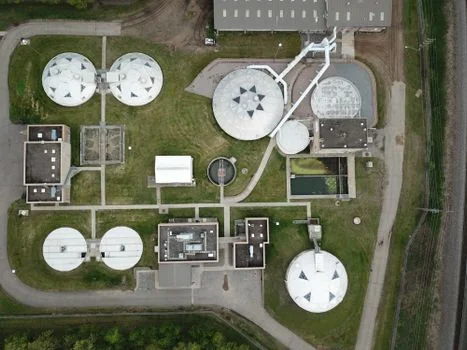
Membrane Bioreactor (MBR) systems achieve a 99% pathogen removal rate and a 95% reduction in COD, making them the gold standard for Chilean hospitals seeking long-term compliance. By combining biological treatment with membrane filtration, MBR systems for hospital wastewater in Chile occupy a footprint 60% smaller than conventional activated sludge plants. The process typically operates at a hydraulic retention time (HRT) of 4 to 8 hours.
For hospitals with high-solid effluents originating from surgical suites or large-scale laboratories, DAF-RO systems for high-solid hospital effluents provide a robust alternative. The Dissolved Air Flotation (DAF) unit utilizes micro-bubbles (30–50 µm) to lift fats, oils, and grease (FOG) and suspended solids to the surface for mechanical removal. When paired with Reverse Osmosis (RO), this system produces high-purity water suitable for technical reuse.
| Technology | Pathogen Removal | COD Reduction | Footprint | Ideal Application |
|---|---|---|---|---|
| MBR (Membrane Bioreactor) | >99% | 95% | Compact | Urban hospitals, pharmaceutical removal |
| DAF-RO | 98% | 90% | Moderate | High solids, FOG, water reuse |
| Chlorine Dioxide | 99.9% | N/A | Minimal | Final disinfection, AMR control |
Engineering Specs for Hospital Wastewater Systems in Chile: Flow Rates, Loadings, and Design Criteria
Hydraulic design for Chilean hospitals typically assumes a flow rate of 0.5 to 1.2 m³ per bed per day for tertiary care facilities. Contaminant loadings must be calculated based on high-strength waste profiles: COD levels of 300–800 mg/L and BOD₅ of 150–400 mg/L are standard for facilities with integrated laundry and kitchen services.
Effective system design begins with robust pre-treatment. Installing pre-treatment screens for hospital wastewater systems is essential to protect downstream membranes and pumps from large solids, fibers, and medical debris. For MBR configurations, engineers must specify a membrane flux between 15 and 25 LMH (liters per square meter per hour) to balance throughput with fouling resistance.
| Design Parameter | Value/Range | Engineering Significance |
|---|---|---|
| Design Flow Rate | 0.5–1.2 m³/bed/day | Total system sizing |
| MBR Membrane Flux | 15–25 LMH | Fouling prevention |
| Equalization Volume | 25–35% of daily flow | Flow balancing & peak buffering |
Cost Breakdown: CAPEX, OPEX, and ROI for Hospital Wastewater Treatment in Chile
The total capital expenditure (CAPEX) for a hospital wastewater treatment plant in Chile ranges from $200,000 to $1.5 million USD. Operating expenditure (OPEX) is driven by energy consumption and chemical requirements. The Return on Investment (ROI) is significant when considering water reuse and fine avoidance.
| Cost Category | MBR System | DAF-RO System |
|---|---|---|
| CAPEX (per m³/day) | $800 – $1,200 USD | $600 – $1,000 USD |
| OPEX (per m³) | $0.70 – $1.20 USD | $0.50 – $0.90 USD |
Case Study: Upgrading a 200-Bed Hospital in Santiago to MBR + Chlorine Dioxide Disinfection
A 200-bed tertiary care facility in Santiago faced a compliance crisis when its legacy activated sludge system failed to meet SISSA 2024 limits. The solution involved the installation of a 50 m³/day MBR system for hospital wastewater in Chile, integrated with a chlorine dioxide generator for hospital wastewater disinfection (200 g/h).
The upgrade allowed the hospital to reuse 40% of its treated effluent for cooling tower makeup water, resulting in a 30% reduction in annual OPEX. A key lesson learned was that the rotary bar screen reduced membrane maintenance requirements by 40%, proving that pre-treatment is non-negotiable in medical settings.
How to Select a Hospital Wastewater Treatment System for Chile: A 5-Step Decision Framework
Selecting a wastewater treatment system for a Chilean medical facility follows a five-step evaluation of regulatory, technical, and financial parameters. This framework ensures that the chosen technology not only meets SISSA 2024 standards but also aligns with the hospital's operational budget and sustainability goals.
- Step 1: Assess Compliance and Reuse Goals. Determine if the discharge is to a municipal sewer or a sensitive water body.
- Step 2: Quantify Hydraulic and Pollutant Loads. Use a design basis of 0.5–1.2 m³/bed/day.
- Step 3: Evaluate Technology Performance. Compare MBR and DAF-RO based on removal efficiencies.
- Step 4: Analyze Total Cost of Ownership. Calculate CAPEX and 10-year OPEX.
- Step 5: Execute Pilot Testing and Training. Request a 3-month pilot trial for MBR systems.
Frequently Asked Questions
What are the SISSA 2024 limits for hospital wastewater in Chile?
The standards require COD ≤ 125 mg/L, TSS ≤ 35 mg/L, fecal coliforms ≤ 1,000 CFU/100 mL, and a chlorine residual ≤ 1 mg/L.
How much does a hospital wastewater treatment system cost in Chile?
CAPEX typically ranges from $200,000 to $1.5 million USD.
What’s the best system for a small hospital (50 beds) in Chile?
A compact, containerized MBR system (approx. 25 m³/day) paired with a chlorine dioxide generator is ideal.
Can treated hospital wastewater be reused in Chile?
Yes. It is commonly reused for landscape irrigation and cooling towers.
How do I comply with Decreto Supremo 90/2000 for hospital wastewater?
Hospitals must obtain a discharge permit from the SISS, install a certified treatment system, and submit monthly monitoring reports.