Bangladesh DoE Discharge Limits Every Rajshahi Hospital ETP Must Meet
Hospital wastewater in Rajshahi must meet Bangladesh Department of Environment (DoE) Schedule-10 limits under ECR 1997: BOD ≤50 mg/L, COD ≤200 mg/L, TSS ≤150 mg/L, and fecal coliform ≤100 CFU/100 mL before discharge. A combined process of biological contact oxidation plus MBR with chlorine dioxide disinfection reliably achieves these limits, with combined MBR systems delivering effluent COD below 50 mg/L and complete fecal coliform removal on 50–500 m³/day hospital flows typical of Rajshahi's tertiary and district hospitals.
DoE enforces ECR 1997 Schedule-10 across all medical facilities discharging to inland surface water, with no negotiated softening for hospitals. The practical enforcement range for fecal coliform on medical discharges is frequently tightened to ≤1 CFU/100 mL where the receiving drain enters a river or pond used downstream — a position Rajshahi DoE has taken for facilities near the Padma tributaries. Hospitals connected to the Rajshahi WASA sewer may negotiate slightly relaxed TSS (≤200 mg/L) at the sewer manhole, but COD, BOD, and coliform remain non-negotiable because the downstream WASA plant is not designed for antibiotic or contrast-media load. Operating consent is granted by DoE Rajshahi Division and is tied to hospital license renewal: no ETP approval, no license. As a design safety margin, engineers working in Rajshahi often reference the Chinese GB18466-2005 hospital wastewater standard — BOD ≤20 mg/L, COD ≤60 mg/L, fecal coliform ≤500/L for chlorinated discharge — because it is tighter and gives margin against routine compliance slippage.
| Parameter | Bangladesh DoE ECR 1997 Schedule-10 | GB18466-2005 (engineering benchmark) |
|---|---|---|
| pH | 6–9 | 6–9 |
| BOD₅ | ||
| COD | ||
| TSS | ||
| Total nitrogen | — | |
| Fecal coliform |
What Rajshahi Hospital Wastewater Actually Looks Like
Typical 100–500 bed Rajshahi hospital influent runs COD 400–1,200 mg/L, BOD₅ 150–400 mg/L, TSS 100–350 mg/L, NH₃-N 20–80 mg/L, and total coliform 10⁶–10⁸ CFU/100 mL — broadly aligned with the South Asian hospital wastewater envelope documented in the Verlicchi Springer review (2017) and updated field data from the University of Rajshahi Environmental Pollution Studies Laboratory. Three pollutant classes make hospital effluent fundamentally different from municipal sewage. First, pharmaceutical residues — ciprofloxacin, amoxicillin, metronidazole, and sulfamethoxazole — typically measure 0.1–30 μg/L in Rajshahi hospital streams and pass through conventional municipal WWTPs largely untouched, contributing to antimicrobial resistance. Second, iodine-based contrast media from radiology load 0.5–5 mg/L of total iodine, which is recalcitrant under activated sludge. Third, formaldehyde 5–50 mg/L from pathology and histology labs is acutely toxic to nitrifiers and can crash a biological stage if equalization is skipped.
Hydraulically, the daily curve is not flat: low overnight (0.3–0.5× average), a sharp morning peak 07:00–10:00 from ward cleaning and laundry, and a mid-afternoon surgical load 13:00–17:00. Equalization at 30–50% of daily flow is non-optional — without it, the morning peak alone can double MBR flux loading and shorten membrane life by 30–40%. Year-round water temperature in Rajshahi sits at 18–32°C, so biological stages do not require winterization enclosures or heat tracing; this is one of the few cost advantages in the region.
Process Selection: MBR vs SBR vs Constructed Wetland for Rajshahi Hospitals
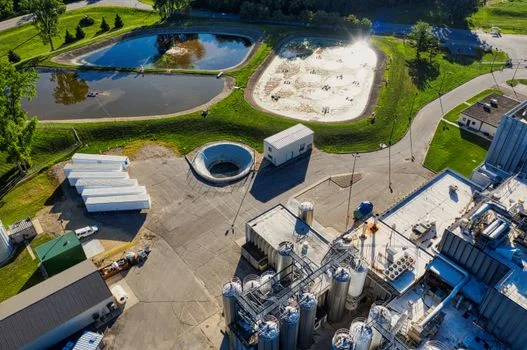
Process selection for a Rajshahi hospital ETP is driven by three constraints: plot size inside the city, pathogen control priority, and the operator skill the hospital can realistically retain. The honest head-to-head: a submerged MBR system for hospital wastewater treatment in Rajshahi delivers effluent COD <50 mg/L and TSS <1 mg/L with near-complete coliform rejection in a footprint roughly 60% smaller than conventional activated sludge. CAPEX for a 50–200 m³/d MBR plant is USD 600–900 per m³/day of capacity (2026 China-origin, FOB). An SBR costs less — USD 350–550 per m³/day — and works for 30–100 m³/d, but it demands a skilled operator, a large equalization volume (typically 50% of daily flow), and a downstream disinfection stage to consistently meet the fecal coliform limit. Constructed wetlands are the lowest-OPEX option and attractive for rural Upazila sadar hospitals, but they require 0.8–1.5 hectares per 100 m³/d of flow — which rules them out for most sites inside Rajshahi city.
An emerging hybrid worth specifying on monsoon-prone sites: a DAF pre-treatment unit for hospital wastewater in Rajshahi upstream of the MBR cuts TSS loading 60–80% and extends membrane cleaning intervals from roughly 6 to 10–12 months. The Lin Chen et al. study (Scientific.Net, 2016) on biological contact oxidation found HRT ≥4 h reliably meets the GB18466-2005 BOD and COD limits; this is a useful design floor when sizing the aeration tank ahead of the MBR module.
| Process | Effluent COD | Footprint (100 m³/d) | CAPEX (USD/m³/d) | Operator skill | Best fit in Rajshahi |
|---|---|---|---|---|---|
| MBR (submerged PVDF) | <50 mg/L | ~25–35 m² | 600–900 | Low–medium | City hospitals, 50–500 m³/d |
| SBR | 60–100 mg/L | ~60–80 m² | 350–550 | Medium–high | Smaller district hospitals, 30–100 m³/d |
| Constructed wetland | 80–150 mg/L | 8,000–15,000 m² | 150–300 | Low | Upazila sadar hospitals with land |
| Biocoagulation + MBR | <40 mg/L | ~30–40 m² | 750–1,050 | Low | Monsoon-affected sites, high TSS |
Disinfection: Why Chlorine Dioxide Is the Practical Choice for Rajshahi
Chlorine dioxide is the disinfection chemistry that survives scrutiny from both a DoE inspector and a hospital infection-control officer. Compared to chlorine gas, sodium hypochlorite, and ozone, ClO₂ has the broadest practical kill spectrum — bacteria, viruses, Giardia, and Cryptosporidium — without forming trihalomethanes or haloacetic acids, and it holds a stable residual across the 18–32°C operating envelope in Rajshahi. Sodium hypochlorite is the cheapest to install but produces THMs when organic load is high, which is exactly the condition of hospital effluent. Chlorine gas carries handling risk that most Rajshahi hospitals refuse to accept. Ozone works but loses residual within minutes, giving no protection in a long sewer reach.
The Jun Li Yu et al. study (Scientific.Net) on a 200 m³/d hospital plant using biological contact oxidation + MBR + sodium hypochlorite reported COD <50 mg/L, NH₃-N <10 mg/L, and total coliform and fecal coliform not detected in the treated water — a useful analogue for a Rajshahi design substituting ClO₂ for hypochlorite to eliminate THM formation. A separate chlorine-dioxide recommendation paper in the same corpus concludes that "effective complex chlorine dioxide generator is the preferred method of wastewater sterilization for county and town level hospital wastewater" — directly applicable to Rajshahi district facilities. Dose: 5–10 mg/L ClO₂ with 30 minutes contact time achieves fecal coliform <1 CFU/100 mL in MBR permeate. An on-site chlorine dioxide generator for hospital effluent disinfection covers 50 g/h to 20,000 g/h, scaling from a 20-bed Upazila clinic to a 1,000-bed medical college. For smaller clinics the compact medical wastewater system for smaller Rajshahi clinics packages the MBR and ClO₂ stages into a single skid.
| Disinfection method | Effective dose | THM/HAAs | Residual stability (18–32°C) | Operational risk in Rajshahi |
|---|---|---|---|---|
| Chlorine gas (Cl₂) | 5–10 mg/L | Forms THMs/HAAs | Moderate | High (cylinder handling) |
| Sodium hypochlorite (NaOCl) | 5–10 mg/L free Cl₂ | Forms THMs with organics | Moderate | Low |
| Ozone (O₃) | 5–15 mg/L | None | Poor (minutes) | Medium (generator maintenance) |
| Chlorine dioxide (ClO₂) | 5–10 mg/L | None at typical doses | Good | Low |
Containerized Hospital ETP: A Practical 2026 Layout for Rajshahi
A 100 m³/d hospital ETP for Rajshahi ships as a single 40-ft ISO container plus one small civil equalization tank, replacing the 200–300 m² conventional reinforced-concrete layout. The process train: rotary bar screen → equalization tank → DAF pre-treatment → anoxic tank → MBR aeration tank with submerged PVDF 0.1 μm modules → chlorine dioxide contact tank (30 min HRT) → sludge holding tank → plate-and-frame filter press for hospital ETP sludge dewatering. The WSZ underground integrated sewage treatment skid is an alternative package for sites with limited above-grade space. A rotary mechanical bar screen at the head of the train protects downstream pumps and membranes from rag and surgical-gauze carryover.
Indicative 2026 CAPEX for a 100 m³/d turnkey containerized plant (China-origin, FOB): MBR skid USD 35,000–55,000, DAF USD 8,000–14,000, ClO₂ generator USD 4,000–9,000, filter press USD 6,000–12,000, automation/MCC USD 5,000–8,000 — total USD 60,000–110,000. At the current 119 BDT/USD reference rate used by Rajshahi bank drafts, that places a turnkey 100 m³/d system in the BDT 71–131 lakh range before Bangladesh-side civil, electrical interconnection, and DoE consent fees. OPEX benchmarks: power 0.8–1.2 kWh/m³, ClO₂ chemical USD 0.04–0.08/m³, membrane replacement every 5–7 years USD 12,000–18,000. Sea transit to Chittagong is 2–3 weeks, then road to Rajshahi roughly 7–9 days; commissioning with one remote and one on-site engineer runs 7–14 days.
| Item | CAPEX (USD, 2026 China-origin) | Notes |
|---|---|---|
| MBR skid (submerged PVDF, 100 m³/d) | 35,000–55,000 | Includes blowers, pumps, CIP |
| DAF pre-treatment | 8,000–14,000 | Polymer dosing skid separate |
| ClO₂ generator (50–500 g/h) | 4,000–9,000 | Precursor chemicals billed monthly |
| Plate-and-frame filter press | 6,000–12,000 | 10–16 m² filter area |
| Automation / MCC / PLC | 5,000–8,000 | SCADA optional |
| Total (100 m³/d turnkey) | 60,000–110,000 | Ex-works; add sea freight, civil, install |
Frequently Asked Questions
What are the Bangladesh DoE discharge limits for a hospital ETP in Rajshahi? Under ECR 1997 Schedule-10: pH 6–9, BOD₅ ≤50 mg/L, COD ≤200 mg/L, TSS ≤150 mg/L, total nitrogen ≤100 mg/L, and fecal coliform ≤100 CFU/100 mL; DoE Rajshahi Division commonly enforces fecal coliform ≤1 CFU/100 mL for surface-water discharges.
Should a 50–500 bed Rajshahi hospital choose MBR or SBR? Choose MBR for 50–500 m³/d with constrained footprint and tight coliform targets; CAPEX is higher (USD 600–900/m³/d vs USD 350–550/m³/d for SBR) but operating complexity and TSS in the effluent are both lower.
What chlorine dioxide dose meets the fecal coliform limit on hospital MBR permeate? 5–10 mg/L ClO₂ with 30 minutes contact time consistently achieves <1 CFU/100 mL in hospital MBR permeate at Rajshahi ambient temperatures of 18–32°C.
What is the indicative 2026 CAPEX for a 100 m³/d containerized hospital ETP shipped to Rajshahi? USD 60,000–110,000 turnkey ex-works for China-origin equipment (MBR + DAF + ClO₂ + filter press + automation); roughly BDT 71–131 lakh at current exchange, before Bangladesh-side civil and consent costs.
How long from purchase order to commissioned operation in Rajshahi? Approximately 5–7 weeks total: 2–3 weeks sea transit to Chittagong, 7–9 days road transport to Rajshahi, and 7–14 days on-site commissioning with one remote and one on-site engineer.