Lusail’s 60,000 m³/day SUEZ Ultrafor™ MBR plant (commissioned 2013) set the benchmark for sewage treatment in Qatar, achieving <1 μm filtration and effluent COD <50 mg/L—critical for reuse in irrigation under KAHRAMAA standards. For 2025 projects, suppliers must address Lusail’s 46°C temperatures, high TDS (up to 1,200 mg/L), and grease loads from commercial developments. This guide compares MBR, DAF, and A/O systems with Lusail-specific CAPEX (e.g., $1.2M–$4.5M for 50–200 m³/h plants) and compliance requirements.
Why Lusail’s Sewage Treatment Needs Are Unique: Climate, Regulations, and Influent Challenges
Lusail’s summer temperatures of 46°C and humidity above 80% accelerate membrane fouling in MBR systems by increasing biological activity and reducing dissolved oxygen solubility (HydropureWater field data, 2025). Mitigation strategies include chilled aeration to maintain optimal biological temperatures (25-35°C) and anti-scalant dosing to prevent mineral precipitation on membrane surfaces. KAHRAMAA’s reuse standards, such as BOD <10 mg/L and TSS <5 mg/L, are stricter than Qatar’s national wastewater discharge limits of BOD <20 mg/L, as outlined in KAHRAMAA Circular 2023/04 for treated sewage effluent quality. Influent characteristics in Lusail present specific challenges: Total Dissolved Solids (TDS) can reach up to 1,200 mg/L due to coastal proximity and saline intrusion, while Fats, Oils, and Grease (FOG) loads from commercial kitchens and food processing facilities typically range from 200–500 mg/L. Additionally, new developments often exhibit highly variable flows, fluctuating from 0–100% within hours, necessitating robust equalization and flexible system designs. These characteristics directly impact system selection, for example, favoring DAF for effective FOG removal or reverse osmosis (RO) as a tertiary step for high TDS reduction.
The unique combination of climate, regulations, and influent challenges in Lusail demands careful consideration when selecting sewage treatment technologies.Lusail Sewage Treatment Technologies Compared: MBR vs DAF vs A/O for Qatar’s Conditions
MBR systems consistently deliver effluent quality meeting KAHRAMAA reuse standards for irrigation, making them a preferred choice for Lusail’s green infrastructure initiatives. SUEZ’s Ultrafor™ MBR technology, as deployed in Lusail, typically utilizes 0.1 μm PVDF (Polyvinylidene Fluoride) membranes, achieving high flux rates of 20–40 LMH (Liters per square meter per hour) even under challenging conditions. For Lusail, MBR systems offer a significant advantage with a footprint up to 60% smaller than conventional Activated Sludge (A/O) plants, crucial for high-value urban land. MBRs consistently achieve high removal efficiencies, with the Lusail SUEZ plant demonstrating 92% COD removal from influent concentrations of 500 mg/L (SUEZ PDF, 2013). For Lusail-ready MBR systems with PVDF membranes and chilled aeration, consider solutions like HydropureWater’s MBR integrated wastewater treatment systems.
Dissolved Air Flotation (DAF) systems excel in FOG removal, achieving efficiencies of 95% or more, making them highly effective as a pre-treatment step for commercial kitchens and high-FOG industrial discharges common in Lusail’s commercial developments. However, DAF efficiency can be reduced when influent TDS exceeds 1,000 mg/L, as high salinity can diminish bubble adhesion to suspended solids. For such cases, pre-treatment options like electrocoagulation, with an estimated CAPEX of $80K–$200K for a typical commercial facility, can enhance DAF performance. For DAF systems for Lusail’s high-FOG commercial wastewater, explore HydropureWater’s Dissolved Air Flotation (DAF) systems.
Conventional Anaerobic/Anoxic/Oxic (A/O) systems present a lower initial CAPEX, with a 50 m³/h plant estimated at $1.2M compared to $2.8M for an equivalent MBR. While A/O systems are robust, they typically require tertiary filtration (e.g., sand filtration or ultrafiltration) to meet KAHRAMAA’s stringent reuse standards for BOD and TSS. This additional step introduces OPEX trade-offs, as A/O systems generally have lower energy consumption for aeration than MBRs but incur higher sludge disposal costs due to greater sludge volume and often require more frequent maintenance of tertiary filters.
Material selection is critical for Lusail’s climate; while PVDF membranes are common, PTFE (Polytetrafluoroethylene) membranes offer superior temperature resistance (up to 80°C) and chemical stability for MBRs. Aeration strategies must consider the ambient 46°C temperatures, with chilled aeration improving oxygen transfer efficiency and reducing membrane fouling compared to ambient aeration. Corrosion protection is paramount, favoring epoxy-coated steel or stainless steel for tanks and piping over standard carbon steel to withstand high humidity and saline environments.
| Technology | Key Advantages for Lusail | Lusail-Specific Limitations | Typical Effluent Quality (BOD/TSS) | Footprint (Relative) | Climate Adaptation Needs |
|---|---|---|---|---|---|
| MBR | Meets KAHRAMAA reuse standards; 60% smaller footprint; high COD removal (92% for SUEZ Ultrafor™). | High CAPEX; membrane fouling risk at 46°C; higher energy for aeration. | <10 mg/L / <5 mg/L | Smallest | Chilled aeration, anti-scalants, temperature-resistant membranes (PTFE). |
| DAF (Pre-treatment) | 95%+ FOG removal for commercial wastewater; effective for variable flows. | Reduced efficiency if TDS >1,000 mg/L; requires post-treatment for full compliance. | Varies (primarily FOG/TSS removal) | Medium | Corrosion-resistant materials for saline environments. |
| A/O (Activated Sludge) | Lower CAPEX; robust for variable influent; lower energy than MBR. | Requires tertiary filtration for KAHRAMAA reuse; larger footprint; higher sludge volume. | <20 mg/L / <10 mg/L (post-secondary) | Largest | Enhanced aeration control, corrosion protection. |
CAPEX and OPEX Breakdown for Lusail Sewage Treatment Plants: 2025 Cost Models by Technology
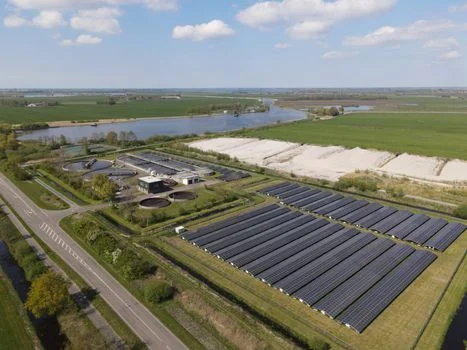
The capital expenditure (CAPEX) for sewage treatment plants in Lusail for 50–200 m³/h capacities ranges from $1.2M for A/O systems to $4.5M for advanced MBR installations, reflecting technology complexity and required effluent quality (HydropureWater field data, 2025). For small to medium-scale plants (50–200 m³/h) in Lusail, typical CAPEX ranges include $1.2M–$1.5M for A/O systems, $1.8M–$2.5M for DAF-based solutions (often as pre-treatment or for specific industrial applications), and $2.8M–$4.5M for MBR systems. These figures encompass equipment procurement, civil works, installation, and commissioning. Recent supplier quotes from Doha indicate a broader range of QAR 4.5M–16.5M ($1.2M–$4.5M USD) for similar capacity projects, depending on the level of automation and specific site conditions.
Operational expenditure (OPEX) is primarily driven by energy consumption, typically $0.08–$0.15/m³ for aeration and pumping, varying with technology and influent load. Chemical costs, including coagulants, flocculants, and disinfection agents, generally fall between $0.03–$0.07/m³. MBR systems incur an additional membrane replacement cost, estimated at $0.05–$0.10/m³ over their lifespan, usually every 5–7 years. Sludge disposal is a significant OPEX component, with costs in Doha ranging from QAR 150–300/ton for dewatered sludge, influenced by volume and hazardous content. For a detailed comparison of cost structures in the region, see how Egypt’s municipal sewage treatment specs compare to Lusail’s KAHRAMAA standards in our guide on Municipal Sewage Treatment Plants in Egypt.
Adapting to Lusail’s climate adds specific cost elements. Chilled aeration, necessary to optimize biological activity and mitigate membrane fouling in high temperatures, can increase CAPEX by 15% due to chiller units and insulated piping. Anti-scalant dosing, crucial for high TDS influent, adds approximately $0.02/m³ to OPEX. The use of corrosion-resistant materials, such as marine-grade stainless steel or specialized epoxy coatings, can increase CAPEX by 10% but significantly extends the plant’s lifespan and reduces maintenance.
Investment in advanced sewage treatment offers substantial returns. Reuse of treated effluent can generate savings of QAR 5–10/m³ compared to purchasing desalinated water for irrigation or industrial processes. Conversely, non-compliance with KAHRAMAA standards can lead to severe penalties, potentially reaching QAR 50,000/month. Project lifespan also impacts ROI, with MBR systems typically designed for 20 years of operation (with membrane replacement), while A/O systems often have a design life of 15 years before major overhauls are required.
| Cost Category | A/O System (50-200 m³/h) | DAF System (Pre-treatment) | MBR System (50-200 m³/h) |
|---|---|---|---|
| CAPEX (USD) | $1.2M – $1.5M | $1.8M – $2.5M | $2.8M – $4.5M |
| Equipment & Civil Works | 70-80% of CAPEX | 65-75% of CAPEX | 75-85% of CAPEX |
| Commissioning & Engineering | 10-15% of CAPEX | 10-15% of CAPEX | 10-15% of CAPEX |
| OPEX (USD/m³) | $0.11 – $0.22 | $0.10 – $0.20 (pre-treatment) | $0.16 – $0.32 |
| Energy | $0.08 – $0.12 | $0.07 – $0.10 | $0.10 – $0.15 |
| Chemicals | $0.03 – $0.05 | $0.03 – $0.07 | $0.03 – $0.05 |
| Membrane Replacement | N/A | N/A | $0.05 – $0.10 (every 5-7 years) |
| Sludge Disposal (QAR/ton) | QAR 200 – 300 | QAR 150 – 250 | QAR 150 – 250 |
| Climate Adaptation (CAPEX increase) | ~5% (corrosion) | ~5% (corrosion) | ~15% (chilled aeration, corrosion) |