Wastewater treatment plant cost in Japan spans about $500K for a 50 m³/day Johkasou unit to over $1B for a 500,000 m³/day municipal MBR plant, with OPEX near $1.29–$1.34/m³ at ¥25/kWh power.
Costs vary widely by scale, site constraints, and technology choice, and strict limits such as COD <10 mg/L apply for reuse duties. Membrane trains (MBR, RO) dominate on tight urban sites and held about 31% of the $13.5B market in 2025. For most buyers, energy consumption in wastewater plant design is the line item that decides long-term viability.
A factory manager in the Kanto region often faces a $2M retrofit on an aging onsite plant when local ordinances tighten. The driver is not only worn equipment; discharge rules now push COD below 10 mg/L to protect Tokyo Bay. Dense industrial clusters also price land at a premium, demand seismic-resistant tanks, and charge steep sludge fees. Those three factors lift both CAPEX and OPEX above typical Southeast Asian bids on similar flows.
Why Wastewater Treatment Plant Cost in Japan Runs Above Global Averages
Japan wastewater plant costs run higher than global averages because land, seismic design, effluent limits, and electricity stack together. Urban land can add a 15–25% CAPEX premium. Seismic detailing adds 20–40% to structure cost. COD <10 mg/L and TN <10 mg/L often force tertiary polishing. At ¥25/kWh, aeration-heavy trains cost 30–50% more to run than in lower-tariff markets.
Japan's land acquisition costs for industrial projects are 3–5× higher than Southeast Asian averages, and that premium alone adds 15–25% to greenfield CAPEX. In Tokyo, Osaka, or Kyoto industrial zones, land prices often sit between ¥500,000 and ¥1,200,000 per square meter. Compact membrane layouts therefore beat cheaper, sprawling clarifier plants once land cost is counted into the total installed price.
Japan Industrial Wastewater Seismic Design Cost Premium
Japan's Building Standard Law requires seismic-resistant design for wastewater infrastructure, so base isolation or thicker reinforced concrete is common on new tanks. Those measures raise structural cost by 20–40% versus lower-seismic regions with similar hydraulic loads. Tank wall thickness and foundation piling that look optional elsewhere become mandatory line items on Japanese bids.
Effluent standards in Japan are stricter than many EU or North American discharge permits. EU permits may allow COD near 30 mg/L for some discharges. Japanese reuse or closed-basin rules often demand COD <10 mg/L and TN <10 mg/L, including Lake Biwa catchments. About 60% of modern industrial plants add advanced oxidation or RO to hit those limits. Buyers comparing EU rules can review the EU Urban Wastewater Treatment Directive: Compliance, Deadlines & Tech against Japan's local ordinances.
Electricity at ¥25/kWh is roughly double typical China or India industrial rates, so MBR scour air and ozone therefore run 30–50% more expensive each year. Procurement teams favor high-efficiency blowers and closed-loop dissolved-oxygen controls for that reason. Most plants we size for Japanese electronics sites run aeration at the lower end of the 0.8–1.2 kWh/m³ MBR band when DO setpoints are tightened carefully.
Procurement teams also under-estimate import lead times for blowers, membranes, and PLC panels. A 12–20 week delivery window is common for specialized skids. That schedule risk converts into temporary rental treatment or production curtailment cost if the old plant fails first. Most plants we size for Kanto electronics sites therefore keep a parallel temporary train budget of 3–5% of CAPEX.
What Is a Water Treatment Plant Cost Breakdown?
A water treatment plant cost breakdown for Japan splits CAPEX into civil, process equipment, membranes, automation, and seismic extras, then OPEX into energy, chemicals, sludge, labor, and membrane replacement. Capacity and technology choice drive up to 85% of upfront spend. Johkasou packages sit at the low end. Large MBR plants sit at the high end because of membrane area and controls. 2023 Japan Sewage Works Association and Kubota-type benchmarks still frame the 2025 ranges below.
| System Size (m³/day) | Technology Type | CAPEX Range (USD) | Cost per m³ ($/m³) | Typical Application |
|---|---|---|---|---|
| 10 – 100 | Johkasou (Packaged) | $10,000 – $200,000 | $1,000 – $2,000 | Rural facilities, small food labs |
| 500 – 5,000 | DAF + Biological | $1.5M – $8M | $1,600 – $3,000 | Food processing, pulp & paper |
| 1,000 – 10,000 | MBR (Membrane Bioreactor) | $3M – $25M | $2,500 – $4,000 | Electronics, pharmaceuticals |
| 50,000+ | Conventional Activated Sludge | $80M – $150M+ | $1,600 – $2,500 | Municipal plants, large industrial parks |
| 500,000+ | Large-Scale MBR | $1B+ | $2,000+ | Mega-city municipal infrastructure |
Johkasou Packaged Plant Cost in Japan
Johkasou units are Japan's standard decentralized package. Prices run from about $10,000 for a 5-person residential unit to $200,000 for a 500-person industrial unit. Where sewers are absent, Johkasou-style underground systems for decentralized treatment can cut CAPEX by up to 30% versus cast-in-place concrete plants. Prefabrication shrinks civil work and onsite labor.
For high-tech sites, MBR systems for high-quality effluent in space-constrained sites remain the default. PVDF membrane modules often take about 40% of process CAPEX at $500–$800 per square meter of membrane area. Conventional activated sludge can be 20–30% cheaper on equipment. It needs roughly twice the footprint, so Tokyo or Osaka land cost usually erases that saving.
Food and dairy plants often pair DAF systems for industrial pretreatment and cost-effective TSS removal with biological stages. That train is typically about 15% lower CAPEX than a full MBR. The trade is higher coagulant and polymer use later in OPEX.
How Energy Consumption in Wastewater Plant Shapes Japan OPEX
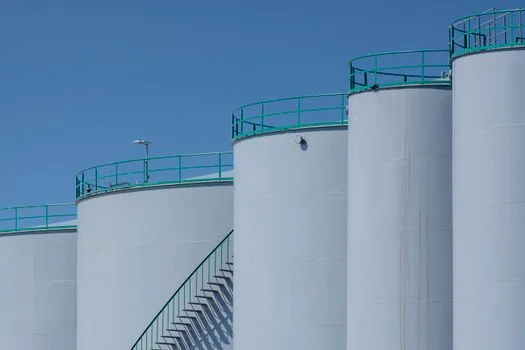
Operational expenditures in Japan track high utility rates and strict waste rules. Total OPEX typically sits between $1.29 and $1.34 per cubic meter treated. Sludge disposal often rivals energy as a budget share. Mapping energy consumption in wastewater plant options early prevents under-sizing blowers or over-buying membranes.
| Cost Category | MBR System (% of OPEX) | Conventional (% of OPEX) | Avg. Cost ($/m³) |
|---|---|---|---|
| Energy (¥25/kWh) | 45% | 30% | $0.45 – $0.60 |
| Chemicals (PAC/Polymer) | 15% | 20% | $0.15 – $0.25 |
| Sludge Disposal | 20% | 35% | $0.25 – $0.45 |
| Labor & Maintenance | 15% | 10% | $0.15 – $0.20 |
| Membrane Replacement | 5% | 0% | $0.05 – $0.08 |
Energy is the primary OPEX driver on MBR trains because membrane scouring pushes specific energy to 0.8–1.2 kWh/m³ at design flux. Conventional aeration usually lands at 0.4–0.6 kWh/m³ under comparable BOD loads. Many Japanese plants add PLC-controlled chemical dosing for precise OPEX optimization so PAC doses only when influent sensors spike.
Sludge disposal fees rank among the world's highest at ¥30–¥50 per kilogram (about $200–$350 per ton). EU regions may see only ¥10–¥20/kg. Limited landfill space and incineration drive the gap. MBR often yields about 60% less sludge volume than conventional trains. A plate and frame filter press for high-solids sludge dewatering can cut sludge mass by up to 80% and trim haul fees.
Automation holds labor down on new Japanese packages, and fully automated Johkasou and MBR plants may need only 0.1–0.5 FTE for monitoring. Older manual plants elsewhere often need 2–5 FTE for the same daily flow. That shift matters as skilled operator wages continue to rise across industrial prefectures.
How does Europe fab OPEX compare?
Europe semiconductor fab OPEX still hinges on ultrapure water and reclaim energy, but Japanese industrial tariffs at ¥25/kWh usually make aeration-heavy reclaim more costly per cubic meter. Fab teams comparing regions should normalize kWh/m³ and sludge ¥/kg, not headline plant CAPEX alone. Cross-checks against other island or seismic markets help; see also industrial wastewater treatment costs in Christchurch for another high-compliance benchmark.
When comparing bids, require vendors to state specific energy at design flow and at 60% flow. Peak-only warranty claims hide the real annual bill at ¥25/kWh. Ask for membrane air scour rates in Nm³/m²·h and for blower turndown to 40–50%. Those two numbers explain more OPEX variance than brand labels.
Tech-Specific Cost Comparison: MBR vs. DAF vs. Johkasou vs. Conventional
Technology choice in Japan is a 15-to-20-year total cost of ownership call, not a CAPEX race. Footprint, effluent COD, energy, and sludge mass decide the winner. The table below compares the four trains that dominate Japanese industrial bids.
| Parameter | MBR | DAF + Biological | Johkasou | Conventional |
|---|---|---|---|---|
| CAPEX ($/m³) | $2,500 – $4,000 | $1,500 – $2,500 | $1,000 – $2,000 | $800 – $2,000 |
| OPEX ($/m³) | $1.30 – $1.45 | $1.10 – $1.30 | $0.90 – $1.15 | $0.80 – $1.00 |
| Footprint (m²/100m³) | 15 – 25 | 30 – 45 | 20 – 30 | 60 – 100 |
| Effluent COD (mg/L) | <10 | 20 – 40 | 15 – 30 | 30 – 50 |
| Energy (kWh/m³) | 0.8 – 1.2 | 0.5 – 0.7 | 0.3 – 0.5 | 0.4 – 0.6 |
| Sludge (kg/m³) | 0.1 – 0.2 | 0.3 – 0.5 | 0.2 – 0.3 | 0.4 – 0.6 |
| Maint. Complexity | High (4/5) | Medium (3/5) | Medium (3/5) | Low (2/5) |
MBR wins when reuse quality or urban footprint dominates. CAPEX and energy are highest, yet low sludge and small area keep TCO competitive for electronics and pharma. High-FOG food plants still protect biology with DAF systems for industrial pretreatment and cost-effective TSS removal ahead of the reactor.
Conventional activated sludge stays cheapest on paper. New Japanese builds rarely choose it when land is scarce. For flows under 500 m³/day, Johkasou-style underground systems for decentralized treatment offer a balanced package with modest maintenance.
How do chemical precipitation CAPEX and OPEX compare?
Chemical precipitation CAPEX is usually lower than membrane CAPEX because reactors and clarifiers cost less than PVDF modules. OPEX rises with PAC, polymer, and sludge mass, often $0.15–$0.25/m³ for chemicals alone in Japanese plants. Precipitation fits metals or phosphate polishing; it rarely replaces MBR when COD <10 mg/L reuse is mandatory. Pairing precipitation with DAF can still beat full MBR CAPEX by about 15% on food wastewater when reuse is not required.
Hidden Costs: Permitting, Land, and Compliance in Japan
Permitting is a real cash and schedule item under Japan's Water Pollution Control Act. An EIA for a new industrial wastewater plant can take 6–18 months and cost ¥5M–¥50M ($35,000–$350,000). Scope covers noise, thermal discharge, and aquatic impacts. Gulf-region buyers facing similar permit stacking can compare notes with the Ajman industrial wastewater compliance equipment guide.
Local ordinances near Tokyo Bay or Lake Biwa often beat national limits. Hitting COD <10 mg/L may need RO systems for high-purity industrial water reuse or a chlorine dioxide generator for high-efficiency disinfection. Those tertiary stages typically add 10–20% to CAPEX.
A 10,000 m³/day MBR plant in Yokohama shows the pattern. The project needed ¥200M ($1.4M) in seismic upgrades under updated 2023 Building Standard codes. An RO polish added ¥50M ($350K) for reuse. Electronics sludge was hazardous, so special permits cost ¥500,000 per year and disposal ran about 3× municipal sludge rates.
Civil contingency deserves its own line. Odour carbon or biofilters are often late additions when neighbors sit within 50 m. Include them in the base case rather than as a change order.
ROI Calculator: How to Justify Your WWTP Investment in Japan
Japanese ROI math focuses on avoided water purchase, sludge fees, and regulatory fines rather than soft brand claims. A common form is ROI = (Annual Savings + Avoided Fines) / (CAPEX + Annual OPEX) × 100, expressed as a percentage. Industrial water in Tokyo often costs ¥200–¥500/m³, while municipal tap water can exceed ¥1,000/m³ on large continuous draws.
MBR plus RO can reclaim up to 80% of process water. A ¥500M MBR plant that saves ¥80M per year in water and sludge costs, and avoids ¥30M in COD fines, can pay back in about 5–6 years. Variable-speed blowers and automated aeration can cut MBR energy 20–30% and shorten that window. Electronics buyers can also bank metal recovery using nickel wastewater treatment specs for electronics/automotive plants.
Water Pollution Control Act penalties can run ¥1M–¥10M per violation, plus forced shutdown risk that dwarfs the fine itself. Those avoided costs belong in the CFO model as quantified contingency, not as a footnote after award.
Decision Framework: How to Choose the Right WWTP for Your Project
Japanese WWTP selection follows effluent, footprint, flow, and prefectural rules in that order. Use this checklist before freezing the process train:
- Step 1: Define effluent requirements. Sewer discharge near COD <50 mg/L differs from cooling reuse at COD <10 mg/L. Stricter limits need MBR or RO.
- Step 2: Assess space. Below 50 m² per 100 m³/day of flow, MBR or Johkasou are usually the only fits.
- Step 3: Match flow. Under 500 m³/day, packaged Johkasou wins on cost. At 500–10,000 m³/day, compare MBR with DAF + biological. Above 10,000 m³/day, weigh MBR against conventional sludge plus land.
- Step 4: Confirm prefectural rules. Tokyo Bay and Lake Biwa catchments typically force tertiary treatment regardless of the core biology.
- Step 5: Benchmark the Japan premium. Check Vietnam's WWTP cost benchmarks for cross-border comparisons and Taiwan's WWTP cost structure for regional benchmarking. A 20–30% Japan premium versus those peers is common once land and seismic work are included.
- Step 6: Stress-test energy. Model aeration kWh/m³ at ¥25/kWh before awarding the bid.
- Step 7: Price sludge. Include ¥30–¥50/kg disposal and dewatering CAPEX in the same sheet.
For multi-site manufacturers, standardize package sizes where flows allow. Repeating a 1,000–2,000 m³/day MBR skid across factories cuts spare parts inventory and operator training time. Custom one-off civil plants rarely recover that soft-cost saving even when unit CAPEX looks lower on paper.
Who This Is For / Next Step
This guide is for plant engineers, EPC estimators, and procurement managers sizing Japanese industrial or municipal trains under tight land and tariff constraints. Buyers seeking only low-land, low-tariff regions should look elsewhere for unit-cost benchmarks. If you need a Japan-ready CAPEX/OPEX sheet for MBR, DAF, or Johkasou scope, send your flow and effluent targets via our request-a-quote form.
Frequently Asked Questions
MBR plant capex opex Japan 2026: what do buyers actually pay?
MBR plants of 1,000–10,000 m³/day typically cost $3M–$25M, or $2,500–$4,000 per m³ of daily capacity, with PVDF modules at $500–$800 per square meter of membrane area. OPEX runs $1.30–$1.45 per m³, driven by scour energy of 0.8–1.2 kWh/m³ at ¥25/kWh. Tight urban sites accept the premium for reuse-quality effluent and a footprint of 15–25 m² per 100 m³. Land and seismic work, not the membranes, set the final number.
What is the average cost per m³ of treated wastewater in Japan?
OPEX typically ranges from $1.29 to $1.34 per cubic meter treated. That band covers energy at ¥25/kWh, chemicals, labor, and sludge fees of ¥30–¥50/kg. CAPEX still depends on technology. MBR systems often land at $2,500–$4,000 per m³ of daily capacity when membrane area and automation are included.
Why are wastewater treatment plants more expensive in Japan than in other Asian markets?
Three stacked premiums drive the gap. Urban land can reach ¥1.2M/m². Seismic detailing adds 20–40% to structural cost. COD <10 mg/L reuse or closed-basin limits force tertiary stages that many Asian peers skip. Together they raise both CAPEX and OPEX versus Southeast Asian bids.
Is a Johkasou system better than an MBR for industrial use?
Johkasou fits decentralized flows under 500 m³/day and usually wins on CAPEX. MBR is the better industrial choice for high-strength loads or reuse at COD <10 mg/L. It also holds a smaller footprint on urban sites. Match the train to flow and effluent, not brand preference.
How much can I save by implementing water reuse in a Japanese factory?
Municipal rates of ¥500–¥1,000/m³ mean a 1,000 m³/day reclaim loop can save over $1M per year. Add avoided sludge fees and fine risk, and many advanced trains reach ROI in 5–7 years. Savings scale with local tariff and reclaim fraction, so model both before approving CAPEX.
What Maldives CAPEX and OPEX costs for water show for island projects?
Maldives island water projects face logistics and energy premiums similar in kind to Japan's remote or seismic sites, though absolute yen tariffs differ. Use them as a reminder to price power and spare parts explicitly. Do not copy Maldives unit rates into a Kanto industrial bid without local land and sludge adjustments.