Sludge press equipment cost price by machine class
The sludge press equipment cost price is the machine quote, not the installed plant. Light screw presses start at $630, and manual plate-and-frame units start at $2,999. Fully automatic plate presses often pass $15,000, and pumps, dosing, and controls can push a plant past $50,000. Capacity, steel grade, and automation move the price more than the brand does.
Three classes show up on almost every industrial bid. A Plate and Frame Filter Press for Sludge Dewatering runs in batches and usually leaves the driest cake. A screw press runs continuously and fits oily or biological sludge when the screw pitch sets the compression. Choosing a sludge press is a choice among those three duty cycles.
Most plants we size for oily waste start on a screw, then move to plates if the landfill fee punishes wet cake. Screw press systems such as the industrial-grade JX-DL 401 dewater without a batch dump. Entry units on marketplaces such as Alibaba start as low as $630 for light-duty work. Heavy industrial models in 316 stainless steel reach upwards of $31,200 (JX Filtration data, 2025).
Metallurgy and screw pitch set that spread. The pitch fixes the compression ratio, and the alloy fixes how long the flights last in chlorides. Basic screw presses at $630 are not the same asset as the $31,200 industrial build. Buy the pitch for the sludge you actually feed, not for the brochure photo.
Plate and frame presses trade continuous flow for higher dry solids. A high-efficiency plate and frame filter press with 1–500 m² filtration area scales from pilot frames to large packs. Small-scale manual units for laboratory or pilot plant use are priced near $2,999, while large-scale municipal units with hundreds of plates scale into the tens of thousands. According to US EPA (EPA 832-F-00-058, September 2000), recessed-plate presses make the highest cake solids of any mechanical dewatering device, from about 12 to 15 percent solids up to 20 to 40 percent solids.
Belt presses are the third class, and they suit high-volume, low-solids feed that must run continuously. Belt presses need a larger physical footprint and higher polymer dosages than a plate press. Scraped supplier data indicates entry costs for belt systems range between $8,500 and $20,000 for the base machine. The Belt Filter Press Cost Price: 2026 B2B Pricing, ROI & Specs Guide separates belt pricing by width, and belt press sludge dewatering is the right page when the question is process fit.
Quoted ranges by throughput
Industrial screw press units available on B2B platforms like Alibaba are often priced between $630 and $3,999 for single-set minimum orders, typically handling sludge volumes of 1–10 m³/h. These units are often intended for light industrial use or secondary dewatering. For heavy-duty manufacturing environments, Made-in-China industrial screw presses listed at $2,999–$4,999 offer more robust builds, including automatic spray-cleaning systems and 304 or 316 stainless steel components. Most plants we size for food waste land in that $2,999–$4,999 band unless chloride forces a 316 shell.
Plate and frame prices follow filtration area and the level of hydraulic sophistication, not one dollar per cubic meter. Base models with manual shifting start at $2,999. Stepping up to semi-automatic hydraulic systems increases the price to approximately $8,000. For facilities requiring 24/7 operation, fully automatic PLC-controlled versions, which manage the entire filtration, cake discharge, and cloth washing cycle, frequently exceed $15,000.
Large-scale packs that use a high-efficiency plate and frame filter press with 1–500 m² filtration area must also carry the cake mass each cycle. Larger frames require reinforced steel structures, and that steel adds to the material cost. Total filtration area and the clamping force of the hydraulic system drive the quote. Plants on a 10–100+ m³/h batch duty usually leave the manual frame once two shifts share one press.
Project cost often dwarfs the sticker. Fully automated, high-capacity systems run over $50,000, and installed systems, including labor and controls, can exceed $50,000. According to ChemREADY installation data, integrating a press into a wastewater stream requires pumps, chemical preparation units, and control panels, adding $10,000 to $50,000+ to the total CAPEX. An automatic chemical dosing system builds the floc, and buyers who need how much does a 2 ton filter press cost should use that page for a two-ton frame.
| Equipment Type | Capacity (m³/h) | Base Price Range (USD) | Key Technical Spec |
|---|---|---|---|
| Screw Press (Light Duty) | 1–5 | $630 – $3,999 | 304 Stainless Steel, Continuous |
| Screw Press (Industrial) | 5–25 | $4,800 – $31,200 | 316 SS, Auto-cleaning, High Torque |
| Plate & Frame (Manual) | 1–10 (Batch) | $2,999 – $7,500 | PP Plates, Manual Shifting |
| Plate & Frame (Automatic) | 10–100+ (Batch) | $15,000 – $45,000+ | PLC Control, Hydraulic Clamping |
| Belt Filter Press | 10–30 | $8,500 – $20,000 | Continuous Belt, High Footprint |
Read the table as base-machine dollars, before freight and before the building. Light screws cover 1–5 m³/h, industrial screws cover 5–25 m³/h, and belt units cover 10–30 m³/h. Manual plates cover 1–10 m³/h in batch service, and automatic plates cover 10–100+ m³/h in batch service. The 316 SS row is the industrial screw, not the plate-frame alloy upcharge.
Filter press automation cost vs labor savings
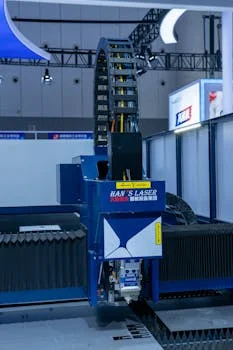
Filter press automation cost vs labor savings usually favors the PLC package once an operator spends about 2 hours per day shifting plates. A manual filter press requires an operator to move each plate and drop the cake, which takes 30 to 60 minutes per cycle. Adding a PLC-controlled automatic plate shifter and a hydraulic power unit reduces that drop to minutes. These automation packages add between $3,000 and $8,000 to the base price of the machine.
Does filter-press automation pay back in labor?
Filter-press automation pays back in labor only when a named shift actually leaves the roster. At an average industrial labor rate of $25/hour, cutting time from 2 hours per day to 30 minutes saves approximately $13,600 annually. The same steady cycle supports a uniform cake dryness of 25% or higher. EPA reports that belt-press automation generally raises capital cost by 10 percent, while open-market plate packages can increase the base equipment cost by 20–50% (EPA 832-F-00-057, September 2000).
Throughput bends the price once capacity exceeds 20 m³/h. Past that rate the frame stress rises quickly, so the build needs reinforced steel side rails, larger hydraulic cylinders, and dual-drive motors for screw presses. An automatic chemical dosing system adds $2,000–$6,000 to the system price but can reduce maintenance labor by up to 40% by holding flocculant quality steady. Consistent floc is what stops blinding or clogging when conditioning is poor.
Sludge dewatering press capex and opex breakdown
A sludge dewatering press capex and opex breakdown puts the machine in the capital column and polymer, power, cloths, and disposal in the operating column. Track the sludge press equipment cost price as capex, then add pumps and dosing before you judge payback. Energy sits in the operating column, not in the machine quote. Screw presses often use 30–50% less power than belt presses for equivalent throughput because they turn at much lower speed.
Over a five-year period, the electricity savings from a screw press can offset a higher initial purchase price compared with a cheaper belt. Most plants we size for continuous duty are specified at the lower end of nameplate power, not the catalog peak. Keep power and polymer on separate rows. A kilowatt saving will not hide a bad polymer contract.
Plate and frame presses generally use 20–30% less flocculant than belt presses because they rely on pressure rather than gravity and tension. At a standard usage of 500 kg of polymer per month, that gap is about $1,200–$3,000 annually. Treat that gap as a field range for a typical industrial dose, not a universal constant.
EPA's September 2000 belt sheet priced polymer from $2.65 to $91.15 per million gallons, with an average of $24.38 per million gallons (EPA 832-F-00-057). The same sheet put polymer near $12 per dry ton on raw primary and up to $80 per dry ton on hard-to-dewater solids. Those unit costs are September 2000 records, not a substitute for the current chemical contract.
Maintenance intervals differ by machine type. Belt systems require daily tracking adjustments and frequent roller cleaning, whereas plate and frame units primarily require quarterly inspections and occasional plate or cloth replacement at $200–$500 per set. Belt life averages about 2,700 running hours, with a range of 400 to 12,000 hours (EPA 832-F-00-057, September 2000). A single belt press on that sheet needed four to eight staff hours per day.
Six to eight presses needed only eight to ten staff hours per day in the same EPA record, because labor does not scale one operator per machine. Follow a plate frame filter press maintenance guide on a plate asset. You can compare belt filter press cost and ROI in 2025 when the machine is a belt. Skipped cloth washes usually cost more downtime than the cloth set on plate presses we size.
Cake dryness dominates the operating bill. Increasing cake solids from 20% to 35% DS reduces the total volume of sludge for disposal by up to 40%. Since industrial waste disposal is often billed by the ton, even a 5% increase in solids can save a plant $10,000 to $20,000 per year in transport and landfill fees. Lime and ferric chloride can still form 15 to 40 percent of that cake mass, which gives back part of the weight the press just removed (EPA 832-F-00-058, September 2000).
What belongs on the seven-line cost check?
Seven lines show whether a dewatering quote is complete before anyone talks payback. Skip a line and the low bid is usually the bid that left something out.
- Machine class: screw, plate-and-frame, or belt, matched to continuous or batch duty.
- Throughput band: 1–10 m³/h, 5–25 m³/h, or 10–100+ m³/h, plus a spare path if you own one press.
- Metallurgy: 304, 316, or epoxy-coated carbon steel against chlorides, acids, and salts.
- Automation: manual shifting, semi-auto hydraulics near $8,000, or a PLC cycle.
- Auxiliaries: feed pump, dosing, cake conveyor, and controls, often $10,000 to $50,000+.
- Operating lines: power, polymer at 500 kg per month, and cloths or plates at $200–$500 per set.
- Cake target: 25% or higher, or a measured step from 20% to 35% DS, tied to tons hauled.
316 stainless steel filter press price premium
The 316 stainless steel filter press price premium is typically 15–25% on material cost versus 304 when chlorides, acids, or salts are in the wastewater. Standard municipal sludge may only require 304 stainless steel or even epoxy-coated carbon steel. Industrial wastewater containing high chlorides, acids, or salts needs 316 stainless steel or specialized duplex steels. Most plants we size for pickle liquor or coastal brine pay the 15–25% rather than plan a reshell inside a 10-to-15-year lifespan.
When does the 316 upgrade win on life cost?
The 316 upgrade wins on life cost when a 304 failure would land inside the first 10-to-15-year window. A cheaply made press may require replacement in 5 years. An industrial-grade unit, maintained via a structured maintenance protocol, can operate for 15+ years. That span makes cost per year of service the fair metric, not the first invoice.
Feed pressure sits beside the alloy choice. US EPA states the feed pump must develop 100 psi to 225 psi, and presses are usually designed for 689.5 kPa (100 psi) or 1,551 kPa (225 psi) terminal pressure (EPA 832-F-00-058, September 2000). The filtration phase often runs one to three hours with little operator attention, which is separate from the 30 to 60 minutes of manual plate shifting. Polymer tests in that sheet reached 45 percent total solids on primary sludge and 35 percent total solids on primary sludge plus waste activated sludge.
Payback math procurement can audit
Payback math for a dewatering press should clear a 3-year benchmark before the purchase order. If a $25,000 automated press reduces disposal costs by $8,000 per year through better dewatering and saves $2,000 in polymer costs, payback is approximately 30 months. That arithmetic ignores compliance and reduced liability. Plants we cost against one landfill contract often clear the screen on disposal alone when solids rise by at least five points.
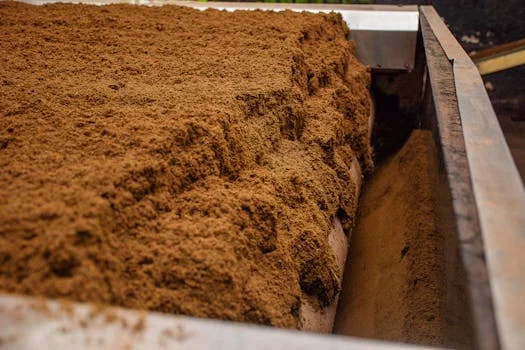
Labor savings belong on the same sheet as disposal. Moving from a manual system to an automated press can reduce operator intervention time from 2 hours per day to just 30 minutes. At $25/hour, that transition saves approximately $13,600 annually. Reliable presses with less than 2% unplanned downtime can prevent $5,000–$10,000 in monthly production losses when production actually stops with the press.
Historical municipal figures are a floor, not a bid. EPA's Fact Sheet: Recessed-Plate Filter Press reports operation near $40 per dry ton and maintenance of $12 per dry ton at Williamsburg, Virginia, in 1987 dollars (EPA 832-F-00-058, September 2000). The Fact Sheet: Belt Filter Press puts operation and maintenance from $80 per dry ton to $200 per dry ton (EPA 832-F-00-057, September 2000). See the plate frame filter press cost and ROI guide when the shortlist is already a plate press, and treat both EPA sheets as September 2000 history.
Who this price guide is for
Plant engineers, EPC estimators, and procurement leads who already know daily volume, feed solids, and the fee per ton are the readers this guide serves. The comparison is screw, plate-and-frame, and belt on installed cost. Bring the chloride level if 316 is on the bid. Bring the shift roster if automation is the justification.
Look elsewhere when plant flow is under about 4 mgd and liquid haul or drying beds are real options. US EPA (September 2000) flags mechanical dewatering as a weak buy at that scale on both fact sheets. A two-ton frame price also belongs on its own page, already linked above. Do not stretch this class guide into a single model-code answer.
Send feed solids, daily volume, cake target, and the disposal fee per ton with a dewatering equipment quote request. A quote that lacks those four numbers is a catalog price, not a project price. Compare screw, plate, and belt offers only after each bid lists pumps, dosing, and controls.
Frequently Asked Questions
What does a mid-range industrial dewatering machine cost before installation?
Mid-range industrial systems typically cost between $8,000 and $25,000 for the equipment alone. Pumps, chemical preparation, and panels often add $10,000 to $50,000+, so a fully integrated system often exceeds $50,000. A dosing skid usually pulls the installed total into the middle of that band. Compare bids only after each vendor lists what the sticker excludes.
How much does a plate and frame filter press cost?
Prices start at approximately $2,999 for small 1 m² manual units. High-capacity, automated models with over 200 m² of filtration area can cost $30,000 to $60,000, depending on the materials and automation level. Manual frames in the $2,999 – $7,500 band suit pilot batches. PLC presses in the $15,000 – $45,000+ band fit plants that drop cake every shift.
Are screw presses cheaper than belt presses?
Basic screw presses start as low as $630 for small units, whereas belt filter presses in the table start at $8,500 – $20,000. EPA's September 2000 belt fact sheet listed municipal vendor estimates from $47,500 to $115,000 before installation, at about 5 percent feed solids (EPA 832-F-00-057). That span is historical context for a 0.5 to 1.5 meter municipal belt, not today's small-press quote. Use the table on this page for the current base-machine band.
What changes cake dryness more than the press name?
Feed solids, polymer type and dose, applied pressure, and filtration area change cake dryness more than the name on the frame. Higher pressure and a larger area usually make a drier cake and a higher equipment cost. Plate presses often pass 30 percent solids on many municipal sludges, according to US EPA (EPA 832-F-00-058, September 2000). For the plate-only price build, see our plate frame filter press cost and ROI guide.
Can drier cake cut disposal cost?
Raising cake solids from 20% to 30% cuts wet volume by roughly 33% for the same dry mass. A further step from 20% to 35% DS can cut volume by up to 40%. Haul and landfill fees are usually billed by the ton, so water left in the cake is what you pay to ship. A 5% increase in solids can save a plant $10,000 to $20,000 per year when the gate fee is already high.