The industrial belt filter press cost price in 2026 typically ranges from $8,000 for basic 0.5 m³/h units to $65,000+ for fully automated stainless steel models handling 15 m³/h. Capex scales with belt width (0.5–3 m), automation level, and frame materials. High-efficiency systems commonly cut sludge volume by 75–85%, with many plants seeing a 3–5 year payback when disposal fees dominate operating cost.
What Sets Industrial Belt Filter Press Cost Price?
An industrial belt filter press capital cost is set by belt width, frame alloy, and automation rather than nameplate flow alone. Basic units near 0.5 m³/h often start around $8,000. Fully automated stainless machines near 15 m³/h commonly pass $65,000. Volume cuts of 75–85% drive the payback when disposal fees are high.
Belt width, automation, and materials set capital cost for industrial and municipal belt presses. A 0.5 m belt unit often starts near $8,000 for small plants, while 2–3 m fully automated stainless systems can exceed $65,000. Automation usually adds $3,000–$15,000. Stainless upgrades add about 20–40% versus epoxy-coated carbon steel.
Filtration area is the primary engineering variable driving capital cost, because belt width sets that area and the frame strength needed for tension and torque. A 0.5-meter belt unit typically serves small-scale industrial applications with prices starting around $8,000. Wide-format 3-meter belts for municipal or high-volume industrial throughput can exceed $65,000. Price scaling is non-linear: larger belts need heavier frames, larger rollers, and stronger drive motors.
Automation levels introduce a price premium of $3,000 to $15,000 per unit. A manual system needs constant oversight for belt tracking and tensioning. A fully PLC-controlled system adds ultrasonic cake-thickness sensing, automated wash cycles, and VFDs for belt speed. Most plants we size for continuous duty recover that premium through a 50–70% cut in dedicated labor hours.
According to US EPA fact sheet EPA 832-F-00-057 (September 2000), automation generally increases belt-press capital cost by 10 percent. On the packages in the price table below, that percent usually lands inside the $3,000 to $15,000 quote. The same sheet says automated lines cut operator hours, yet they still need an instrumentation specialist to hold the tune.
Drive power also affects sticker price. Systems with high-efficiency 0.75–5.5 kW motors and high-torque gearboxes cost more upfront but lower long-term energy use. Sludge viscosity and feed solids set gravity-zone length.
Very dilute sludge needs a longer zone, a larger footprint, and more steel. Pre-thickened sludge allows a more compact, lower-cost design.
Stainless Steel Belt Filter Press Price Premium
The stainless steel belt filter press price premium is about 20–40% above an epoxy-coated carbon steel frame of the same belt width. Standard carbon steel frames with epoxy coatings are the baseline. Upgrading to Stainless Steel 304 or 316 increases cost by 20–40%. In high-chloride or acidic sludge, that premium avoids a second capital hit from early frame replacement.
What adds the stainless price premium?
Alloy grade, wetted-surface area, and fabrication complexity add the stainless premium. Stainless Steel 304 covers most neutral industrial sludge. Stainless Steel 316 is the step up when chloride or acid attacks the wetted frame. Skid-mounted polymer dosing, washwater, and electrical panels add further cost when buyers specify a turnkey package rather than a bare press.
According to US EPA (EPA 832-F-00-057), a self-enclosed press should use stainless steel where wash spray and hydrogen sulfide meet the frame. An enclosed unit typically pulls about 100 cubic feet per minute of foul air per meter of belt width. On food and textile sludge, we usually stay with 304 unless chloride tests push the alloy to 316.
Belt Filter Press Price by Capacity
Belt filter press price by capacity follows hydraulic throughput, belt width, and how much automation is factory-fitted. Small-scale belt filter presses at 0.5–3 m³/h typically cost $8,000–$18,000. These units often use carbon steel frames and simplified roller sets. They fit small food plants or textile mills where sludge volume is modest and 24/7 duty is not required.
Which capacity band fits a small plant?
A small plant at 0.5–3 m³/h usually belongs in the $8,000–$18,000 carbon-steel band if duty is not continuous. At this level, buyers usually minimize capital while still meeting basic wastewater sludge reduction targets. Mid-range systems at 3–8 m³/h are the industry workhorse, priced $18,000–$35,000. Configurations usually include stainless wetted parts, semi-automatic belt washing, and pneumatic tensioning.
Chemical plants and medium municipal sites use the mid band when reliability matters more than the lowest bid. Engineers often prefer this band because it upgrades uptime without municipal heavy-duty pricing. Large-capacity systems (8–15 m³/h and above) run $35,000 to over $65,000. They typically include full PLC automation, inline polymer dosing, and belt tracking sensors.
Budget an extra 10–15% for installation and commissioning: site prep, electrical integration, and training. For municipal sizing questions such as the cost of belt filter press for a 0.5 mgp wwtp with 2% solids, compare hydraulic loading and cake targets before locking belt width. According to US EPA (EPA 832-F-00-057), mechanical dewatering may not be the lowest-cost path for plants operating at less than about 4 mgd.
| Capacity (m³/h) | Belt Width (m) | Typical Price Range (USD) | Frame Material | Automation Level |
|---|---|---|---|---|
| 0.5 – 3 | 0.5 – 0.75 | $8,000 – $18,000 | Carbon Steel / Epoxy | Manual / Basic |
| 3 – 8 | 1.0 – 1.5 | $18,000 – $35,000 | Stainless Steel 304 | Semi-Automatic |
| 8 – 15+ | 2.0 – 3.0 | $35,000 – $65,000+ | Stainless Steel 316 | Fully Automated PLC |
| Refurbished | Varies | $5,000 – $25,000 | Mixed | Varies |
Earlier US EPA municipal vendor estimates (EPA 832-F-00-057, September 2000) cited about $47,500 for a 0.5 m belt to $115,000 for a 1.5 m belt at roughly 5% feed solids, excluding installation and ancillaries. The fact sheet text is still that September 2000 edition. No later EPA table has replaced those vendor figures.
The 0.5 m estimate is about 500 dry pounds per hour, and the 1.5 m estimate is about 1,625 dry pounds per hour. Prices also exclude shipping plus ancillary equipment such as flow control and centrate management.
Current industrial export pricing for similar widths often sits in the lower ranges in the table above. Used or refurbished units via platforms like Surplus Record still list around $5,000–$25,000. Lower sludge dewatering equipment cost is attractive, but buyers should plan for warranty gaps plus early belt press replacement belt cost and bearing overhauls. For a broader selection checklist beyond price alone, see the Belt Filter Press: Engineering Specs, Costs & Zero-Risk Selection Guide.
Belt Filter Press Total Cost of Ownership
Belt filter press total cost of ownership is set by polymer, belts, power, and avoided hauling, not by the purchase order alone. Energy use for a belt filter press typically ranges from 1.5 to 4 kWh per cubic meter of sludge processed (1.5 to 4 kWh/m³), depending on pre-conditioning and motor ratings. Belt presses usually draw less power than centrifuges. Cumulative electricity over 10 years can still equal about 25% of purchase price.

VFDs cut that bill by matching belt and feed rates to real-time inflow. Consumables dominate ongoing spend: filter belts and flocculants. Earlier USABlueBook listings for many 2.2 m wide belts clustered near $4,000–$4,200 each. Current catalog prices for 2.2 m belts span roughly $2,745–$5,781 by length and seam style.
According to US EPA (EPA 832-F-00-057), belt life averages about 2,700 running hours (range 400–12,000). In high-duty plants, budget at least one belt set every 12–18 months when washwater quality is poor. EPA also reports overall O&M of about $80–$200 per dry ton of solids, with polymer alone often $12–$80 per dry ton depending on sludge type. Belt washing should occur daily after the cake leaves the press.
The same fact sheet also prices polymer by flow: about $2.65 to $91.15 per million gallons, averaging $24.38 per million gallons. Raw primary sludge may sit near $12 per dry ton of solids, while hard residuals may reach $80 per dry ton. Permanganate for odor control adds about $1 per million gallons. Digested mixed sludge we see in food plants usually lands in the middle of that polymer band, not at the raw-primary floor.
| Expense Category | Estimated Annual Cost (USD) | Impact on TCO |
|---|---|---|
| Energy (Electricity) | $1,200 – $3,500 | Moderate; depends on kWh rates |
| Replacement Belts | $2,000 – $4,200 | High; critical consumable |
| Maintenance (Bearings/Rollers) | $1,200 – $2,500 | Variable based on sludge abrasiveness |
| Polymer/Chemicals | $5,000 – $15,000 | Very High; depends on sludge chemistry |
| Labor (Operator Time) | $3,000 – $10,000 | Reduced by automation levels |
Labor in that annual table lines up with EPA staffing notes in EPA 832-F-00-057. One belt press needs about four to eight staff hours per day, including lab tests. Six to eight presses can be run with about eight to ten staff hours per day. A single industrial press we commission still needs the high end of that range when feed solids swing by shift.
Volume reduction remains the main financial driver. Achieving a 75–85% volume cut lowers landfill and hauling fees. In many jurisdictions, disposal costs range from $30 to $80 per ton. A plant producing 100 tons of wet sludge per month can save upwards of $4,500 monthly by raising cake solids from 15% to 25%.
To maximize those savings, explore best sludge dewatering methods and efficiency benchmarks and confirm polymer dose against real feed solids. A side-by-side Plate vs Belt Filter Press Cost Difference: 2026 Total Cost of Ownership helps when dryness targets push you toward batch equipment.
Gravity drainage should raise solids about 5 to 10 percent above the feed before the pressure rollers. Readers comparing zone layouts can review the two zones in a belt filter press before they specify roller count.
The low-pressure wedge then forms a cake that can take the high-pressure rollers. A longer gravity deck costs more steel when the feed is very dilute.
EPA 832-F-00-057 describes the polymer zone as a 265 to 379 liter tank (70 to 100 gallons). Place it 0.6 to 1.8 meters (2 to 6 feet) from the press, or use an in-line injector supplied with the machine. Undersized aging tanks waste polymer and show up later as a higher $/dry ton, not as a higher equipment invoice.
Belt Filter Press vs. Alternatives: Cost and Performance Comparison
Belt filter presses compete with screw presses, plate-and-frame presses, and centrifuges on cake dryness, labor, and energy. Engineers comparing options should weigh continuous throughput against cake solids. The plate and frame filter press often reaches 25–35% solids, but it is a batch process with more plate shifting and cleaning labor. US EPA notes a belt press can start and stop quickly, while a centrifuge may take up to an hour to reach speed (EPA 832-F-00-057).
A Plate and Frame Filter Press for Sludge Dewatering fits when higher solids justify slower cycles. Buyers asking how much does a 2 ton filter press cost are usually sizing plate-and-frame capacity, not belt width.
Screw presses need less operator attention and enclose odors well, yet they can underperform on fibrous or difficult sludge and may clog. To choose on numbers, compare screw press dewatering cost and efficiency against continuous belt throughput. Belt presses still fit large municipal and food plants where continuous flow and moderate energy matter more than maximum dryness.
| Technology | Typical Capex | Dry Solids % | Operation Type | Energy Use |
|---|---|---|---|---|
| Belt Filter Press | $8k – $65k | 18% – 25% | Continuous | Low |
| Plate and Frame | $10k – $80k | 25% – 40% | Batch | Low |
| Screw Press | $6k – $45k | 15% – 22% | Continuous | Very Low |
| Centrifuge | $50k – $150k+ | 20% – 30% | Continuous | High |
Centrifuges sit at the high end, often above $100,000. They offer a small footprint and competitive cake solids, but energy use is commonly 5 to 10 times a belt press. For most industrial buyers, the belt press remains the middle path between capital cost, operating complexity, and performance. According to the EPA process design manual (EPA-625/1-82-014, October 1982), a filter press was seldom the default municipal pick because capital and operating cost ran high. It stayed useful when the site needed a very dry cake.
The 18% – 25% belt band in the comparison table is the range we quote on mixed industrial sludge. Cake solids are not one number across all feeds. US EPA fact sheet EPA 832-F-00-057 still prints a 1987 performance table with a wider span by sludge type.
According to US EPA (EPA 832-F-00-057), oil and grease can blind the belt and drop cake solids. On oily food sludge, we usually price a centrifuge before locking belt width.
| Type of Wastewater Sludge | Total Feed Solids (percent) | Polymer (g/kg) | Total Cake Solids (percent) |
|---|---|---|---|
| Raw Primary | 3 to 10 | 1 to 5 | 28 to 44 |
| Raw WAS | 0.5 to 4 | 1 to 10 | 20 to 35 |
| Raw Primary + WAS | 3 to 6 | 1 to 10 | 20 to 35 |
| Anaerobically Digested Primary | 3 to 10 | 1 to 5 | 25 to 36 |
| Anaerobically Digested WAS | 3 to 4 | 2 to 10 | 12 to 22 |
| Anaerobically Digested Primary + WAS | 3 to 9 | 2 to 8 | 18 to 44 |
| Aerobically Digested Primary + WAS | 1 to 3 | 2 to 8 | 12 to 20 |
| Oxygen Activated WAS | 1 to 3 | 4 to 10 | 15 to 23 |
| Thermally Conditioned Primary + WAS | 4 to 8 | 0 | 25 to 50 |
Those cake and polymer cells are reproduced from US EPA, 1987, as printed in fact sheet EPA 832-F-00-057 (September 2000). Use them to screen sludge type. Confirm the dose on a jar test of the real feed before you freeze belt width or the polymer budget.
Belt Filter Press ROI Payback Calculation
Belt filter press ROI payback calculation is disposal savings minus annual operating cost, then divided into installed capital. Aggregate equipment, installation, energy, labor, and chemicals, then subtract avoided hauling of excess water. For parallel ROI math on batch equipment, review the plate and frame filter press ROI guide. Procurement teams often track purchase price against avoided wet-ton fees before approving CapEx.
How does belt press dewatering change disposal cost?
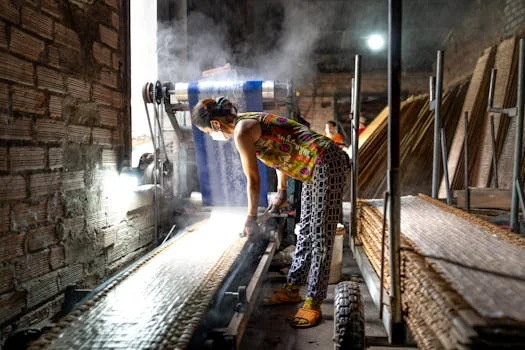
Belt press dewatering cuts hauled mass when cake solids rise and free water leaves in the filtrate. Consider a plant generating 200 tons of wet sludge per month at 3% solids. Without a press, hauling at $35/ton costs $7,000/month. Installing a $30,000 automated belt filter press that reaches about 20% cake solids can drop mass to roughly 30 tons, or about $1,050/month at the same rate.
Gross monthly savings near $5,950, less about $1,000/month for chemicals, power, and labor, leave roughly $4,950 net. Under those assumptions, capital often recovers in about 6–7 months. That fast payback assumes $35/ton hauling and a jump from 3% feed solids to about 20% cake. If disposal is only $30 per ton, or cake stalls near 15%, the same $30,000 press slips toward the 3–5 year band instead.
Selection checklist before you buy:
- Measure feed solids (%TS) and peak m³/h, not just average daily volume.
- Set a cake target (for example 18–25% TS) against landfill or digester limits.
- Choose belt width from hydraulic loading, then confirm polymer dose on real sludge.
- Specify frame alloy for chloride/acid duty; do not under-buy coatings on corrosive streams.
- Price automation against operator hours and washwater quality.
- Add 10–15% for install, commissioning, and spare belts/rollers.
- Model disposal at local $/ton before accepting the lowest equipment bid.
Who this is for: plant engineers and procurement teams sizing continuous dewatering at roughly 0.5–15 m³/h with moderate cake targets. Who should look elsewhere: sites that must hit very high cake solids in a small footprint, or oily sludges better suited to centrifuges.
Share feed solids, target cake, and duty hours. That match sets the industrial belt filter press cost price to belt width and alloy. Request a scoped quote through the HydropureWater inquiry form.
Frequently Asked Questions
What price range should buyers expect in 2026?
Most industrial units quote about $8,000–$65,000+ depending on capacity, belt width, automation, and stainless content. Small 0.5–3 m³/h carbon-steel presses often land at $8,000–$18,000. Mid-range 3–8 m³/h packages commonly run $18,000–$35,000. Large 8–15+ m³/h PLC systems with stainless frames frequently exceed $35,000 before installation and polymer skid costs.
How long do filter belts last on a belt press?
Belt life depends on abrasion, washwater quality, and duty hours. US EPA guidance in fact sheet EPA 832-F-00-057 reports an average near 2,700 running hours, with a wide range from about 400 to 12,000 hours. Many continuous plants replace belts every 1–3 years. High grit or poor wash spray shortens life toward the low end, so budget a belt set every 12–18 months when washwater is dirty.
Is a belt filter press cheaper to run than a centrifuge?
Yes for energy in most municipal and food applications. Belt presses typically use far less power than centrifuges while delivering continuous throughput. Cake solids are often moderate, about 18–25% in many industrial quotes, versus higher centrifuge dryness on some feeds. Belt-press energy is commonly 1.5 to 4 kWh per cubic meter, and centrifuge power is often 5 to 10 times that. Polymer and belts still sit inside the $80–$200 per dry ton O&M band.
When should I choose plate and frame instead?
Choose plate and frame when you need higher cake solids, often 25–40%, and can accept batch cycles plus more cleaning labor. Belt presses win on continuous flow, lower energy, and simpler labor at moderate dryness of about 18–25%. If cloth blinding or cycle-time faults dominate downtime, start with feed solids, cloth condition, and pressure hold times. A plate press in the comparison table runs about $10k – $80k, against a belt press at $8k – $65k.
What operating cost should I budget per dry ton?
US EPA fact-sheet ranges put overall belt-press O&M around $80–$200 per dry ton of solids, heavily driven by polymer. Polymer alone may run about $12 per dry ton on easy primary sludge and up to about $80 per dry ton on hard-to-dewater residuals. On a flow basis, EPA lists polymer at $2.65 to $91.15 per million gallons, with an average of $24.38 per million gallons. Site power rates and belt replacements move the total inside that band.