Why Nickel Wastewater Treatment is a Critical Compliance Challenge
Nickel wastewater treatment systems for industrial applications face stringent removal requirements to meet global environmental regulations. Non-compliance can lead to severe financial penalties, operational disruptions, and reputational damage. For instance, a petrochemical plant in southeast Texas exceeded its permitted daily average mass loading limit for nickel discharge in January 2012 due to stormwater contamination, resulting in $2.1 million in fines and a six-month compliance plan. The variability of nickel concentrations across industries necessitates tailored treatment strategies, with electroless plating facilities often seeing influent levels from 500–1,000 mg/L, semiconductor fabs between 5–50 mg/L, and metal finishing operations ranging from 100–300 mg/L. Beyond regulatory pressures, nickel is classified as a Group 1 carcinogen by the IARC and is toxic to aquatic life at concentrations as low as 0.01 mg/L, according to the EPA. Failure to meet these standards can lead to permit revocation and the loss of critical certifications, such as ISO 14001 for semiconductor manufacturers.
| Regulatory Body/Region | Nickel Discharge Limit (mg/L) |
|---|---|
| EPA (USA) | 0.1 |
| European Union (Directive 2000/60/EC) | 0.05 |
| China (GB 8978-1996) | 0.5 |
| Aquatic Life Toxicity Threshold (EPA 2024) | 0.01 |
Nickel Wastewater Treatment Methods: How They Work and When to Use Them
Selecting the appropriate nickel wastewater treatment method hinges on influent characteristics, desired effluent quality, and operational constraints. Chemical precipitation, typically involving pH adjustment to 10–11 with lime or sodium hydroxide followed by sedimentation, achieves 90–95% nickel removal but generates significant sludge requiring disposal, with operating costs ranging from $0.50–$1.50/m³. Dissolved Air Flotation (DAF) utilizes microbubbles to lift precipitated nickel hydroxides, achieving 90–98% removal and is particularly effective for wastewaters with high suspended solids, common in metal finishing. For stringent discharge limits or water reuse, Reverse Osmosis (RO) systems offer over 99% nickel removal but necessitate robust pre-treatment to prevent membrane fouling. Membrane Bioreactors (MBR) combine biological treatment with membrane filtration, capable of achieving nickel concentrations below 0.1 mg/L in a compact footprint, albeit with higher energy demands. Electrocoagulation, particularly with zinc electrodes, has demonstrated 99.9% nickel removal at the lab scale, but industrial-scale OPEX can reach $2.00–$4.00/m³ due to electrode consumption. Adsorption using specialized media or nanocomposites can achieve 90–98% removal, but frequent media replacement adds $1.00–$3.00/m³ to operational costs. Regardless of the primary method, pH adjustment is critical; nickel solubility drops sharply above pH 9.0, but excessively high pH (>11) can damage RO membranes and increase chemical usage.
| Treatment Method | Typical Nickel Removal (%) | Pros | Cons | Estimated OPEX ($/m³) | Ideal Influent Ni (mg/L) |
|---|---|---|---|---|---|
| Chemical Precipitation | 90–95 | Cost-effective for bulk removal | Sludge generation, moderate removal efficiency | 0.50–1.50 | >100 |
| Dissolved Air Flotation (DAF) | 90–98 | Handles high TSS, effective for precipitated metals | Requires chemical addition, sludge generation | 0.40–1.20 | 50–500 |
| Reverse Osmosis (RO) | 99+ | High removal efficiency, water recovery | Requires pre-treatment, membrane fouling risk, high CAPEX | 0.30–0.80 (post-DAF/precipitation) | <10 (with pre-treatment) |
| Membrane Bioreactor (MBR) | <0.1 (effluent) | Compact footprint, high effluent quality | Energy-intensive, complex operation | 0.60–1.50 | 5–50 |
| Electrocoagulation | 99.9 (lab scale) | High removal efficiency, direct treatment | Electrode consumption, higher OPEX, scaling challenges | 2.00–4.00 | 10–500 |
| Adsorption | 90–98 | Effective for low concentrations, compact | Media replacement cost, breakthrough risk | 1.00–3.00 | <10 |
For effective nickel removal and compliance, integrating technologies is often necessary. For example, DAF systems can serve as a robust pre-treatment step for subsequent polishing technologies.
Hybrid DAF-RO-MBR Systems: 2026 Engineering Specs for Zero-Discharge Compliance
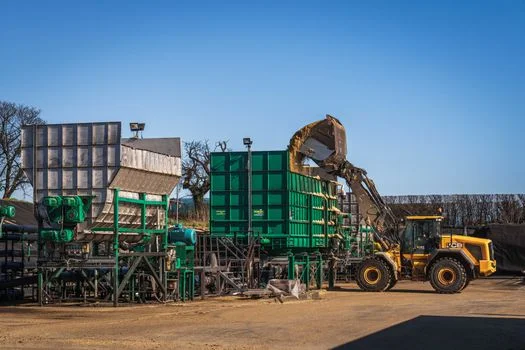
Hybrid DAF-RO-MBR systems represent a leading-edge solution for achieving 99.9% nickel removal and meeting stringent zero-discharge targets, with effluent nickel levels consistently below 0.05 mg/L. These integrated systems typically comprise a DAF unit for initial solids and metal hydroxide removal, followed by high-recovery RO membranes operating at 600–1,200 psi, and finally, an MBR employing PVDF membranes with a 0.1 μm pore size for final polishing. Such configurations can achieve up to 95% water recovery, significantly reducing freshwater intake by 20–40% for facilities like semiconductor fabs. The estimated operational expenditure (OPEX) for these hybrid systems ranges from $0.80–$2.50/m³, with membrane replacement contributing approximately $0.15/m³ and energy costs around $0.40/m³. Capital expenditure (CAPEX) for systems designed for flow rates of 50–500 m³/h typically falls between $500,000 and $5 million. The integration of MBR technology allows for a 30–50% smaller footprint compared to conventional treatment trains. Effective pre-treatment is crucial, involving pH adjustment to 9.5–10.5 and ensuring total suspended solids (TSS) are below 50 mg/L, a target readily met by the DAF stage. For water reuse applications, post-treatment such as UV disinfection or chlorine dioxide generation (using systems like HydropureWater's) is often incorporated.
| Component | Key Specifications | Typical Performance |
|---|---|---|
| DAF Pre-treatment | Surface loading rate: 4-8 m/h; Hydraulic retention time: 20-40 min | TSS removal: >95%; Nickel hydroxide removal: 90-98% |
| Reverse Osmosis (RO) | Operating pressure: 600-1200 psi; Membrane type: Thin-film composite | Nickel removal: 99%+; Water recovery: 75-95% |
| Membrane Bioreactor (MBR) | Membrane pore size: 0.1 μm (PVDF); Operating flux: 15-25 LMH | Effluent nickel: <0.05 mg/L; High-quality treated water |
| Overall System | Flow rate: 1-500 m³/h | Nickel removal efficiency: 99.9%; Water recovery: Up to 95% |
These advanced systems offer a pathway to regulatory compliance and water conservation, integrating technologies like DAF, RO, and MBR for comprehensive treatment.
Electrocoagulation with Zinc Electrodes: Lab Performance vs. Industrial Reality
Electrocoagulation (EC) using zinc electrodes has shown remarkable promise at the laboratory scale for nickel wastewater treatment, achieving 99.9% removal efficiency. Studies indicate optimal performance at a current density of 10 mA/cm², a pH of 9.2, and with an electrode spacing of 4 cm, with kinetic data best fitting a second-order Lagergren model. The uniform corrosion of zinc electrodes allows for predictable performance, though their lifespan typically ranges from 200–300 hours, necessitating periodic replacement at a cost of approximately $0.50–$1.00 per kilogram of zinc. While lab results are impressive, scaling EC to industrial flow rates of 50 m³/h presents challenges. Energy consumption can increase by 30–50% due to ohmic losses, pushing OPEX into the $2.00–$4.00/m³ range, which includes energy costs around $0.80/m³ and electrode replacement estimated at $1.20/m³. Although EC can achieve effluent nickel concentrations below 0.1 mg/L, meeting extremely low zero-discharge limits (<0.05 mg/L) may still require post-treatment, such as RO. Real-world retention times may also need adjustment from the 90-minute benchmark seen in lab studies to account for system dynamics and ensure consistent performance.
How to Select the Right Nickel Wastewater Treatment System: A Decision Framework

Choosing the optimal nickel wastewater treatment system requires a systematic evaluation of influent characteristics, discharge requirements, and economic considerations. The process begins with accurately measuring the influent nickel concentration (mg/L) and the facility's flow rate (m³/h). Concurrently, the specific compliance limit (e.g., EPA's 0.1 mg/L or the EU's 0.05 mg/L) must be clearly defined. Space constraints are also a significant factor; hybrid systems, for instance, can offer a 30–50% smaller footprint than conventional treatment trains. A thorough comparison of capital expenditure (CAPEX) and operational expenditure (OPEX) is essential. For example, a DAF-RO-MBR system might have a CAPEX of $500K–$5M and an OPEX of $0.80–$2.50/m³, whereas electrocoagulation could have a lower CAPEX of $200K–$1M but a higher OPEX of $2.00–$4.00/m³. Evaluating the need for system redundancy is also critical, as single-stage systems may not withstand compliance audits, whereas hybrid configurations often provide inherent backup. Industry-specific recommendations can guide the decision: semiconductor fabs often benefit from DAF-RO-MBR for its high recovery and purity, plating plants may find chemical precipitation followed by RO cost-effective for their high influent concentrations, and petrochemical facilities might consider electrocoagulation combined with DAF for its robustness.
| Influent Ni (mg/L) | Flow Rate (m³/h) | Compliance Limit (mg/L) | Recommended System | Estimated CAPEX ($) | Estimated OPEX ($/m³) |
|---|---|---|---|---|---|
| 5–50 | 1–50 | <0.1 | DAF-RO-MBR | 500K–2M | 0.80–1.50 |
| 50–500 | 10–200 | <0.1 | Chemical Precipitation + RO | 200K–1M | 1.00–2.00 |
| 100–300 | 50–500 | <0.5 | DAF + Electrocoagulation | 200K–1M | 2.00–4.00 |
| >500 | 50–500 | <0.5 | Chemical Precipitation + DAF + RO | 750K–3M | 1.50–2.50 |
Case Study: Hybrid DAF-RO-MBR System Cuts Nickel Discharge by 99.9% at a Semiconductor Fab
A 300 mm semiconductor fabrication plant in Taiwan faced significant challenges in meeting the Taiwan EPA's nickel discharge limit of 0.1 mg/L, with influent nickel concentrations averaging 30–50 mg/L from its wastewater streams, processing approximately 150 m³/h. To address this, the facility implemented a hybrid DAF-RO-MBR treatment system. Since its installation in 2024, the system has consistently achieved effluent nickel levels below 0.05 mg/L, representing a 99.9% reduction in nickel discharge. The system boasts a water recovery rate of 94%, significantly reducing the fab's reliance on freshwater sources. Operational expenditures are reported at $1.10/m³, a figure that includes all treatment stages and consumables. This advanced treatment solution has led to substantial cost savings, estimated at $1.2 million annually by reducing freshwater intake by 35%. the successful compliance enabled the fab to maintain its ISO 14001 certification and avoid potential fines of up to $500,000, underscoring the economic and environmental benefits of investing in robust nickel wastewater treatment.
Frequently Asked Questions
Q: What is the most cost-effective nickel wastewater treatment method for plating plants?
A: For plating plants with influent nickel concentrations typically exceeding 500 mg/L, a combination of chemical precipitation followed by RO offers a cost-effective solution. This approach can achieve 99% nickel removal with OPEX ranging from $1.00–$2.00/m³.
Q: Can electrocoagulation achieve zero discharge for nickel wastewater?
A: While lab-scale electrocoagulation tests demonstrate 99.9% nickel removal, industrial applications may require post-treatment, such as RO, to reliably meet stringent zero-discharge limits below 0.05 mg/L. The OPEX for electrocoagulation is generally higher, between $2.00–$4.00/m³, primarily due to electrode replacement costs.
Q: What are the key parameters to monitor in a nickel wastewater treatment system?
A: Critical parameters include pH (ideally 9.0–10.5 for precipitation), influent and effluent nickel concentrations, TSS (<50 mg/L is often required for RO pre-treatment), and membrane flux (typically 15–25 LMH for MBR systems) to ensure optimal performance and compliance.
Q: How do I size a DAF system for nickel wastewater?
A: Sizing a DAF system involves considering the surface loading rate (typically 4–8 m/h) and the required hydraulic retention time (20–40 minutes). For a flow rate of 50 m³/h, a DAF unit with a surface area of approximately 12.5 m² would generally be appropriate.
Q: What are the compliance risks of treating nickel wastewater with adsorption alone?
A: Adsorption methods typically achieve 90–98% nickel removal, which may not be sufficient to meet strict compliance audits for zero discharge. Media saturation and potential breakthrough can lead to non-compliance. For guaranteed zero-discharge performance, hybrid systems, such as adsorption coupled with RO, are recommended.
Related Equipment
- PLC-controlled pH adjustment for nickel precipitation — view specifications, capacity range, and technical data
Need a customized solution? Request a free quote with your specific flow rate and pollutant parameters.