How Baghouse Dust Collectors Capture Particulates: A Step-by-Step Process Flow
Baghouse dust collectors achieve high particulate removal efficiencies through a carefully orchestrated process of filtration and automated cleaning. The journey of dirty air begins as it enters the baghouse hopper, typically at the bottom of the unit. From there, it is directed upward through an array of cylindrical fabric filter bags, often referred to as filter sleeves. These bags are suspended vertically within the collector. As the dust-laden air flows through the fabric, larger particles are captured on the outer surface of the bags, while finer particles are trapped through a combination of interception, impaction, and diffusion mechanisms. Over time, a layer of captured dust, known as the "dust cake," builds up on the filter bags. This dust cake is crucial for effective filtration, as it actually becomes the primary filtering medium for particles smaller than 0.1 µm. However, as the dust cake thickens, it increases the resistance to airflow, leading to a rise in the system's pressure drop. Industrial baghouses are engineered to operate within a specific pressure drop range, typically between 1,200 and 1,800 Pa. To maintain optimal airflow and filtration efficiency, an automated cleaning cycle is initiated. In pulse jet cleaning systems, like HydropureWater’s, a short, high-pressure burst of compressed air (0.3–0.5 MPa) is injected into the top of each bag for approximately 0.1 seconds. This rapid influx of air creates a shockwave that momentarily expands the bag, causing the accumulated dust cake to fracture and fall into the hopper below. These cleaning cycles are typically programmed to occur at intervals ranging from 10 to 30 minutes, depending on the dust loading and operational conditions. The hopper itself is designed with a steep slope, often a minimum of 60°, to ensure that the dislodged dust flows freely downwards and prevents bridging or bridging issues. Collected dust is then discharged from the hopper via rotary airlock valves or screw conveyors, maintaining the integrity of the negative pressure within the baghouse.
Baghouse Efficiency by Particulate Size: 2025 Performance Benchmarks for PM0.3 to PM10
The efficacy of a baghouse dust collector is best understood by examining its particulate removal efficiency across various particle sizes. Modern industrial baghouses, particularly advanced pulse jet systems, demonstrate remarkable performance, especially for PM2.5 and larger particles, which are critical for meeting stringent environmental regulations. The following table, compiled from EPA AP-42 data and HydropureWater pulse-jet baghouse specifications, illustrates typical efficiency benchmarks for pulse jet versus reverse air baghouses in 2025:
| Size (µm) | Pulse Jet Efficiency | Reverse Air Efficiency |
|---|---|---|
| 0.3 | 95% | 90% |
| 1.0 | 99% | 97% |
| 2.5 | 99.9% | 99% |
| 10 | 99.99% | 99.9% |
The subtle drop in efficiency for sub-micron particles, particularly PM0.3, is an inherent characteristic of fabric filtration. At these extremely small sizes, particle capture is primarily governed by Brownian motion (diffusion), which is less predictable than the inertial impaction and interception mechanisms that dominate for larger particles. However, even at 0.3 µm, pulse jet systems can achieve efficiencies of 95%. For particles of 2.5 µm and larger, the efficiency rapidly approaches and often exceeds 99.9%. This level of performance is directly relevant to regulatory compliance. For instance, the EPA New Source Performance Standards (NSPS) for various industrial sources often stipulate particulate matter limits, such as those for PM2.5, which must be below 10 mg/Nm³. Achieving this requires a dust collection system with a minimum 99.9% efficiency at the 2.5 µm particle size, a benchmark that well-designed baghouses consistently meet.
Pulse Jet vs. Reverse Air vs. Shaker Baghouses: 2025 Decision Matrix for Industrial Applications

Selecting the appropriate baghouse type is paramount for ensuring efficient dust collection, longevity of the system, and operational cost-effectiveness. The choice hinges on a detailed analysis of the dust characteristics, process temperature, and operational constraints. While all baghouses utilize fabric filtration, their cleaning mechanisms and resulting performance envelopes differ significantly. The following comparison table and decision framework provide guidance for industrial applications in 2025:
| Parameter | Pulse Jet | Reverse Air | Shaker |
|---|---|---|---|
| Cleaning Method | Compressed air pulses | Reverse airflow | Mechanical shaking |
| Max Temp (°C) | 260 (PTFE) | 230 (PPS) | 135 (polyester) |
| Air-to-Cloth Ratio (m/min) | 1.5–2.5 | 0.5–1.2 | 0.8–1.5 |
| Pressure Drop (Pa) | 1,200–1,800 | 1,000–1,500 | 800–1,200 |
| Maintenance Frequency | Low (no moving parts in cleaning) | Medium (valves, fans) | High (mechanical wear) |
| Typical Applications | Coal boilers, cement, metals, incinerators | Food, pharmaceuticals, chemicals (sticky/hygroscopic dust) | Woodworking, grain, light industrial dust |
Decision Framework:
- Pulse Jet: The preferred choice for high-temperature applications (above 150°C) and for handling abrasive or sticky dust streams, such as those found in coal-fired boilers, cement plants, and metalworking facilities. Their robust cleaning mechanism and ability to handle high gas volumes with relatively compact footprints make them highly versatile. For example, a Shandong cement plant successfully reduced PM2.5 emissions from 35 mg/Nm³ to 8 mg/Nm³ by implementing a Pulse Jet Baghouse, achieving a compliance margin of 97%.
- Reverse Air: Best suited for applications involving sticky, hygroscopic, or delicate dust where a gentler cleaning action is required to prevent bag blinding or damage. Industries such as food processing and pharmaceuticals often utilize reverse air systems. These systems can also be integrated with pre-treatment chemical dosing for sticky or hygroscopic dust to improve handling.
- Shaker: Generally employed in lower-temperature, less demanding applications where capital cost is a primary concern. They are suitable for lighter dust loads like those from woodworking or grain processing. However, their mechanical nature leads to higher maintenance requirements and a shorter filter media lifespan compared to pulse jet or reverse air systems.
When considering integration with other emission control technologies, baghouses can effectively complement systems like flue gas desulfurization (FGD) scrubbers. By removing particulate matter downstream of combustion, baghouses ensure that the FGD system operates more efficiently and that combined emissions meet stringent SO₂ and particulate compliance standards. This integrated approach is often necessary for facilities subject to complex environmental regulations. For a deeper dive into fabric filter technology, consult our comprehensive guide on fabric filter dust collectors.
Filter Media Selection Guide: Balancing Cost, Temperature, and Chemical Resistance
The lifespan and effectiveness of any baghouse are critically dependent on the choice of filter media. Selecting the wrong material can lead to premature failure, increased operating costs, and non-compliance. The ideal filter media balances temperature resistance, chemical compatibility, dust characteristics, and budget. Below is a guide to common filter media and their performance trade-offs for 2025:
| Material | Max Temp (°C) | Acid Resistance | Alkali Resistance | Cost ($/ft²) | Typical Applications |
|---|---|---|---|---|---|
| Polyester | 135 | Good | Poor | $0.50 | Woodworking, grain, general dust collection |
| PPS (Polypropylene Sulfide) | 190 | Excellent | Good | $1.20 | Coal boilers, incinerators, asphalt plants |
| PTFE (Polytetrafluoroethylene) | 260 | Excellent | Excellent | $3.00 | High-temperature metals, chemical processes, corrosive gases |
| Fiberglass | 280 | Poor | Poor | $2.50 | Asphalt, cement kilns (with specific coatings) |
Understanding potential failure modes is crucial. For instance, polyester media is susceptible to degradation in alkaline environments, making it unsuitable for applications involving lime or fly ash with high alkali content. Conversely, PPS media offers excellent chemical resistance but can oxidize and degrade at temperatures exceeding 190°C. PTFE, while chemically inert and highly temperature-resistant, is the most expensive option and may not be cost-effective for less demanding applications. Fiberglass offers high-temperature capability but is generally vulnerable to acid and alkali attack without specialized coatings. A practical example highlights the benefit of proper selection: a coal-fired boiler facility that initially used polyester bags experienced premature failures due to temperature and fly ash composition. Switching to PPS bags not only extended the filter life from an average of 12 months to 36 months but also reduced annualized filter replacement costs by approximately 40%, demonstrating a clear return on investment through superior media performance.
Baghouse Sizing and Air-to-Cloth Ratio: Engineering Calculations for Optimal Performance

Accurate sizing of a baghouse dust collector is critical to ensure efficient operation, prevent excessive pressure drop, and avoid unnecessary capital expenditure. The primary parameter used for sizing is the air-to-cloth ratio (A/C), which represents the volume of air passing through a unit area of filter fabric per unit of time. The formula for calculating the required filter area, and thus the number of bags, is derived from the desired air-to-cloth ratio and the total airflow:
A/C = Q / (N × π × D × L)
Where:
- A/C = Air-to-cloth ratio (m/min)
- Q = Total airflow rate (m³/min)
- N = Number of filter bags
- D = Diameter of a single filter bag (m)
- L = Length of a single filter bag (m)
A commonly used rule of thumb for selecting the A/C ratio is based on the dust loading and particle fineness. For fine dusts typically found in pharmaceutical or chemical processes, an A/C ratio of 1.5–2.5 m/min is often recommended. For coarser dusts, such as those from wood chip processing or grinding operations, a higher A/C ratio of 2.5–3.5 m/min might be acceptable. For example, consider a cement plant with a process gas flow rate of 10,000 m³/h (equivalent to 167 m³/min). If a target A/C ratio of 2.0 m/min is chosen, and the available filter bags are 150 mm (0.15 m) in diameter and 3 m long, the required number of bags can be calculated as follows: N = Q / (A/C × π × D × L) = 167 m³/min / (2.0 m/min × π × 0.15 m × 3 m) ≈ 59 bags. Operating a baghouse at an A/C ratio that is too high will lead to a significantly increased pressure drop, as the fabric cannot effectively filter the volume of air without rapid blinding. Conversely, an excessively low A/C ratio would result in an oversized and more expensive baghouse. A doubling of the air-to-cloth ratio can increase the system pressure drop by as much as 300–400 Pa, directly impacting fan energy consumption and overall operational costs.
Baghouse Maintenance: 2025 Best Practices to Extend Filter Life and Reduce Downtime
Effective maintenance is crucial for maximizing the lifespan of baghouse filter media, minimizing unscheduled downtime, and ensuring consistent compliance. Proactive strategies, informed by operational data, are key in 2025. Optimizing the pulse cleaning cycle is paramount. Instead of fixed timers, adjust pulse intervals based on real-time differential pressure readings. The goal is to maintain a stable pressure drop within the optimal range of 1,200–1,500 Pa. For example, cement dust, which is highly abrasive and builds a dense cake, might require more frequent pulses (e.g., 10–15 minute intervals) than lighter dust from wood processing (e.g., 20–30 minute intervals). Regular inspection of filter bags is essential. Thermal imaging can detect hot spots that may indicate early bag failure or leaks. Differential pressure sensors provide continuous data on bag condition, alerting operators to clogged or torn bags. Hopper maintenance should be performed daily to prevent dust accumulation, which can lead to re-entrainment into the clean air stream. Utilizing rotary airlock valves is critical for maintaining negative pressure within the baghouse during dust discharge. the quality of compressed air used for pulse cleaning directly impacts filter life. Install coalescing filters to remove moisture and oil, targeting a dew point below -40°C and oil content below 0.1 ppm. By adhering to these best practices, operators can significantly extend filter media lifespan, reduce energy consumption, and prevent costly shutdowns.
Baghouse Cost Analysis: 2025 CapEx, OPEX, and ROI for Industrial Applications
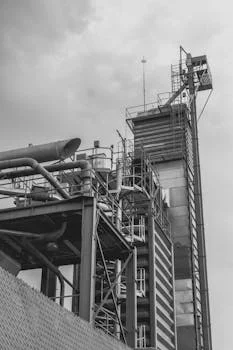
The capital expenditure (CapEx) and operational expenditure (OpEx) associated with industrial baghouse dust collectors are significant considerations for procurement specialists and financial planners. However, a thorough cost-benefit analysis, factoring in compliance penalties and energy savings, often reveals a strong return on investment (ROI). For 2025, typical CapEx for a pulse jet baghouse system capable of handling 10,000 m³/h, such as HydropureWater’s, ranges from $80,000 to $120,000. This includes the main housing, filter bags, and ancillary components. The cost of filter media itself can add an additional $15,000 to $45,000, depending on the material chosen (e.g., polyester vs. PTFE). Installation costs typically represent 20–30% of the equipment cost. Annual OpEx includes several key components: energy consumption for the fan, which can range from $12,000 to $20,000 annually for a system operating at a 1,500 Pa pressure drop; filter replacement costs, which vary from $5,000 to $15,000 every 12–36 months depending on media type and dust loading; and maintenance labor and parts, estimated at $3,000 to $8,000 per year. A compelling ROI can be demonstrated through compliance and efficiency gains. For instance, a cement plant facing potential EPA penalties totaling $250,000 for PM2.5 exceedances found that the installation of a baghouse resulted in a payback period of just 2.5 years, primarily through avoided fines and improved operational stability. Integrating baghouses with other emission control systems, like flue gas desulfurization (FGD) scrubbers, can further enhance long-term compliance and operational efficiency, solidifying the economic justification for these essential industrial investments.
Frequently Asked Questions
Q: What’s the difference between a baghouse and a cartridge collector?
A: Baghouses utilize fabric tubes (bags) designed for high-temperature or abrasive dust streams, capable of handling very large airflow volumes (up to 1,000,000 m³/h) and requiring more physical space. Cartridge collectors use pleated fabric media in a compact configuration, typically suited for low-temperature, fine dust applications like welding fumes or general workshop dust, and handle lower airflow rates.
Q: How do I know if my baghouse is undersized?
A: Key indicators of an undersized baghouse include a consistently high pressure drop exceeding 1,800 Pa, frequent pulse cleaning cycles (intervals less than 10 minutes), and visible dust emissions from the stack. Verifying the system's air-to-cloth ratio against the actual airflow and dust loading is essential for accurate sizing.
Q: Can baghouses handle explosive dust (e.g., coal, grain)?
A: Yes, baghouses can be designed to handle explosive dust hazards. This requires the integration of safety features such as explosion vents, deflagration suppression systems, and compliance with standards like NFPA 68 and NFPA 69. HydropureWater’s pulse-jet baghouse offers optional ATEX-certified components for hazardous area applications.
Q: What’s the lifespan of a baghouse filter?
A: The lifespan of baghouse filter media typically ranges from 12 to 36 months. This duration is influenced by several factors, including the properties of the dust being collected, the operating temperature, the frequency and intensity of cleaning cycles, and the chosen filter material. For instance, PPS bags in demanding coal boiler applications can last 24–36 months, while polyester bags in less aggressive woodworking environments might last 12–18 months.
Q: How do I reduce baghouse energy costs?
A: Energy costs can be reduced by optimizing pulse cleaning intervals to maintain a target pressure drop of 1,200–1,500 Pa, thereby minimizing fan runtime and power consumption. Utilizing variable frequency drives (VFDs) on fan motors allows for speed adjustments based on actual airflow demand. Selecting filter media with lower pressure drop characteristics, such as PTFE-coated options where appropriate, also contributes to energy savings.