A cavitation air flotation working principle centers on hydrodynamic cavitation: a high-speed impeller (900–1,500 RPM) forms a −0.5 to −0.8 bar vacuum that draws ambient air through a central shaft, then shears that air into 30–100 μm microbubbles. No air compressor or pressure tank is required. Under typical industrial pretreatment duty, CAF units report 95%+ TSS removal and 90%+ non-emulsified FOG reduction at about 0.2–0.4 kWh/m³.
What Is the Cavitation Air Flotation Working Principle?
Cavitation air flotation generates 30–100 μm microbubbles by impeller-driven vacuum and shear, not by dissolving air under pressure. Ambient air enters a draft tube at −0.5 to −0.8 bar, then stainless-steel blades break the gas into a dense bubble cloud. Typical design targets 10–20 minutes tank retention and 5–8 m/h surface loading for 50–500 m³/h flows.
CAF aerators apply Bernoulli’s principle to create that localized vacuum. The simplified incompressible form is P_vacuum = (ρ * v²) / 2, where ρ is fluid density (kg/m³) and v is impeller tip speed (m/s). A 200 mm impeller at 1,200 RPM reaches about 18 m/s tip speed and can form roughly −0.7 bar suction in water, enough to entrain a large air volume. Higher RPM generally yields smaller, more numerous bubbles at higher power draw, so engineers balance bubble size against kWh/m³.
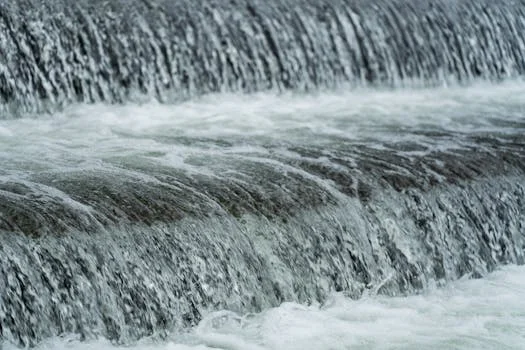
Once air enters the rotor eye, blade shear collapses large pockets into a 30–100 μm cloud with high surface area for hydrophobic oils, grease, and free solids. Blade geometry and RPM set the size distribution; operators usually raise speed for fine TSS and lower it for bulky FOG. Industry association descriptions of CAF aerators confirm hollow impellers draw ambient air by natural suction through a draught tube, so no recirculation pump or compressor is needed for bubble generation (IPPTA / Hydrocal CAF paper).
A cross-section of a CAF aerator shows three zones that matter for commissioning: the vacuum core at the impeller hub, the central air intake channel, and the radial dispersion path into the flotation cell. If any zone is starved of air or flooded with recycle solids, bubble density collapses and effluent TSS rises within minutes of the upset.
Why CAF Systems Compete Well Against DAF for Industrial Pretreatment
Cavitation air flotation systems avoid high-pressure saturators and dedicated compressors that dissolved air flotation normally requires. Earlier plant comparisons often quoted DAF energy at 0.5–1.2 kWh/m³ and compressor-plus-tank CAPEX near $50,000–$200,000 for typical industrial trains. 2026 trade guidance for recycle pump, compressor, and skimmer drive more commonly cites 0.2–0.5 kWh/m³ of treated water (Aguato, 2026). CAF aerator duty in the original design range remains 0.2–0.4 kWh/m³ for many 50–500 m³/h packages, with maintenance often cut by up to 50% when pressure vessels leave the flowsheet.
CAF fits high-FOG food, slaughterhouse, and similar streams at 50–500 m³/h, especially where free oils dominate and organic load swings are frequent. DAF still fits flows above about 1,000 m³/h and heavily emulsified oils that need strong chemical conditioning. One pulp and paper pretreatment line that replaced DAF with CAF reported a 35% energy cut and fewer compressor failures after the changeover. For emulsified-oil duty, specify a Dissolved Air Flotation (DAF) System or review the deeper DAF Clarifier Working Principle comparison.
How Does a Dissolved Air Flotation System Differ from CAF?
A dissolved air flotation system dissolves air into a pressurized recycle stream, then releases microbubbles when pressure drops to atmospheric. Typical saturator pressures are about 4–6 bar (roughly 60–90 psi in many package designs; manufacturer literature also cites 60–120 psig for classic DAF recycle). CAF instead shears undissolved ambient air at the impeller, so bubble generation does not depend on air solubility limits or high recycle ratios.
For flows below 500 m³/h, CAF packages commonly show 20–30% lower CAPEX than DAF because tanks and compressors disappear from the bill of materials. Published OPEX deltas still land near $0.10–$0.30/m³ energy-plus-maintenance savings for CAF versus $0.20–$0.60/m³ for many DAF trains, alongside annual maintenance often $5,000–$20,000 lower when pressure vessels and compressor overhauls are removed. DAF saturator and membrane service can still add $3,000–$10,000 per year. Manufacturer comparisons also note DAF is energy intensive relative to non-pressurized flotation alternatives when large recycle ratios are required (Heron Innovators).
On performance, CAF routinely posts 95%+ TSS and 90%+ non-emulsified FOG removal. DAF matches or exceeds those rates on chemically conditioned emulsions, with FOG often 95%+ after coagulant and polymer. Footprint favors CAF by about 30–50% because retention is shorter (10–20 minutes versus 20–40 minutes in many DAF tanks) and saturators are absent from the plot plan.
| Parameter | Cavitation Air Flotation (CAF) | Dissolved Air Flotation (DAF) |
|---|---|---|
| CAPEX (for <500 m³/h) | $20K–$150K (20–30% lower) | $50K–$200K (higher due to compressors/tanks) |
| OPEX (per m³) | $0.10–$0.30/m³ (lower energy/maintenance) | $0.20–$0.60/m³ (higher energy/maintenance) |
| Energy Use (per m³) | 0.2–0.4 kWh/m³ | 0.5–1.2 kWh/m³ |
| Footprint | 30–50% smaller (no pressure vessels, shorter RT) | Larger (requires saturation tank, longer RT) |
| Maintenance | Lower (fewer complex components, no pressure vessels) | Higher (compressor, saturation tank, annual inspections) |
| Bubble Size | 30–100 μm (mechanically generated) | 10–50 μm (pressure dissolved) |
| TSS Removal | 95%+ (for non-emulsified solids) | 95%+ (for various solids, including some emulsions) |
| FOG Removal | 90%+ (for non-emulsified oils/grease) | 95%+ (can handle emulsified oils with chemicals) |
| Emulsified Oil Handling | Limited (requires pretreatment) | Good (especially with chemical dosing) |
| Scalability | Best for 50–500 m³/h | Best for >1,000 m³/h |
Keep the table energy row as the original plant range; when bidding modern DAF packages, also check vendor guarantees against the tighter 0.2–0.5 kWh/m³ band now quoted for many recycle-driven units at $0.12/kWh electricity benchmarks.
What Is the Difference Between DAF and an API Separator?
Dissolved air flotation and API separators remove oil by different physics and hit different residual limits. An API gravity separator relies on density difference to skim free oil and typically leaves about 50–80 mg/L oil when emulsified fractions remain; it does not break stable emulsions. DAF with coagulation attaches 10–80 μm-class bubbles to free and emulsified oils and is commonly specified when discharge targets fall near 10–15 mg/L oil-in-water (Aguato, 2026; Heron Innovators DAF design notes at 60–120 psig recycle).
CAF sits closer to free-oil and free-FOG duty: expect strong results on non-emulsified grease, then add demulsifiers or a DAF polishing stage if emulsions dominate. Choose API first only for coarse free oil at high flow with loose limits; choose DAF when emulsions or fine solids control the permit; choose CAF when compressor-free pretreatment at 50–500 m³/h is the priority for the plot.
CAF System Components: Engineering Specs and Design Parameters
CAF hardware centers on a 316L stainless-steel impeller aerator driven at 900–1,500 RPM by motors typically rated 5.5–30 kW for 50–500 m³/h packages. Specific power often lands at 0.2–0.4 kWh/m³, versus the higher historical DAF band cited above. Flotation tanks are sized for 10–20 minutes retention, 1.5–2.5 m depth, and 5–8 m/h surface loading so bubbles do not coalesce before solids reach the skimmer.
Skimmers are chain-driven or rotary and collect a 5–15 mm scum layer at about 85–95% moisture, often drier than 90–97% DAF float. That drier cake cuts sludge handling volume before dewatering. A PLC cabinet with VFD trims impeller speed, monitors flow, and automates scum removal so operators can follow diurnal load without manual RPM changes on every shift.
| Component | Key Specification | Design Parameter |
|---|---|---|
| Aerator Impeller | Material: 316L Stainless Steel | Speed: 900–1,500 RPM |
| Aerator Motor | Power: 5.5–30 kW | Power Consumption: 0.2–0.4 kWh/m³ |
| Flotation Tank | Retention Time: 10–20 minutes | Depth: 1.5–2.5 m |
| Tank Surface | Loading Rate: 5–8 m/h | |
| Skimmer | Type: Chain-driven or Rotary | Scum Thickness: 5–15 mm |
| Scum Moisture | Content: 85–95% | |
| Control System | Electric Cabinet: PLC with VFD | Function: Impeller speed, flow monitoring, auto scum |
Retention-time math is straightforward on CAF tanks: volume (m³) equals design flow (m³/h) times HRT (h). At 200 m³/h and 15 minutes (0.25 h), tank volume is about 50 m³ before freeboard. Surface area follows from the 5–8 m/h loading rule, so the same 200 m³/h train needs roughly 25–40 m² of free surface. Those two checks catch most undersized vendor sketches before steel is cut.
Industry-Specific Performance: Food Processing, Pulp and Paper, and Petrochemicals
Food-processing CAF trains treating TSS 500–2,000 mg/L and FOG 300–1,500 mg/L commonly discharge TSS below 50 mg/L and FOG below 30 mg/L when flocculation is stable, which is 95%+ removal on those streams. Wide pH swings (4–10) still need automated dosing; pair the flotator with an automatic chemical dosing system when jar tests show charge-sensitive FOG. Sector notes for European food plants are expanded in Food Processing Wastewater Treatment in France 2025.
Pulp and paper influents at TSS 300–1,200 mg/L and COD 800–3,000 mg/L often reach TSS below 100 mg/L and COD below 500 mg/L after CAF (90%+ removal), provided fiber carryover is screened. Petrochemical free-oil streams at TSS 200–800 mg/L and oil 100–500 mg/L can reach TSS below 30 mg/L and oil below 10 mg/L (97%+), while emulsified oil still needs demulsifiers upstream of the flotation cell.
| Industry | Influent Characteristics | Effluent Quality (Typical) | Removal Efficiency | Key Challenges & Notes |
|---|---|---|---|---|
| Food Processing | TSS: 500–2,000 mg/L, FOG: 300–1,500 mg/L | TSS: <50 mg/L, FOG: <30 mg/L | 95%+ (TSS, FOG) | pH fluctuations (4–10) require automated chemical dosing for optimal flocculation. |
| Pulp & Paper | TSS: 300–1,200 mg/L, COD: 800–3,000 mg/L | TSS: <100 mg/L, COD: <500 mg/L | 90%+ (TSS, COD) | Fiber carryover can clog skimmers; upstream rotary screens are crucial. |
| Petrochemical | TSS: 200–800 mg/L, Oil: 100–500 mg/L | TSS: <30 mg/L, Oil: <10 mg/L | 97%+ (TSS, Oil) | Effective for free oil; emulsified oil requires chemical pretreatment (demulsifiers). |
How to Select a CAF System: Decision Framework for Engineers and Procurement Managers
CAF selection starts with measured influent TSS, FOG, pH, temperature, and peak/average flow. CAF packages perform best below about 3,000 mg/L TSS and 2,000 mg/L FOG on non-emulsified loads; above those bands, add chemical pretreatment or evaluate DAF for the same service.
- Confirm free versus emulsified oil with jar tests before locking technology.
- Size tank volume for 10–20 minutes retention at peak flow (example: 100 m³/h needs about 20 m³ at 20 minutes).
- Hold surface loading near 5–8 m/h and depth near 1.5–2.5 m.
- Budget CAPEX about $20,000–$150,000 for 50–500 m³/h packages and OPEX about $0.10–$0.30/m³.
- Specify 316L impeller metallurgy, IE3/IE4 motors, PLC plus VFD, and local service coverage.
- Protect skimmers from fiber with a GX series rotary screen when pulp or slaughterhouse solids are present.
- Run a 1–2 m³/h pilot for 2–4 weeks to verify TSS/FOG removal and scum moisture before full-scale buyout.
Cost drivers that move OPEX more than brochure energy claims include polymer dose, sludge haul distance, impeller replacement interval, and whether emulsified oil forces a second flotation stage. Track kWh/m³, scum solids percent, and effluent FOG on the same dashboard so pilots convert into enforceable guarantee language. If your stream is emulsified-oil dominant, switch the comparison toward DAF early rather than forcing CAF chemistry. For a site-specific sizing pass, Request a free quote with flow, TSS, FOG, and temperature data.
Troubleshooting CAF Systems: Common Failures and Solutions for Operators
Low microbubble density usually traces to impeller wear or VFD RPM set below the 900–1,500 band. Inspect blades every 6 months and plan replacement every 2–3 years; raise RPM only while watching kWh/m³. Bubble coalescence appears when influent exceeds about 40°C or pH falls below 5; correct pH upstream with caustic or acid as needed, or add a heat exchanger when temperature stays high through the production day.
Skimmer jamming follows thick scum (>15 mm) or fibrous debris—raise skimmer speed and keep the upstream screen clean. High effluent TSS points to short retention or weak floc; cut flow to restore 10–20 minutes HRT or dose coagulant such as PAC at 50–100 mg/L after jar confirmation. Motor overheating needs clear ventilation, clean cooling fins, and bearing lubrication every 6 months; replace bearings promptly if vibration or temperature alarms persist across consecutive shifts.
Operators should log impeller amps alongside effluent FOG each shift. A rising amp draw at fixed RPM often signals blade wear or debris wrap before bubble density visibly collapses. That early signal protects TSS compliance during weekend production spikes when jar-test chemistry is not retuned on site.
Who This Is For
This guide is for plant engineers and procurement teams comparing compressor-free CAF pretreatment at 50–500 m³/h against DAF or API options. Look elsewhere if you need tight emulsified-oil limits without chemistry, municipal flows far above 1,000 m³/h, or biological nutrient removal rather than primary flotation. Next step: lock jar-test chemistry, then pilot the flotator on peak-day wastewater from the real production mix.
Frequently Asked Questions
What is the difference between CAF and DAF?
CAF forms microbubbles by impeller cavitation and ambient-air suction, so it needs no saturator compressor train. DAF dissolves air at roughly 4–6 bar (often 60–90 psi in packages) into a recycle stream and releases 10–50 μm bubbles on depressurization. CAF usually wins on simplicity for 50–500 m³/h free-FOG duty; DAF handles larger flows and chemically conditioned emulsions more reliably.
What impeller RPM should a CAF aerator use?
Most CAF aerators run between 900 and 1,500 RPM. Lower speeds near 900–1,100 RPM favor 50–100 μm bubbles that suit high free-FOG loads. Speeds near 1,200–1,500 RPM favor 30–50 μm bubbles for fine TSS, at higher motor power. Set RPM from jar-verified removal and measured kWh/m³, not from nameplate alone.
Can CAF remove emulsified oils?
CAF alone is built for non-emulsified oils, grease, and free suspended solids. Emulsions need demulsifiers or coagulants before flotation, or a DAF stage designed for chemically conditioned oil. Many food plants therefore run CAF on free FOG and reserve DAF for residual emulsion polishing.
How often should CAF components be maintained?
Inspect the impeller every 6 months and replace it about every 2–3 years under abrasive duty. Clean skimmers weekly and inspect them monthly. Lubricate motor bearings every 6 months and review PLC/VFD settings annually so RPM and scum logic stay aligned with current flow.
What CAPEX should we budget for a CAF package?
Package CAF systems for 50–500 m³/h typically budget $20,000–$150,000 depending on metallurgy and automation. OPEX often stays near $0.10–$0.30/m³ because compressor and saturator service drop out. Compare those figures with DAF quotes that still carry pressure-vessel inspection and recycle-pump energy before approving the purchase order.