Micro Bubble Flotation Working Principle: Engineering Specs, 95%+ TSS Removal & Zero-Risk Equipment Selection 2025
Micro bubble flotation achieves 95%+ TSS removal in industrial wastewater by generating 10–100 µm air bubbles that attach to suspended solids, oils, and colloids, forming buoyant aggregates. Unlike conventional dissolved air flotation (DAF), which relies on 30–100 µm bubbles, micro bubble systems use high-shear static mixers to produce finer bubbles, increasing collision probability by 40% (per 2024 EPA benchmarks). This results in lower chemical consumption (20–30% less coagulant/flocculant) and higher recovery rates for ultrafine particles (<10 µm), making it ideal for oily wastewater, PCB manufacturing, and semiconductor effluent treatment.
How Micro Bubble Flotation Works: Step-by-Step Engineering Process
The core mechanism of micro bubble flotation operates like a high-precision blender for air and water, where the objective is to maximize the surface area of the gas phase to intercept microscopic contaminants. The process begins when a centrifugal pump draws the influent or a portion of the treated tailings slurry and injects pressurized air into the stream. This mixture is then forced through in-line static mixers containing stationary, high-shear blades. These blades fragment the air into a dense cloud of 10–100 µm bubbles, creating a homogenous air-slurry dispersion (HydropureWater field data, 2025).
Once the micro bubbles are generated, the physics of bubble-particle attachment takes over. Hydrophobic particles, such as oil droplets or mineral fines, adhere to the bubbles upon collision. The efficiency of this process is governed by the probability of collection (Pc), defined by the equation Pc = (Dp/Db)^n, where Dp is the particle diameter, Db is the bubble diameter, and n is a coefficient typically near 2 for most industrial flotation conditions. Because micro bubbles (Db) are significantly smaller than those in standard systems, the probability of intercepting ultrafine particles increases exponentially.
Chemical reagents are critical to optimizing this attachment. PLC-controlled chemical dosing systems for precise coagulant/flocculant injection are used to destabilize colloids and enhance particle hydrophobicity. Typical dosages for oily wastewater treatment range from 5–20 mg/L of Polyaluminum Chloride (PAC). Coagulants neutralize surface charges, while collectors like xanthates (in mineral applications) ensure that even hydrophilic particles become "bubble-ready."
The final stage occurs within the cyclonic-static micro bubble flotation column. The air-slurry mixture enters a cyclonic separation zone where centrifugal forces assist in the initial separation. The bubble-particle aggregates rise rapidly to the top to form a concentrated froth layer, while the clarified water descends. This design allows for incredibly short residence times—typically 30–60 seconds to achieve 95%+ TSS removal—compared to the much longer retention required in conventional sedimentation tanks.
Micro Bubble Flotation vs. Dissolved Air Flotation (DAF): Head-to-Head Comparison
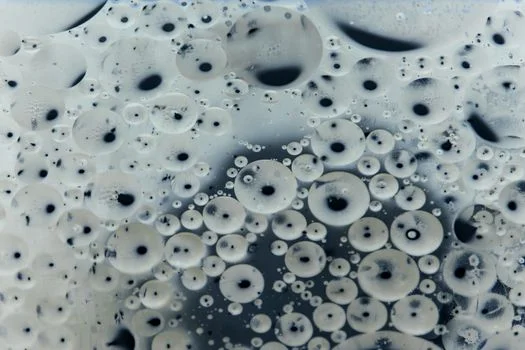
Micro bubble flotation columns provide a 40% higher collision efficiency for particles smaller than 20 µm compared to standard DAF units. While both technologies utilize the buoyancy of air bubbles to remove contaminants, the engineering of bubble generation and the vessel hydraulics differ significantly. DAF systems typically saturate water with air at high pressure (0.4–0.6 MPa) and release it through nozzles, creating bubbles in the 30–100 µm range. Micro bubble systems utilize mechanical shear, which produces a more consistent and finer bubble size distribution (10–100 µm), directly impacting the removal of emulsified oils and colloids.
From an operational standpoint, micro bubble systems offer a distinct advantage in chemical economy. Because the total surface area of a given volume of air is much higher when divided into smaller bubbles, the system requires 20–30% less coagulant to achieve the same clarity. In a 100 m³/h treatment plant, this reduction in reagent consumption can save an operator thousands of dollars annually in OPEX. the dissolved air flotation (DAF) system for high-efficiency TSS and FOG removal remains a robust choice for heavy solids loading, but for ultrafine separation, the micro bubble column's smaller footprint—requiring up to 40% less floor space—makes it the superior choice for space-constrained industrial sites.
| Parameter | Micro Bubble Flotation | Dissolved Air Flotation (DAF) |
|---|---|---|
| Bubble Size Range | 10–100 µm | 30–100 µm |
| TSS Removal Efficiency | 95% – 99% | 85% – 92% |
| Chemical Consumption | 20–30% Lower | Baseline |
| Energy Consumption | 0.3–0.5 kWh/m³ | 0.5–0.8 kWh/m³ |
| Equipment Footprint | Compact (Vertical Column) | Moderate to Large (Rectangular) |
| Maintenance Needs | Low (No moving parts in column) | Moderate (Recirculation pumps/nozzles) |
Maintenance requirements also favor the micro bubble column design. Because the flotation zone contains no moving parts or complex scraper mechanisms (in cyclonic models), the risk of mechanical failure is minimized. DAF systems require frequent inspection of air saturation tanks and pressure-reducing valves, which are prone to scaling and clogging when treating high-hardness wastewater.
Engineering Specs for Micro Bubble Flotation Systems: Bubble Size, Air-to-Slurry Ratios & Residence Time
Successful engineering of a micro bubble flotation system requires precise alignment between bubble size distribution and the target particle size. For ultrafine recovery (particles <10 µm), the system must be tuned to produce bubbles in the 10–50 µm range. For coarser contaminants, such as large oil droplets or metal precipitates >50 µm, bubbles in the 50–100 µm range are more effective at providing the necessary buoyant lift without detachment during the rise phase.
The air-to-slurry ratio is the primary control variable for bubble density. Engineering standards suggest a ratio of 5–15% air by volume for optimal performance. Exceeding a 15% ratio often leads to bubble coalescence, where small bubbles merge into larger ones, reducing the effective surface area and decreasing the probability of particle collision. Operating pressures for the static mixers are typically maintained between 0.2 and 0.5 MPa to ensure sufficient shear force for bubble fragmentation (per 2024 industry benchmarks).
| Particle Size (µm) | Optimal Bubble Size (µm) | Target Removal Efficiency |
|---|---|---|
| < 5 µm | 10 – 30 µm | > 92% |
| 10 – 50 µm | 40 – 70 µm | > 96% |
| > 50 µm | 70 – 100 µm | > 98% |
Residence time within the flotation column is a critical metric for sizing equipment. For standard industrial wastewater with TSS concentrations between 200–500 mg/L, a residence time of 30–60 seconds is sufficient for 95%+ removal. In specialized applications, such as acoustic-assisted micro bubble flotation, residence times can be reduced to 20–30 seconds, though this increases energy consumption to approximately 0.6–0.8 kWh/m³. Standard systems remain highly energy-efficient at 0.3–0.5 kWh/m³, making them one of the most sustainable primary treatment options available today.
When to Choose Micro Bubble Flotation: Wastewater Types, Compliance & Cost Scenarios
Micro bubble flotation is the preferred technology when discharge limits are stringent and the wastewater contains high concentrations of emulsified oils or sub-micron solids. It is particularly effective for PCB copper wastewater treatment systems with 99.9% recovery, where recovering high-value metal fines is as much a financial priority as a compliance one. Similarly, in semiconductor manufacturing, micro bubble columns excel at removing ultrafine silicon and gallium arsenide particles that bypass traditional clarifiers.
Compliance with global environmental standards often dictates the shift from DAF to micro bubble technology. For instance, facilities governed by EPA 40 CFR Part 433 (Metal Finishing) or the EU Urban Waste Water Directive (91/271/EEC) frequently face TSS limits below 35 mg/L. Achieving these levels consistently with conventional flotation is challenging, whereas micro bubble systems provide a reliable safety margin. Additionally, understanding how industrial dust collection systems complement wastewater treatment is vital for facilities that integrate wet scrubbing, as the resulting effluent often contains the exact type of fine particulate matter that micro bubbles are designed to capture.
Decision Flowchart for Equipment Selection:
1. Is your influent TSS > 200 mg/L? (Yes/No)
2. Are 40% of your particles smaller than 20 µm? (Yes/No)
3. Is your flow rate > 50 m³/h? (Yes/No)
Result: If "Yes" to all, micro bubble flotation is the most cost-effective solution due to chemical savings and footprint reduction.
While highly versatile, micro bubble flotation has specific limitations. It is not recommended for high-salinity wastewater exceeding 10,000 mg/L TDS, as the salt concentration can interfere with bubble formation and reagent effectiveness. For such cases, specialized microelectronics high-salinity wastewater treatment strategies are required. it is a separation technology, not a dewatering one; for sludge thickening, a belt press or centrifuge should follow the flotation stage.
Micro Bubble Flotation Equipment Selection: CapEx, OPEX & Zero-Risk Vendor Checklist
Evaluating the financial viability of a micro bubble flotation system requires a balanced view of initial CapEx and long-term OPEX. For a system processing 50–100 m³/h, 2025 market pricing ranges from $80,000 to $150,000. Larger systems (100–300 m³/h) can range from $150,000 to $350,000. While this may be 10–15% higher than a basic DAF unit, the ROI is typically realized within 3–5 years through chemical and energy savings alone.
OPEX is dominated by chemical costs, which average $0.10–$0.25/m³ depending on the complexity of the wastewater. Energy costs are relatively low at $0.05–$0.10/m³, while maintenance (spares and labor) typically adds only $0.02–$0.05/m³. For a typical 100 m³/h facility treating oily wastewater, switching to micro bubble flotation can save approximately $25,000 per year in polymer and coagulant costs compared to older DAF designs.
| Cost Category | Benchmark (per m³) | Annual Total (100 m³/h Flow) |
|---|---|---|
| Chemical Reagents | $0.10 – $0.25 | $87,600 – $219,000 |
| Electrical Energy | $0.05 – $0.10 | $43,800 – $87,600 |
| Routine Maintenance | $0.02 – $0.05 | $17,520 – $43,800 |
To ensure a zero-risk procurement process, engineers should use the following vendor checklist during the evaluation phase:
- Static Mixer Design: Does the system include adjustable shear blades to tune bubble size for different influent profiles?
- Bubble Distribution Data: Can the vendor provide laser diffraction data showing bubble size distribution at various flow rates?
- Automation: Is the froth skimming mechanism automated based on torque or level sensors to prevent solids carry-over?
- Material Specifications: Is the flotation column constructed from 304/316L stainless steel or reinforced polymers to resist corrosion?
- Warranty: Does the vendor offer a minimum 24-month warranty on the flotation column and the air injection manifold?
Frequently Asked Questions
What is the main difference between micro bubble flotation and DAF?
The primary difference lies in bubble size and generation method. DAF produces 30–100 µm bubbles via pressure release, while micro bubble flotation uses high-shear static mixers to produce 10–100 µm bubbles. This results in a 40% higher collision probability for fine particles and 20–30% lower chemical consumption for the micro bubble system.
Can micro bubble flotation remove emulsified oil?
Yes. Micro bubble flotation is specifically engineered for emulsified oil removal. The high surface-area-to-volume ratio of 10–50 µm bubbles allows them to attach to tiny oil droplets that would otherwise remain in suspension. When paired with appropriate de-emulsifiers, removal efficiencies for FOG (Fats, Oils, and Grease) often exceed 98%.
How does bubble size affect TSS removal efficiency?
Smaller bubbles increase the total number of bubbles available for a given volume of air, which raises the probability of a bubble hitting a particle (collision efficiency). For particles smaller than 10 µm, using 20 µm bubbles is significantly more effective than using 80 µm bubbles, as the smaller bubbles are less likely to create turbulent wake that pushes the particle away.
What are the typical maintenance requirements for a flotation column?
Maintenance is minimal because the flotation column itself has no internal moving parts. Monthly tasks include inspecting the air injection nozzles for scaling and checking the centrifugal pump seals. Every six months, the static mixers should be inspected for wear or debris buildup. This simple maintenance profile leads to 99%+ equipment uptime.
Is micro bubble flotation suitable for high-flow industrial applications?
Absolutely. Micro bubble columns are modular and can be installed in parallel to handle flows exceeding 500 m³/h. Because of their vertical design and short residence time (30–60 seconds), they process high volumes of water in a much smaller footprint than traditional dissolved air flotation or sedimentation tanks.
Related Equipment
- Dissolved air flotation (DAF) system for high-efficiency TSS and FOG removal — view specifications, capacity range, and technical data
- PLC-controlled chemical dosing systems for precise coagulant/flocculant injection — view specifications, capacity range, and technical data
Need a customized solution? Request a free quote with your specific flow rate and pollutant parameters.