Why Industrial Dust Collection Systems Fail: A Real-World Case Study
A lithium battery manufacturing plant received $250,000 in OSHA fines in late 2023 after combustible dust controls failed. The root cause was the wrong filter media: standard polyester blinded fast on fine reactive lithium particulate and lost 30% collection efficiency. Unplanned shutdowns cost the mid-sized facility roughly $10,000 per hour in lost production, based on industry benchmarks. The lesson is straightforward: dust collection working principle knowledge is not optional, it is the difference between a compliant plant and a shut one.
Engineering Principles of Dust Collection: How Airflow, Filtration, and Cleaning Work Together
An industrial dust collection system captures airborne particles through engineered airflow, filter media, and an automated cleaning cycle. Three physical mechanisms handle the bulk of the work. Inertial impaction catches particles above 10 µm: their mass carries them straight when the airstream turns, so they collide with and stick to collection surfaces. Interception handles particles from 1 to 10 µm: they follow the airflow but brush close enough to a fiber to be held by van der Waals forces. Diffusion catches anything below 1 µm through Brownian motion, which drives random collisions with filter surfaces.
Four parameters decide whether a system performs. The air-to-cloth ratio (ACR) sets the volume of air per unit of filter area per minute; pulse jet baghouses typically run 3:1 to 6:1, while cyclones tolerate 10:1 to 15:1 because their separation is less precise. Fan static pressure must overcome filter and duct losses: 4–6 kPa for a baghouse and 8–12 kPa when HEPA stages are added. Filter pore size is matched to the dust, with HEPA/ULPA media at 0.5–5 µm. Hopper walls need at least a 60° slope, or 65°+ for sticky dusts, otherwise material bridges and stops flowing; in food plants we typically add air cannons or vibrators as insurance.
| Parameter | Description | Typical Range/Value | Significance |
|---|---|---|---|
| Air-to-Cloth Ratio (ACR) | Volume of air processed per unit of filter area per minute (CFM/ft²) | 3:1 - 6:1 (Baghouse) 10:1 - 15:1 (Cyclone) |
Influences filter life, cleaning effectiveness, and system capacity. |
| Fan Static Pressure | Resistance the fan must overcome (kPa or inches H₂O) | 4-6 kPa (Baghouse) 8-12 kPa (HEPA Systems) |
Determines airflow rate and ability to move air through filters and ductwork. |
| Filter Pore Size | Average diameter of openings in filter media (µm) | 0.5-5 µm (HEPA/ULPA) Varies widely for baghouses/cartridges |
Dictates the smallest particle size the filter can capture. |
| Hopper Slope Angle | Angle of the dust collection hopper walls | 60° minimum (standard) 65°+ (sticky dust) |
Prevents dust bridging and ensures material flow to discharge. |
Dust Collector Types Compared: Efficiency, Cost, and Application Fit
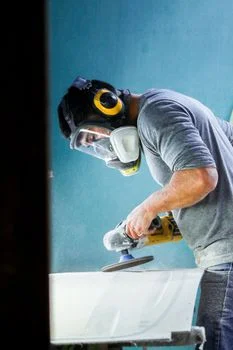
Selecting the right collector means weighing efficiency against capital cost, operating cost, and dust characteristics. No single technology wins on all four.
Pulse jet baghouses are the workhorse for fine dust, hitting 99.9% removal on particles from 0.5 to 100 µm. Initial CapEx is $15 to $25 per CFM, and annual maintenance runs $5,000 to $10,000, driven by bag and pulse valve replacement. They fit pharmaceuticals, fine chemicals, and lithium battery lines. Cyclone separators are cheaper to install ($5–$10 per CFM) and simpler to maintain ($2,000–$5,000 per year), but only reach 85–95% efficiency on coarse 10–100 µm particles. They suit metalworking, woodworking, and bulk material pre-collection. Cartridge collectors split the difference: 99% efficiency from 0.3 to 50 µm, $10–$20 per CFM CapEx, $3,000–$8,000 per year maintenance, in a smaller footprint than a baghouse. Most plants we size for food and chemical duty end up here.
The trade-off is real. A cyclone alone will not meet OSHA's PEL for sub-10 µm dust, so a secondary stage gets added, raising total system cost. A pulse jet baghouse costs more upfront but usually stands alone in regulated environments.
| System Type | Particle Size Range Captured (µm) | Typical Efficiency (%) | Initial CapEx ($/CFM) | Estimated Maintenance Cost ($/year) | Best For (Industry Examples) |
|---|---|---|---|---|---|
| Pulse Jet Baghouse | 0.5 – 100 | 99.9 | $15 – $25 | $5,000 – $10,000 | Pharmaceuticals, Lithium Battery Manufacturing, Fine Chemical Processing |
| Cyclone Separator | 10 – 100 | 85 – 95 | $5 – $10 | $2,000 – $5,000 | Metalworking, Woodworking, Bulk Material Handling (Pre-collection) |
| Cartridge Collector | 0.3 – 50 | 99 | $10 – $20 | $3,000 – $8,000 | Food Processing, General Chemical Manufacturing, Welding Fumes |
Compliance and Safety: OSHA, NFPA, and ATEX Standards for Dust Collection Systems
OSHA, NFPA, and ATEX set the compliance floor. OSHA 1910.1000 lists PELs: respirable crystalline silica at 5 mg/m³ and total dust at 15 mg/m³. Exceeding them triggers fines and forced upgrades. NFPA 652 requires a Dust Hazard Analysis (DHA) for any combustible dust, reviewed every 5 years or after major process changes. NFPA 68 governs deflagration venting; a common sizing rule is 0.045 m² of vent area per m³ of protected volume. NFPA 69 covers prevention systems, including spark detection with UV/IR sensors at roughly 100 ms response time to stop ignition before it reaches the collector. In the EU, the ATEX Directive zones dust areas (Zone 20, 21, 22) and requires equipment rated II 2D or II 3D for those zones.
5 Steps to OSHA/NFPA Compliance for Dust Collectors:
- Conduct a Dust Hazard Analysis (DHA): Identify combustible dust properties, potential ignition sources, and containment methods. Re-evaluate every 5 years or after significant process changes.
- Determine and Monitor PELs: Implement air monitoring to ensure dust concentrations remain below OSHA's Permissible Exposure Limits (PELs).
- Select Appropriate Filtration: Choose filter media and collector types that meet or exceed required efficiency for captured particle sizes.
- Implement Explosion Protection: For combustible dusts, integrate explosion venting, suppression, or isolation systems compliant with NFPA 68 and NFPA 69.
- Ensure ATEX Compliance (if applicable): For EU operations, select equipment certified for the specific hazardous zone classification.
Broader emissions control often pairs with dust collection. Flue gas desulfurization (FGD) scrubbers handle SO₂ alongside particulate on coal-fired boilers, and our integrated SO₂ and particulate control for coal-fired boilers covers that combined duty. Plants with metal-bearing dust, for example from electroplating, also need advanced wastewater treatment using a High-Efficiency Sedimentation Tank (Lamella Clarifier) to keep dissolved metals out of the discharge stream.
Troubleshooting Common Dust Collector Failures: Symptoms, Causes, and Fixes
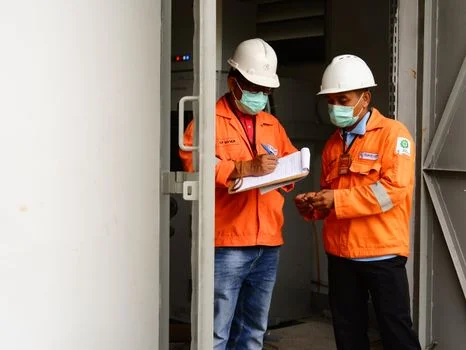
Most field problems come down to four symptoms. High differential pressure above 1.5 kPa usually means blinded filters: shorten the pulse cycle, lengthen the pulse duration, or move to PTFE-coated media for better cake release. Low airflow points to leaky ductwork (target under 5% pressure drop per ASHRAE 90.1) or an undersized fan that needs a motor upgrade. Bridging in the hopper is a geometry problem: bump the slope to 65° or more, or fit air cannons to keep sticky dust moving. Fan vibration typically traces to impeller imbalance or worn bearings, fixed by dynamic balancing to ISO 1940 Grade 2.5 and bearing replacement.
| Symptom | Potential Cause(s) | Corrective Action(s) |
|---|---|---|
| High Differential Pressure (> 1.5 kPa) | Filter blinding, overloaded filters, insufficient cleaning | Adjust pulse cleaning cycle, inspect/replace filters, upgrade filter media (e.g., PTFE-coated) |
| Low Airflow | Leaky ductwork, undersized fan, clogged filters, blocked inlets | Seal duct leaks, upgrade fan motor, clean/replace filters, clear obstructions |
| Dust Bridging/Hopper Plugging | Sticky or cohesive dust, insufficient hopper slope, inadequate discharge | Install air cannons or vibrators, increase hopper slope (65°+), ensure proper discharge mechanism |
| Excessive Fan Vibration | Fan imbalance, worn bearings, misalignment | Dynamic balancing of fan rotor (ISO 1940 Grade 2.5), replace bearings, check alignment |
| Premature Filter Bag Failure | Abrasive dust, chemical attack, improper installation, excessive pulse pressure | Select more durable filter media, use chemical-resistant coatings, ensure correct bag installation, calibrate pulse valves |
How to Select the Right Dust Collection System: A Practical Selection Framework
Selection is a sequence, not a single decision. Start with dust characterization: particle size distribution, abrasiveness, moisture, temperature, and combustibility. Lithium dust, for example, forces ATEX-rated pulse jet baghouses with spark detection. Then size the airflow from workspace volume and OSHA PELs, using CFM = (Room Volume × Air Changes/Hour) / 60 as a starting point. Match the system type against the comparison table above: coarse dust to a cyclone, fine hazardous dust to a baghouse or cartridge. Verify compliance: OSHA PELs, NFPA 652 DHA, NFPA 68 venting for combustible service. Finally, run a total-cost-of-ownership comparison across CapEx, energy, filters, and maintenance. A baghouse may carry roughly 2× the CapEx of a cyclone, yet save over $20,000 per year in maintenance and compliance exposure on the right duty. For high-efficiency fine dust capture, our ATEX-rated pulse jet baghouses for combustible dust applications cover most pharmaceutical and battery plant requirements. If your facility needs a custom-engineered dust collection solution, Request a free quote from our engineering team for a sized system and performance impact package.
Frequently Asked Questions
What is the difference between a dust collector and an air purifier?
An industrial dust collector handles 1,000–50,000 CFM and removes 99%+ of particles at or above 0.5 µm, per ASHRAE 52.2 methods, for production environments. An air purifier is built for small rooms, usually below 1,000 CFM, and targets sub-micron contaminants like viruses and allergens.
How often should dust collector filters be replaced?
Pulse jet filters typically last 1–3 years, depending on dust loading. Metalworking dust may force annual replacement; pharmaceutical dust can stretch a set to three years. The reliable trigger is differential pressure crossing 1.5 kPa, which means the cake is too thick to clean off.
Can a cyclone separator meet OSHA dust limits on its own?
Usually no. A cyclone clears 85–95% on 10–100 µm particles but misses most fines below 10 µm, including respirable silica. To hit OSHA's 5 mg/m³ total dust limit and control the respirable fraction, pair it with a baghouse or cartridge second stage.
What does a 10,000 CFM pulse jet baghouse cost?
CapEx for a 10,000 CFM pulse jet baghouse runs $150,000 to $250,000. Annual operating cost, including filter replacement, pulse valves, and energy, lands between $10,000 and $20,000. A cyclone skid is roughly 60% cheaper to buy, but the secondary filtration it forces usually wipes out that saving.
What dust characteristics most affect system selection?
Particle size distribution and combustibility drive the choice. Coarse, non-explosive dust points to a cyclone; fine or combustible dust pushes toward a baghouse or cartridge collector with NFPA 68/69 protection. Abrasiveness, moisture, and temperature decide the filter media grade.