Why Food Processing Plants Use DAF Clarifiers for FOG and TSS Compliance
A DAF clarifier for food processing is a dissolved air flotation unit that uses microbubbles to lift fats, oils, and grease (FOG) and suspended solids to the surface. Typical performance is 95%+ FOG removal and 92-97% TSS reduction in food processing wastewater. EPA 40 CFR Part 405 sets dairy effluent limits for BOD5, TSS, and pH; local permits often set FOG near 100 mg/L. The EU Urban Waste Water Directive (91/271/EEC) sets BOD5 at 25 mg/L and TSS at 35 mg/L for urban plant discharges, not a FOG sub-25 mg/L ceiling. Local authorities add surcharges of $0.50 to $2.00 per pound of FOG above permitted levels, so non-compliance hits the operating budget directly.
Space is a second driver: DAF units need 30-50% less footprint than gravity clarifiers at equivalent flow, which matters for plants inside urban industrial parks. Common FOG sources include dairy, meat rendering, vegetable oil refining, and bakery washwater. Those streams also disturb downstream biological stages by inhibiting microbial activity when they bypass pretreatment.
How DAF Clarifiers Work: Microbubble Physics and Process Parameters
In a DAF clarifier for food processing, separation starts by saturating a sidestream at 4 to 6 bar. Releasing that pressure forms a dense cloud of 20 to 100 μm microbubbles at 104 to 106 bubbles/mL. Per Stokes' Law, the rise velocity v = (g(ρw-ρp)d²)/(18μ); flotation works when the bubble-particle aggregate density drops below 1.0 g/cm³. Most food processing DAF systems run at a surface loading rate of 5 to 15 m/h and a hydraulic retention time of 20 to 40 minutes. Air-to-solids ratio is typically 0.02 to 0.06 m³/kg. Chemical pretreatment is standard: polyaluminum chloride or ferric chloride at 0.5 to 5 mg/L coagulant and 0.1 to 1 mg/L polyacrylamide flocculant. Keep pH between 6.5 and 7.5 so chemistry and bubble attachment stay efficient.
| Parameter | Typical Range for Food Processing DAF | Significance |
|---|---|---|
| Dissolved Air Pressure | 4-6 bar | Ensures sufficient air saturation for microbubble generation. |
| Microbubble Size | 20-100 μm | Optimal for efficient attachment to suspended solids and FOG. |
| Bubble Density | 104-106 bubbles/mL | High density ensures comprehensive coverage and particle lift. |
| Surface Loading Rate (SLR) | 5-15 m/h | Determines tank size and throughput capacity; higher SLR for less demanding streams. |
| Hydraulic Retention Time (HRT) | 20-40 min | Sufficient time for bubble-particle attachment and flotation. |
| Air-to-Solids Ratio (A/S) | 0.02-0.06 m³/kg | Ensures adequate air for effective flotation of solids. |
| Coagulant Dosing (e.g., PAC, Ferric Chloride) | 0.5-5 mg/L | Neutralizes negative charges, promoting particle aggregation. |
| Flocculant Dosing (e.g., Polyacrylamide) | 0.1-1 mg/L | Binds aggregated particles into larger flocs for efficient flotation. |
| pH Range | 6.5-7.5 | Optimizes coagulant and flocculant performance, and bubble-particle interaction. |
DAF vs Conventional Clarifier for Food Processing: Efficiency, Footprint, and OPEX
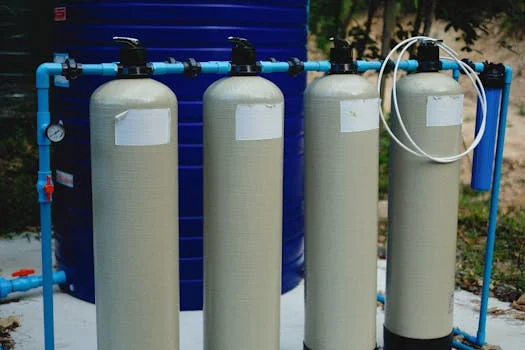
Side-by-side, DAF typically removes 95% of FOG and 92-97% of TSS, while conventional gravity clarifiers reach about 70% FOG removal and 80-85% TSS removal on the same streams. For flows from 5 to 300 m³/h, DAF units occupy 30-50% less floor area than gravity clarifiers of equal capacity. That margin helps when pretreatment must fit inside an existing production building. The shorter 20 to 40 minute HRT (versus 2 to 4 hours in a gravity clarifier) also cuts coagulant and flocculant demand by 15-25%. On high-FOG streams, that usually means 15-20% lower OPEX once energy, chemicals, and sludge hauling are totaled. The trade-off is mechanical simplicity: no rake scraper, but bubble diffusers still need a quarterly cleaning cycle to keep the rise rate stable.
| Feature | DAF Clarifier | Conventional Clarifier | Advantage for Food Processing |
|---|---|---|---|
| FOG Removal Efficiency | 95% | 70% | Significantly better compliance and lower surcharge costs. |
| TSS Removal Efficiency | 92-97% | 80-85% | Improved effluent quality for downstream treatment or discharge. |
| Footprint Requirement | 30-50% smaller | Larger | Ideal for space-constrained facilities. |
| Chemical Usage (Coagulants/Flocculants) | 15-25% lower | Higher | Reduced operational costs. |
| Operational Costs (OPEX) | 15-20% lower (for high FOG) | Higher | Improved profitability and budget predictability. |
| Hydraulic Retention Time (HRT) | 20-40 minutes | 2-4 hours | Faster treatment, smaller tank volumes. |
| Sludge Production | Slightly drier, less volume | Higher volume, wetter | Reduced sludge disposal costs. |
| Maintenance Complexity | Bubble diffuser cleaning (quarterly) | Rake mechanism maintenance (periodic) | Generally simpler mechanical maintenance. |
2025 Engineering Specs for DAF Clarifiers in Food Processing
Modern DAF systems for food plants, including HydropureWater's, are modular and cover 4 to 300 m³/h in parallel or series. They are rated for FOG loads from 500 to 5,000 mg/L. Above 2,000 mg/L of emulsified FOG, chemical pretreatment becomes mandatory to keep separation stable. On the solids side, the units cut TSS from 50 to 500 mg/L to well below the 30 mg/L EPA secondary treatment ceiling under 40 CFR 133.102 (30-day average). Operating temperature sits between 10°C and 40°C, with efficiency tending to fall above 35°C. Hold pH at 6.5 to 7.5 for chemistry and bubble attachment. Design compliance targets include EPA 40 CFR Part 405, the EU Urban Waste Water Directive (91/271/EEC), and local discharge permits. For a packaged unit sized to these specs, the Dissolved Air Flotation (DAF) System product page lists the standard flow and skid options.
| Specification | Range/Value for Food Processing DAF (HydropureWater) | Compliance/Performance Implication |
|---|---|---|
| Nominal Flow Rate Capacity | 4 - 300 m³/h | Scalable for small to large food processing plants. |
| FOG Load Handling | 500 - 5,000 mg/L | Effective treatment of high-fat streams; emulsified FOG >2,000 mg/L requires enhanced pretreatment. |
| TSS Influent Concentration | 50 - 500 mg/L | Achieves 92-97% removal, meeting EPA secondary treatment standards (≤30 mg/L). |
| Surface Loading Rate (SLR) | 5 - 15 m/h | Optimized for efficient separation and compact design. |
| Hydraulic Retention Time (HRT) | 20 - 40 minutes | Rapid treatment cycle. |
| Operating Temperature Range | 10°C - 40°C | Standard operational range; efficiency may decrease above 35°C. |
| Optimal pH Range | 6.5 - 7.5 | Crucial for chemical treatment efficacy and flotation. |
| Regulatory Compliance | Supports EPA 40 CFR Part 405, EU Urban Waste Water Directive, local mandates | Ensures legal discharge. |
Cost Breakdown: CAPEX, OPEX, and ROI for DAF Systems in Food Processing
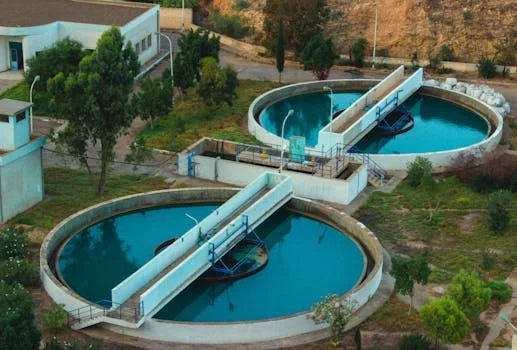
The total spend on food-plant DAF equipment splits between CAPEX and OPEX. As of 2025 market data, CAPEX for the skid, installation, and commissioning runs from about $50,000 for a 5 m³/h unit to roughly $350,000 for a 300 m³/h system. OPEX lands between $0.10 and $0.30 per cubic meter treated. Energy is about $0.02 to $0.05/m³, chemicals $0.03 to $0.08/m³, and maintenance $0.05 to $0.10/m³. Because DAF cuts sludge volume by 20-30% versus gravity clarifiers, plants save another $0.02 to $0.05/m³ on hauling. With FOG surcharges in the $0.50 to $2.00/lb range, payback typically falls between 1.5 and 3 years. A meatpacking plant that cut FOG from 3,200 mg/L to 80 mg/L recovered a $250,000 CAPEX in about 2 years from $120,000 in annual surcharge savings (HydropureWater field data, 2025). Leasing and environmental upgrade grants can soften the upfront cost.
| Cost Component | Typical Range (USD) | Notes |
|---|---|---|
| CAPEX (Equipment, Installation, Commissioning) | $50,000 - $350,000 | Varies with capacity (4-300 m³/h). |
| OPEX (Per m³ Treated) | $0.10 - $0.30 | |
| Energy | $0.02 - $0.05 | Pumps, blowers, automation. |
| Chemicals | $0.03 - $0.08 | Coagulants, flocculants, pH adjustment. |
| Maintenance & Consumables | $0.05 - $0.10 | Diffuser cleaning, seals, minor repairs. |
| Sludge Disposal Savings | $0.02 - $0.05 (per m³ treated) | Due to reduced sludge volume and improved dewatering. |
| ROI Payback Period | 1.5 - 3 years | Highly dependent on FOG surcharge savings. |
Step-by-Step Selection Guide for a DAF Clarifier in a Food Processing Plant
A reliable DAF selection for food plants starts with full wastewater characterization: average and peak flow, FOG, TSS, pH, temperature, and inhibitors. Pair that with jar tests to lock coagulant and flocculant doses. Match the unit to duty flow but leave a 20-30% peak buffer; for the high-FOG plants we work with, that usually means stepping up one model size. If emulsified FOG regularly exceeds 2,000 mg/L, plan enhanced chemical dosing such as the PLC-controlled chemical dosing for DAF pretreatment. Consider a pre-DAF step for the heaviest streams. Compare footprint against conventional or hybrid clarifiers, pick automation from manual to PLC with remote monitoring, and confirm maintenance (quarterly diffuser cleaning, monthly skimmer checks). Before full-scale, run a 2 to 4 week pilot on the actual line to verify removal, finalize chemistry, and document the OPEX baseline.
How do you select a clarifier for industrial wastewater?
Select by measured flow, FOG, TSS, pH, and temperature first, then match primary technology to the pollutant that drives the permit. For FOG above about 500 mg/L, DAF usually beats gravity or lamella alone. Size to average flow with a 20-30% peak buffer, lock chemistry with jar tests, and confirm effluent against the local FOG and TSS limits before purchase.
What design criteria matter for DAF sizing?
Key design criteria for DAF sizing are surface loading rate (5-15 m/h), HRT (20-40 min), air-to-solids ratio (0.02-0.06 m³/kg), and saturator pressure (4-6 bar). Emulsified FOG above 2,000 mg/L forces stronger chemical pretreatment. Temperature above 35°C and pH outside 6.5-7.5 both cut attachment efficiency, so cool or adjust chemistry before you freeze the tank area.
Who this is for / who should look elsewhere
This guide targets plant engineers, EPC contractors, and procurement managers sizing pretreatment for food and beverage lines that discharge municipal or industrial wastewater with FOG above 500 mg/L. If your stream is low-FOG and low-TSS domestic sewage, a simpler biological package may be the lower-cost path. If you need pathogen-grade reuse water, plan a DAF upstream of an MBR or RO rather than expecting DAF alone to meet reuse limits.
Next step
Send your average flow, peak flow, FOG range, TSS range, and current discharge limits to request a sized DAF clarifier quote. Typical replies include a process flow diagram, a budget CAPEX, and an OPEX estimate. That package lets you present a defended number to procurement in one cycle.
Frequently Asked Questions
What is the typical payback period for a DAF system in food processing?
Payback for a DAF clarifier for food processing typically falls between 1.5 and 3 years. Most of that return comes from avoided FOG surcharges in the $0.50 to $2.00/lb range, plus lower chemical and sludge hauling costs versus gravity clarification. Actual timing depends on influent FOG, local surcharge schedules, and whether CAPEX sits near the $50,000 or $350,000 end of the range.
Can DAF systems handle high-temperature wastewater from food processing?
Yes, DAF systems can generally handle wastewater temperatures up to 40°C. Efficiency may drop above 35°C because water viscosity and air solubility change. Plants with hotter cook or CIP streams usually cool the feed or adjust coagulant and flocculant dose before flotation to keep FOG and TSS removal stable.
What are the maintenance requirements for DAF clarifiers?
Routine maintenance includes quarterly cleaning of bubble diffusers, monthly inspection and cleaning of the sludge skimmer, and annual checks of pumps and motors. That workload is usually lighter than rake-scraper maintenance on gravity clarifiers. Skipping diffuser cleaning is the fastest way to lose rise rate and miss FOG limits on high-fat food streams.
How does DAF compare to MBR for food processing wastewater?
DAF systems excel at removing FOG, oils, and suspended solids, so they fit primary treatment of high-FOG food streams. Membrane bioreactors (MBRs) target secondary and tertiary duty: pathogen control and reuse-grade effluent. Use DAF ahead of an MBR when FOG would foul membranes; do not expect DAF alone to meet reuse limits. For plant-wide layout, see how DAF integrates into full wastewater treatment plants.
What compliance standards do DAF systems meet for food processing?
DAF systems help plants meet EPA 40 CFR Part 405 dairy limits for BOD5, TSS, and pH, plus local FOG permits that often sit near 100 mg/L. They also support EU Directive 91/271/EEC targets of BOD5 at 25 mg/L and TSS at 35 mg/L for urban discharges. Secondary treatment under 40 CFR 133.102 still caps TSS at 30 mg/L as a 30-day average. For other industrial trains, see advanced wastewater treatment technologies for industrial applications.