Why Integrated Wastewater Treatment Plants Outperform Conventional Systems
Industrial facilities facing stringent compliance deadlines and limited site real estate often find conventional wastewater treatment plants (WWTPs) to be an insurmountable challenge. Traditional WWTPs, characterized by their extensive civil works, can occupy 1,200–2,500 m² for a 50 m³/h capacity, demanding significant capital expenditure (CAPEX) ranging from $1.2 to $2.5 million and construction timelines of 12–18 months. This makes them impractical for urban industrial parks, remote mining operations, or temporary construction camps where space is at a premium and rapid deployment is essential. Integrated wastewater treatment plants (ISTPs) directly address these limitations. By consolidating multiple treatment stages into a single, pre-engineered, skid-mounted unit, ISTPs achieve a footprint reduction of up to 60%, slash CAPEX by 30–40%, and dramatically shorten deployment from over a year to a mere 6–8 weeks due to factory pre-fabrication and streamlined on-site installation. This makes them the non-negotiable solution for projects where space, speed, and cost-efficiency are critical success factors.
Integrated Wastewater Treatment Plant Working Principle: Step-by-Step Process Flow
An integrated wastewater treatment plant (ISTP) operates as a self-contained, multi-stage system designed for high efficiency and minimal footprint. The process begins with a robust rotary mechanical bar screen (GX Series), which effectively removes large solids like rags and plastics with over 90% efficiency for particles larger than 6 mm. This is followed by grit removal, ensuring 95% of sand and grit particles down to 0.2 mm are captured, protecting downstream equipment.
The primary sedimentation stage utilizes advanced lamella clarifiers, a key differentiator from conventional designs. These inclined plate settlers achieve significantly higher surface loading rates of 20–40 m/h compared to the 1–2 m/h of traditional clarifiers, resulting in 50–70% removal of suspended solids (TSS) in a much smaller volume.
Following primary treatment, the wastewater enters the biological treatment phase, typically employing an anoxic/aerobic (A/O) contact oxidation process within the WSZ Series. This stage operates with a hydraulic retention time (HRT) of 4–6 hours and maintains a mixed liquor suspended solids (MLSS) concentration of 3,000–5,000 mg/L. This biologically active environment achieves 92–97% Chemical Oxygen Demand (COD) removal, meeting stringent EPA 2024 discharge benchmarks for influent COD levels between 50–500 mg/L.
Secondary clarification is accomplished using integrated tube settlers or inclined plates, mirroring the efficiency gains of primary sedimentation. These systems achieve a 95%+ reduction in TSS with overflow rates of 10–15 m/h, far exceeding conventional clarifier performance.
Finally, disinfection is performed using advanced methods, such as the Chlorine Dioxide (ClO₂) Generator. This process ensures a 4-log pathogen kill (99.99% reduction) with minimal chemical dosage (0.5–2 mg/L), meeting WHO drinking-water guidelines and ensuring compliance with the latest EPA wastewater discharge limits 2025.
| Process Stage | Influent Quality Range | Effluent Quality Target | Typical Removal Efficiency | Key Design Parameters |
|---|---|---|---|---|
| Pre-treatment (Screening & Grit Removal) | N/A (Solids Removal) | Removal of >90% solids >6mm; >95% grit >0.2mm | N/A | Screen mesh size, grit settling velocity |
| Primary Sedimentation (Lamella Clarifier) | COD: 50-500 mg/L; TSS: 100-300 mg/L | TSS: 40-90 mg/L | TSS: 50-70% | Surface loading rate: 20-40 m/h; HRT: 1-2 h |
| Biological Treatment (A/O Contact Oxidation) | COD: 50-500 mg/L; BOD: 30-250 mg/L | COD: < 50 mg/L; BOD: < 20 mg/L | COD: 92-97%; BOD: 95%+ | HRT: 4-6 h; MLSS: 3,000-5,000 mg/L; DO: 2-4 mg/L |
| Secondary Clarification (Tube Settler/Inclined Plate) | TSS: 40-90 mg/L | TSS: < 10 mg/L | TSS: 95%+ | Overflow rate: 10-15 m/h; Sludge blanket level |
| Disinfection (Chlorine Dioxide) | TSS: < 10 mg/L; Pathogens: Variable | < 10 CFU/100mL (e.g., E. coli) | Pathogen kill: 4-log (99.99%) | ClO₂ dosage: 0.5-2 mg/L; Contact time: 15-30 min |
Engineering Specs: Performance Metrics, Footprint, and Energy Efficiency
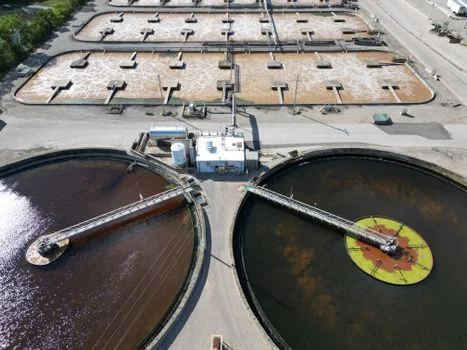
For industrial engineers and procurement managers, understanding the precise engineering specifications of an integrated wastewater treatment plant (ISTP) is paramount for accurate system selection and performance prediction. ISTPs consistently deliver high removal efficiencies, achieving 92–97% COD reduction and over 95% TSS removal, aligning with or exceeding EPA wastewater discharge limits 2025. The compact design is a significant advantage; for a 50 m³/h capacity, integrated systems typically occupy only 0.4–0.8 m²/m³/h, a stark contrast to the 1.5–3 m²/m³/h required by conventional facilities. This translates to a substantial space saving of up to 60%.
Energy consumption is another critical metric. ISTPs operate with an energy efficiency of 0.3–0.5 kWh/m³, significantly lower than conventional systems which can range from 0.6–0.9 kWh/m³. The majority of this energy (approximately 60%) is consumed by the aeration process in biological treatment. the efficient solids separation in both primary and secondary clarification stages contributes to reduced sludge production, typically between 0.2–0.4 kg TSS per kg of COD removed, compared to 0.5–0.8 kg for conventional systems. This lower sludge yield directly translates to reduced dewatering costs and disposal fees.
| Process Stage | Influent Quality | Effluent Quality | Removal Efficiency | Key Design Parameters |
|---|---|---|---|---|
| Primary Sedimentation | COD: 50-500 mg/L; TSS: 100-300 mg/L | TSS: 40-90 mg/L | TSS: 50-70% | Surface loading rate: 20-40 m/h; HRT: 1-2 h |
| Biological Treatment (A/O) | COD: 50-500 mg/L; BOD: 30-250 mg/L | COD: < 50 mg/L; BOD: < 20 mg/L | COD: 92-97%; BOD: 95%+ | HRT: 4-6 h; MLSS: 3,000-5,000 mg/L; DO: 2-4 mg/L |
| Secondary Clarification | TSS: 40-90 mg/L | TSS: < 10 mg/L | TSS: 95%+ | Overflow rate: 10-15 m/h |
| Disinfection | TSS: < 10 mg/L; Pathogens: Variable | < 10 CFU/100mL | Pathogen kill: 4-log (99.99%) | ClO₂ dosage: 0.5-2 mg/L; Contact time: 15-30 min |
| Overall System Metrics (for 50 m³/h capacity) | ||||
| Footprint | 0.4–0.8 m²/m³/h | (vs. 1.5–3 m²/m³/h for conventional) | ||
| Energy Consumption | 0.3–0.5 kWh/m³ | (vs. 0.6–0.9 kWh/m³ for conventional) | ||
| Sludge Production | 0.2–0.4 kg TSS/kg COD removed | (vs. 0.5–0.8 kg for conventional) | ||
Integrated vs. Conventional WWTPs: Head-to-Head Comparison for Industrial Buyers
For procurement managers and engineers tasked with selecting a wastewater treatment solution, a direct comparison between integrated and conventional WWTPs highlights critical decision-making factors. Integrated systems offer a compelling value proposition across several key metrics. Their upfront capital expenditure (CAPEX) is 30–40% lower than conventional systems, primarily due to reduced civil engineering and construction costs. The footprint is dramatically smaller, up to 60% less, making them ideal for space-constrained industrial sites. Deployment time is also significantly compressed, from 12–18 months for conventional plants to just 6–8 weeks for integrated units, facilitating rapid compliance and operational startup.
While CAPEX is lower, it's essential to note that for very small flow rates (<10 m³/h), the equipment cost per unit volume for integrated systems might be slightly higher than a rudimentary conventional setup. However, this is quickly offset by operational expenditure (OPEX) savings. Integrated systems typically boast 20–30% lower energy costs due to optimized designs and more efficient components (0.3–0.5 kWh/m³). Automated operation, a hallmark of modern ISTPs, also reduces operator requirements by up to 70% compared to manual oversight needed for conventional plants. Scalability is another advantage; integrated systems can be easily expanded by adding modular units, whereas conventional plants require extensive and costly retrofitting. the ability to pre-certify integrated systems to specific EPA/EU standards can reduce permitting time by 3–6 months, offering greater compliance flexibility.
| Feature | Integrated WWTP | Conventional WWTP | Notes |
|---|---|---|---|
| CAPEX | 30-40% Lower | Higher | Savings from reduced civil work and faster deployment. |
| OPEX | 20-30% Lower | Higher | Lower energy consumption (0.3-0.5 kWh/m³ vs. 0.6-0.9 kWh/m³), reduced chemical dosing, lower labor costs. |
| Footprint | Up to 60% Smaller | Larger (1.5-3 m²/m³/h for 50 m³/h flow) | Ideal for space-constrained industrial sites. |
| Deployment Time | 6-8 Weeks | 12-18 Months | Factory pre-fabrication and modular design enable rapid installation. |
| Scalability | High (Modular Additions) | Low (Requires extensive retrofitting) | Easy to expand capacity as production demands increase. |
| Operator Requirements | Minimal (Automated) | Significant (Manual oversight) | Automated systems reduce labor costs and human error. |
| Compliance Flexibility | High (Pre-certifiable) | Moderate | Faster permitting, easier adaptation to new standards. |
Zero-Risk Selection Framework: How to Choose the Right Integrated WWTP for Your Project
Selecting an integrated wastewater treatment plant (ISTP) involves a structured approach to mitigate risk and ensure optimal performance for your specific industrial application. Follow these five steps to make a confident decision:
- Define Influent Quality and Effluent Targets: Thoroughly analyze your wastewater. Key parameters include Chemical Oxygen Demand (COD), Total Suspended Solids (TSS), pH, temperature, and the presence of specific contaminants like heavy metals or hydrocarbons. Simultaneously, establish your effluent discharge requirements, referencing EPA 2024 discharge limits (e.g., COD typically <250 mg/L for industrial, or stricter limits for sensitive receiving waters) or any wastewater reuse standards you aim to meet.
- Assess Site Constraints: Evaluate your available space, including footprint, height restrictions, and any underground utility conflicts. ISTPs require significantly less area (0.4–0.8 m²/m³/h), but consider factors like load-bearing capacity for above-ground units or sufficient depth clearance for WSZ series underground integrated sewage treatment systems (typically 2-3 meters). Noise restrictions and accessibility for maintenance are also crucial.
- Evaluate Modularity and Scalability Needs: Consider your projected future capacity requirements. Integrated systems excel in modularity; you can install a system for your current needs (e.g., 20 m³/h) and easily add identical modules in parallel as your production expands, avoiding costly over-sizing upfront or complex retrofits.
- Compare Automation and Control Levels: Decide on the desired level of automation. Fully automated systems, often controlled by PLCs, significantly reduce operator intervention and potential for human error, leading to consistent performance and lower labor costs. While these systems may have a 15% higher upfront investment than manually controlled counterparts, they typically offer a 70% reduction in operational labor costs and a faster return on investment (ROI).
- Calculate Return on Investment (ROI): Quantify the financial benefits. A simplified ROI calculation can be made using the formula:
Payback Period (Years) = (Total CAPEX + Annual OPEX) / (Annual Savings from Water Reuse + Annual Avoided Compliance Penalties + Annual Operational Cost Savings)
For example, a system with $500,000 CAPEX and $50,000 annual OPEX that generates $200,000 in annual savings (from water reuse, avoided fines, and reduced labor) would have a payback period of 2.5 years.
Frequently Asked Questions
What is the typical footprint reduction of an integrated wastewater treatment plant compared to a conventional one?
Integrated wastewater treatment plants (ISTPs) offer a significant footprint reduction of up to 60%. For a typical 50 m³/h flow rate, an ISTP requires only 0.4–0.8 m²/m³/h, whereas a conventional plant can demand 1.5–3 m²/m³/h.
How does the CAPEX of an integrated WWTP compare to a conventional system?
Integrated systems generally reduce capital expenditure (CAPEX) by 30–40% due to their pre-engineered, modular design, which minimizes on-site civil construction and speeds up installation timelines.
What are the key advantages of A/O biological contact oxidation in integrated systems?
The A/O (Anoxic/Aerobic) process in ISTPs provides efficient COD and BOD removal (92-97% COD, 95%+ BOD) within a compact footprint and a relatively short HRT of 4-6 hours. This process also helps in nutrient removal, which is increasingly important for EPA nutrient discharge regulations.
Can integrated wastewater treatment plants meet stringent EPA discharge limits?
Yes, ISTPs are engineered to meet or exceed stringent EPA and EU wastewater discharge limits. Systems commonly achieve effluent quality with COD below 50 mg/L and TSS below 10 mg/L, with disinfection stages ensuring pathogen levels meet WHO guidelines.
What is the energy consumption of an integrated wastewater treatment plant?
Integrated systems are energy-efficient, typically consuming 0.3–0.5 kWh/m³. This is significantly lower than conventional WWTPs, which can require 0.6–0.9 kWh/m³, with aeration being the largest energy consumer within the biological treatment stage.
Related Equipment
The following HydropureWater products are engineered for the wastewater challenges discussed above:
- MBR membrane bioreactor system for near-reuse-quality effluent — view specifications, capacity range, and technical data
Need a customized solution? Request a free quote with your specific flow rate and pollutant parameters.