How Buried Wastewater Treatment Systems Work: Step-by-Step Process Flow
A buried wastewater treatment system utilizes a four-stage sequence—primary sedimentation, biological treatment, secondary clarification, and disinfection—to achieve secondary or tertiary effluent standards within a single, subsurface footprint. Unlike traditional septic systems that rely primarily on anaerobic digestion, these integrated plants employ active aeration or membrane filtration to ensure compliance with stringent environmental regulations, often reaching COD removal rates of 92–97% (HydropureWater field data, 2025).
The process begins with Primary Sedimentation. Influent enters a watertight underground tank where the flow velocity is reduced. This allows heavy solids to settle as sludge and lighter materials like oils and grease to float as scum. This stage typically requires a retention time of 2–4 hours. In many industrial applications, a screen is placed at the inlet to remove inorganic debris that could damage downstream mechanical components.
The second stage is Biological Treatment, which is the core of the system. Most modern buried units utilize the A/O (Anoxic/Aerobic) process or Membrane Bioreactor (MBR) technology. In the anoxic zone, denitrifying bacteria convert nitrates into nitrogen gas. In the aerobic zone, integrated blowers provide oxygen to support the growth of aerobic microorganisms that consume dissolved organic matter. For WSZ series buried wastewater treatment plants (1–80 m³/h), the biological retention time ranges from 6 to 12 hours, depending on the influent strength.
The third stage is Secondary Sedimentation or Filtration. In A/O systems, a secondary clarifier allows biological floc to settle, which is then recycled back to the anoxic zone as activated sludge. In MBR-based systems, the clarifier is replaced by a membrane module that physically screens out particles as small as 0.03 microns. The effluent then undergoes Disinfection. Chlorine dioxide, UV, or ozone is used to eliminate 99.9% of pathogens before the water is discharged or directed to a leachfield. A typical process flow follows this path: Influent → Mechanical Screen → Anoxic Zone → Aerobic Zone → Clarifier/MBR → Disinfection → Effluent/Soil Dispersal.
Key Components of a Buried System: Engineering Specs and Design Standards
Engineering standards for buried systems require watertight tanks capable of withstanding lateral soil pressure and buoyant forces at depths of 1–2 meters while maintaining structural integrity for a 20- to 50-year service life. The selection of materials and internal components is critical to preventing groundwater contamination and avoiding expensive excavation repairs.
The primary tankage is usually constructed from reinforced concrete, fiberglass-reinforced plastic (FRP), or high-density polyethylene (HDPE). Concrete offers the longest lifespan (50+ years) but is heavy and prone to hydrogen sulfide corrosion if not coated. FRP is the preferred choice for industrial sites due to its high strength-to-weight ratio and inherent corrosion resistance. An effluent filter is a mandatory component at the outlet of the primary tank; per EPA 2024 guidelines, these filters must remove solids ≥2 mm to prevent the clogging of downstream soil absorption systems.
For high-performance applications, MBR systems for buried applications requiring reuse-quality effluent are specified. These units replace the secondary clarifier with PVDF or PTFE membranes, allowing for a much higher Mixed Liquor Suspended Solids (MLSS) concentration (8,000–12,000 mg/L), which reduces the overall footprint by up to 50% compared to traditional contact oxidation. Disinfection is typically handled by ClO₂ generators for buried system disinfection, which are chosen for their ability to maintain a residual disinfectant effect in buried piping networks.
| Parameter | Standard A/O System | MBR Integrated System | Septic Tank (Baseline) |
|---|---|---|---|
| COD Removal Efficiency | 85–92% | 95–98% | 30–50% |
| Hydraulic Loading Rate | 0.5–2.0 m³/m²/day | 2.0–5.0 m³/m²/day | 0.1–0.4 m³/m²/day |
| Footprint (for 50 m³/day) | 25–40 m² | 12–20 m² | 150–300 m² |
| Effluent TSS | ≤20 mg/L | ≤5 mg/L | >100 mg/L |
| Typical Burial Depth | 0.5–2.5 m | 0.5–2.0 m | 1.0–3.0 m |
The dispersal system, or leachfield, must be designed based on the site’s hydraulic loading capacity. Absorption beds typically require a footprint of 50–100 m², while trenches are more flexible for smaller sites. If the dispersal area is located uphill from the treatment unit, a pump tank is required to dose the system 4–6 times per day, ensuring even distribution across the soil media (per EPA 2024 design standards).
Soil Compatibility and Site Requirements: Can Your Land Support a Buried System?
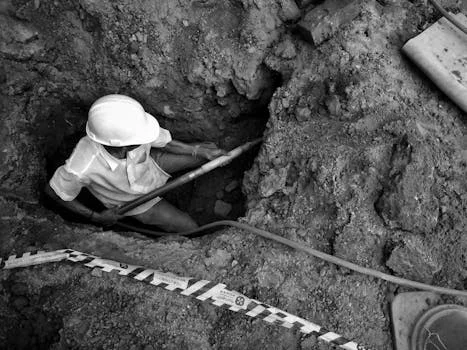
Soil percolation rates between 1 and 60 minutes per inch are the primary determinant for the feasibility of gravity-fed buried dispersal systems. Before any equipment is specified, a site-specific soil morphology report and "perc test" must be conducted to determine how much treated effluent the ground can safely absorb without surfacing or contaminating the water table.
Ideal soils consist of sandy loams or silt loams, which provide a balance of drainage and biological surface area for final polishing. Heavy clay soils are problematic because they have low permeability, often exceeding 60 min/inch. In such cases, a standard absorption bed will fail. Mitigation strategies include the installation of a "mound system"—where sand fill is built up above the natural grade—or upgrading the treatment plant to an MBR process to produce effluent clean enough for surface irrigation or direct discharge, bypassing the soil requirement entirely.
| Soil Type | Percolation Rate (min/in) | Suitability | Recommended Mitigation |
|---|---|---|---|
| Coarse Sand / Gravel | <1 | Poor (Too fast) | Plastic liner or clay loam layering |
| Sandy Loam | 1–30 | Excellent | None (Standard absorption bed) |
| Silty Clay / Silt | 31–60 | Moderate | Increased trench length or aeration |
| Heavy Clay | >60 | Unsuitable | Mound system or MBR pretreatment |
| Bedrock / High Water Table | N/A | Unsuitable | Above-ground modular plant |
Setback requirements are non-negotiable for regulatory approval. Most international standards, including WHO guidelines, require buried systems to be located at least 30 meters from potable water wells and 15 meters from building foundations to prevent structural undermining or vapor intrusion. The bottom of the leachfield must maintain a minimum vertical separation of 1.2 meters from the seasonal high groundwater table or restrictive bedrock layers to allow for natural aerobic treatment in the soil profile.
Buried vs. Above-Ground vs. Septic: Cost and Performance Comparison
While septic systems offer the lowest initial CAPEX, buried treatment plants provide 92–97% COD removal compared to the 50–70% typical of anaerobic septic tanks, making them the only viable subsurface option for industrial compliance. Procurement managers must weigh the higher upfront cost of buried plants against the land-value savings achieved by eliminating large above-ground structures and the potential fines associated with septic tank failure.
The CAPEX for a buried integrated system generally ranges from $15,000 for small residential/commercial units to over $500,000 for large-scale industrial configurations. In comparison, modular sewage treatment systems as an alternative to buried plants may cost 10–20% more due to the need for weatherproofing, insulation, and architectural screening. However, above-ground plants are significantly easier to maintain, as all mechanical parts are accessible without confined-space entry.
From an OPEX perspective, buried systems are remarkably efficient. The soil provides natural insulation, and biological processes remain stable year-round without the need for tank heaters in cold climates. Operating costs typically range from $0.10 to $0.30 per cubic meter of treated water, primarily covering electricity for the aeration blowers and periodic sludge removal. For industrial facilities, integrating sludge dewatering for buried systems with integrated clarifiers can further reduce OPEX by minimizing the volume of waste that must be hauled away by vacuum trucks.
| Metric | Buried Integrated Plant | Above-Ground Modular | Traditional Septic System |
|---|---|---|---|
| CAPEX Range | $15k – $500k | $20k – $600k | $5k – $50k |
| OPEX ($/m³) | $0.10 – $0.30 | $0.15 – $0.40 | $0.05 – $0.20 |
| Compliance | Class A/B Effluent | Class A/B Effluent | Rarely meets industrial limits |
| Land Use | Zero (Underground) | Significant (50–200 m²) | Moderate (Leachfield area) |
| Maintenance | Annual filter/pump service | Weekly operator checks | Sludge pumping every 3–5 years |
How to Select the Right Buried System: A Decision Framework for Buyers
Selecting a buried system requires a multi-variable assessment of hydraulic flow rate, effluent quality targets, and site-specific geological constraints. Following a structured framework ensures that the selected equipment meets both budgetary and regulatory requirements without the risk of premature system failure.
- Step 1: Determine Peak and Average Flow Rates. Calculate the daily wastewater volume based on facility occupancy or industrial process output. The WSZ series covers 1–80 m³/h; flows exceeding this typically require custom-engineered concrete basins.
- Step 2: Conduct a Soil Percolation Test. If the rate is 1–60 min/inch, a standard leachfield