Why Nebraska’s Industrial Facilities Are Switching to Package Wastewater Treatment Plants
Nebraska Title 119, Chapter 3 mandates that industrial discharges to surface waters must not exceed 30 mg/L for Biological Oxygen Demand (BOD) and 30 mg/L for Total Suspended Solids (TSS), a standard that is increasingly difficult for aging lagoon systems to meet under high organic loads. For many facilities, particularly in the meatpacking and ethanol sectors, the 2024 enforcement data from the Nebraska Department of Environment and Energy (NDEE) shows a 15% increase in compliance actions related to ammonia and nutrient overages. This regulatory pressure, combined with the operational volatility of traditional systems, is driving a shift toward modular, high-efficiency package plants.
A primary driver for this transition is the organic intensity of Nebraska’s industrial output. For example, Omaha’s Missouri River Treatment Plant serves over 12 major meatpacking facilities where influent cooling water and process waste often carry BOD concentrations exceeding 2,000 mg/L. When these facilities attempt to expand production, they often find that municipal surcharge costs or existing lagoon capacities become the primary bottleneck. A package plant, such as WSZ series package plants for Nebraska’s municipal and industrial sites, allows these facilities to treat high-strength waste at the source, reducing municipal fees by up to 70%.
Space constraints in urban industrial corridors like Lincoln, Grand Island, and Fremont further complicate the use of conventional infrastructure. A traditional lagoon system for a 500,000 GPD flow typically requires 3 to 5 acres of land to provide adequate retention time for nutrient removal. In contrast, a Membrane Bioreactor (MBR) package plant can process the same volume within a 0.2-acre footprint. This 80% reduction in land requirement allows facilities to expand production lines or parking without purchasing adjacent land.
Economic feasibility is supported by state-level financial incentives. The Nebraska Water Sustainability Fund (WSF) and the Clean Water State Revolving Fund (CWSRF) currently offer grants and low-interest loans that can cover up to 50% of the capital cost for qualifying modular upgrades. For municipal planners in rural Nebraska, these funds make the transition from failing lagoons to modern package systems a fiscally responsible long-term strategy compared to the recurring maintenance costs of dredging and liner repair.
Package Wastewater Treatment Plants: How They Work in Nebraska’s Climate
Biological treatment kinetics in Nebraska package plants must account for a 50% reduction in microbial activity when influent temperatures drop to 5°C during winter months. Unlike conventional lagoons that lose heat through large surface areas, package plants utilize insulated, steel-reinforced tanks or underground configurations to maintain process stability. The typical process flow for a Nebraska-based system begins with fine screening (2mm-6mm) followed by an equalization tank to buffer the "slug loads" common in meatpacking and manufacturing shifts.
The core of the system is the biological reactor, which in Nebraska is frequently configured as an MBR or a Sequencing Batch Reactor (SBR). These systems are designed to handle high-strength wastewater; while domestic sewage averages 250 mg/L BOD, Nebraska meatpacking effluent often ranges from 1,500 to 3,000 mg/L. To achieve 98% removal rates, MBR systems for Nebraska’s high-strength industrial wastewater employ high mixed liquor suspended solids (MLSS) concentrations (8,000–12,000 mg/L), which provide a dense microbial population capable of degrading complex organics even in cold weather.
Cold-weather engineering is the most critical factor for 2025 Nebraska installations. Systems must include submerged aeration diffusers to prevent surface icing and heat-traced piping for all external chemical feed lines. Data from the Aquarius system in Wayne, NE, demonstrates that by utilizing submerged biological processes and insulated housing, plants can maintain nitrification even when ambient temperatures reach -20°F. for facilities dealing with high fats, oils, and grease (FOG), the integration of DAF systems for Nebraska’s food processing wastewater pretreatment is essential to prevent membrane fouling and ensure the biological stage operates at peak efficiency.
| Parameter | Industrial Influent (Meatpacking) | Package Plant Effluent (MBR/SBR) | Nebraska DEQ Limit (Title 119) |
|---|---|---|---|
| BOD5 (mg/L) | 1,500 - 3,500 | < 5.0 | 30.0 |
| TSS (mg/L) | 800 - 1,200 | < 2.0 | 30.0 |
| Ammonia (mg/L) | 150 - 250 | < 1.0 | 2.0 (Seasonal) |
| FOG (mg/L) | 400 - 600 | < 10.0 | N/A (Pretreatment focus) |
Technical Specifications: Package Plants vs. Conventional Systems for Nebraska Facilities
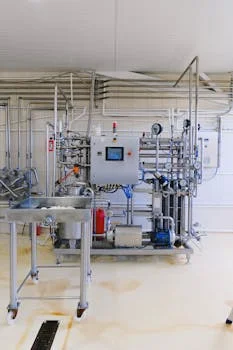
Package wastewater treatment plants achieve effluent quality that is an order of magnitude cleaner than conventional activated sludge or lagoon systems, specifically regarding nutrient removal. While a well-maintained lagoon in Nebraska might achieve 25 mg/L BOD in the summer, performance often degrades to 60 mg/L or higher during the winter "turnover" periods. Package MBR systems maintain consistent effluent quality of <5 mg/L BOD and TSS year-round, making them the preferred choice for facilities discharging into sensitive Nebraska watersheds like the Platte or Loup Rivers.
The trade-off for this efficiency is energy consumption. Package plants, particularly MBRs, consume between 0.8 and 1.2 kWh per cubic meter of treated water due to the air scouring required to keep membranes clean. Conventional lagoons are much more passive, consuming 0.3 to 0.5 kWh/m³. However, when factoring in the cost of sludge management, package plants offer a distinct advantage. According to 2023 NDEE sludge management reports, package plants produce 0.2–0.4 kg of TSS per kg of BOD removed, whereas conventional systems produce nearly double that amount, leading to higher hauling and disposal costs in rural Nebraska.
| Feature | Package MBR/SBR | Conventional Lagoon | Activated Sludge (Large Scale) |
|---|---|---|---|
| Footprint (for 250k GPD) | 0.15 - 0.25 Acres | 2.0 - 5.0 Acres | 1.0 - 1.5 Acres |
| Winter Efficiency (BOD) | 95% - 98% | 60% - 75% | 85% - 90% |
| Operator Requirement | Part-time (Automated) | Minimal | Full-time (High) |
| Sludge Production | Low (Dense) | High (Accumulative) | Moderate |
| Scalability | Modular (Plug & Play) | Difficult (Requires Digging) | Complex (Civil Works) |
For engineering managers evaluating MBR vs. SBR cost comparison for Nebraska buyers, the decision often hinges on the specific discharge limit for phosphorus and nitrogen. MBR systems provide superior solids separation, which is critical for meeting the stringent 2025 nutrient standards, whereas SBRs offer a slightly lower CAPEX for facilities where 10-15 mg/L TSS is acceptable.
Cost Breakdown: Package Wastewater Treatment Plants in Nebraska (2025 Data)
The Capital Expenditure (CAPEX) for a package wastewater treatment plant in Nebraska for 2025 ranges from $1.5 million for a 100,000 GPD system to over $5 million for a 500,000 GPD high-strength industrial plant. These costs are inclusive of the treatment modules, internal piping, and basic control systems. In Grand Island or Kearney, a typical 250,000 GPD MBR plant averages $3.2 million. While this is higher than the initial cost of a lagoon, the Return on Investment (ROI) for industrial users is typically realized within 3 to 7 years through the elimination of municipal surcharges and reduced water consumption via reuse.
Operating Expenditure (OPEX) in Nebraska is influenced heavily by local utility rates and chemical costs. On average, facilities should budget $0.75 to $1.50 per 1,000 gallons treated. This includes electricity for aeration, chemicals for pH adjustment and phosphorus precipitation, and a sinking fund for membrane replacement every 7 to 10 years. For a detailed comparison of regional pricing, see the national guide to package wastewater treatment plants, which outlines the ROI framework used by industrial facility owners to justify these capital projects.
| Cost Component | Estimated Range (USD) | Notes for Nebraska Buyers |
|---|---|---|
| CAPEX (250k GPD) | $2,800,000 - $3,500,000 | Includes MBR modules and installation. |
| Site Preparation | $80,000 - $250,000 | Higher for Nebraska's expansive clay soils. |
| Annual OPEX | $90,000 - $140,000 | Power, labor, and chemical consumables. |
| Permitting & Legal | $15,000 - $45,000 | NDEE engineering report and public notice. |
| State Grants (WSF) | ($500,000 - $1,500,000) | Potential reduction for municipal/rural projects. |
Hidden costs often overlooked by Nebraska procurement teams include the specialized soil compaction required for heavy modular tanks in the eastern part of the state and the cost of NDEE-certified operator training. While package plants are highly automated, Nebraska law requires a certified operator to oversee the discharge, which may necessitate an additional $5,000 to $15,000 in annual training and certification fees if local staff are not already qualified.
Nebraska DEQ Compliance: Permitting, Monitoring, and Common Pitfalls
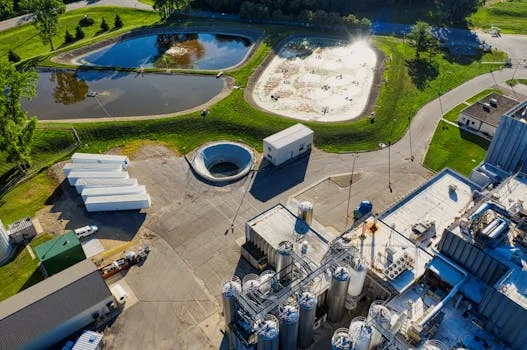
The permitting process for a new package wastewater treatment plant in Nebraska is governed by the NDEE under the National Pollutant Discharge Elimination System (NPDES). For direct discharge into a stream or river, the application timeline typically spans 6 to 12 months. This period includes a mandatory 30-day public comment period and an technical review of the engineering report by NDEE staff. Industrial facilities in sectors like meatpacking that discharge to a municipal sewer must instead obtain a Pretreatment Permit, which involves local city council approval in addition to state oversight.
Monitoring requirements are rigorous. Under Title 119, Chapter 3, most package plants must perform weekly sampling for BOD and TSS, and daily monitoring of pH and flow. For facilities using disinfection, chlorine dioxide generators for Nebraska DEQ-compliant disinfection provide a reliable method for meeting E. coli limits without the hazardous byproduct formation associated with traditional chlorine gas. annual Whole Effluent Toxicity (WET) testing is often required for industrial plants to ensure that the treated water does not negatively impact aquatic life in Nebraska’s sensitive river ecosystems.
Common compliance pitfalls in Nebraska often stem from underestimating the impact of the state’s extreme temperature swings. A frequent violation occurs during the spring thaw, where rapid temperature changes can cause biological "upsets" if the system does not have adequate equalization and heating. Another pitfall is the failure to account for high nitrogen loads in ethanol and meatpacking waste; without a dedicated anoxic zone for denitrification, plants will frequently exceed ammonia limits during the winter months when nitrifying bacteria are naturally less active. To mitigate these risks, NDEE recommends the use of real-time online sensors for dissolved oxygen (DO) and ORP to allow for immediate process adjustments.
Supplier Checklist: How to Evaluate Package Wastewater Treatment Plant Vendors in Nebraska
Selecting a vendor for a Nebraska-based project requires more than a comparison of price tags; it requires a verification of cold-weather engineering expertise. A supplier who primarily installs systems in southern climates may not provide the necessary insulation or aeration adjustments required for a Nebraska winter. When evaluating proposals, engineering managers should demand performance data from existing installations in the Midwest, specifically looking for systems that have maintained 90%+ removal efficiency during sub-zero events.
Local service availability is the most critical post-installation factor. In rural Nebraska, a 24-hour response time for technicians and spare parts is essential. If a blower or a membrane rack fails in a meatpacking plant, the resulting production downtime can cost tens of thousands of dollars per hour. Ensure the supplier has a regional service hub or a verified partnership with Nebraska-based mechanical contractors who are trained on the specific equipment.
| Evaluation Criteria | Critical Question for Vendors | Red Flag Scenario |
|---|---|---|
| Cold Weather Data | Can you provide BOD removal data for an influent temp of 5°C? | Only provides data from warm-weather sites. |
| Nebraska References | Have you completed projects for NDEE-regulated facilities? | No experience with Nebraska Title 119 permits. |
| Service Proximity | Where is your nearest technician located? | Technician must fly in from out of state. |
| Warranty Terms | Is there a 5-year guarantee on membrane integrity? | Standard 1-year warranty on all components. |
| Compliance Support | Will you assist with the NDEE engineering report? | Vendor only provides equipment, no permit support. |
A significant red flag is a supplier who cannot provide a clear path for sludge management or membrane cleaning. In Nebraska, the disposal of biological sludge is strictly regulated, and a vendor should be able to specify the expected sludge yield and recommend local hauling services. For MBR systems, ask for the specific chemical cleaning protocols and the expected lifespan of the membranes under high-strength industrial loads. If the vendor is unfamiliar with Missouri’s industrial wastewater treatment solutions or similar high-load Midwestern environments, they may struggle with Nebraska’s unique requirements.
Frequently Asked Questions
What is the average cost of a package wastewater treatment plant in Nebraska?
For 2025, a standard 100,000 GPD package plant costs approximately $1.5M, while a 500,000 GPD system for high-strength industrial waste can reach $5M. These costs include the treatment equipment and controls. Site preparation and permitting can add an additional 10-15% to the total project budget.
How long does it take to get a Nebraska DEQ (NDEE) permit for a package plant?
The permitting process typically takes 6 to 12 months. This includes the time for engineering design, NDEE technical review, and the mandatory 30-day public comment period required for NPDES permits. Pretreatment permits for industrial users discharging to city sewers may be faster depending on the municipality.
Can package plants handle the high BOD from meatpacking facilities?
Yes, but they require specific configurations. MBR systems are ideal for meatpacking as they can handle BOD loads up to 3,000 mg/L and achieve 98% removal. Pretreatment with a DAF system is usually required to remove fats, oils, and grease (FOG) before the biological stage.
What are the most common compliance issues in Nebraska for these systems?
The most common issues are winter performance failures (nitrification loss due to cold) and inadequate operator training. Nebraska’s Title 119 is strict regarding ammonia limits, so systems must be designed with adequate insulation and aeration capacity to function at -20°F.
Are there grants available for wastewater upgrades in Nebraska?
Yes. The Nebraska Water Sustainability Fund (WSF) provides grants that can cover up to 50% of the cost for qualifying projects. Additionally, the USDA Rural Development program offers low-interest loans (often around 2.5%) for municipal wastewater projects in rural communities.