Industrial wastewater treatment in Missouri, USA, is regulated by the Missouri Department of Natural Resources (MO DNR) Pretreatment Program. Significant Industrial Users (SIUs) that discharge to Publicly Owned Treatment Works (POTWs) need permits. For systems of 0.1–10 MGD, capital costs commonly run $50,000–$2M+ based on flow and pollutant load. Dissolved air flotation (DAF) systems for 50–300 m³/h typically cost $120,000–$450,000. Regulated pollutants include heavy metals (Cd, Cr, Pb), FOG, BOD, TSS, and process-related E. coli byproducts. BioKyowa's 1.6 MGD Missouri plant shows industrial E. coli treatment without human waste is a real operating case in the state.
Missouri Industrial Wastewater Rules Manufacturers Must Follow
Missouri manufacturers discharging process wastewater to a POTW must follow the MO DNR Pretreatment Program. SIUs include facilities over 25,000 gallons per day of process flow, or any discharge that can interfere with the POTW. Site-specific or general permits apply, with quarterly self-monitoring typical. Capital cost for 0.1–10 MGD systems often runs $50,000–$2M+.
The MO DNR Pretreatment Program requires industrial users discharging to POTWs to prevent interference, sludge contamination, and pass-through to receiving waters (MO DNR, 2024). SIUs need formal permits that set monitoring, reporting, and effluent limits matched to the local POTW. Most plants we size for Missouri food and metalworking sites treat the SIU threshold as a planning trigger even when current flow sits just below 25,000 gallons per day, because production growth can cross that line within one capital cycle.
Permit thresholds capture food processors, metal finishers, chemical plants, and other Missouri manufacturers. Common pollutants that trigger pretreatment include cadmium (Cd), chromium (Cr), and lead (Pb) from electroplating and battery work; FOG, BOD, and TSS from food and general manufacturing; and industrial E. coli byproducts from fermentation processes such as BioKyowa's 1.6 MGD facility. Local POTWs may add surcharge formulas for BOD or TSS above domestic strength, which changes the economics of on-site removal versus paying the utility. When surcharge rates exceed the marginal cost of on-site DAF or biology, Missouri plants usually pull load down before the sewer meter rather than pay the utility indefinitely.
Keep a shared folder with the current permit, the last four quarterly reports, and the as-built P&ID. Inspectors ask for those first, and missing files slow walk-throughs even when the plant is in numeric compliance. Train at least two people on sample collection so vacation coverage does not create monitoring gaps.
Enforcement includes unannounced inspections and quarterly self-monitoring reports from permitted facilities (City of Washington pretreatment guidance). Non-compliance can bring fines and production interruptions. Permits are site-specific when the waste stream is complex, or general when a category of similar activities shares standard conditions. Small vehicle-wash sites often fit a general permit; a large chemical plant usually needs a site-specific permit because pollutant lists and variability are wider.
| Pollutant Category | Typical Missouri Industrial Sources | Primary Regulatory Concern | Pretreatment Objective |
|---|---|---|---|
| Heavy Metals (Cd, Cr, Pb, Ni) | Metal finishing, battery manufacturing, electronics, plating | POTW interference, sludge contamination, aquatic toxicity | Precipitation, ion exchange, removal before discharge |
| Fats, Oils, & Grease (FOG) | Food processing, meat packing, rendering plants, restaurants | Sewer line blockages, POTW operational issues | Physical separation (DAF), grease traps |
| Biochemical Oxygen Demand (BOD) | Food processing, breweries, chemical manufacturing | Overload on POTW biological treatment capacity | Biological treatment, equalization, nutrient removal |
| Total Suspended Solids (TSS) | Mining, textile, paper, general manufacturing | Sewer blockages, POTW interference, aesthetic impact | Sedimentation, filtration, DAF |
| pH (Acids/Bases) | Chemical manufacturing, metal finishing, food processing | Corrosion of sewer systems, POTW biological upset | Neutralization (chemical dosing) |
| E. coli (Industrial Byproducts) | Specific fermentation processes (e.g., amino acid production) | Discharge limits for specific industrial processes | Advanced biological treatment, disinfection |
Treatment Technologies and Pollutant Removal Rates for Missouri Plants
Treatment technology choice for Missouri plants starts from the waste stream and the MO DNR or POTW limit package. Most plants we size for food and metalworking loads put physical separation ahead of biology when FOG or TSS drive the permit risk. Equalization of 4–12 hours of average daily flow is often added first so peak dumps do not blow through downstream units.
DAF units separate suspended solids and FOG. At design conditions typical of oily process water, they reach 95–98% TSS removal and 90–95% FOG removal. Capacities of 10 m³/h to 500 m³/h are common; a 100 m³/h unit often occupies about 5–30 m² and draws 5–15 kW depending on size. Missouri food processors, meat packers, dairies, and metalworking shops with oily wastewater use this step as the primary FOG and TSS barrier. Skimming too aggressively re-emulsifies FOG; skimming too slowly lets float thicken and odor rise. Operators usually adjust polymer dose from jar tests each time the product mix changes, rather than locking one recipe for the year.
Where ultra-low effluent limits apply, membrane bioreactor (MBR) systems combine biology with membrane filtration. Typical performance includes >99.9% bacterial removal and TSS often <1 mg/L, with >99% BOD/COD reduction under steady operation. Modular trains from 10 m³/day to 2,000 m³/day cut footprint versus conventional activated sludge, often by 50% or more. Pharmaceutical and chemical sites in Missouri use MBR when NPDES or pretreatment limits leave little room for TSS or organics excursions. Membrane cleaning intervals and mixed-liquor suspended solids setpoints should be written into the O&M plan before startup, not after the first flux drop.
Automatic chemical dosing systems handle pH control and heavy-metal precipitation so discharge stays in the usual 6–9 pH window required by many MO DNR permits. For metal finishing that releases lead or chromium, coagulant dosing (ferric chloride or aluminum sulfate) plus flocculation and sedimentation can deliver >95% removal of dissolved heavy metals when dose tracks influent load. At 100 m³/h, coagulant use often falls in the 50–200 mg/L range and pH adjusters in the 5–20 mg/L range, subject to influent chemistry. Hexavalent chromium still needs a reduction step to Cr III before precipitation; skipping that step is a common lab-to-plant failure mode.
Sludge handling closes the mass balance. Plate and frame filter presses commonly reach 30–40% dry solids. A press paired with a 100 m³/h DAF train may process 5–10 m³ of wet sludge per day and cut volume by 80% or more, which lowers landfill fees for Missouri industrial sites. Cake dryness, not just press cycle time, drives disposal cost when local landfills charge $50–$150+ per ton.
Compact sites with limited yard space sometimes add an Underground Package Sewage Treatment Plant (WSZ Series) for segregated sanitary or low-strength process streams while the main industrial train stays aboveground. That split keeps high-FOG or metal-bearing flows on dedicated pretreatment without expanding the plant footprint.
| Technology | Key Pollutants Removed | Typical Removal Efficiency | Primary Missouri Industries | Engineering Specification Highlight |
|---|---|---|---|---|
| Dissolved Air Flotation (DAF) | TSS, FOG, light particulates | 95-98% TSS, 90-95% FOG | Food processing, meat packing, metalworking, dairy | DAF line: 10-500 m³/h capacity, 5-15 kW power, compact footprint |
| Membrane Bioreactor (MBR) | BOD, COD, TSS, Bacteria, Viruses | >99% BOD/COD, <1 mg/L TSS, >99.9% bacteria | Pharmaceutical, chemical, high-purity industrial discharge | DF Series: 10-2,000 m³/day capacity, low sludge production, small footprint |
| Chemical Dosing (pH, Coagulation) | Heavy metals, pH adjustment, colloidal solids | >95% heavy metals, pH 6-9 consistency | Metal finishing, chemical manufacturing, general industrial | Automatic system: Real-time pH monitoring, precise chemical injection |
| Sludge Dewatering (Filter Press) | Water from sludge solids | 30-40% dry solids content | All industries generating sludge (DAF, MBR, chemical treatment) | Plate & frame: Reduces sludge volume by 80%+, lowers disposal costs |
Cost Benchmarks for Industrial Wastewater Treatment in Missouri
Capital planning for Missouri industrial pretreatment hinges on flow, pollutant load, and how many unit processes the permit forces into series. For 0.1–10 MGD trains, total installed cost often spans $50,000 to more than $2 million (MO DNR permit application data, 2025). Civil work, electrical service upgrades, and winterized buildings for outdoor equipment frequently add 20–40% beyond skid prices on Midwestern sites.
Equipment line items sharpen the budget. DAF systems used on Missouri food-processing wastewater typically run $120,000–$450,000 for 50–300 m³/h packages that include the flotation cell, pumps, compressors, and basic installation (HydropureWater DAF pricing, 2025). MBR systems sized for stricter pharmaceutical or chemical limits commonly range $250,000–$1.2 million for 10–2,000 m³/day, covering membrane modules, bioreactor tanks, and controls (HydropureWater MBR product specifications, 2025). Dual-train redundancy for critical discharge points raises capital but protects against single-unit downtime when the POTW has zero tolerance for bypass.
Operating cost in Missouri usually falls between $0.50 and $2.00 per 1,000 gallons treated (MO DNR 2024 industry survey). That band covers power for pumps and aeration, coagulants and pH chemicals, maintenance, and labor. Regional electricity rates and local operator wages move the needle, and sludge disposal fees rise when cake dryness stays low. New or modified industrial permit application fees run about $1,500–$15,000 by facility size and discharge complexity (MO DNR fee schedule, 2025). Plants that track cost per pound of BOD or metal removed, not only cost per gallon, spot the unit process that actually drives spend. For food plants, FOG disposal and biological aeration often dominate OPEX; for platers, hydroxide sludge hauling and metal precipitant chemicals usually dominate.
| Cost Category | Description | Typical Range (Missouri, 2025) | Key Influencing Factors |
|---|---|---|---|
| Total Capital Expenditure | Complete system installation (0.1-10 MGD) | $50,000 - $2,000,000+ | Flow rate, pollutant load, technology complexity, site conditions |
| DAF System (Capital) | Dissolved Air Flotation unit (50-300 m³/h) | $120,000 - $450,000 | Capacity, materials of construction, automation level |
| MBR System (Capital) | Membrane Bioreactor unit (10-2,000 m³/day) | $250,000 - $1,200,000 | Capacity, membrane type, system integration |
| Operational Costs | Per 1,000 gallons treated | $0.50 - $2.00 | Electricity rates, chemical costs, labor, sludge disposal fees |
| Permit Application Fees | MO DNR industrial wastewater permit | $1,500 - $15,000 | Facility size, discharge volume, pollutant complexity |
| Sludge Disposal | Per ton of dewatered sludge | $50 - $150+ | Dry solids content, landfill proximity, local regulations |
How Missouri Manufacturers Should Select Treatment Equipment
Equipment selection for Missouri manufacturers works best as a four-step gap analysis from lab data to 10-year cost of ownership. Skipping characterization is the most common reason plants oversize DAF or under-size biology. A written basis-of-design that lists each permit limit next to the design effluent target keeps vendors honest during bid review. Ask each bidder to show which unit process removes each regulated pollutant and what effluent they guarantee at peak hour flow, not only at average daily flow.
- Step 1: Characterize Your Wastewater. Measure average and peak flow, list pollutants (heavy metals, FOG, BOD, TSS, pH), and record concentration ranges. Sample across production shifts and clean-in-place cycles so the design case is not a mid-shift average. Accurate characterization is required for the Missouri industrial pretreatment program and drives every later design choice.
- Step 2: Compare Missouri Permit Limits to Your Effluent. Pull the site MO DNR or POTW permit, or the matching general permit, and map each analyte to its limit. The gap defines required removal. Metal finishing focuses on lead and chromium; food plants focus on FOG and BOD. Note daily maximum versus monthly average limits; equipment must hit the tighter of the two under peak load.
- Step 3: Match Technology to Removal, Footprint, and Staffing. High FOG and TSS usually start with DAF. Strict BOD/COD and bacteria limits push toward MBR. pH swings and dissolved metals need chemical precipitation with automated dosing. Check available footprint and who will run the plant on nights and weekends. If the site has only one operator on call, favor automated dosing and alarming over manual jar-test control.
- Step 4: Run a 10-Year ROI on Capital Versus Operating Cost. Project chemicals, energy, labor, and sludge disposal against installed cost over a 10-year life. The lowest bid that fails cake dryness or energy use rarely wins on total cost in Missouri. Include membrane replacement or DAF saturator rebuilds in year 5–8 so the model is not only year-one OPEX.
Selection checklist used on Missouri projects:
- Confirm SIU status and whether the discharge is to a POTW or direct NPDES outfall.
- List every numeric limit and monitoring frequency from the current or draft permit.
- Size equalization for peak-to-average flow ratios measured on site, not brochure defaults.
- Pick the primary FOG/TSS or metals unit process before adding polishing stages.
- Budget sludge hauling at local tip fees using the expected cake dryness, not wet sludge volume.
- Verify winterization, power availability, and chemical storage rules for the county.
- Require factory acceptance or site performance tests tied to the permit numbers.
Industry shortcuts used on most Missouri projects:
- Food Processing (Meat, Dairy, Beverages): High FOG, BOD, TSS. Start with DAF for FOG/TSS, then biological treatment (activated sludge or MBR) for BOD.
- Metal Finishing/Electroplating: Heavy metals (Cr, Ni, Pb, Cd) and swinging pH. Use chemical precipitation, neutralization, and ion exchange for polishing when limits are tight.
- Chemical Manufacturing: Mixed organics, pH extremes, and toxics. Equalization, oxidation or biology (often MBR), and polishing filtration are typical stages.
| Pollutant | Typical Limit (mg/L) | Common Industrial Source | Relevant Treatment Technology |
|---|---|---|---|
| Cadmium (Cd) | 0.07 | Electroplating, battery manufacturing | Chemical precipitation, ion exchange |
| Chromium (Cr) Total | 2.0 | Metal finishing, tanning | Reduction (Cr VI to Cr III), chemical precipitation |
| Lead (Pb) | 0.1 | Battery manufacturing, metal finishing | Chemical precipitation, filtration |
| Fats, Oils, & Grease (FOG) | 100 | Food processing, meat packing, rendering | DAF, oil/water separators |
| Total Suspended Solids (TSS) | 250 | General manufacturing, food processing | DAF, sedimentation, filtration, MBR |
| Biochemical Oxygen Demand (BOD) | 300 | Food processing, breweries, chemical manufacturing | Biological treatment (aerobic/anaerobic), MBR |
| pH | 6.0 - 9.0 (Standard Units) | All industrial discharges | Chemical dosing (acid/base neutralization) |
Note: Specific permit limits vary by POTW, industry, and facility. Always consult your official MO DNR permit.
Missouri NPDES Permit Application Steps for Industrial Facilities
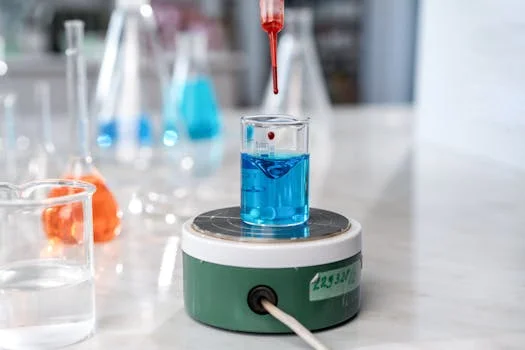
Missouri NPDES and pretreatment applications stall when sampling packages or engineering reports arrive incomplete. The sequence below is the path most industrial facilities follow with MO DNR. Build the laboratory schedule and draft P3 in parallel with early engineering so the NOI is not the first document that forces a scramble. Assign one owner for sampling logistics and one owner for the engineering report; split ownership is how Missouri applications miss the 90–180 day window and slide into production-startup risk.
- Step 1: Submit Notice of Intent (NOI) to MO DNR.
File an NOI that states the intent to discharge and gives basic facility data. MO DNR typically allows about 60 days for NOI review. Incomplete NOIs are a frequent delay (MO DNR 2024 enforcement report). Name the outfall, receiving POTW or stream, and primary SIC or NAICS codes accurately on the first filing.
- Step 2: Conduct Wastewater Characterization Study.
Collect representative effluent samples and analyze them at a MO DNR-approved laboratory. Cover federal categorical pollutants and Missouri-specific parameters for your industry. That dataset sets discharge limits and treatment design basis. Peak-day and clean-in-place samples belong in the package, not only mid-production grabs.
- Step 3: Develop Pollution Prevention Plan (P3) with Missouri-Specific Requirements.
Many general permits require a P3 that documents source reduction, spill control, and waste minimization. Missing P3 elements often send applications back for revision. Spill kits, secondary containment volumes, and employee training records are the items reviewers flag most often.
- Step 4: Submit Engineering Report and Permit Application.
Prepare an engineering report covering process design, expected performance, and compliance with MO DNR limits. File the Missouri permit forms (often aligned with EPA Form 1 or 2D) with the report and characterization data. Include process flow diagrams, mass balances, and a monitoring plan that matches the proposed permit schedule.
- Step 5: MO DNR Public Comment Period and Final Permit Issuance.
After completeness review, a 30-day public comment period usually follows. Addressing comments leads to final issuance. End-to-end timing is often 90–180 days, longer when sampling or design detail is thin. Do not schedule construction completion earlier than the expected issuance window plus contingency.
Operators who run plants in more than one state often review how Missouri's regulations compare to other U.S. states before locking a corporate treatment standard.
Multi-plant operators should standardize sampling methods and data sheets across Missouri sites even when POTW limits differ. Consistent lab methods make corporate audits faster and reduce the chance that one plant reports FOG as hexane extractable while another uses a different method that is not comparable.
Who This Guide Is For and Next Steps
This guide is for Missouri plant engineers, EPC firms, and procurement managers sizing pretreatment for food, metal finishing, or chemical discharges to a POTW or under NPDES. Facilities with only sanitary flow and no process wastewater should look to local building sewer rules instead of industrial pretreatment design. When you need a Missouri-specific equipment package sized against your permit limits, request a treatment design quote with flow, pollutant data, and the receiving POTW limits attached.
Frequently Asked Questions
What Missouri industrial facilities need a wastewater discharge permit?
Any Missouri industrial facility that discharges process wastewater directly to state waters under NPDES, or indirectly to a POTW as an SIU, needs a MO DNR permit. SIU triggers include more than 25,000 gallons per day of process wastewater or any discharge that can interfere with POTW operations. Site-specific and general permits both count as formal authorization.
Which pollutants does MO DNR regulate in industrial wastewater?
MO DNR focuses on heavy metals such as lead, chromium, and cadmium, plus FOG, BOD, COD, TSS, and pH. Exact numeric limits depend on the industry category and the receiving POTW or water body. Always use the values printed on the active permit, not generic tables, for compliance design.
How much does industrial wastewater treatment cost in Missouri?
Capital cost for Missouri industrial treatment commonly ranges from $50,000 to more than $2 million for 0.1–10 MGD systems, driven by flow and pollutant load. Operating cost typically runs $0.50–$2.00 per 1,000 gallons treated when energy, chemicals, labor, and sludge disposal are included. Permit application fees alone often add $1,500–$15,000.
What treatment works best for Missouri food processing wastewater?
Missouri food plants with high FOG and TSS usually start with DAF, then add biological treatment such as activated sludge or MBR to cut BOD and COD. That sequence matches common POTW pretreatment limits for FOG around 100 mg/L and BOD around 300 mg/L when those values appear on the local permit. Confirm each limit with the receiving utility before freezing design.
How long does a Missouri industrial wastewater permit take?
From NOI to final issuance, MO DNR industrial wastewater permitting often takes 90–180 days. Incomplete sampling packages, missing P3 sections, or thin engineering reports extend that window. Plan characterization and design documents before the NOI clock starts if production startup is fixed.