An industrial RO membrane system achieves 95–99% TDS rejection at 15–70 bar pressure, outperforming alternatives like UF (1–100 kDa MWCO) and DAF (90–95% TSS removal) in dissolved contaminant removal. However, MBR and DAF offer lower energy use and higher fouling resistance for high-organic wastewaters, making technology choice dependent on feedwater composition and discharge standards.
What Defines an RO Membrane System in Industrial Applications?
Reverse osmosis (RO) uses semi-permeable membranes with pore sizes typically less than 0.0001 μm (0.1 nm) to reject monovalent ions like Na⁺ and Cl⁻, as well as organics larger than 100 Da. This ultra-fine filtration capability is critical for achieving high purity water in diverse industrial settings. Industrial RO systems operate at pressures ranging from 15 to 70 bar, with brackish water applications requiring 15–30 bar and seawater desalination demanding higher pressures of 55–70 bar to overcome osmotic pressure.
An industrial RO membrane system consistently achieves 95–99% TDS rejection, providing highly purified water suitable for boiler feedwater, process water, and even potable water production. Beyond dissolved salts, RO also achieves greater than 99% removal of bacteria, viruses, and heavy metals such as lead (Pb) and arsenic (As), meeting stringent EPA and WHO standards for water quality. HydropureWater's industrial RO systems are engineered to achieve up to a 95% recovery rate, minimizing wastewater volume. These systems incorporate advanced PLC-controlled antiscalant dosing and automated Clean-In-Place (CIP) cycles, which are essential for maintaining membrane performance and extending lifespan by mitigating fouling and scaling. This robust design makes industrial RO systems with 95% recovery rate a cornerstone of modern industrial water purification systems.
Nanofiltration: Selective Rejection at Lower Pressure
Nanofiltration (NF) membranes feature larger pore sizes, typically ranging from 0.001–0.01 μm (1–10 nm), with a molecular weight cut-off (MWCO) between 200 and 1,000 Da. This characteristic allows NF to selectively reject divalent ions such as calcium (Ca²⁺) and sulfate (SO₄²⁻) at rates of 90–95%, while permitting a significant portion of monovalent ions to pass through, achieving only 40–60% rejection. This selective permeability distinguishes NF from RO, making it ideal for applications where complete demineralization is not necessary but specific contaminant removal is required.
Operating pressures for NF systems are considerably lower than RO, typically between 5 and 20 bar. This translates to a 30–50% reduction in energy consumption compared to RO for similar flow rates, offering a more cost-effective solution for specific treatment goals. NF is particularly well-suited for softening water, removing color, and reducing chemical oxygen demand (COD) in industrial wastewaters. For instance, in textile and dye wastewater treatment, NF effectively reduces color and COD without the energy intensity of RO, making it a highly efficient choice where salt retention isn't a primary concern. The balance of selective rejection and lower operating costs makes NF a valuable option in the spectrum of membrane filtration technologies, especially when considering ro vs nanofiltration efficiency.
Ultrafiltration and Microfiltration: Particle-Based Separation

Ultrafiltration (UF) membranes, with pore sizes ranging from 0.01–0.1 μm (10–100 kDa MWCO), are highly effective at removing bacteria, colloids, and viruses from water. Microfiltration (MF) membranes, featuring larger pores of 0.1–10 μm, primarily target suspended solids, algae, and larger pathogens. Both UF and MF operate at significantly lower pressures (typically 0.5–5 bar) compared to RO or NF, making them less energy-intensive for their specific applications.
Typical UF rejection rates demonstrate its strength in particulate removal: over 99.9% for E. coli bacteria and greater than 90% for turbidity. However, UF is not designed for desalination, with TDS rejection typically remaining below 50%. Consequently, UF and MF are not suitable for removing dissolved salts but excel in clarifying water. They are frequently employed as critical pretreatment steps for RO systems, effectively reducing the Silt Density Index (SDI) to below 5, which protects RO membranes from fouling and extends their operational life. HydropureWater's multi-media filters, when paired with UF, achieve an SDI of less than 3, providing superior protection for downstream membrane processes and enhancing overall industrial water purification systems. For more on pretreatment, see HydropureWater multi-media filters paired with UF.
Dissolved Air Flotation (DAF): High-Efficiency Solid-Liquid Separation
Dissolved Air Flotation (DAF) systems remove 90–98% of fats, oils, and grease (FOG), total suspended solids (TSS), and colloidal matter by using microbubbles, typically 20–80 μm in diameter, generated at 4–6 bar saturation pressure. These microbubbles attach to suspended particles, causing them to float to the surface for removal, a process that is particularly effective for wastewaters with high concentrations of light solids or emulsified oils. Unlike membrane processes, DAF systems do not face the risk of membrane fouling, making them robust for challenging influent streams.
HydropureWater's DAF systems are designed to handle flow rates from 4 to 300 m³/h, featuring automatic skimming and sludge removal mechanisms that ensure continuous and efficient operation. For industrial applications such as food processing or metalworking effluent with oil content typically below 1,000 ppm, DAF often presents a lower CAPEX compared to RO systems. While DAF excels in solid-liquid separation and FOG removal, it lacks desalination capability, differentiating dissolved air flotation vs ro systems in their fundamental purpose. For a deeper dive into industrial DAF performance, consider an industrial DAF performance case study from food processing sector.
MBR Systems: Combining Biological Treatment with Membrane Filtration

Membrane Bioreactor (MBR) systems integrate activated sludge biological treatment with submerged PVDF membranes, typically having a pore size of 0.1 μm, to achieve superior effluent quality. This combination eliminates the need for secondary clarifiers and tertiary filtration, simplifying the overall treatment process and significantly reducing the plant footprint. MBR technology consistently produces effluent with less than 1 NTU turbidity and achieves greater than 99% bacteria removal, making it highly effective for wastewater reuse applications.
In terms of energy consumption, MBR systems typically operate with an energy footprint of 1.2–2.5 kWh/m³, which is considerably lower than RO systems, which require 3–10 kWh/m³ for desalination. MBR systems generally exhibit lower chemical consumption compared to conventional activated sludge plants. HydropureWater's MBR system with 0.1 μm filtration and compact footprint produces high-quality effluent suitable for various reuse purposes, offering a footprint reduction of up to 60% compared to conventional wastewater treatment plants. While RO excels at dissolved salt removal, MBR systems, including HydropureWater MBR membrane bioreactor modules, provide a highly efficient solution for organic and suspended solids removal, often being sufficient for water reuse without requiring further desalination. For a detailed look at MBR costs, see real-world MBR cost and performance data from India.
Performance and Cost Comparison Across Technologies
Selecting the optimal industrial water purification system requires a direct comparison of performance metrics and operational costs. While RO membrane systems are unparalleled for dissolved contaminant removal, alternatives excel in specific niches, offering tailored solutions for diverse effluent matrices and water quality goals. This section provides a head-to-head evaluation across key parameters, including rejection rates, energy consumption, and primary applications, to guide B2B decision-makers.
| Technology | Primary Removal Target | Typical Rejection Rate | Energy Use (kWh/m³) | Key Industrial Application | Compliance Alignment (e.g., Effluent Quality) |
|---|---|---|---|---|---|
| Reverse Osmosis (RO) | Dissolved Salts (TDS), Heavy Metals, Pathogens | 95–99% TDS, >99% Pathogens | 3–10 | Ultrapure water production, ZLD, seawater desalination | Meets stringent EPA/WHO drinking water standards (e.g., conductivity <10 μS/cm) |
| Nanofiltration (NF) | Divalent Ions (Hardness), Organics, Color | 50–90% TDS, 80–95% Hardness | 1–3 | Water softening, dye removal, COD reduction | Suitable for specific industrial discharge limits on hardness/color |
| Ultrafiltration (UF)/Microfiltration (MF) | Suspended Solids, Colloids, Bacteria, Viruses | <10% TDS, >90% Turbidity, >99.9% Bacteria | 0.3–1.0 | RO pretreatment, surface water clarification, pathogen control | Achieves low turbidity (<1 NTU) for discharge or reuse |
| Dissolved Air Flotation (DAF) | Fats, Oils, Grease (FOG), Total Suspended Solids (TSS) | 90–98% TSS/FOG | 0.5–1.5 | Food processing, metal finishing, high-oil wastewater | Meets primary treatment standards for TSS/FOG discharge |
| Membrane Bioreactor (MBR) | Biochemical Oxygen Demand (BOD), COD, Suspended Solids, Pathogens | >95% BOD/COD, <1 NTU Turbidity, >99% Bacteria | 1.2–2.5 | Wastewater reuse, compact biological treatment, high-quality effluent | Meets stringent reuse standards (e.g., California Title 22 for non-potable reuse) |
RO systems are the clear choice for ultrapure water requirements, demanding extensive pretreatment to protect their delicate membranes and manage their higher energy footprint. Nanofiltration offers a cost-effective alternative for selective removal, particularly for softening or color reduction, with significantly lower operating pressures. UF/MF excel in particulate and pathogen control, often serving as crucial upstream components for more advanced membrane systems. DAF provides robust, non-membrane solid-liquid separation for challenging wastewaters, while MBR systems stand out for their ability to deliver high-quality effluent suitable for reuse, combining biological treatment with membrane filtration. The decision hinges on the specific wastewater matrix, the desired effluent quality, and the overall wastewater treatment cost comparison, including both CAPEX and OPEX.
How to Choose: Decision Framework by Industry and Effluent Type
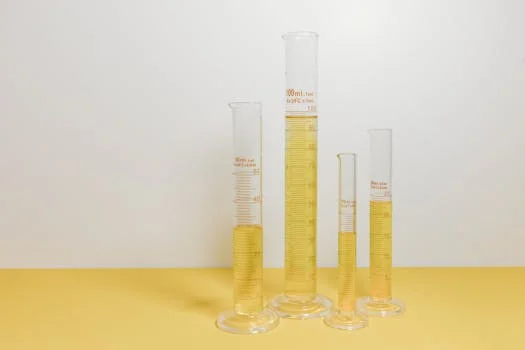
Selecting the optimal wastewater treatment technology hinges on a precise understanding of the influent's characteristics, the desired effluent quality, and overarching operational and economic goals. The following decision framework outlines common industrial scenarios and the most suitable technologies, considering factors like compliance, efficiency, and total cost of ownership (TCO) reduction.
- Pharmaceutical or Semiconductor Manufacturing: These industries demand exceptionally high-purity water. An industrial RO membrane system is essential for achieving ultrapure water with conductivity consistently below 10 μS/cm, often followed by ion exchange or EDI for polishing.
- Food & Beverage Processing: Wastewater in this sector is typically characterized by high BOD, COD, and often significant oil and grease content. MBR systems are highly effective for comprehensive organic removal and producing effluent suitable for reuse. Alternatively, DAF is ideal for primary treatment to efficiently remove FOG and suspended solids before biological treatment. Nanofiltration can be considered for partial demineralization of process water or specific ingredient water.
- Textile and Dye Industries: Effluents here are often heavily colored with high COD. Nanofiltration is an excellent choice for targeted dye removal and COD reduction without the high energy penalty of full desalination. For facilities aiming for zero liquid discharge (ZLD) systems to meet strict environmental regulations, RO is indispensable, often integrated with evaporators or crystallizers.
- Municipal Wastewater Treatment: For space-constrained urban sites, MBR systems offer a compact solution for producing high-quality effluent suitable for urban reuse or discharge. For primary treatment of municipal wastewater with high solids loads, DAF can provide efficient removal of suspended solids and phosphorus, sometimes in conjunction with or as an alternative to primary sedimentation. To compare lamella clarifiers vs DAF and traditional settlers, refer to relevant comparisons.
The choice is not always mutually exclusive; often, a combination of technologies forms a comprehensive industrial water purification system. For instance, DAF or UF/MF often serve as critical pretreatment steps for RO or MBR, optimizing overall system performance and lifespan. Understanding the specific challenges of your feedwater composition and the stringency of your discharge standards is paramount for effective water treatment technology selection.
Frequently Asked Questions
This section addresses common queries regarding RO membrane systems and their alternatives in industrial wastewater treatment.
Is RO better than MBR for industrial wastewater?
RO removes dissolved salts and trace contaminants, making it essential for desalination and ultrapure water production. MBR excels in organic and solid removal, producing high-quality effluent suitable for reuse. For reuse applications where salt removal isn't critical, MBR is often sufficient. For desalination or ultrapure water, RO is indispensable.
What is the lifespan of an RO membrane?
The lifespan of an RO membrane typically ranges from 3 to 7 years with proper pretreatment, regular cleaning, and stable operating conditions. However, severe fouling from organics or scaling from mineral precipitation can significantly reduce lifespan to 1–2 years if not managed effectively.
Can DAF replace RO?
No, DAF cannot replace RO. DAF effectively removes suspended solids, fats, oils, and grease (FOG) from wastewater. It does not remove dissolved ions or salts. DAF is often used as an efficient pretreatment step for RO systems, protecting the membranes from particulate fouling.
Which system has the lowest operating cost?
For non-desalination applications, DAF and MBR systems typically have 30–60% lower energy costs (0.5–2.5 kWh/m³) compared to RO (3–10 kWh/m³). However, the lowest operating cost depends heavily on the specific application, feedwater quality, and desired effluent standards, as each technology has different chemical, maintenance, and labor requirements.
Does NF remove hardness?
Yes, nanofiltration removes 80–95% of divalent ions like calcium and magnesium, which are responsible for water hardness. This makes NF an ideal and energy-efficient solution for water softening without the need for salt-based ion exchange regeneration.