A 2025 PCB wastewater treatment plant must achieve zero-liquid discharge (ZLD) to comply with EPA effluent limits (e.g., 0.5 mg/L copper, 1.0 mg/L nickel) while recovering 99.8% of metals for reuse. Hybrid DAF-RO-MBR systems dominate the market, combining dissolved air flotation (DAF) for solids removal (92–97% TSS reduction), reverse osmosis (RO) for salt rejection (95–98% conductivity reduction), and membrane bioreactors (MBR) for organic degradation (COD <50 mg/L). CAPEX ranges from $200K for small-scale DAF systems to $10M for full ZLD plants, with OPEX driven by membrane replacement ($0.10–$0.30/m³) and chemical dosing ($0.05–$0.20/m³).
The landscape of industrial water management in 2025 has shifted from simple "treatment and discharge" to complex "resource recovery and circularity." For Printed Circuit Board (PCB) manufacturers, this transition is no longer optional. As global supply chains face increasing scrutiny over environmental, social, and governance (ESG) metrics, the wastewater treatment plant (WWTP) has become a focal point for operational efficiency. Modern plants are now designed with a digital-first approach, utilizing industrial IoT (IIoT) sensors to monitor effluent quality in real-time, ensuring that heavy metal concentrations never breach the razor-thin margins set by local and federal authorities.
Beyond compliance, the economic incentive for Zero-Liquid Discharge (ZLD) has grown. With the rising cost of industrial water procurement and the high value of reclaimed metals like copper and palladium, a well-engineered ZLD system can offer a return on investment (ROI) within 3 to 5 years. By closing the water loop, facilities eliminate the risk of "slug loads" hitting municipal sewers, which often result in catastrophic fines and temporary plant shutdowns. The integration of high-efficiency DAF units, robust MBRs, and multi-stage RO systems ensures that every drop of water is scrubbed of contaminants and returned to the production line as high-purity process water.
Why PCB Wastewater Treatment Plants Fail Compliance: The Copper Crisis
A Northeastern PCB facility faced a $250,000 EPA fine in 2023 after continuous copper exceedances, highlighting the critical risks of outdated infrastructure in the face of tightening 2025 regulations. Copper concentrations in PCB wastewater vary drastically by process stream, ranging from 50–500 mg/L in electroless plating rinses to 1–10 mg/L in acid copper rinses. When these streams are combined without adequate segregation, the resulting chemical complexity often overwhelms conventional precipitation systems.
The Challenge of Chelated Copper
The primary technical hurdle in copper compliance is the presence of chelating agents such as EDTA (ethylenediaminetetraacetic acid), tartrates, and ammonia. These compounds form stable, water-soluble complexes with copper ions, preventing them from reacting with standard hydroxide precipitants like sodium hydroxide or lime. In the case of the Northeastern facility, the failure was traced back to a leak in the electroless copper line that introduced high levels of EDTA into the general rinse stream. Because the existing system was designed for simple ionic copper, the chelated copper passed through the clarifiers completely untouched, leading to an effluent concentration of 4.2 mg/L—nearly ten times the legal limit.
Sensor Drift and Mechanical Failures
Technical failure in these facilities typically stems from three specific points: inadequate segregation of high-load chelated streams, irreversible membrane fouling in RO systems due to poor pretreatment, and the lack of real-time monitoring for heavy metal fluctuations. Sensor drift is a silent killer of compliance; if a pH probe is not calibrated weekly, the automated acid/caustic dosing will be inaccurate, failing to reach the "optimal precipitation window" (typically pH 8.5 to 9.2 for copper). Furthermore, many older plants lack Oxidation-Reduction Potential (ORP) controllers, which are essential for managing the breakdown of cyanides or the reduction of hexavalent chromium, both of which can interfere with metal settling.
Regulatory limits are becoming increasingly stringent: the EPA mandates 0.5 mg/L for copper under 40 CFR Part 433, while the EU (Directive 2010/75/EU) and China (GB 21900-2008) enforce limits as low as 0.2 mg/L and 0.5 mg/L respectively. Without high-resolution sensing and automated response, a single process upset in the plating line can lead to an effluent violation within minutes. Modern 2025 systems mitigate this by using "buffer tanks" with a 4-to-8-hour hydraulic retention time, allowing the system to equalize spikes before they reach the critical treatment stages.
PCB Wastewater Contaminant Profile: What’s in Your Effluent?
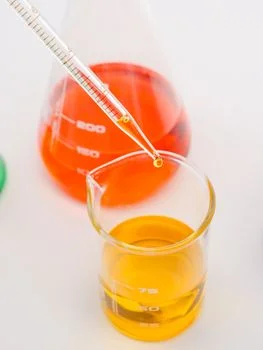
PCB manufacturing produces one of the most complex industrial wastewater profiles, characterized by high concentrations of copper (50–500 mg/L), nickel (10–100 mg/L), and lead (1–20 mg/L), alongside organic photoresists that push Chemical Oxygen Demand (COD) to levels between 1,000 and 5,000 mg/L. Total Suspended Solids (TSS) typically range from 200 to 1,000 mg/L, requiring aggressive primary treatment before any membrane-based recovery can occur.
The Role of Organic Loadings and Photoresists
One of the most overlooked contaminants in PCB effluent is the organic load from developing and stripping processes. Photoresists are high-molecular-weight polymers that, when stripped, create a "gummy" waste stream that can instantly blind filters and foul membranes. These organics contribute significantly to the Chemical Oxygen Demand (COD). If the COD is not reduced early in the treatment train, it acts as a nutrient for uncontrolled bacterial growth in the RO and MBR systems, leading to biofouling. This biofouling reduces permeate flow and increases the pressure requirements of the pumps, directly inflating electricity costs.
Detailed Stream Mapping for Efficiency
Effective system design begins with source mapping. Electroless plating contributes the highest copper load and complexing agents (like EDTA), which resist standard precipitation. Acid copper plating produces moderate copper levels but high acidity, while etching processes introduce the bulk of organic photoresists. Segregation is the most effective strategy for reducing OPEX; by treating high-load spray rinses separately from high-volume, low-load general rinses, facilities can reduce chemical consumption by 30-40%.
Typical flow rates for modern facilities range from 10–100 m³/h for specialized shops to 200–500 m³/h for high-volume Tier 1 manufacturers. Utilizing DAF systems for PCB wastewater pretreatment allows for the initial removal of the bulk solids and emulsified oils that would otherwise compromise downstream recovery units. Furthermore, micro-etching processes often introduce high levels of ammonium persulfate, which must be managed to prevent ammonia toxicity in the MBR biological stage.
| Waste Stream Source | Primary Contaminants | Concentration Range (mg/L) | Treatment Strategy |
|---|---|---|---|
| Electroless Plating | Chelated Copper, Nickel | 50 – 500 | Ion Exchange / Fenton Oxidation |
| Acid Copper Plating | Free Copper, H2SO4 | 5 – 50 | Chemical Precipitation / DAF |
| Inner/Outer Layer Etching | COD (Photoresists), TSS | 1,000 – 5,000 | Coagulation / MBR |
| General Rinsing | Dilute Metals, Salts | 1 – 5 | Reverse Osmosis (RO) Reuse |
| Micro-Etching | Ammonia, Persulfates | 100 - 1,000 | Air Stripping / Breakpoint Chlorination |
| Desmear Processes | Permanganate, Manganese | 500 - 2,000 | Reduction / Precipitation |
Hybrid DAF-RO-MBR Systems: The 2025 Gold Standard for Zero-Discharge PCB Plants
The hybrid DAF-RO-MBR configuration is the industry standard for achieving Zero-Liquid Discharge (ZLD) because it addresses the physical, biological, and chemical requirements of PCB effluent in a modular sequence. The DAF stage serves as the primary defense, removing 92–97% of TSS and 60–80% of Fats, Oils, and Grease (FOG). It operates by injecting microbubbles (40–70 μm diameter) at 4–6 bar pressure, causing suspended particles to float for mechanical skimming. This protects the subsequent membrane stages from rapid fouling.
Advanced Biological Treatment via MBR
The MBR stage follows, specifically targeting the degradation of organic photoresists to achieve COD levels below 50 mg/L. Modern integrated MBR systems for organic degradation in PCB effluent utilize submerged PVDF membranes with a 0.1 μm pore size, maintaining flux rates of 10–20 LMH. The biological component of the MBR uses specialized "acclimated" bacteria that can tolerate the trace heavy metals and complex organics found in PCB waste. By maintaining a high Mixed Liquor Suspended Solids (MLSS) concentration (8,000–12,000 mg/L), the MBR can handle organic spikes that would kill a traditional activated sludge plant.
Precision Polishing with Reverse Osmosis
Finally, the RO stage provides the polishing required for ZLD, achieving 95–98% salt rejection and metal removal. These high-rejection RO systems for PCB wastewater salt removal operate at 10–15 bar with 0.0001 μm pore sizes, producing permeate that meets ultrapure water (UPW) feed specifications. To prevent scaling, antiscalants are injected based on the Langelier Saturation Index (LSI) of the water, ensuring that calcium carbonate and sulfate precipitates do not form on the membrane surface. For ZLD applications, the RO concentrate is often sent to an evaporator or a crystallizer to recover solid salts, leaving only clean water for reuse.
Chemical dosing is critical to this hybrid flow. Coagulants like Polyaluminum Chloride (PAC) are dosed at 50–200 mg/L, followed by flocculants such as polyacrylamide (PAM) at 1–5 mg/L to facilitate aggregate growth. pH adjustment via NaOH (10–50 mg/L) ensures optimal precipitation of non-chelated metals. Sludge management is handled via a plate-and-frame filter press, which dewaters DAF sludge (3–5% solids) and MBR sludge (1–2% solids) into a stable cake for hazardous waste disposal or metal reclamation. In a 2025 facility, this sludge is often sold to copper smelters, turning a waste liability into a revenue stream.
| Treatment Stage | Mechanism | Pore Size / Bubble Size | Removal Efficiency |
|---|---|---|---|
| DAF (Dissolved Air Flotation) | Physical Flotation / Skimming | 40 – 70 μm (Bubbles) | 95% TSS, 70% FOG |
| MBR (Membrane Bioreactor) | Biological Oxidation / Microfiltration | 0.1 μm (Membrane) | 98% COD, 99.9% Bacteria |
| RO (Reverse Osmosis) | Hyperfiltration / Osmotic Pressure | 0.0001 μm (Membrane) | 99% Metals, 98% TDS |
| Ion Exchange (Polishing) | Selective Ion Adsorption | Resin Beads | >99.9% Trace Copper |
Related Equipment
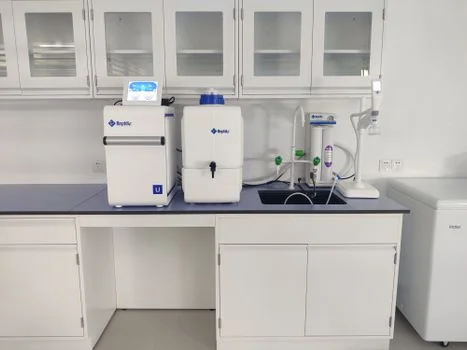
The following HydropureWater products are engineered for the wastewater challenges discussed above. In 2025, equipment must be modular to allow for rapid scaling as production capacity increases. Our systems are built on stainless steel skids (304 or 316L) to resist the highly corrosive nature of acidic PCB rinses and stripping chemicals.
A critical component of any modern plant is the Automatic Chemical Dosing System. Manual dosing is prone to human error and cannot react to the rapid pH swings typical of PCB manufacturing. Our systems utilize high-precision diaphragm pumps and redundant pH/ORP sensors to ensure chemicals are used only when necessary, reducing OPEX by up to 25% compared to manual systems. The integration of PLC control allows for data logging, which is essential for proving compliance during EPA audits.
- PLC-controlled chemical dosing for PCB wastewater treatment — view specifications, capacity range, and technical data
- Multi-Stage Membrane Racks — designed for high-pressure RO applications with easy-access housings for rapid maintenance and Cleaning-in-Place (CIP) cycles.
- DAF Units — featuring patented micro-bubble generators that ensure maximum contact time between air and solids for superior clarification.
Need a customized solution? Request a free quote with your specific flow rate and pollutant parameters. Our engineering team can provide a detailed mass balance and P&ID (Piping and Instrumentation Diagram) tailored to your facility's unique effluent profile.
Further Reading
Explore these in-depth articles on related wastewater treatment topics to stay ahead of 2025 regulatory shifts and technological advancements:
- Detailed 2025 specs for hybrid DAF-RO-MBR systems — A deep dive into the engineering calculations and CAPEX/OPEX models.
- Zero-risk compliance guide for PCB wastewater treatment suppliers — How to vet vendors and ensure performance guarantees in your service contracts.
- The Future of Metal Recovery — Technical whitepaper on using electrowinning and ion exchange to recover 99.8% pure copper from concentrated etching waste.