What Sewer Pretreatment Compliance Requires in Walkerton
Mining and metals plants near Walkerton generally comply with sewer pretreatment requirements by treating industrial wastewater at the site, monitoring it, and discharging only under a permit from the receiving publicly owned treatment works. The permit and sewer use ordinance control locally applicable limits, while federal pretreatment rules prohibit pass through and interference. A typical treatment train may use chemical dosing for pH control and metals precipitation, followed by clarification or flotation, filtration, and sludge dewatering. The final design must be based on plant-specific wastewater characterization, local limits, flow and loading data, and required monitoring—not on generic treatment assumptions.
Pretreatment is the on-site treatment or control of industrial wastewater before it enters a POTW. Its operational purpose is not simply to dilute a discharge or shift the pollutant to another waste stream. The receiving system must be protected against industrial pollutants that pass through the POTW untreated or interfere with its operation. The general mining and metals pretreatment workflow provides a useful process overview, but the controlling requirements must come from the receiving POTW and applicable state law.
A locally issued industrial user permit does not displace federal pretreatment enforcement authority. In the EMD Millipore enforcement example published by Williams Mullen on 2017-03-30, EPA and the Department of Justice alleged violations of federal pretreatment requirements even though Millipore discharged under a pretreatment permit issued by the Town of Jaffrey. The settlement required treatment-system upgrades, annual operator training, sampling and analysis, quarterly monitoring, and a $385,000 civil penalty.
The enforcement action also illustrates why monitoring must extend beyond routine end-of-pipe concentration samples. Millipore allegedly failed to notify the POTW of slug loadings and exceeded permitted flow limits; the associated organic waste contributed to excessive ammonia nitrogen and cBOD in the receiving POTW’s effluent. Williams Mullen reported that EPA’s National Enforcement Initiative, announced in October 2016, targeted industrial sectors including mining and primary metals manufacturing.
Before selecting treatment equipment, request the receiving POTW’s sewer use ordinance, industrial user permit, local-limits report, approved analytical methods, monitoring frequency, approved discharge points, reporting forms, and slug-load procedures. These documents establish whether proposed equipment is being designed against enforceable requirements or merely against a generic metals-treatment template. The comparable mining-plant pretreatment requirements in another jurisdiction can help organize those questions, but its numerical limits must not be treated as Walkerton requirements.
Build a Site-Specific Compliance Basis
A defensible treatment design begins with the receiving POTW’s own local-limits calculations, not with equipment available from a vendor. The local limits report, permit, sewer use ordinance, and monitoring instructions define the enforceable design basis. A documented study from another municipality can explain the method, but it cannot establish the limits applicable to a Walkerton-area discharger.
Obtain the following records before selecting equipment:
- The industrial user permit and sewer use ordinance.
- The local-limits report and supporting flow, loading, background, and treatment-performance data.
- Approved monitoring methods, sampling frequency, reporting deadlines, discharge locations, and slug-load requirements.
- Restrictions on compatible industrial pollutants, discharge flow, pH, and slug releases.
- State requirements and any applicable categorical pretreatment standards.
Maximum allowable headworks loading is an estimate of the upper limit of pollutant loading a POTW can accept without causing pass through or interference; the City of Circleville’s Local Limits Report Update dated 2020-06-29 describes MAHL as the basis for local limits. The report calculated MAHL from the NPDES limit, plant flow, the conversion factor, and estimated removal efficiency, then used that framework to develop allowable industrial loadings and local limits.
The Circleville study is useful because it documents a complete pollutant-selection process. It assessed 16 pollutants of concern: arsenic, cadmium, total chromium, dissolved hexavalent chromium, copper, free cyanide, lead, mercury, molybdenum, nickel, silver, zinc, CBOD, TSS, and ammonia. The analytical sampling list also included selenium. These constituents are not a substitute for the actual list in the receiving POTW’s documents.
Do not import Circleville limits into Walkerton. The receiving POTW’s NPDES permit, industrial flows, background concentrations, demonstrated treatment performance, sludge-disposal pathway, and applicable state requirements determine the local criteria. For a broader review of treatment-selection issues, see the MBR and conventional activated-sludge comparison; its technology conclusions remain subject to site-specific characterization.
| Design input | Evidence to request | Why it matters |
|---|---|---|
| Local limits | Effective permit conditions, local-limits report, analytical methods, and monitoring schedule | Defines measurable discharge requirements and how compliance will be demonstrated |
| MAHL basis | Receiving-POTW flow, background, NPDES conditions, treatment removal assumptions, and industrial allocation | Connects concentration limits to the mass the sewer can accept |
| Flow and loading | Continuous flow, maximum day, production rate, discharge duration, batch releases, and slug-load events | Prevents equipment sizing from being based only on an average flow |
| Wastewater character | Pollutant concentrations, pH, suspended solids, dissolved fractions, and constituent-specific analytical results | Identifies the treatment functions and residual risks that must be designed for |
Distinguish concentration from mass loading. For each regulated constituent, document flow, discharge duration, production rate, batch frequency, and maximum-day conditions. A compliant average concentration can still produce an unacceptable slug load or exceed the POTW’s allocated industrial loading.
Characterize the Wastewater Before Designing Equipment
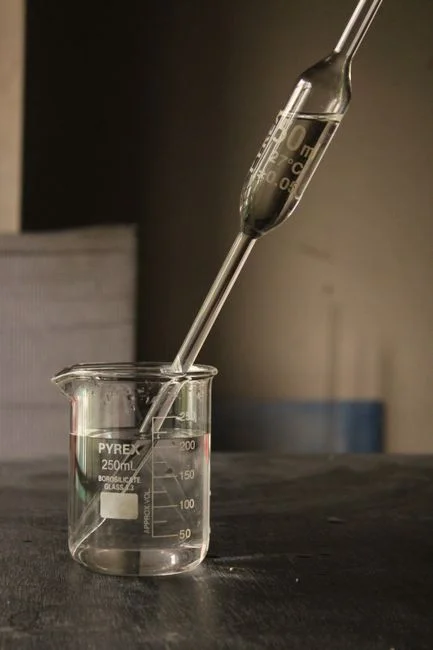
Mining wastewater characterization must capture both normal production discharge and episodic releases, because the latter can exceed treatment or monitoring assumptions even when routine sampling looks compliant. Build the sampling plan by production area and stream rather than treating the entire site as one homogeneous flow.
The Circleville study used 24-hour composite samples for most pollutants and grab samples for free cyanide. Raw influent and final-effluent composite samples were collected for seven consecutive days from February 4 through February 10, 2020. Grab samples for free cyanide were collected from February 5 through February 11, 2020 at raw influent and final effluent; the final-effluent grab was collected one detention-time cycle—approximately eight hours—after the influent grab (City of Circleville, 2020-06-29).
For a Walkerton-area plant, the sampling program should follow the POTW’s approved methods and frequencies while adding operational observations that explain variability. At minimum, evaluate pH, flow, total and dissolved metals, suspended solids, settleable solids, and hardness where hardness affects chemical precipitation. Include the permit-listed constituents and any process-specific parameters identified by the POTW. The Circleville analytical screen included arsenic, cadmium, total chromium, copper, lead, mercury, molybdenum, nickel, selenium, silver, zinc, CBOD, TSS, and ammonia.
| Characterization element | Information to collect | Design or compliance use |
|---|---|---|
| Flow regime | Average flow, maximum-day flow, operating duration, batch discharge volume, and recurring slug loads | Sets hydraulic basis and identifies events requiring equalization or temporary storage |
| pH | Point measurements across production states, storage turnover, and discharge timing | Defines chemical demand, corrosion controls, and permit compliance strategy |
| Metals and process constituents | Total and dissolved fractions under permit methods, including free cyanide where applicable | Identifies precipitation, adsorption, biological, or polishing requirements |
| Solids | Suspended solids, settleable solids, and solids associated with each production stream | Determines clarification, flotation, filtration, and sludge-management needs |
| Precipitation chemistry | Hardness, alkalinity, competing ions, and test results from representative waste streams | Tests whether chemical dosing can form the intended metal-bearing solids |
| Episodic sources | Dump and sump cleanouts, filter backwash, tank bottoms, upset conditions, and production changes | Supports slug notification, routing, containment, and corrective-action controls |
Sample upstream and downstream of proposed treatment so each unit can be evaluated against an agreed performance basis. For raw water, final effluent, and sludge, use the same representative-period concept and document every deviation. The coal mining wastewater sludge treatment guide provides additional context for solids-handling decisions, but its project examples are not Walkerton limits.
Record production conditions beside each sample. A result without the associated production stage, flow, tank level, chemical dose, and release source cannot reliably establish design loading. Maintain enough raw laboratory and field data to explain outliers and repeat the sampling if the POTW, laboratory, or operator identifies an invalid result.
Select a Treatment Train That Protects the Sewer
Select each treatment stage for a defined contaminant-removal or control function, then size the complete train from measured hydraulic and pollutant loads. A sound mining and metals train often begins with equalization and pH control, proceeds through metals precipitation or coagulation and solids separation, and ends with filtration or polishing where the permit and effluent data require it.
Use automatic chemical dosing when the process requires controlled addition of pH adjusters, coagulants, flocculants, or specialty precipitating chemicals. A PLC-controlled chemical dosing system should be evaluated for dose control, chemical inventory, alarms, and operator verification rather than only tank capacity. Metals precipitation must be confirmed by representative testing because the required chemical form and dose depend on pH, metal species, competing constituents, and effluent goals.
Use a lamella clarifier when flocculation followed by high-rate solids separation is the required function. A lamella clarifier for chemical precipitation solids combines inclined-plate separation with sludge recirculation in a compact structure. It is not a substitute for adequate reaction chemistry, equalization, or downstream polishing where residual dissolved metals or suspended solids remain.
Use a DAF system for industrial wastewater pretreatment when suspended solids, oil and grease, or colloidal material are significant treatment objectives. The referenced DAF catalog identifies 13 standard models from 4 to 300 m³/h and identifies metalworking and municipal pretreatment among its applications. The model range is a catalog selection aid; the chosen unit still requires site-specific hydraulic, solids, and operating-hour checks.
Use multi-media filtration where additional suspended-solids removal is needed before membrane or polishing equipment. Use an ultrafiltration system for final solids separation where finer solids separation and low suspended-solids effluent are required. The ultrafiltration process flow walkthrough explains how membrane stages fit into a broader treatment train; UF does not itself remove every dissolved metal or dissolved contaminant.
| Treatment objective | Primary equipment | Required engineering basis | Main limitation to resolve |
|---|---|---|---|
| pH adjustment and chemical addition | PLC-controlled chemical dosing system with reaction and mixing | Representative pH, alkalinity, flow, chemical demand, and target dose | Overdosing can increase solids and consume downstream capacity |
| Precipitated-metal and solids separation | Lamella clarifier | Metal loading, precipitation test, flocculation data, hydraulic peak, sludge yield | Residual dissolved metals may remain without polishing |
| Suspended solids, oil and grease, or colloids | DAF | Solids and oil loadings, flow variability, recycle performance, waste-removal route | Requires reliable skimming and solids handling |
| Residual suspended solids | Multi-media filtration | Filtration loading, backwash demand, particle targets, waste stream | Backwash can create an episodic internal discharge |
| Fine solids separation or low suspended solids | UF | Feed quality, flux basis, membrane area, cleaning strategy, redundancy | Does not replace removal of dissolved pollutants |
| Specialized dissolved constituent | Biological or other specialist treatment | Constituent speciation, treatability study, influent variability, local limit | Performance can change with source chemistry |
Where selenium or another constituent requires specialized biological removal, do not assume that a generic metals-precipitation train will suffice. WesTech’s power-plant case used chemical addition, sedimentation, media filtration, and biological treatment followed by ultrafiltration; it states that selenium performance depends on chemical species and influent conditions (WesTech, undated industrial guide). That sequence is an engineering precedent, not a universal recipe or a Walkerton requirement.
Control Solids and Verify Compliance
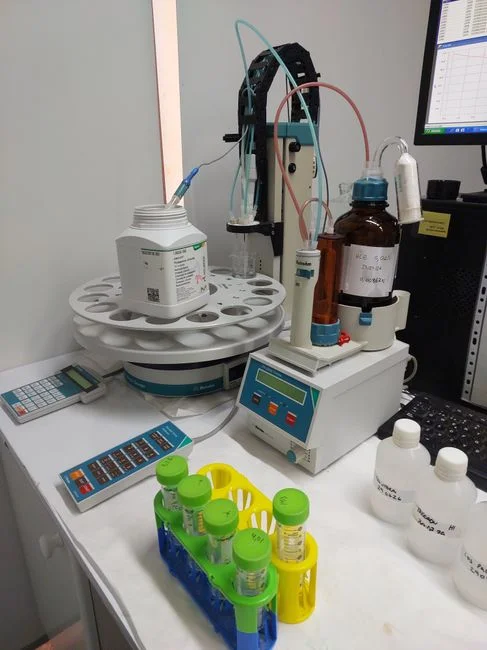
Separated solids must enter a managed sludge pathway because treatment compliance cannot be demonstrated if metals-bearing sludge is stored without control, dewatered inconsistently, or disposed of under an undefined procedure. Route clarifier or flotation residuals to thickening, dewatering, storage, and authorized disposal, with the waste characterization used to establish the handling plan.
A plate and frame filter press for mining sludge can be evaluated where batch dewatering is appropriate. The referenced product range spans filtration areas from 1 m² to 500 m² and offers manual, hydraulic, and fully automatic PLC-controlled operation. These are equipment-selection parameters, not guarantees of cake dryness, recovery, or permit compliance. The acceptance test must specify the actual sludge, target solids content, throughput, filtrate quality, cycle time, and cleaning requirements.
Set final acceptance criteria from the Walkerton-area industrial user permit, local limits, approved monitoring methods, and discharge restrictions. Do not substitute a supplier’s generic performance claim. Where the treatment train includes biological or membrane steps, include the relevant biological criteria, membrane flux, cleaning frequency, and recovery assumptions in the guarantee; a solids-removal percentage alone does not prove compliance with every permit parameter.
The operating control plan should cover:
- Chemical inventory, inspection, calibration, dose verification, and depletion response.
- Continuous flow and pH records, including alarms and diversion capability.
- Clarifier, flotation, filter, and UF operating data.
- Sludge inventory, dewatering records, and disposal documentation.
- Representative sampling, laboratory review, compliance assessment, and corrective action.
- Operator training, maintenance, spare parts, and upset response.
Retain analytical results, laboratory reports, flow records, chemical-use records, calibration records, training records, equipment logs, maintenance records, and corrective-action records as operating evidence. The SCADA monitoring for industrial wastewater treatment describes how centralized monitoring and data logging can support this control plan.
The EMD Millipore settlement shows the enforcement value of documentation. The 2017-03-30 Williams Mullen account states that the required program included annual operator training, sampling, analysis, and quarterly monitoring. For a Walkerton-area operator, those are minimum elements of a defensible compliance file, not substitutes for the actual POTW permit requirements. The metals-wastewater MBR comparison can support treatment discussions where biological capacity is technically relevant.
Make a Defensible Equipment and Supplier Decision
Procurement should compare treatment trains against the site’s enforceable limits and verified wastewater loads, not lowest purchase price or a standard equipment package. Sizing must reflect measured average flow, maximum-day and batch flows, pollutant loading, operating hours, required redundancy, and planned production changes.
Ask each supplier to identify the design basis for every major unit. The hydraulic calculation should demonstrate how the selected equipment handles sustained flow, short-duration releases, equalization turnover, and maintenance conditions. The process calculation should connect chemical demand and removal mechanisms to representative analytical results. A supplier that cannot identify the permitted discharge point, applicable limits, sampling method, or worst-case operating condition has not supplied a compliance basis.
| Procurement criterion | Evidence required in the proposal | Acceptance question |
|---|---|---|
| Compliance basis | Permit and local-limit references, wastewater characterization, and proposed compliance monitoring | Does every guaranteed parameter map to an enforceable requirement or an agreed operating objective? |
| Hydraulic sizing | Flow dataset, maximum-day and batch cases, equalization calculations, and selected equipment capacity | Was the train sized from measured and documented flow conditions rather than average flow alone? |
| Process performance | Guaranteed effluent values, test methods, test conditions, sampling points, and acceptance duration | Can the result be reproduced using the agreed wastewater and compliance method? |
| Lifecycle cost | Chemicals, energy, sludge transport and disposal, media or membranes, maintenance, monitoring, labor, and downtime | Does the estimate include all operating costs associated with the selected train? |
| Supplier capability | Named roles for characterization, process design, installation, commissioning, training, testing, and service | Who is accountable for each stage and for corrective work after acceptance? |
| Operational support | Controls scope, alarms, data export, maintenance plan, spare-parts policy, and technical response process | Can the plant be operated and audited by the site’s staff? |
Compare alternatives using guaranteed performance, chemical and energy demand, sludge quantity, footprint, controls, maintenance burden, operator workload, and replacement-part availability. For clarification versus flotation, the DAF-versus-clarifier decision guide illustrates the type of wastewater-specific comparison needed; the chemicals-wastewater comparison reinforces that technology choice must follow stream characteristics rather than a generic preference.
Require proposal-level guarantees tied to the actual wastewater and the POTW permit. Define the analytical method, sample point, flow condition, test duration, chemical dose, production state, and treatment-system status for which each guarantee applies. A guarantee that applies only to a laboratory beaker result or a narrow concentration range is not enough to establish plant performance.
Compare lifecycle cost rather than purchase price alone. Major cost drivers include chemical consumption, sludge hauling and disposal, media or membrane replacement, preventive maintenance, monitoring, operator labor, energy, and production downtime. Obtain a written estimate under the intended operating scenario, identify excluded costs, and document which assumptions could change the estimate.
Finally, define responsibility for characterization, process design, installation, commissioning, operator training, performance testing, and ongoing support. The supplier should be able to explain why the proposed train fits the wastewater and permit, not merely why each product operates. That traceability protects the operator during acceptance, audit, enforcement review, and future production changes.
Frequently Asked Questions
How much does a mine or metals wastewater pretreatment system cost near Walkerton?
There is no defensible project price without the site-specific flow, wastewater analyses, treatment objectives, permit limits, and sludge-disposal requirements. Request a lifecycle estimate that separates equipment, installation, chemical consumption, energy, sludge handling and disposal, media or membranes, monitoring, maintenance, operator labor, training, commissioning, and downtime. Require the supplier to state the operating assumptions behind each line. A purchase-price comparison alone can conceal the costs that determine whether the system remains effective in service.
What inputs are required to size pretreatment equipment?
Request continuous flow data, maximum-day and batch flows, discharge duration, production schedules, representative pollutant concentrations, pH, suspended solids, metal fractions, chemical-demand results, and expected future production changes. Average flow alone is insufficient because a short slug discharge can create a disproportionate pollutant load. The permit’s local limits and sampling requirements must also be included in sizing and acceptance criteria.
How should an operator select a wastewater treatment supplier?
Select a supplier that demonstrates site-specific process design rather than offering a standard package without verified wastewater data. Require clear performance guarantees, approved analytical methods, defined test conditions, commissioning and performance testing, operator training, maintenance support, and named responsibility for analytical and corrective work. Ask who performs characterization, who owns process calculations, and who remains accountable after acceptance.
What compliance risks should be addressed before discharging to the POTW?
The principal risks are violating a local limit or permit condition, causing pass through or interference, discharging without required notice, and failing to control slug loads. Address them through verified local limits, representative sampling, flow and pH records, slug notification and containment procedures, treatment alarms, corrective action, and retained laboratory and operating records. The EMD Millipore enforcement example reported by Williams Mullen on 2017-03-30 demonstrates that a local pretreatment permit does not remove federal enforcement exposure.
Should the treatment train use DAF, lamella clarification, or UF?
Use lamella clarification when the objective is high-rate separation of flocculated or precipitated solids, DAF when suspended solids, oil and grease, or colloidal material are significant treatment objectives, and UF where finer solids separation or low suspended-solids effluent is required. UF does not independently remove every dissolved metal. The correct combination must follow the permit, wastewater characterization, chemical-precipitation results, and required residual treatment.