Which Rules Control a Sewer Discharge?
An indirect industrial discharge to a POTW is controlled through the Clean Water Act pretreatment program, not through the NPDES permit that governs the POTW’s surface-water discharge. For a mining or metals facility near Centerville, the controlling requirements can include a local sewer-use ordinance, an industrial discharge permit, federal categorical standards under 40 CFR Part 437 for ore mining and dressing or 40 CFR Part 433 for metal finishing, and site-specific prohibitions. EPA identifies the POTW as the control authority when it has an approved pretreatment program and directs it to apply the most stringent applicable requirement. The equipment specification should therefore begin with the current permit documents, not with a generic treatment-train drawing.
The categorical classification depends on the facility’s actual industrial activity and regulatory status. A mine is not automatically a Part 437 categorical industrial user, and a plant is not necessarily subject to both Part 437 and Part 433. Plating, pickling, anodizing, or other metal-finishing operations require a separate applicability analysis. Request the POTW’s sewer-use ordinance, industrial discharge permit, approved pretreatment program, current monitoring results, discharge authorization, and the applicable categorical subcategory. The representative local limits cited in commercial guidance are not Centerville-area law and must not be used as procurement criteria without the current receiving POTW’s ordinance.
| Requirement | What it governs | Document to request |
|---|---|---|
| NPDES permit under Clean Water Act §402 | Direct discharge to surface water | Site NPDES permit, if the facility has a direct-discharge outfall |
| 40 CFR Part 403 | Indirect industrial discharges and national pretreatment requirements | Industrial discharge permit and applicable categorical provisions |
| 40 CFR Part 437 | Applicable ore-mining and dressing subcategory | PotW determination and facility process description |
| 40 CFR Part 433 | Applicable metal-finishing subcategory | PotW determination and metal-finishing process description |
| POTW sewer-use ordinance | Site-specific local limits, monitoring, sampling, fees, and prohibitions | Current ordinance and current industrial discharge permit |
The mining and metals sewer-limit compliance guide provides a useful cross-check, but its representative limits still require confirmation from the receiving authority. For a parallel sector review, see the 2026 mining pretreatment compliance guide.
Characterize the Wastewater Before Fixing the Equipment
Equipment sizing should begin with measured wastewater quantity and chemistry, not the mining method alone. Obtain average flow, peak two-hour flow, batch-discharge records, and a documented turndown basis; the commercial pretreatment guidance recommends designing for the peak two-hour flow with 20–30% turndown capacity. Map acid mine drainage, spent process solution, leach-pad runoff, mill clean-out water, and brine before combining them in an equalization basin. Combining incompatible streams can make a nominally adequate basin ineffective because it blends a short, high-concentration batch with a much larger dilute flow.
The wastewater profile may include acidic pH, suspended solids, dissolved metals, sulfate, and TDS. The commercial source describes mining profiles that can include pH of 2–4, TSS in the hundreds to several thousand mg/L, dissolved lead, copper, zinc, cadmium, nickel, and arsenic, plus elevated sulfate and TDS. Those values characterize potential stream conditions; they are not automatic plant limits and should not be used as design influent without site sampling.
| Input | Why it affects design | Information required |
|---|---|---|
| Hydraulic profile | Sets equalization, treatment, and transfer capacities | Average flow, peak two-hour flow, batch schedule, and minimum flow |
| pH | Determines chemical demand and precipitation conditions | Continuous trend and grab-sample results |
| Metals | Defines precipitation and polishing duties | Species-specific analytical results at the discharge point |
| TSS and oil and grease | Sets flocculation, separation, and filtration requirements | Representative results for each process stream |
| Sulfate and TDS | Affects reagent choice, sludge quantity, and water balance | Full-stream analysis |
Confirm whether plating, pickling, or anodizing warrants a Part 433 applicability review. The commercial source cites Part 433 values of 3.38 mg/L copper daily maximum and 2.07 mg/L monthly average, and 2.77 mg/L total chromium daily maximum and 1.71 mg/L monthly average. These remain Part 433 values; they are not universal mining-facility limits or Centerville limits.
Run parameter-specific jar tests before selecting the operating pH target. The proper precipitation window for copper is not automatically the same as for zinc, nickel, or arsenic. The commercial source reports a general pH target of 6.5–9.0, but that range does not replace jar-tested chemistry. Additional site context is available in the mining acquisition wastewater article.
Build a Treatment Train Around the Binding Limit
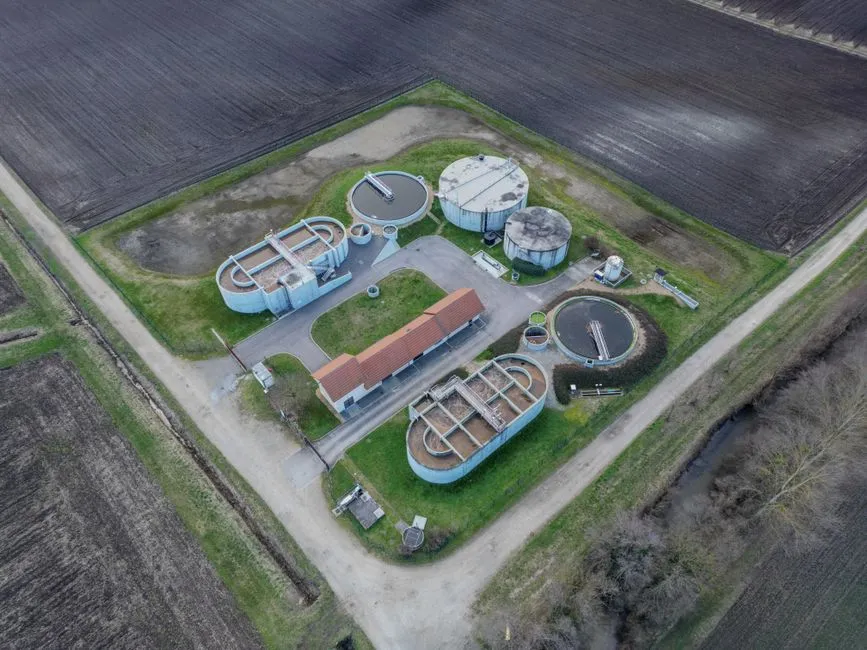
The treatment train should be ordered so that each unit protects the next process step and the final compliance point. Equalization comes first, followed by chemical adjustment, precipitation, solids separation, final filtration, monitoring, and sludge handling. Disinfection should be added only when the controlling POTW requirements or site risk assessment justify it.
- Equalization: The commercial source recommends 8–24 hours of average daily flow to dampen dump-leach cycles, shift changes, and mill clean-outs. Size from the measured batch profile rather than assuming a generic basin is adequate.
- pH adjustment: Use automatic chemical dosing for pH control and coagulant feed. The source describes PLC control capable of holding pH within a ±0.2 band. Stage reactors when influent pH swings exceed 2 units.
- Precipitation: Start with hydroxide precipitation. Use sulfide polishing only where very low residual metals are required, with sealed reactors and scrubbed vents where hydrogen sulfide is a concern.
- Clarification: Match the separation device to the sludge and colloid characteristics. DAF suits oil, grease, and fine colloids; lamella suits concentrated metal-hydroxide flocs.
- Final filtration: Use a multimedia filter when the discharge limit requires a final TSS barrier. The commercial source states 1–2 m/h filtration and residual TSS below 10 mg/L, with backwash triggered by differential pressure.
- Disinfection and sludge: Add chlorine dioxide or UV only where required, then route clarifier or DAF sludge to dewatering and evaluate filtrate return to the plant headworks.
| Unit operation | Binding design question | Evidence or acceptance basis |
|---|---|---|
| Equalization basin | Can it absorb the measured batch and dump-leach cycle? | Commercial recommendation: 8–24 hours of average daily flow |
| Chemical adjustment | Will dosing maintain the jar-tested pH window? | Commercial general pH target: 6.5–9.0; PLC control within ±0.2 |
| Hydroxide precipitation | Does jar testing support the proposed metal removals? | Parameter-specific test results and reagent consumption |
| Sulfide polishing | Are residual-metal targets too stringent for hydroxide alone? | Commercial residuals: 0.01–0.05 mg/L for Cu, Zn, Cd, and Ni versus 0.5–2.0 mg/L for hydroxide |
| Multimedia filtration | Is a final solids barrier required? | Commercial filtration rate: 1–2 m/h; residual TSS below 10 mg/L |
| Disinfection | Does the POTW ordinance or risk assessment require it? | Commercial chlorine dioxide dose: 1–5 mg/L |
| Sludge dewatering | Can cake be handled and filtrate safely returned? | Commercial plate-and-frame result: 25–35% dry-solids cake |
The DAF versus clarifier buyer guide provides a useful equipment-selection reference for the separation stage.
Compare DAF and Lamella Clarification
DAF is generally the stronger choice when oil, grease, or fine colloids are present; lamella clarification is generally stronger for dense metal-hydroxide flocs and high-flow applications where footprint matters. The commercial source reports DAF hydraulic loading of 5–25 m/h, 90–98% TSS removal, and 85–95% oil and grease removal. It reports lamella surface loading of 20–40 m/h and describes inclined plates, sludge recirculation, and flocculation in one compact structure. Those are commercial performance claims to be tested against project-specific influent and permit conditions, not blanket guarantees.
| Criterion | DAF | Lamella clarification |
|---|---|---|
| Primary strength | Oil-coated and colloidal solids | Dense metal-hydroxide flocs |
| Reported loading | 5–25 m/h hydraulic loading | 20–40 m/h surface loading |
| Reported removal | 90–98% TSS; 85–95% oil and grease | No equivalent removal range supplied |
| Best fit | Streams with oil, grease, or fine colloids | Primarily precipitation sludge at higher flow or constrained sites |
| Commercial product data | 4–300 m³/h across 13 models | Chemical consumption reported as up to 30% lower |
Below 10 m³/h, the commercial source identifies packaged DAF skids as common. Above 100 m³/h, it identifies parallel DAF trains or lamella clarification as potentially more economical. These are procurement screening points, not automatic sizing rules. Evaluate an industrial DAF system for metal-bearing wastewater against a high-efficiency lamella clarifier using the same wastewater data, required solids removal, footprint, chemical demand, sludge handling, and operating labor.
Turn the Permit into Monitoring and Contingency Rules

The compliance plan must reproduce the controlling permit’s parameters, averaging periods, monitoring frequency, compliance point, sampling protocol, reporting duties, and notification requirements. No Centerville-specific monitoring frequency is supplied, so it cannot be stated from the available research. Continuous pH and flow records provide early warning, while metals and TSS should be verified through the POTW-required sampling protocol.
Define operator actions before an excursion reaches the sewer. Alarms should cover high flow, off-target pH, dosing-system failure, elevated clarifier solids, and filter differential pressure. Each alarm needs a defined response: reduce or stop incoming batch flow, switch to an available chemical system, isolate failed equipment, extend equalization residence time, divert wastewater to an approved holding or treatment route, and notify the POTW when required.
Use the actual local limit as the design basis. The commercial source gives representative 2026 POTW ranges of 0.3–1.0 mg/L zinc monthly average and 0.3–0.5 mg/L copper monthly average. These are expressly subject to confirmation against the specific POTW ordinance and are not Centerville limits.
Do not state that the 2024 Multi-Sector General Permit directly governs an industrial sewer discharge. It addresses permitted surface-water discharges. Instead, track analytical-suite changes at the receiving POTW and verify whether PFAS or other pollutants have been incorporated into its pretreatment requirements. The commercial source cites Clean Water Act §309 civil penalties of up to $25,000 per day per violation; confirm current applicability and enforcement with the POTW or legal counsel.
The mining and metals sewer-limit compliance guide can support an internal permit review, but it cannot replace the current Centerville-area ordinance.
Use This Vendor and Equipment Checklist
A comparable bid should state the controlling requirement, the categorical applicability determination, and the wastewater stream handled by every unit. Provide measured average flow, peak two-hour flow, pH, metals, TSS, sulfate, TDS, and applicable oil-and-grease data. A supplier should then size the train against those inputs, not against a generic “mining flow.”
- Identify the governing POTW limit, averaging basis, discharge point, monitoring requirement, and applicable categorical subcategory.
- Provide a flow and batch profile showing how equalization handles dumps, clean-outs, and shift changes.
- State guaranteed process performance, reagent-consumption estimates, utility demand, sludge-generation estimate, footprint, controls scope, and monitoring scope.
- Define operating boundaries for pH, chemical feed, solids loading, filtration, backwash, and alarm response.
- Clarify whether the offer includes a plate-and-frame filter-press dewatering package or assumes a separate sludge contractor.
- Confirm filtrate-return assumptions and sludge-disposal responsibilities.
- Provide delivery, installation, commissioning, training, and permit-support terms separately.
Require the supplier to size equalization from the actual batch profile; the commercial source recommends 8–24 hours of average daily flow. Any representative numeric limit in this article remains a screening reference until verified against the current local ordinance. The 2026 mining pretreatment compliance guide can help structure that request, but the bid documents must carry the binding project values.
Frequently Asked Questions
How much does mining wastewater pretreatment cost?
A reliable project price cannot be stated without the permit, flow profile, chemistry, selected precipitation chemistry, sludge route, and site constraints. Request itemized capital, installation, commissioning, utilities, chemicals, sludge handling, monitoring, and maintenance costs. Hydroxide precipitation is the commercial source’s default because it is comparatively straightforward, while sulfide polishing is reported to cost 2–4 times more in reagents. Ask each bidder to price reagent consumption at the jar-tested operating point and disclose assumptions.
What flow rate is needed to size a mining wastewater treatment system?
Average flow is not enough. Provide the peak two-hour flow, minimum operating flow, batch schedule, equalization requirement, measured chemistry, and permit limits. The commercial source recommends 8–24 hours of average daily flow for equalization and identifies 20–30% turndown as a design consideration. Those values should be checked against the actual dump-leach, clean-out, and shift-change profile rather than adopted without site data.
Should a mining pretreatment system use DAF or lamella clarification?
Use DAF when oil, grease, or fine colloidal metals dominate the separation duty; use lamella when the stream consists mainly of dense metal-hydroxide flocs, flow is higher, or footprint is constrained. Compare bids using the same influent chemistry and required final solids concentration. Generic removal percentages do not establish which unit will perform reliably at the site.
What should buyers check before selecting a wastewater treatment supplier?
Require guaranteed performance boundaries, controls and alarm functions, chemical consumption, sludge quantity and dewatering scope, monitoring scope, and support for the applicable POTW permit. Also request commissioning acceptance criteria and confirmation that the proposed equipment handles the measured batch profile. The supplier should identify any permit or analytical-suite assumptions that remain unresolved.
Related Equipment
- industrial DAF system for metal-bearing wastewater — specifications, capacity range, and technical data