What changes when Freeport-McMoRan acquires a plant in Hungary?
No single Freeport-McMoRan or Hungarian acquisition rule automatically determines the wastewater requirements. The buyer must review the acquired plant’s water permits, water rights, wastewater-treatment obligations, sewer pretreatment conditions, monitoring records and closure liabilities under the laws applicable to that site. The transaction should not be assumed to transfer every authorization automatically. Freeport-McMoRan’s public record shows a disciplined water-risk approach: its 2017 CDP response said 76-100% of sites monitored and annually reported water withdrawals, discharges, destinations, treatment methods and discharge quality, and that most mining operations were managed as zero-discharge facilities. In Hungary, those corporate practices should be applied through a site-specific permit and technical due-diligence review.
The supplied research does not document a specific Freeport-McMoRan plant acquisition in Hungary. This article serves as an acquisition-readiness and due-diligence framework. Corporate control changes who must demonstrate compliance; it does not replace the site’s environmental authorizations or create a new permit by itself.
For the acquired operator, the defensible position is a current water balance, valid authorizations, treatment capacity matched to actual discharge routes, and evidence that permitted activities still match plant operations. The environmental review should also cover water rights, sewer pretreatment, monitoring, sludge, spills, remediation and pending compliance issues.
The Kellogg School of Management case provides acquisition context rather than a Hungarian environmental precedent. It describes the 2007 Phelps Dodge transaction and its $17.5 billion in debt financing, $1.5 billion in credit facilities and $5 billion in equity capital (Kellogg School of Management, 2007). The practical lesson for the wastewater workstream is narrower: regulatory dependencies, capital expenditure and unresolved liabilities must be resolved within the transaction timetable rather than deferred until after control changes.
Hungarian wastewater due-diligence checklist
A wastewater permit review requires matching every authorization to an activity, receiving route, operator obligation and evidence file. Begin with a permit register, then test the register against the plant layout, process description, water balance and agency correspondence. For broader context, this approach expands on Freeport-McMoRan plant acquisition wastewater due diligence and the Hungary plant acquisition wastewater compliance guide.
| Diligence record | Evidence to request | Decision or liability to establish |
|---|---|---|
| Authorization register | Permit or consent number, issuing authority, covered activity, effective dates, discharge point, receiving water or sewer, monitoring duties, reporting dates and transfer status | Transfer, modification, replacement, renewal or unresolved gap |
| Site and process basis | Layouts, process descriptions, product and raw-material inventories, water-balance diagrams, drainage maps, stormwater-segregation plans, sampling points and treatment/reuse infrastructure | Whether actual operations remain consistent with permit conditions |
| Compliance history | Permit files, inspection reports, notices of violation, consent orders, monitoring results, deviation reports, accident records and agency correspondence | Corrective work, historical exposure and acquisition-environmental liability |
| Discharge and reuse route | Direct surface-water or groundwater discharge, municipal sewer discharge, transfer to another plant, internal reuse or zero-discharge evaporation | Applicable authorization and pretreatment pathway |
| Sludge and contaminated media | Origin, analytical results, transport records, treatment records and disposal documentation | Historical waste-management liability and future disposal cost |
Trace the receiving route before classifying the project. A direct-discharge authorization, municipal sewer pretreatment obligation, transfer agreement and internal reuse scheme represent different compliance paths. A plant cannot be shortlisted as “zero discharge” until evaporation losses, residual sludge, contaminated media and off-site waste movements are included in the water balance.
Apply the Freeport-McMoRan 2017 CDP response as a data-completeness benchmark rather than a Hungarian legal standard. The company reported 76-100% coverage for annual reporting of withdrawals, discharges, destination, treatment method, discharge quality and consumption data (Freeport-McMoRan, 2017). The acquisition team should ask for comparable site records, reconciled to the facility boundary and current operating configuration.
Make unresolved permit gaps, exceedances, contaminated soil or groundwater, incomplete treatment records and unquantified closure costs explicit purchase-agreement issues. If a permit cannot be verified, a discharge route cannot be traced or historical waste disposition is undocumented, allocate that uncertainty explicitly rather than treating it as a post-closing operating issue.
Map each wastewater stream to its compliance obligation
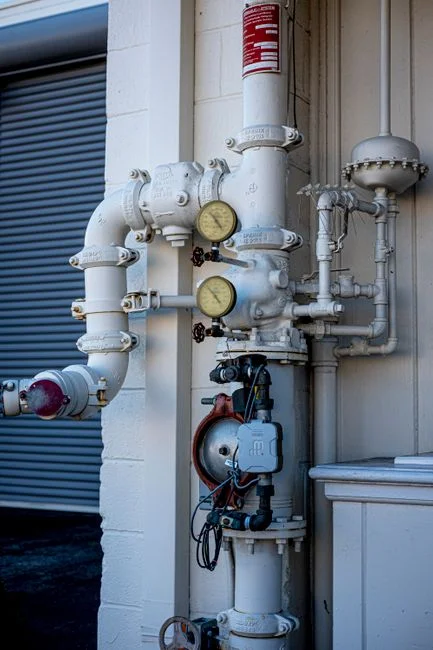
Industrial wastewater characterization must start with the plant’s actual streams and process chemistry. A generic mining-wastewater profile is not a substitute for site data, particularly where the acquired facility may be a plant rather than a mine.
| Stream | Evidence to establish | Compliance question |
|---|---|---|
| Process, cooling and washing water | Source, flow, variability, chemistry and discharge or reuse destination | Which permit, reuse specification or equipment performance criterion controls? |
| Boiler blowdown and equipment washdown | Generation frequency, treatment history, chemical additions and residual contaminants | Is episodic discharge controlled through monitoring, containment and treatment? |
| Stormwater and runoff | Drainage map, segregation logic, inspection records, rainfall exposure and analytical results | Which drainage routes are permitted, and which are contaminated? |
| Laboratory and domestic sewage | Waste composition, segregation, sewer route and treatment responsibility | Are the streams suitable for municipal sewer pretreatment or require separate treatment? |
| Externally supplied wastewater | Supplier quality, source, flow and acceptance conditions | Does reuse or intake comply with the site’s water-right and permit conditions? |
Inventory process water, cooling and washing water, boiler blowdown, floor and equipment washing, stormwater, process-residue runoff, laboratory waste, domestic sewage, washdown water and externally supplied wastewater. For each stream, request representative analytical data and the facility’s list of regulated and dangerous substances. Separate routine, episodic and contaminated stormwater because their duration, controls and treatment needs differ.
The 2017 CDP response provides a useful operating reference. Freeport-McMoRan reported 121,610 megaliters of fresh-surface-water discharge in 2016 and stated that most company mining operations were managed as zero-discharge facilities (Freeport-McMoRan, 2017). Any direct-discharge site should be tested against the rationale, destination and performance of its water balance rather than accepted as a routine discharge.
Document internal reuse by recording its source, quality criteria, treatment steps and end use. Freeport-McMoRan reported that approximately 80% of the 1,740,000 megaliters of water used in operating processes in 2016 was recycled, with much of it originating from reclaimed water captured at tailings storage facilities and leach pads (Freeport-McMoRan, 2017). A Hungarian plant’s reuse case must be rebuilt from local process and permit data. Further treatment comparisons are discussed in MBR versus conventional activated sludge for mining wastewater.
Choose treatment from the permit and reuse objective
Treatment selection begins with the required outcome: authorized direct discharge, sewer discharge, process reuse, potable-grade reuse, internal recycle or zero-liquid-discharge operation. Equipment follows the applicable permit limits, sewer conditions and reuse specification; the technology name does not establish compliance.
| Required outcome | Option to evaluate | Selection evidence and limitation |
|---|---|---|
| Remove suspended solids, oil and grease, or floating material | Industrial DAF system for solids and oil removal | HydropureWater states a 4-300 m³/h range, 13 standard models, micro-bubble flotation and automatic skimming. Verify fit against actual flow, loading and permit criteria. |
| Compact biological treatment of domestic or suitable industrial sewage | WSZ underground integrated treatment plant | HydropureWater states 1-80 m³/h capacity and an integrated anoxic and aerobic contact-oxidation, sedimentation and disinfection arrangement. Suitability depends on influent characteristics. |
| High-quality reuse or process-water treatment | Integrated MBR wastewater treatment system | HydropureWater states filtration below 1 μm and a footprint 60% smaller than conventional systems. These are catalog claims, not site performance guarantees. |
| Condition and dewater separated solids | Plate-and-frame filter press | HydropureWater states filtration areas from 1 m² to 500 m² in manual, hydraulic and automatic configurations. Sludge destination and disposal cost remain separate requirements. |
Include sludge handling in every comparison. A treatment train is incomplete until the separated solids have a documented conditioning, dewatering, storage, transport and disposal route. Historical sludge records remain part of acquisition-environmental liability, not merely an operating detail.
Do not select equipment until representative sampling establishes flow, variability, pH, solids, oil and grease, metals and other site-specific parameters. Require a performance guarantee tied to the actual permit or reuse criteria after sampling. Catalog flow ranges and treatment technologies are selection inputs; they do not prove that the proposed system will meet a Hungarian authorization or sewer requirement.
Turn the wastewater review into acquisition conditions
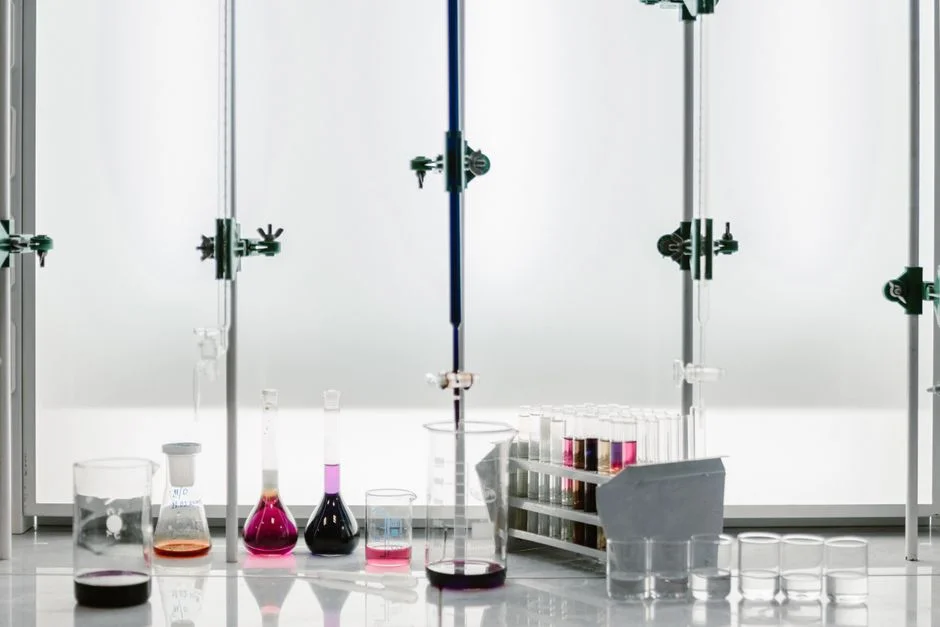
The environmental review should produce a classified transaction issue list. Classify each finding as permit transfer, permit modification, new authorization, compliance upgrade, remediation, residual liability or acceptable condition with a scheduled action. Attach the supporting permit, analytical record, agency correspondence, cost estimate, responsible party and completion dependency to each class.
Price treatment, monitoring, sampling, sludge disposal, training and operating costs separately. The supplied research contains no reliable Hungary-specific project cost data, so request site-specific vendor quotations rather than applying a generic budget. A defensible estimate must identify equipment, installation, permitting, monitoring, sludge disposal, energy, chemicals, maintenance and contingency assumptions.
Set measurable completion milestones before signing, including permit-transfer dependencies, competent-authority submissions, construction or commissioning, performance testing, training and operating procedures. Use the defined technical-information request as the 100-day post-closing baseline: update the permit register, complete the water balance, verify monitoring, confirm sludge pathways and submit every required transfer or modification application.
The transaction schedule should show which works are conditions precedent, which can proceed after closing and which require a long-stop date or seller retention. The Kellogg case’s financing structure demonstrates why acquisition funding and corporate approvals can move on a compressed timetable; it does not justify allowing unresolved water-compliance dependencies to slip into operating risk.
Frequently Asked Questions
Does a Hungarian wastewater permit transfer automatically when Freeport-McMoRan acquires the plant?
No automatic transfer should be assumed. The answer depends on the authorization, covered site activity, issuing authority and applicable Hungarian transfer rules. Before signing, identify each instrument and ask the relevant Hungarian authority and environmental counsel whether it requires transfer, modification, replacement or renewal. Include unresolved status and the effect of closing on permitted operations in the purchase agreement.
What treatment capacity should be shortlisted for the acquired plant?
Size the system from representative wastewater flow and contaminant data, not the plant name or headline production capacity. Request flow-duration data, sampling across operating states, identified contaminants and the required discharge or reuse outcome. Then compare the selected treatment against the applicable permit limits, sewer pretreatment conditions and reuse criteria, with a measurable site-specific performance guarantee.
What should the buyer budget for Hungarian industrial wastewater treatment?
The supplied research provides no Hungary-specific project price. Request itemized quotations covering treatment equipment, installation, authorization work, monitoring and sampling, sludge disposal, energy, chemicals, maintenance, training and contingency. Keep civil works, temporary treatment, remedial work and historical waste liabilities as separate cost categories so the buyer can distinguish recurring operating expenditure from acquisition remediation.
How should the buyer select a wastewater treatment supplier?
Assess documented process fit, pilot or performance data, Hungarian execution capability, service response, technical documentation and a guarantee tied to the site’s permit and reuse criteria. Ask for evidence from comparable wastewater rather than relying on catalog capacity. The supplier should also demonstrate how the plant will manage residuals, alarms, sampling, operator handover and permit-documentation updates.