Which discharge rules apply to a Hernando mining plant?
A mining or metals plant near Hernando meets sewer pretreatment limits by identifying the discharge route, characterizing each wastewater stream, and designing treatment around the pollutants that control the applicable authorization. EPA’s 40 CFR Part 436 covers mineral mining and processing wastewater, while 40 CFR Part 440 covers ore mining and dressing discharges; both are incorporated into NPDES permits. Indirect sewer discharge is different: the facility must also satisfy the receiving publicly owned treatment works’ local limits. A defensible sequence is equalization, pH correction, precipitation or coagulation, solids separation, filtration, membrane polishing where necessary, and controlled sludge dewatering.
First determine whether the facility will discharge directly to waters of the United States or indirectly through a sewer. The distinction changes the approval path and cannot be inferred from the equipment selected. EPA states that 40 CFR Part 436 covers mine drainage, mineral processing wastewater, and stormwater runoff. EPA also states that 40 CFR Part 440 covers wastewater from ore mines and processing operations, including extraction, milling, and beneficiation.
EPA identifies mine dewatering, equipment cooling and dust control, precipitation entering mines, chemical leaching during milling or beneficiation, and contaminated stormwater at storage facilities as mining wastewater sources. Smelting is not automatically assigned to a mining subpart: EPA places iron and steel smelting under 40 CFR Part 420, Subpart C, and nonferrous metals manufacturing under 40 CFR Part 421.
For an indirect discharge, obtain the receiving POTW’s current pretreatment permit, local limits, monitoring requirements, discharge authorization procedure, and approved discharge point. Federal mining guidelines do not replace those requirements. The regional mining and metals sewer pretreatment guide provides a broader overview, but the Hernando project file must contain the governing POTW documents.
| Term | What it establishes | Decision relevance |
|---|---|---|
| Effluent guidelines | EPA regulations for an industrial category, including 40 CFR Parts 436 and 440 where applicable | Determine category coverage and applicable subpart requirements |
| NPDES permit | Authorization and conditions for a direct discharge to waters of the United States | Use the permit and incorporated requirements as the discharge basis |
| POTW pretreatment limits | Local discharge restrictions, monitoring duties, and authorization conditions | Controls an indirect sewer discharge and supplements—not replaces—applicable federal requirements |
| Wastewater characterization | Measured stream chemistry, flow, variability, and contaminants | Provides the technical basis for treatment selection and sizing |
Characterize each wastewater stream before selecting equipment
Mining wastewater cannot be treated as one chemically uniform stream, so the sampling plan must preserve the origin of every flow before equalization or treatment. EPA identifies groundwater produced during ore extraction, water used for equipment cooling and dust control, precipitation entering mines, milling and beneficiation wastewater, chemical-leach wastewater, and contaminated stormwater from storage facilities as distinct operational sources. Separating these streams allows the plant to avoid carrying acid mine drainage, process reagents, and washdown solids into one unnecessarily complex treatment duty.
For each stream, request representative sampling for pH, TSS, turbidity, conductivity or TDS, metals, sulfate, and hardness. Add cyanide, ammonia, phosphorus, chloramines, or other process-specific constituents where the facility’s process warrants them. Mining extraction, milling, leaching, and beneficiation methods differ materially, so neither a generic “mine water” analysis nor an assumed Hernando concentration should control equipment selection.
The sampling program should cover normal operations and relevant variability rather than relying on one grab sample. Request peak and average flow records, storm-event behavior, operating schedules, seasonal variation, and proposed reuse quantities. These inputs determine equalization volume, pumping and chemical-system duty, treatment capacity, and whether intermittent storm flows require a separate route. The supplied research does not provide Hernando-area wastewater concentrations or flow bands; those values must come from site data.
The project record also shows that a mine-water basis of design can include metals, TDS, sulfate, selenium, phosphorus, BOD, ammonia, and TSS. That list illustrates scope, not a Hernando requirement. Each parameter needs a site-specific concentration, applicable limit, and decision rule before it is assigned to a treatment step.
| Stream to segregate | Potential design drivers | Information required |
|---|---|---|
| Contact water and contaminated stormwater | Suspended solids, metals, variable storm flow, oil or grease where present | Event flows, rainfall response, representative chemistry, storage strategy |
| Groundwater and mine dewatering | pH, acidity, dissolved metals, sulfate, TDS | Flow history, seasonal chemistry, metals profile, source areas |
| Milling and beneficiation water | Process reagents, fine solids, pH, metals | Batch and continuous discharge data, reagent inventory, flow peaks |
| Leaching and tailings-related water | Dissolved metals, salts, residual reagents, solids | Leach chemistry, constituent profile, pond or impoundment behavior |
| Washdown and equipment-cleaning water | Suspended solids, cleaning chemicals, variable concentration | Segregation and hold-up practices, discharge timing, chemistry |
After establishing the analytical and flow basis, the plant can define whether a compact integrated water purification configuration is appropriate or whether individual unit operations are required.
Build a treatment train around the limiting pollutant
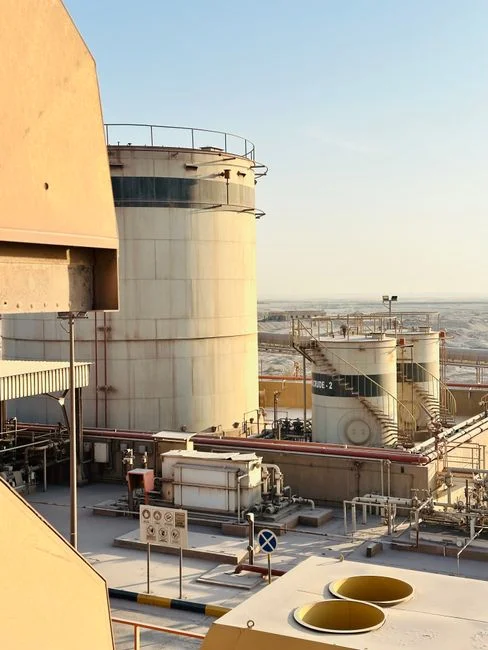
The treatment train should follow the contaminant path: equalization and flow control, pH correction, coagulation or precipitation, solids separation, filtration, membrane polishing where required, and sludge dewatering. Each stage needs a defined purpose and an enforceable outlet basis; otherwise, one undersized or poorly conditioned step can shift the entire compliance burden downstream.
For acidic, metal-bearing water, pH adjustment can precipitate dissolved metals as hydroxides and remove gypsum. The supplied literature describes lime raising pH above 10 before thickening as one defined treatment example, but that is not a universal Hernando setpoint (PMC review, 2024-02). Establish lime demand from representative influent testing and verify residual metal levels at the actual operating pH.
DAF is generally the stronger choice when floc is buoyant or the stream contains oil, grease, or floatable fines. Lamella clarification is generally more suitable when dense metal-hydroxide sludge and footprint are the controlling constraints. The comparison of DAF and lamella clarification for mining wastewater provides a useful mechanical selection framework, but a DAF system for mining wastewater clarification should be selected only after representative solids and floatability testing.
Multimedia filtration or UF can remove residual suspended solids and colloids before RO or another sensitive process. The supplied UF specification lists 2,000–40,000 L/h capacity, 0.03-micron PVDF membranes, automatic backwash, air scour, and feed turbidity up to 300 ppm (HydropureWater UF specification supplied for this project). These equipment values are not Hernando flow bands; the UF duty must be matched to the selected filtration and membrane recovery.
RO addresses dissolved salts and residual dissolved metals that remain above the sewer limit. The supplied research reports rejection above 99% for dissolved metals and salts, 50–70% RO recovery for AMD feed, and 70–85% for the RO stage of a ZLD train (AMPAC USA, 2025-09). Those figures are literature contexts, not universal guarantees. The high-TDS reverse osmosis design guide addresses feed conditioning and recovery, but site testing must establish scaling risk and concentrate disposition.
Chemical precipitation creates sludge that must be included in the design. The supplied plate-and-frame filter press catalog lists 1–500 m² filtration areas and manual, hydraulic, or fully automatic PLC-controlled configurations (HydropureWater plate-and-frame filter press catalog supplied for this project). Select the press from measured cake volume, solids content, cycle requirements, and target moisture rather than filtration area alone.
| Condition | Treatment response | Verification before purchase |
|---|---|---|
| Acidic water with dissolved metals | pH correction, then metal precipitation and solids separation | Jar test for lime demand, residual metals, sludge settleability |
| Buoyant floc, oil, grease, or floatable fines | DAF after conditioning | Floatability test and solids-solids loading review |
| Dense metal-hydroxide sludge and limited footprint | Lamella clarification | Solids inventory, sludge density, underflow and footprint review |
| Residual solids or colloids before sensitive membranes | Multimedia filtration or UF | Filtered turbidity, target SDI where applicable, membrane loading test |
| Dissolved salts or residual dissolved metals above the sewer limit | RO polish | Feed chemistry, scaling analysis, recovery trial, concentrate route |
| Metal-bearing precipitate or filter solids | Plate-and-frame dewatering | Batch cake test, cycle assessment, residual-moisture requirement |
Size, pilot, and prove the Hernando pretreatment system
Equipment sizing should follow peak flow, verified stream chemistry, selected treatment recovery, and the current authorization—not generic mining flow examples. Equalization and pumps must accommodate the highest anticipated discharge; chemical systems must meet measured reagent demand; clarification, filtration, and membranes must carry their assigned peak duties with the selected recovery. Because the supplied research contains no Hernando flow bands, the equipment proposal should show each unit’s design flow and duty with the site data identified.
Representative feed testing establishes lime or pH-adjuster demand, coagulant behavior, settleability or floatability, filter loading, membrane scaling risk, and sludge characteristics. Jar testing is useful for chemical-dose selection, but it does not replace pilot testing where hydraulic behavior, sludge withdrawal, filtration loading, or membrane recovery cannot be inferred reliably from bench work.
Use pilot results to update equipment sizing and control setpoints. Tie final acceptance criteria to the current POTW authorization or discharge permit, including the applicable parameters and monitoring conditions. Generic removal claims or a supplier’s published performance context do not establish site-specific compliance.
Specify continuous pH, flow, and conductivity monitoring with PLC/HMI integration. A PLC-controlled automatic chemical dosing system should coordinate chemical addition with flow and pH conditions, while the multimedia filtration configuration should be assessed by filtered-water quality and membrane-protection requirements rather than inlet turbidity alone.
Before finalizing the commercial scope, compare chemical consumption, sludge volume, membrane cleaning, energy demand, operator workload, and reuse value. These items affect both the price of the installed system and the practicality of sustained permit compliance. The supplier should also define the self-monitoring and reporting plan for each permitted parameter.
- Fix the governing authorization and complete stream-level characterization.
- Establish peak and average design flows and treatment objectives.
- Use representative testing to set chemical, separation, filtration, and membrane duties.
- Update sizing with pilot results and define acceptance criteria from the current permit or POTW authorization.
- Verify monitoring, controls, sludge handling, commissioning, and ongoing self-monitoring before acceptance.
What should a mining wastewater supplier quote?
A comparable mining wastewater quotation must begin with the project’s design basis, not a catalog price or generic flow range. Request peak and average flow, representative influent pH and metals, current local sewer limits for metals, pH, and TSS, desired recovery, reuse objectives, and sludge-handling constraints. Also provide stream origins, variability, operating schedule, chemical-reagent preferences, monitoring requirements, and the route for any RO concentrate.
Ask each supplier to define the proposed train by unit operation, rated capacity, design duty, controls, monitoring points, chemical requirements, included commissioning, and operating documentation. The scope should make clear whether equalization, dosing, clarification, filtration, membrane treatment, sludge dewatering, and concentrate handling are included. Evaluate integrated responsibility across these interfaces so performance gaps are not assigned to the owner after delivery.
For references, request installations with comparable wastewater chemistry, flow magnitude, treatment objectives, and operating conditions. A generic mining reference does not demonstrate that a supplier can handle the site’s acidity, salt load, solids, or permit limits.
The supplied research contains no published complete-system price points and no Hernando flow bands. A project-specific quotation is therefore necessary; do not substitute an unsupported generic price range. Ask what is excluded, which guarantees depend on verified feed chemistry, how pilot results will revise capacity, and who remains responsible for performance through commissioning.
Frequently Asked Questions
What data is needed to get an accurate mining pretreatment quotation?
Provide peak and average flow, representative pH and metals data, current POTW limits for metals, pH, and TSS, reuse objectives, and sludge constraints. These are the minimum quotation basis; the supplied research provides no complete-system price point, so request a project-specific price rather than relying on unsupported generic pricing.
Should a Hernando mine choose DAF or a lamella clarifier?
Choose DAF when representative testing shows buoyant floc, oil, grease, or floatable fines. Choose lamella clarification when dense metal-hydroxide sludge and footprint are the controlling constraints. Verify the choice through chemical-response, settleability, or floatability testing and pilot work where required.
Is UF or RO required for mine wastewater?
UF is appropriate when residual colloids or suspended solids threaten downstream membranes. RO is appropriate when dissolved salts or residual dissolved metals exceed the sewer limit or must be reduced for reuse. Confirm the required combination against the current limits and measured feed chemistry.
How do operators demonstrate compliance?
Use the current permit or POTW authorization as the acceptance basis. Combine representative feed testing with pilot or equipment verification, then maintain the required pH, flow, conductivity, pollutant, and self-monitoring records through startup and operation.
Can one treatment system handle all mining wastewater?
A combined system may be feasible, but only after stream-level chemistry, peak flows, contaminants, and sludge characteristics are established. If streams differ materially, separate collection or equalization and staged treatment may reduce chemical use and prevent one uncontrolled stream from compromising the final discharge.