Why the DAF vs Clarifier Question Is Different for Chemical Plants
For Burley, Idaho chemical plants in 2026, choose DAF when influent contains emulsified oils, FOG, or fine suspended solids above ~200 mg/L, and choose a lamella clarifier when the stream is dominated by heavy, settleable inorganics with low oil content. DAF with polymer conditioning typically removes 85–95% of FOG and TSS, while a clarifier delivers strong TSS cuts on heavy slurries at lower OPEX. Match the choice to your influent chemistry, not to the equipment brochure.
Generic comparisons treat this as a food-vs-mining question, and that framing is wrong for specialty and agrochemical plants on the Snake River plain. Chemical wastewater swings pH from 1 to 13 between batches, carries solvent or non-ionic surfactant emulsions that defeat a gravity cell, and arrives as intermittent slugs rather than a steady soup. TSS-to-FOG ratios shift by campaign, not by season. The often-cited benchmark of 95% FOG removal on a DAF versus 70% on a clarifier (per Ecologix) was measured on a food processing stream; it does not transfer directly to a chemical plant handling emulsified aromatics, glycols, or quaternary ammonium surfactants, where the oil droplets are smaller and the floc chemistry is more sensitive to pH.
The 1978 EPA symposium on wastewater stabilization ponds made the underlying point clearly: "the apparent simplicity of lagoon systems should not imply that haphazard designs or inadequate data can be tolerated" (EPA-600/9-79-011, 1979). The same logic governs DAF vs clarifier choice: characterize first, then specify. Burley adds a climate constraint — winter lows drop below -10°C, outdoor clarifiers suffer ice, density-driven turnover, and slow floc kinetics, while enclosed DAF vessels stay close to process temperature. Most chemical facilities in the region discharge to the City of Burley wastewater treatment plant under IDEQ-issued Industrial User (IU) permits, so the separator is the first line of compliance, not the last.
Burley Pretreatment Rules Every Chemical Plant Must Clear
Every chemical manufacturer discharging to a U.S. POTW falls under 40 CFR 403 General Pretreatment Standards, with additional categorical standards layered on by SIC code — for example 40 CFR Part 414 for organic chemicals, plastics, and synthetic fibers, Part 417 for soap and detergent manufacturing, and Part 433 for metal finishing lines that often run alongside chemical operations. The federal floor sets prohibited discharge practices and categorical effluent limits; the local IU permit, issued by the Burley POTW and administered with IDEQ oversight, tightens the envelope on TSS, FOG, pH, and COD on a plant-by-plant basis.
Miss those numbers and the consequences are concrete. A Significant Noncompliance (SNC) status triggers public notice, state-level enforcement, and potential EPA Region 10 action — a much more expensive outcome than sizing a separator correctly up front. Burley's local limits typically track federal categorical ceilings but add a hard FOG ceiling (commonly 100 mg/L daily max) and a pH band of 6.0–9.0 for any stream entering the collection system, even if the categorical standard is looser.
Two operational points follow. First, the primary separator must hold the stream inside the local IU envelope continuously, not just on a 30-day average, because slug discharges trigger SNC faster than chronic exceedances do. Second, the same 1978 EPA framing still applies: even a "simple" gravity clarifier needs adequate influent data to be specified correctly (EPA-600/9-79-011, 1979). Sampling must cover pH swings, batch events, and the realistic FOG peak — not just the weekly composite that compliance reporting requires.
How DAF and Clarifiers Actually Separate Contaminants
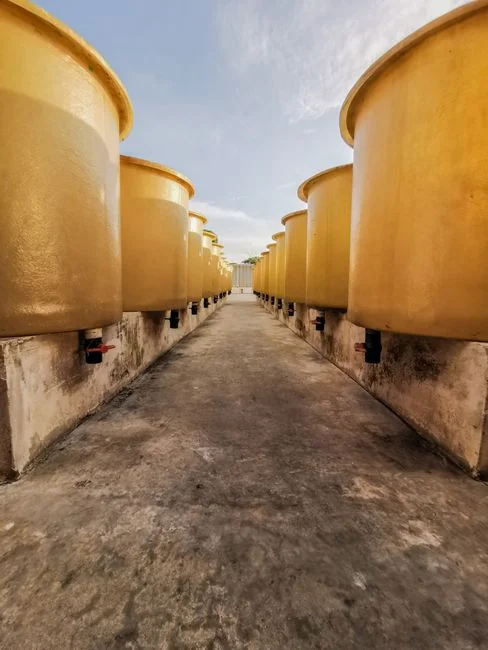
A DAF unit saturates a side stream of clarified effluent with air at 50–80 psi, then releases it through needle valves into the main flotation tank. The pressure drop nucleates a cloud of 30–50 micron microbubbles that attach to flocculated particles and oil droplets, lifting them to the surface where paddle skimmers scrape the float into a sludge trough. Heavier particles that do not attach settle to a bottom collection zone and are removed by an auger (per Clearwater Industries, 2026). The whole separation happens in roughly 15–30 minutes of hydraulic retention, which is why DAF handles shock loads and emulsions better than any gravity device.
A clarifier, including a lamella or inclined-plate clarifier, relies on Stokes' law: particles denser than water settle under gravity, and clarified supernatant overflows a peripheral weir. Lamella plates shrink the footprint dramatically by shortening the settling path, pushing surface loading to 20–40 m³/m²·h on chemical-plant streams with good settleability. The trade-off is hydraulic retention measured in hours, not minutes, which makes the unit a large buffer — useful for damping minor swings, dangerous when a real slug arrives.
The mechanism difference decides the chemistry match. Emulsified oil droplets are buoyant and typically under 20 microns, smaller than the threshold where gravity can overcome Brownian motion in reasonable tank area — they will pass through a clarifier essentially untouched, then lift cleanly on DAF microbubbles. Conversely, dense inorganic slurries such as metal hydroxide floc, catalyst fines, or precipitated calcium salts settle readily in a lamella clarifier and can build up as a heavy bottom layer in a DAF, fouling the sludge auger and starving the float blanket of gas. The separator that handles the dominant phase well is almost always the right answer.
Matching Influent Chemistry to the Right Separator
The decision reduces to four influent characteristics: FOG concentration, FOG droplet size (emulsified vs free), TSS settleability, and pH/temperature variability. The table below maps each to a primary recommendation.
| Influent characteristic | Threshold | Recommended primary separator | Reasoning |
|---|---|---|---|
| Total FOG / emulsified oil | ≥100 mg/L or stable emulsion | DAF, with coagulant + flocculant in serpentine mix tubes or mix tank | Microbubbles attach to droplets a clarifier cannot capture; 85–95% FOG removal expected (per Clearwater, 2026) |
| Settleable inorganic TSS, FOG <50 mg/L | TSS >500 mg/L, low oil | Lamella clarifier (high-efficiency sedimentation tank) | Surface loading 20–40 m³/m²·h with low polymer demand (HydropureWater field data, 2026) |
| Mixed batch stream | Both phases present, variable ratio | DAF primary + lamella polish, or DAF → biological (MBR/activated sludge) | DAF protects downstream biology from oil shock; lamella polishes residual TSS |
| pH swings 1–13 or solvent slugs | Intermittent batch dumps | DAF (enclosed, short HRT) | 15–30 min retention avoids upset; large clarifier volume buffers but risks biomass/polymer kill |
| Outdoor clarifier in Burley winter | Air temperature < -5°C for extended periods | Enclosed DAF preferred; clarifier needs cover + windbreak | Ice, density turnover, and slow floc kinetics cut settling efficiency 20–40% (engineering rule of thumb) |
The threshold numbers are decision aids, not regulatory limits. If FOG sits at 80 mg/L but the stream also carries a non-ionic surfactant that keeps droplets emulsified, treat it as the high-FOG case and specify DAF. Conversely, a stream at 250 mg/L TSS of calcium carbonate and zero detectable oil is a textbook lamella application, and pushing it to a DAF wastes polymer and capacity.
DAF vs Clarifier: Side-by-Side Parameter and Cost Comparison
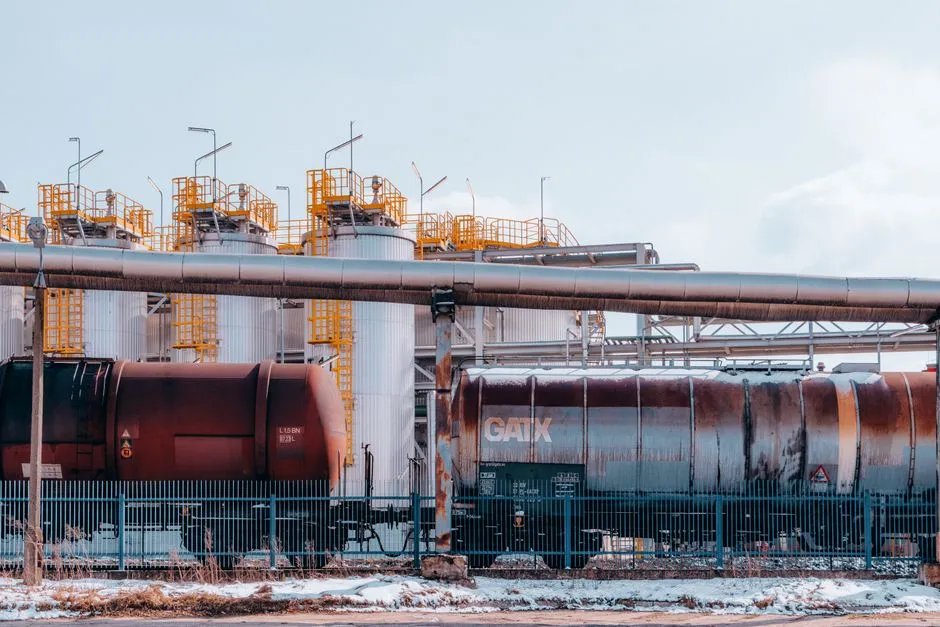
This is the table to screenshot for procurement. Numbers are drawn from Clearwater Industries specifications (2026), Ecologix benchmarks, and HydropureWater field data, with CAPEX/OPEX bands normalized to a 50 m³/h plant in 2026 USD.
| Parameter | DAF | Lamella Clarifier (high-efficiency sedimentation tank) |
|---|---|---|
| Typical TSS removal | 80–95% with polymer conditioning | 70–90% on settleable inorganics; poor on fines <20 µm |
| Typical FOG removal | 85–95% (per Ecologix and Clearwater) | 50–70% on free oil, near-zero on emulsified |
| Flow range per unit | 4–300 m³/h across 13 DAF models (HydropureWater) | 20–40 m³/m²·h surface loading; footprint scales with plate area |
| Footprint per m³/h | 0.1–0.3 m²/(m³/h) (compact, enclosed) | 0.4–0.8 m²/(m³/h) for lamella; conventional clarifier 2–3× larger |
| Bubble / mechanism size | 30–50 µm microbubbles at 50–80 psi saturation | Gravity settling, no bubbles; lamella plate spacing 50–80 mm typical |
| Polymer / coagulant demand | 5–20 mg/L typical, optimized via jar test | 0–5 mg/L on settleable streams; often zero on heavy inorganic TSS |
| Energy use | 0.05–0.15 kWh/m³ (saturation pump + compressor dominant) | 0.01–0.04 kWh/m³ (sludge rake + minor pumping) |
| Materials of construction | 304SS standard, 316SS or polypropylene (PP) recommended for chloride- or solvent-bearing chemical wastewater (per Clearwater) | Carbon steel with epoxy/coating, 304SS, or FRP; 316SS for chloride exposure |
| 2026 CAPEX (USD per m³/h, skid+install) | $9,000–$18,000 per m³/h (DAF, including dosing skid) | $3,000–$8,000 per m³/h (lamella package) |
| 2026 OPEX (USD per m³ treated) | $0.18–$0.45/m³ (polymer, energy, sludge hauling) | $0.06–$0.18/m³ (lower polymer, lower energy, more sludge volume) |
| Sludge character | Thickened float (2–5% DS), smaller volume | Settled sludge (1–3% DS), larger volume on fine TSS |
The CAPEX line is the headline: a DAF of equivalent flow runs roughly 2–4× the upfront cost of a lamella clarifier. That gap closes quickly when the stream contains emulsified FOG, because a clarifier either fails the IU FOG limit (cost: SNC and shutdown risk) or requires a downstream polish that erases the upfront savings. For heavy, settleable, low-FOG streams the lamella wins on total cost of ownership with no contest.
Choosing a Primary Separator for Your Burley Chemical Plant
Apply the decision rules in order. If FOG is ≥100 mg/L or the stream contains emulsified oils that do not break on a 30-minute jar settle, specify the HydropureWater DAF system sized at 4–300 m³/h with 316SS or polypropylene internals matched to your chloride and solvent profile. If the stream is dominated by settleable inorganic TSS with oil below 50 mg/L and polymer budget is tight, specify the HydropureWater lamella clarifier at 20–40 m³/m²·h surface loading.
For the common Burley case of a batch specialty or agrochemical line with both phases and chemistry that drifts campaign to campaign, run a hybrid: DAF as primary, lamella as polish on the DAF subnatant. This combination handles flows above 66 GPM with a two-skid DAF plus a small lamella, and it gives biology downstream a stable influent regardless of which batch just dumped. Pair the chosen separator with an automatic polymer dosing skid to stabilize polymer use, protect downstream biological or RO steps, and keep jar-test recipes in automatic control rather than in an operator's head.
Run a jar test plus a 7-day pilot before purchase. Variable batch discharges are the single biggest reason chemical-plant separator choices fail in the first year; a week of pilot data across three or four representative batches will expose pH sensitivity, polymer demand curves, and emulsion stability that a one-day jar test misses. The pilot pays for itself in avoided CAPEX mistakes, and it gives procurement a defensible number for the CAPEX band attached to the recommendation.
Frequently Asked Questions
DAF or clarifier for chemicals wastewater in Burley, ID — which should a factory choose in 2026?
Match the separator to the dominant phase. Choose DAF when FOG or emulsified oil is ≥100 mg/L or TSS is above ~200 mg/L with fines that do not settle; choose a lamella clarifier when the stream is heavy, settleable, low-FOG inorganic TSS. Budget roughly $9,000–$18,000 per m³/h for DAF and $3,000–$8,000 per m³/h for a lamella in 2026 USD, and confirm both with a 7-day pilot.
What removal efficiency can a DAF reach on chemical wastewater?
A properly conditioned DAF reaches 85–95% FOG removal and 80–95% TSS removal on chemical streams (per Ecologix and Clearwater, 2026). The range depends on emulsion stability, polymer selection, and pH control — surfactant-heavy streams sit at the low end unless coagulant and flocculant are tuned to the specific emulsion.
Are DAF systems compatible with high-COD chemical streams?
Yes, as a primary separation step. A DAF removes the FOG and TSS fraction that would otherwise foul or shock downstream biology, but it does not reduce dissolved COD on its own. High-COD chemical streams must still pass through a biological step — typically MBR or activated sludge — after the DAF to meet 40 CFR 403 and local IU COD limits.
When is a lamella clarifier better than a DAF?
When the stream is dominated by dense, settleable inorganic TSS (metal hydroxides, catalyst fines, precipitated salts), oil is below 50 mg/L, and polymer budget is constrained. A lamella clarifier delivers 70–90% TSS removal at roughly 30% less polymer demand and 0.01–0.04 kWh/m³ versus 0.05–0.15 kWh/m³ for a DAF (per HydropureWater field data, 2026).
What pretreatment standards apply to chemical plants in Burley, Idaho?
Discharges to the Burley POTW fall under 40 CFR 403 General Pretreatment Standards plus any applicable categorical subpart (for example 40 CFR Part 414 for organic chemicals, Part 417 for soap and cleaning compounds, or Part 433 for metal finishing lines). The local IU permit, issued with IDEQ oversight, tightens limits on TSS, FOG, pH, and COD, and the primary separator must keep the stream inside that envelope continuously to avoid Significant Noncompliance.